Time recognition Normal Worksheets for Ages 4-7
5 filtered results
-
From - To
Discover our engaging Time Recognition Normal Worksheets designed specifically for children ages 4 to 7! These worksheets help young learners understand the concept of time, including reading clocks, distinguishing between hours and minutes, and recognizing daily routines. With fun activities and colorful illustrations, children will develop essential skills in a playful way. Our resources are perfect for reinforcing time-telling skills at home or in the classroom. Each worksheet encourages critical thinking and problem-solving, making learning enjoyable and effective. Download our Time Recognition worksheets today and watch as your child gains confidence in managing time throughout their daily activities!
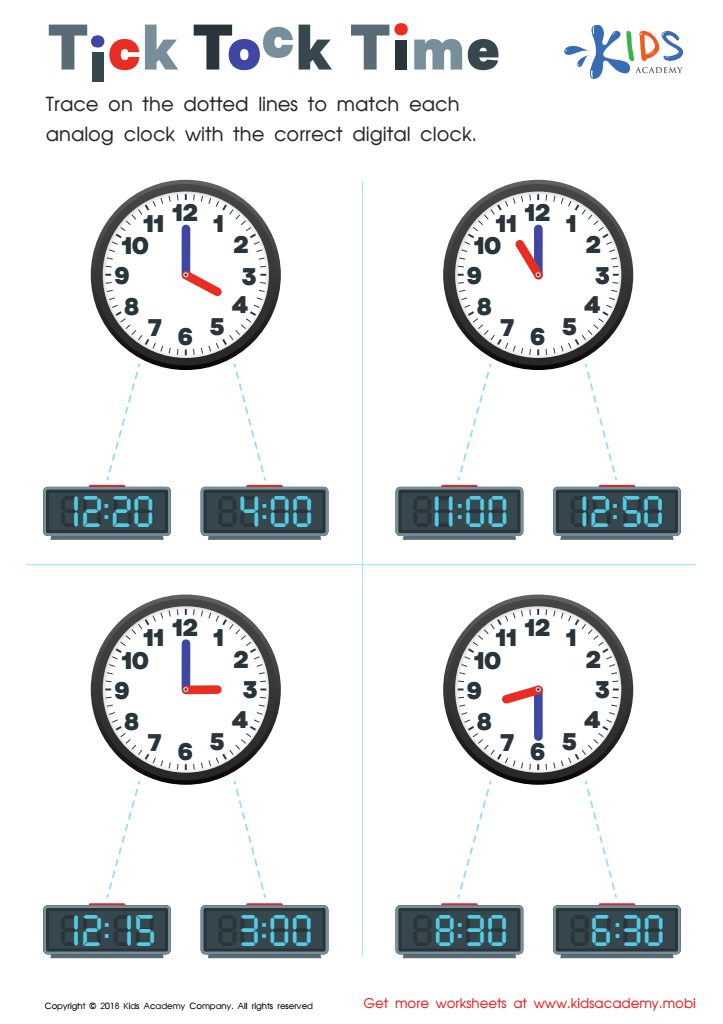
Tick Tock Time Worksheet
 Assign to My Students
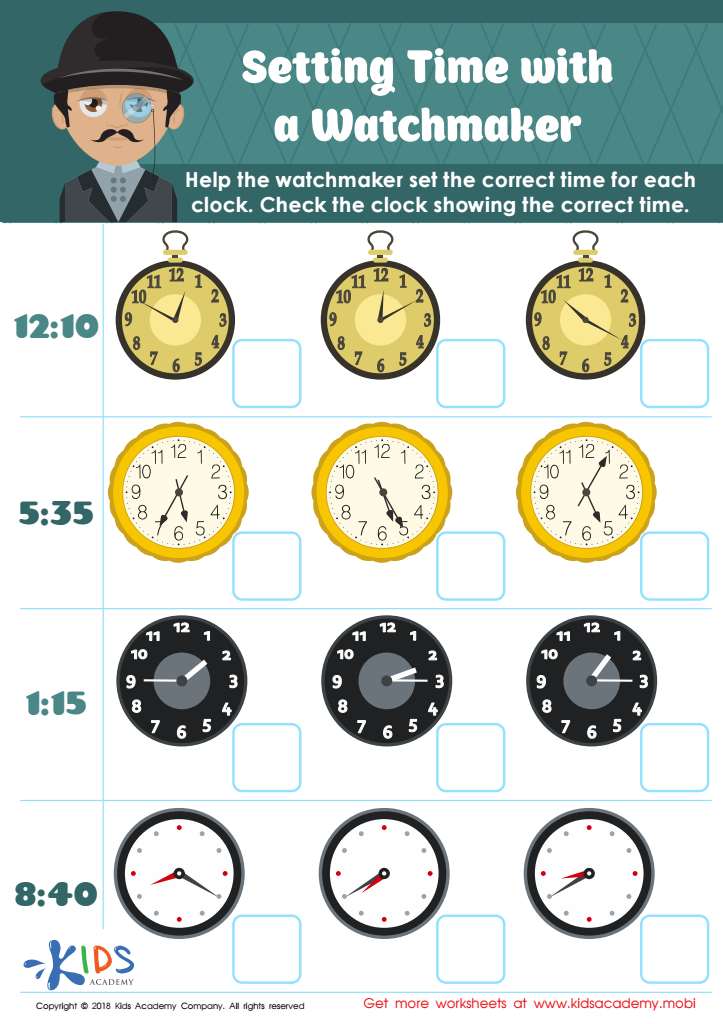
Setting Time with Watchmaker Worksheet
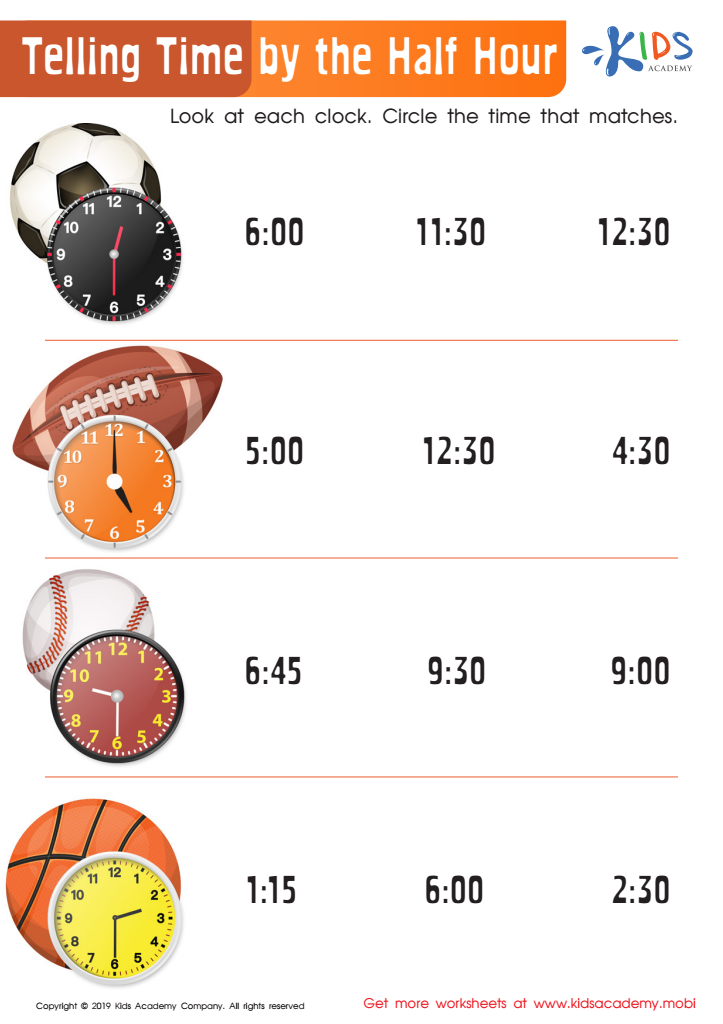
Telling Time by the Half Hour Worksheet
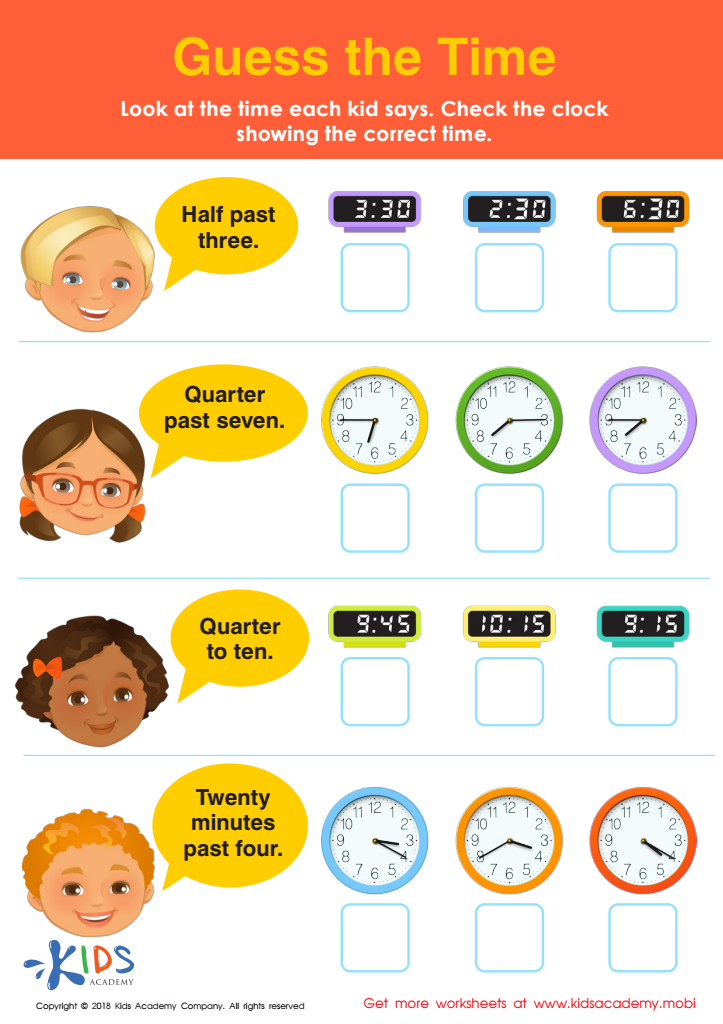
Guess the Time Worksheet
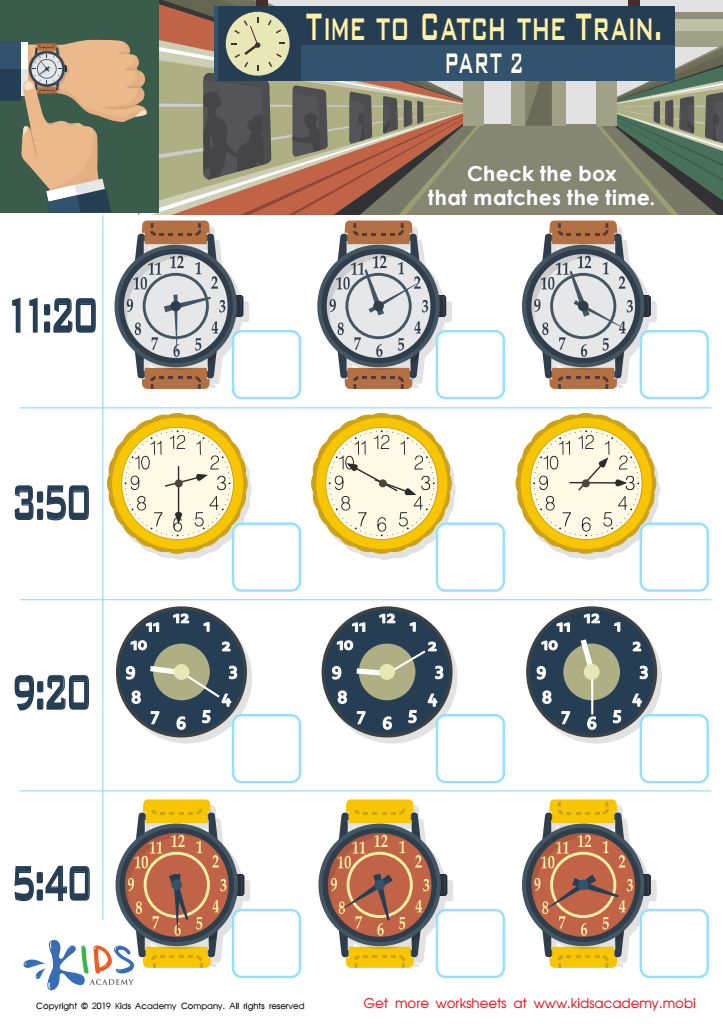
Time to Catch the Train Part 2 Worksheet




.jpg)


Time recognition is a critical skill for children aged 4-7, and its mastery is essential for not only daily functioning but also for overall cognitive development. At this age, children begin to understand routines and the importance of timing in their daily activities. This understanding fosters responsibility as they learn to manage tasks, like getting ready for school or bedtime.
Parents and teachers should care about time recognition because it enhances a child's ability to navigate their environment and fosters independence. Knowing how to read a clock helps children grasp the concept of waiting, scheduling, and eventually contributing to their organization skills. It also plays a vital role in developing critical thinking and problem-solving abilities as they internalize how events correlate with time.
Additionally, teaching children about time can promote healthy habits. For example, understanding when it’s time to eat or play helps them establish routines vital to their growth and well-being. By providing guidance and activities linked to time recognition, parents and teachers can create engaging learning opportunities that not only improve academic readiness but also support life skills that children will carry into adulthood. Overall, fostering time recognition lays a strong foundation for children's independent and confident progression through their early years.








