Understanding number relationships Normal Worksheets for Ages 4-7
3 filtered results
-
From - To
Unlock your child's mathematical potential with our "Understanding Number Relationships" normal worksheets for ages 4-7. Designed to foster numeric fluency and critical thinking, these engaging worksheets help young learners grasp fundamental concepts such as counting, number comparisons, and basic operations. Through fun activities and creative exercises, kids will develop a solid understanding of how numbers interact, setting a strong foundation for future math success. Perfect as a supplement to classroom learning or for extra practice at home, these worksheets make mastering math concepts both enjoyable and accessible for young minds. Ideal for parents and educators alike!
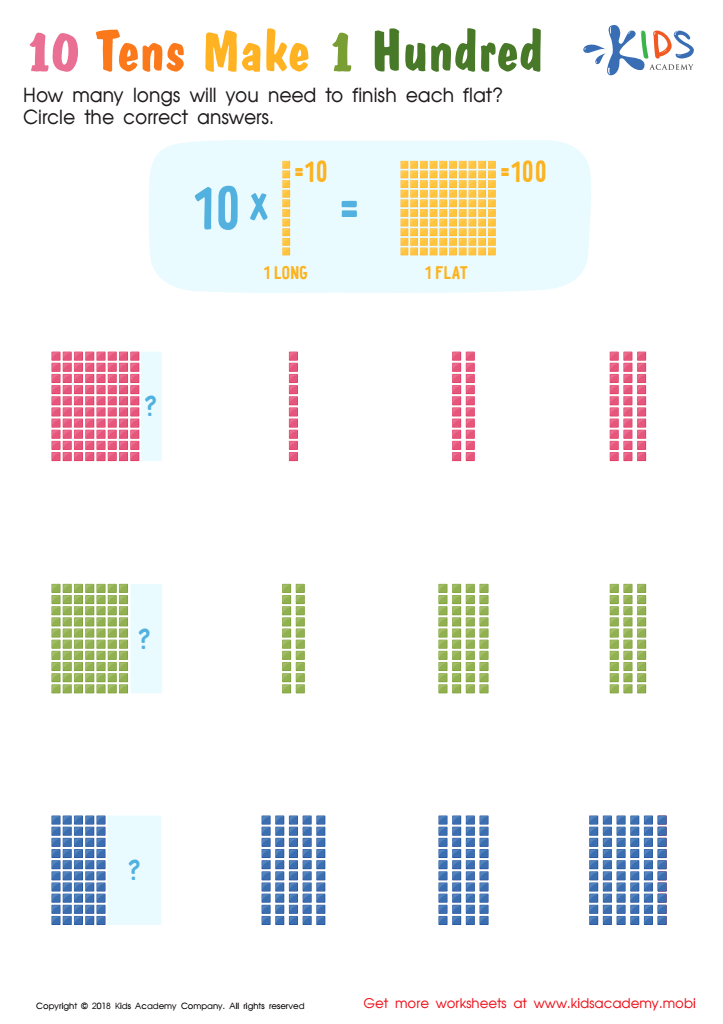
10 Tens Make 1 Hundred Worksheet
 Assign to My Students
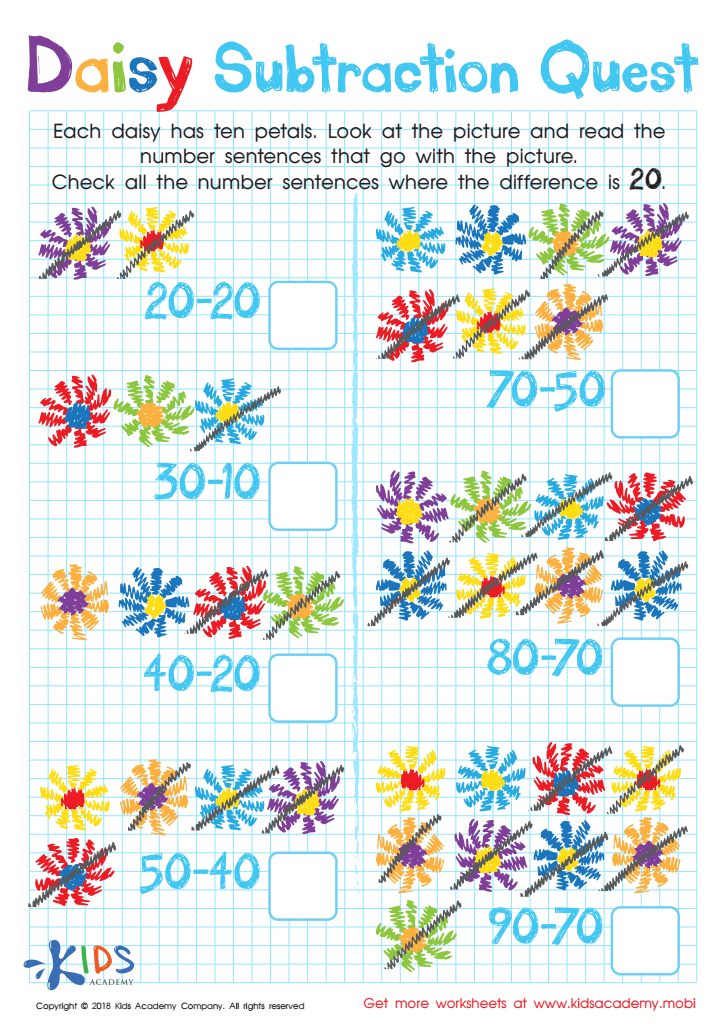
Daisy Subtraction Quest Worksheet
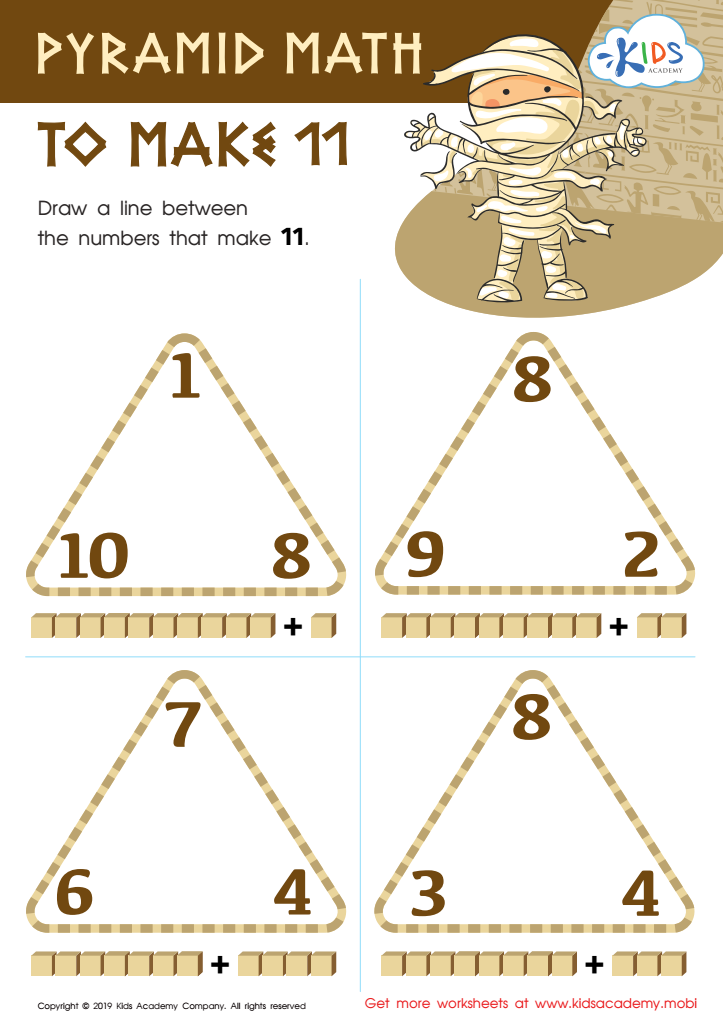
Pyramid Math to Make 11 Worksheet





.jpg)


Understanding number relationships is fundamental for children aged 4-7 as it lays the groundwork for future mathematical concepts and cognitive development. When parents and teachers prioritize this aspect of learning, they foster children's abilities to recognize patterns, compare quantities, and develop problem-solving skills. These early number relationships, such as identifying which of two sets has more objects, understanding one-to-one correspondence, and grasping the basics of addition and subtraction, are crucial for effective numerical literacy.
By nurturing these skills at a young age, children build a solid foundation that will support more complex math operations in later grades. For instance, understanding that numbers can represent quantities and the relationships between these quantities prepares children for advanced topics like algebra and geometry. Moreover, number relationships are linked to logical thinking and reasoning abilities, which are transferable to a wide array of subjects and everyday situations.
Additionally, early confidence in handling numbers helps children develop a positive attitude towards mathematics, reducing anxiety and fostering resilience when faced with more challenging problems. This proactive approach not only enhances academic performance but also equips children with essential life skills such as analytical thinking and persistence. Therefore, parents and teachers who emphasize the importance of number relationships contribute significantly to a child's overall intellectual and emotional growth.








