Visual interpretation Normal Worksheets for Ages 4-7
4 filtered results
-
From - To
Unlock your child's potential with our Visual Interpretation Worksheets, designed for ages 4-7. These engaging resources focus on enhancing visual literacy skills through fun and interactive activities. Children will learn to interpret images, identify patterns, and develop critical thinking abilities. Our worksheets feature vibrant illustrations that captivate young learners, making complex concepts easier to grasp. Ideal for preschool and early elementary education, these printable worksheets promote creativity and boost confidence. Discover how our visual interpretation tools can enrich your child's learning experience today! Perfect for parents and educators, these resources encourage exploration and a love for learning. Get started on your educational journey now!
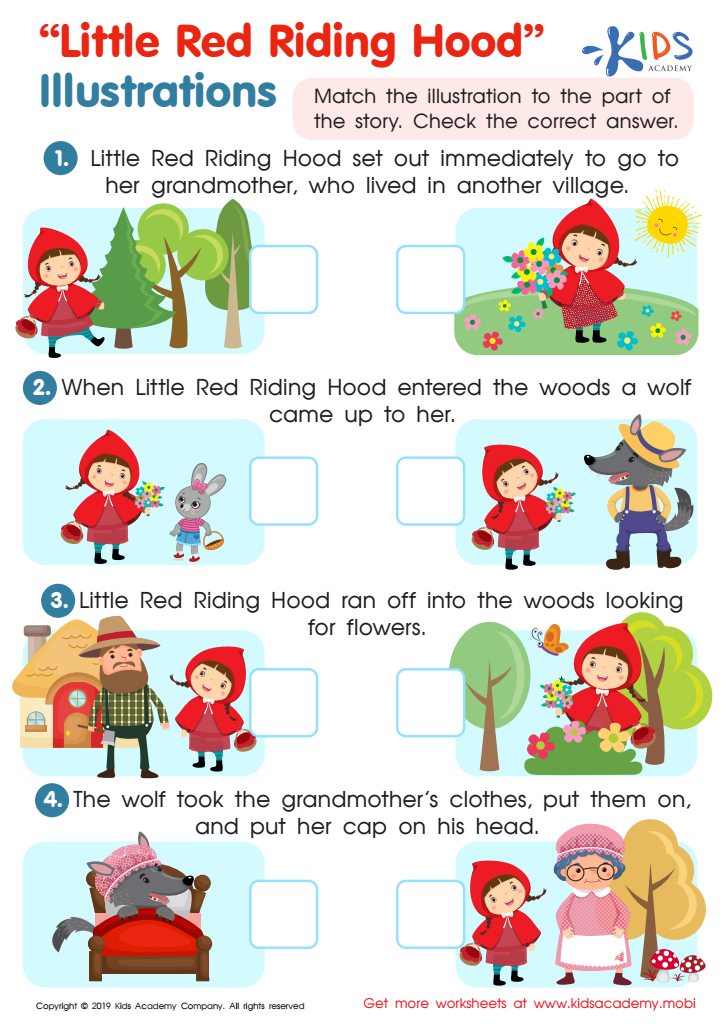
Little Red Riding Hood: Illustrations Worksheet
 Assign to My Students
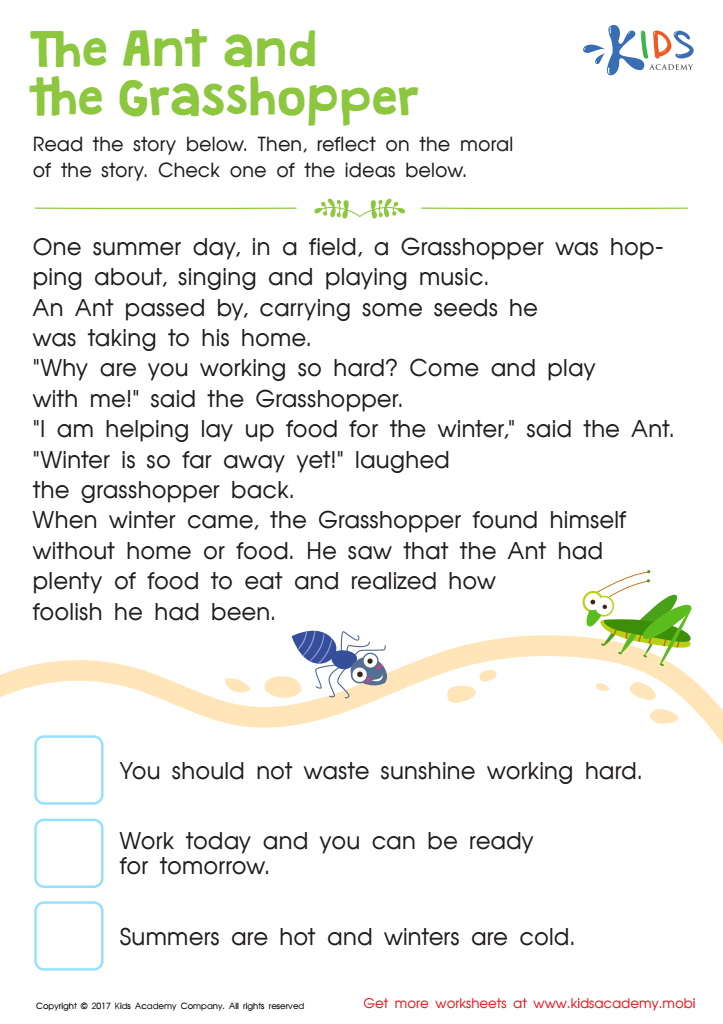
The Ant and The Grasshopper Printable
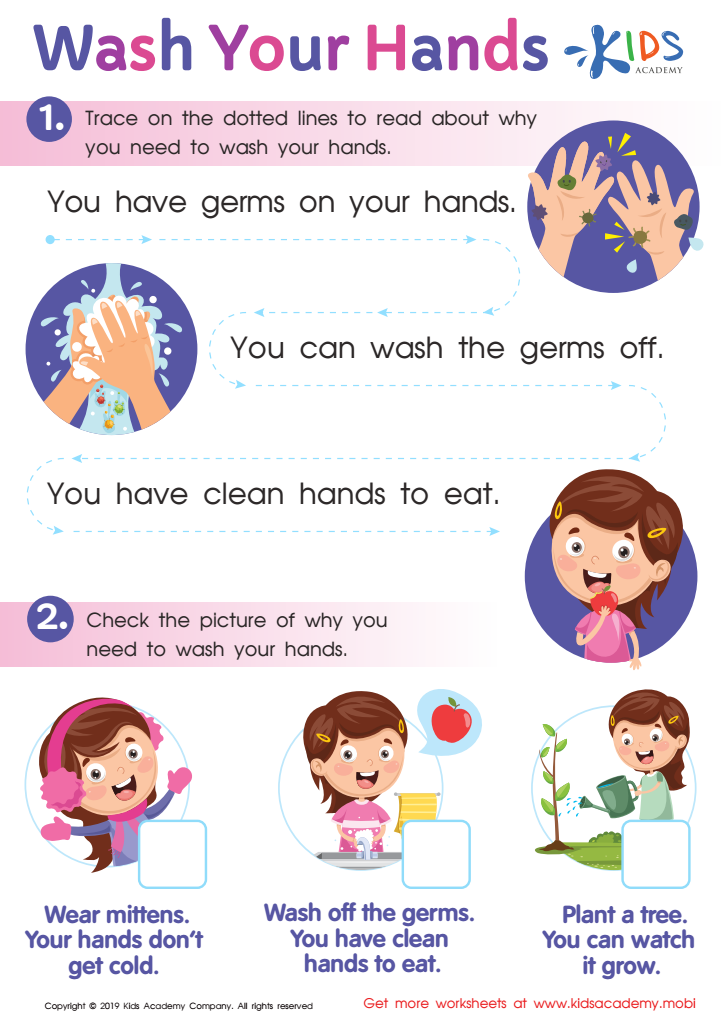
Wash Your Hands Worksheet
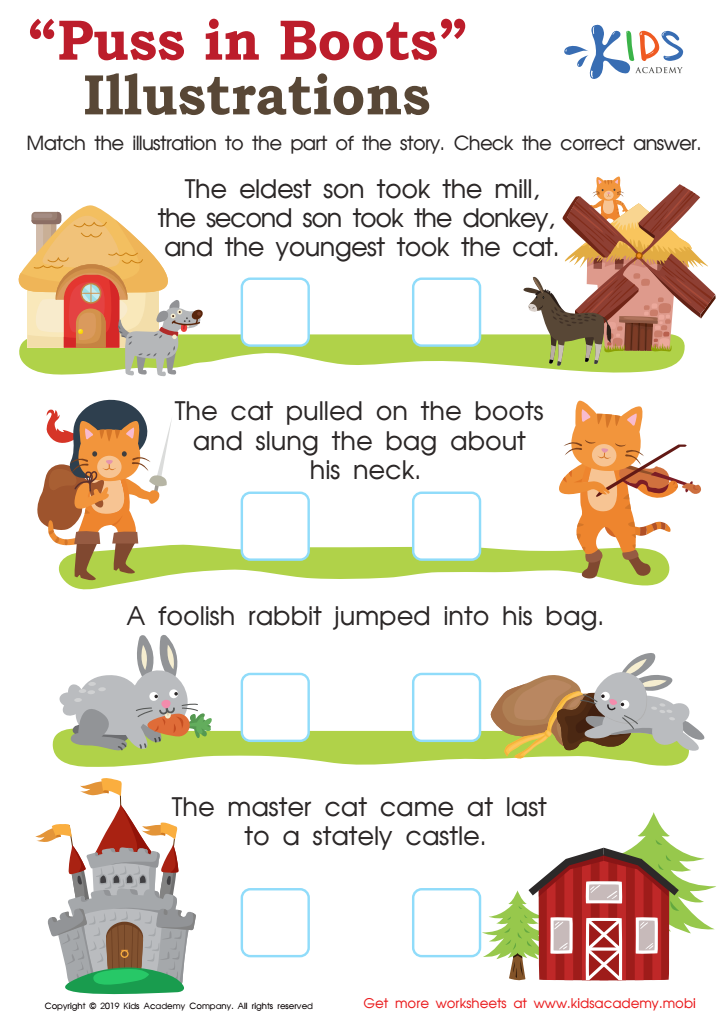
Puss in Boots Illustrations Worksheet





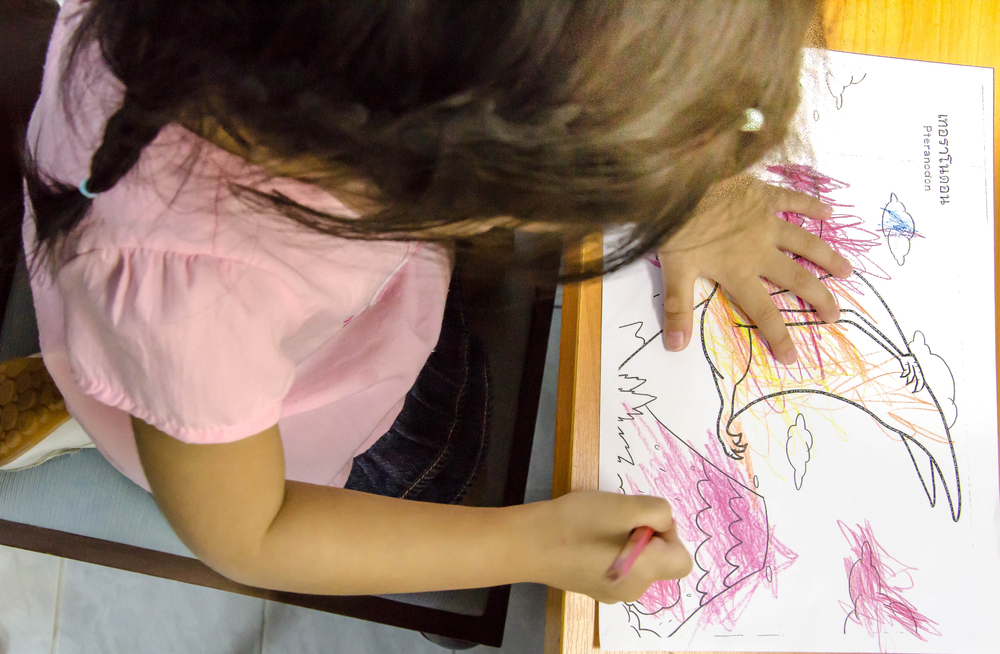


Visual interpretation skills are crucial for children aged 4-7 as they lay the foundation for learning and cognitive development. During these formative years, children begin to process and interpret visual information, which aids in their understanding of the world around them. Engaging with visual materials—such as pictures, diagrams, and illustrations—helps them develop critical thinking and analytical skills.
For parents and teachers, prioritizing visual interpretation promotes creativity and self-expression. By encouraging children to express their ideas through drawing and visual storytelling, adults can nurture their imaginations and encourage a lifelong love of learning. These skills are essential for literacy as well; being able to decode pictures, graphs, and symbols directly supports reading and writing development.
Moreover, visual interpretation fosters problem-solving abilities. Children learn to analyze information, identify patterns, and draw conclusions, vital skills for later academic success. This ability also extends to social contexts; recognizing visual cues in peer interactions is key to developing empathy and social skills.
Ultimately, parents and teachers should care about nurturing visual interpretation skills because they empower children to engage fully with their environment, enhancing both learning and overall developmental outcomes essential for their future growth.








