Logical Reasoning Normal Addition and Subtraction Word Problems Worksheets for Ages 4-7
4 filtered results
-
From - To
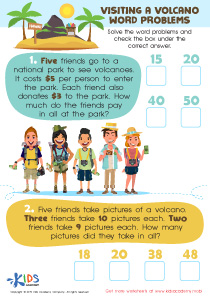
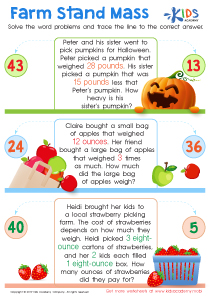
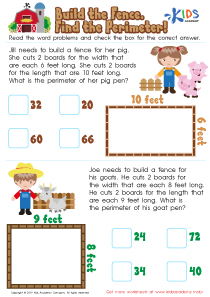
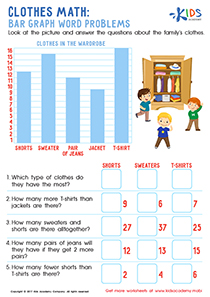
Enhance your child’s mathematical skills with our engaging Logical Reasoning Normal Addition and Subtraction Word Problems Worksheets, designed for ages 4-7. These worksheets foster critical thinking as children solve real-world problems involving addition and subtraction in fun, relatable situations. Each activity encourages logical reasoning and problem-solving abilities, helping young learners connect math to everyday life. Our carefully crafted exercises make learning enjoyable and interactive, ensuring that your child builds a strong foundation in math concepts. Perfect for classroom or home learning, these worksheets provide a seamless blend of education and enjoyment, empowering children to become confident math thinkers. Explore now!
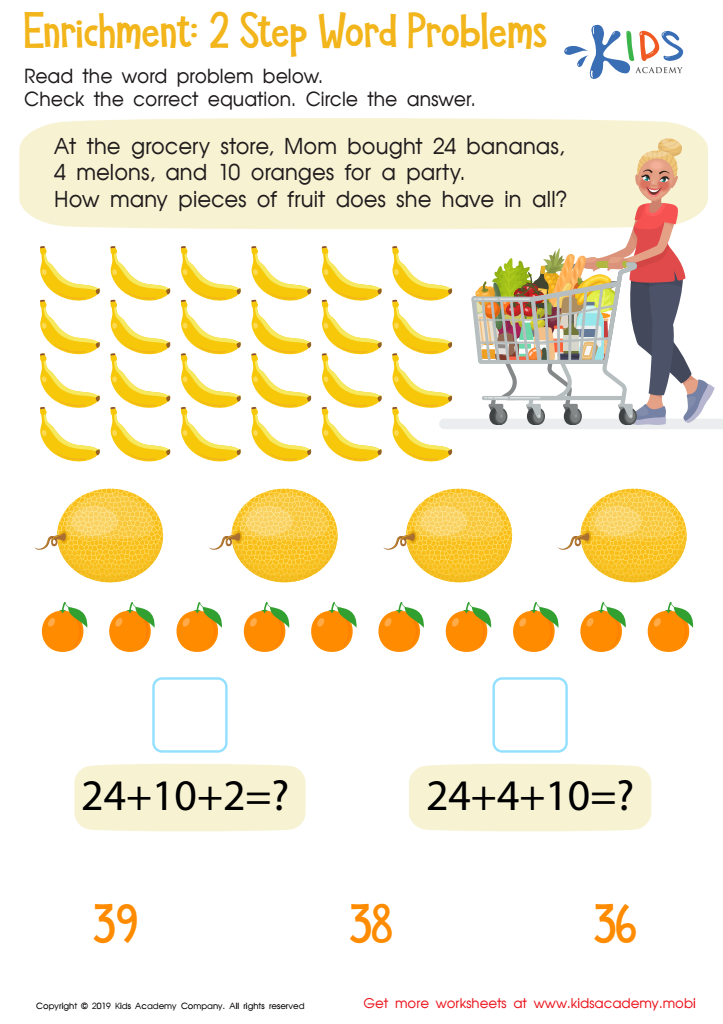
Enrichment -2 Step Word Problems Worksheet
 Assign to My Students
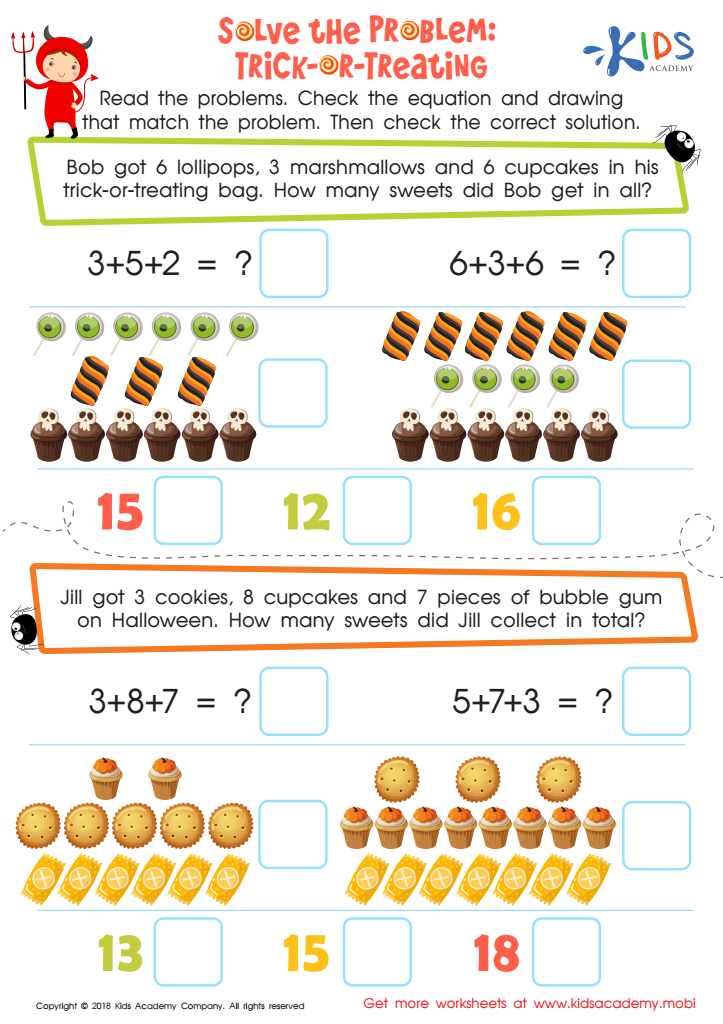
Solve the Problem: Trick–or–treating Worksheet
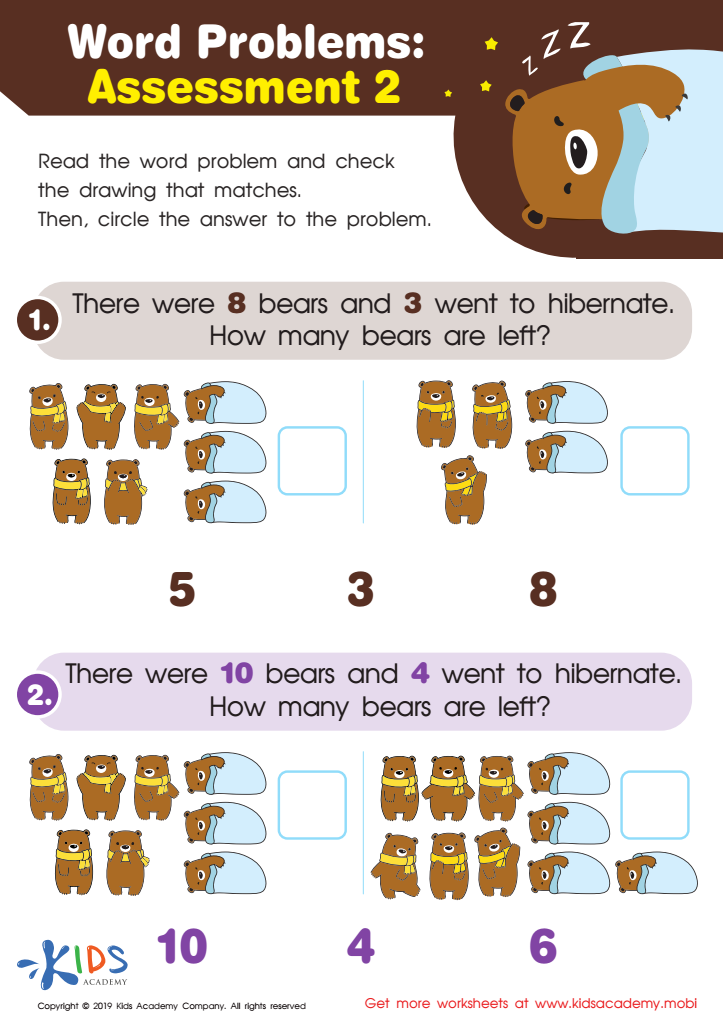
Word Problems: Assessment 2 Worksheet
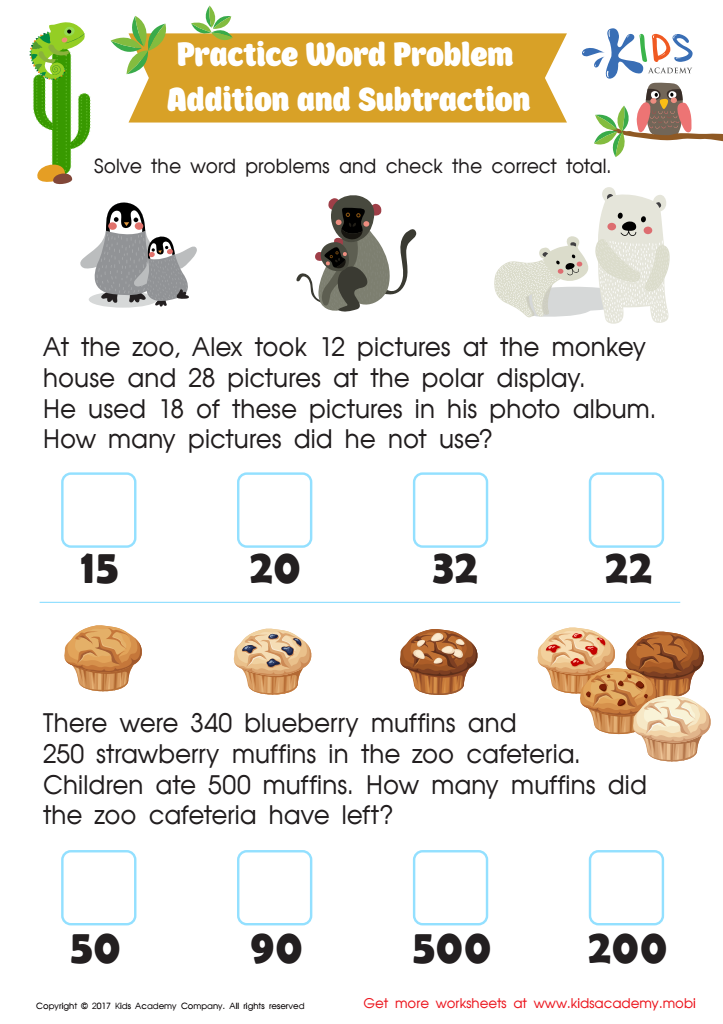
Addition and Subtraction: Word Problems Worksheet








Parents and teachers should care about Logical Reasoning Normal Addition and Subtraction Word Problems for children aged 4-7 because these foundational skills are crucial for developing critical thinking and problem-solving abilities. At this early stage, children learn to understand the relationship between numbers and develop their mathematical literacy. Engaging with word problems enhances their logical reasoning and allows them to visualize and process information in a structured manner.
Additionally, tackling these problems helps improve language skills as children must comprehend and interpret the scenario presented. This aligns math with literacy, fostering an integrated approach to learning. Practicing these problems also boosts a child's confidence in tackling challenges, preparing them for more complex mathematical concepts in the future.
Moreover, logical reasoning through word problems encourages collaboration among peers, promoting social interaction and communication skills. Children learn to express their thought processes clearly, which is essential in both academic and real-world situations. Ultimately, an early foundation in addition and subtraction through logical reasoning cultivates a mindful and enthusiastic attitude toward learning math, equipping young learners with competencies that extend well beyond the classroom.