Visual perception Normal Addition & Subtraction Worksheets for Ages 4-7
3 filtered results
-
From - To
Enhance your child's math skills with our Visual Perception Normal Addition & Subtraction Worksheets, specifically designed for ages 4-7. These engaging worksheets help young learners develop essential visual perception skills while mastering basic arithmetic concepts. With colorful illustrations and age-appropriate exercises, children will strengthen their ability to recognize numbers and solve simple addition and subtraction problems. Our carefully crafted activities promote critical thinking and boost confidence in math, making learning fun and interactive. Explore our collection today and watch your child thrive in their mathematical journey! Perfect for homeschooling or classroom use, these worksheets are a vital resource for foundational math skill development.
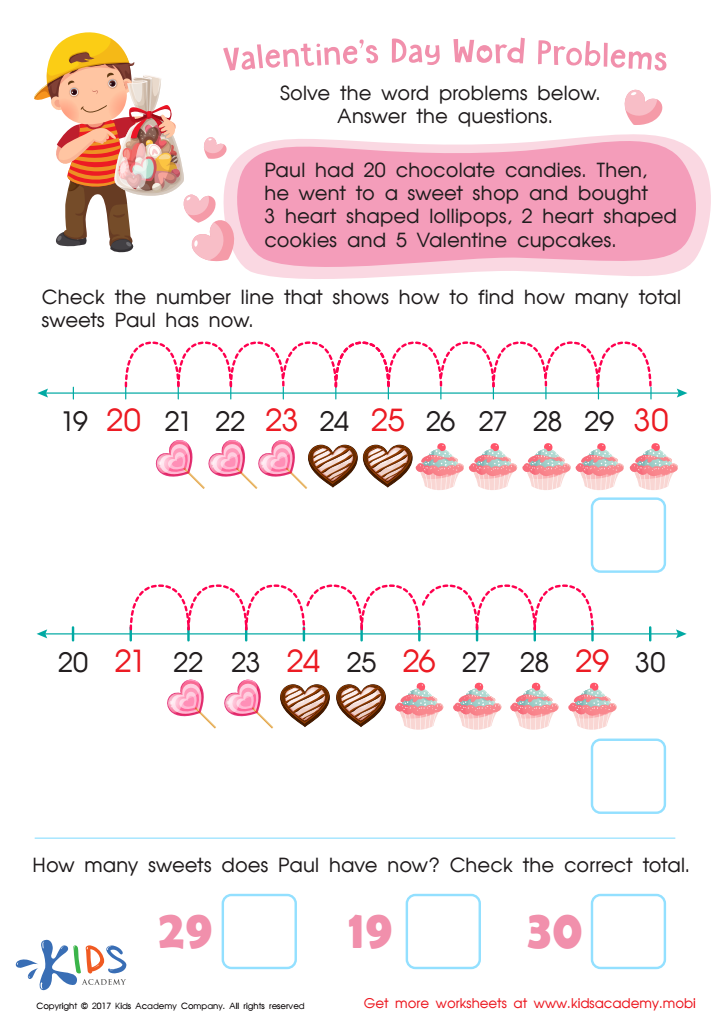
Valentines Day 2 Printable
 Assign to My Students
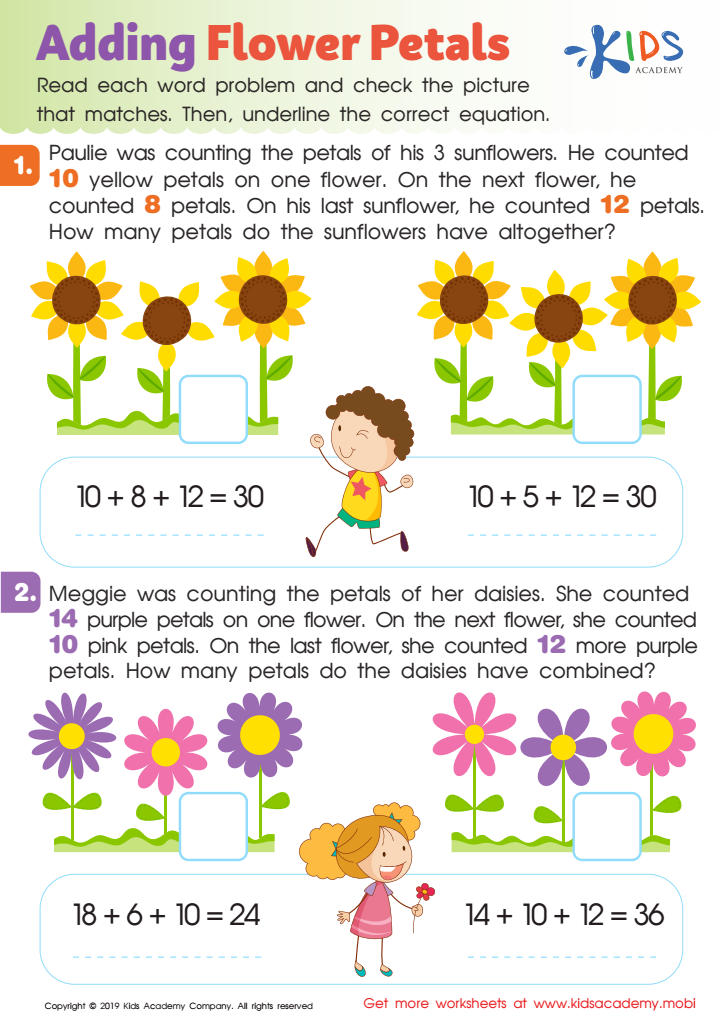
Adding Flower Petals Worksheet

Find 10 Barrels Worksheet








Parents and teachers should care deeply about visual perception skills in the context of normal addition and subtraction for children aged 4-7 because these foundational abilities greatly impact a child's overall learning and development. Visual perception involves the ability to interpret and make sense of visual information—a critical skill for math.
In early childhood, mastering number recognition, counting, and basic math operations relies on visual understanding. Children must visualize concepts like quantity, arrangement, and spatial relationships to grasp addition and subtraction. Additionally, visual perception aids in recognizing patterns and shapes, crucial for problem-solving and critical thinking.
Addressing visual perception not only facilitates math skills but also enhances overall cognitive development. A child who struggles to accurately perceive visual information may face challenges in various subjects, potentially leading to frustration and a lack of confidence. Engaging in activities that promote visual perception—like puzzles and games—can help bolster both mathematical ability and broader academic skills.
Ultimately, fostering strong visual perception lays the groundwork for advanced learning and promotes a positive attitude towards math, setting children up for future success both in school and life. Therefore, parents and teachers should actively engage in supporting and developing these essential skills.








