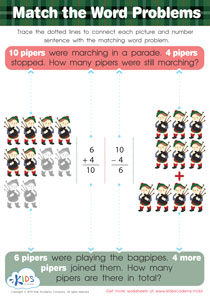
Counting practice Normal Addition Worksheets for Ages 4-7
3 filtered results
-
From - To
Encourage early math skills with our Counting Practice Normal Addition Worksheets designed for ages 4-7. These engaging, printable activities help young learners master basic addition through fun and interactive exercises. Perfect for reinforcing classroom lessons or providing extra practice at home, our worksheets aim to build a strong mathematical foundation. With vibrant illustrations and simple, clear instructions, children will enjoy learning to count and add in an exciting, enjoyable way. Support your child's educational journey by making addition practice both effective and entertaining. Explore our variety of kid-friendly worksheets to ensure math success!
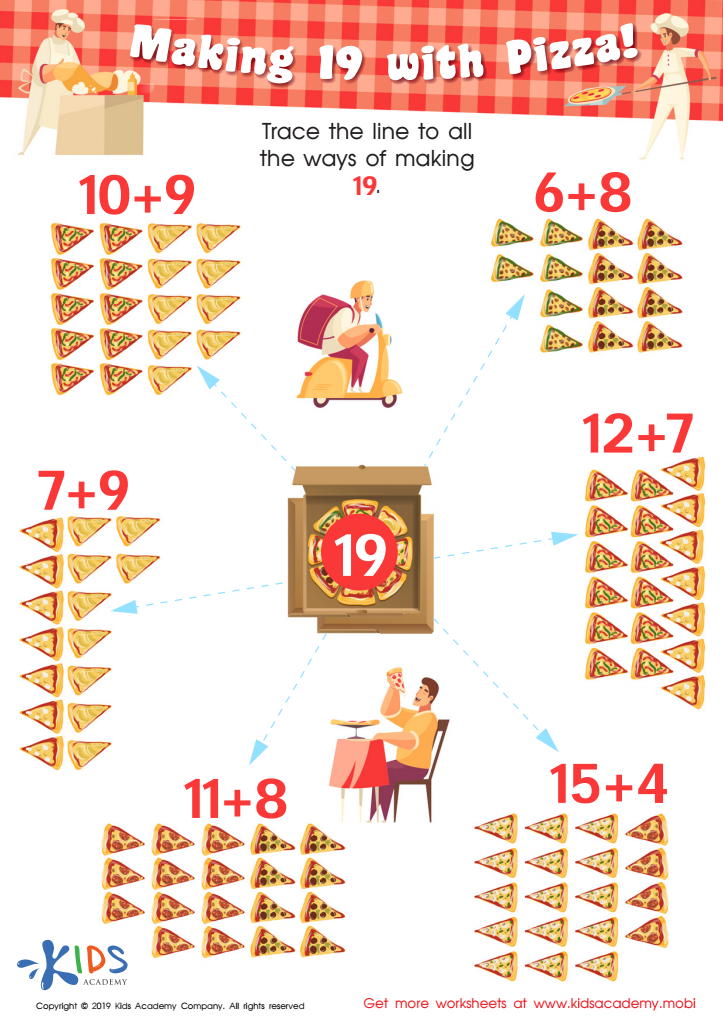
Making 19 with Pizza! Worksheet
 Assign to My Students
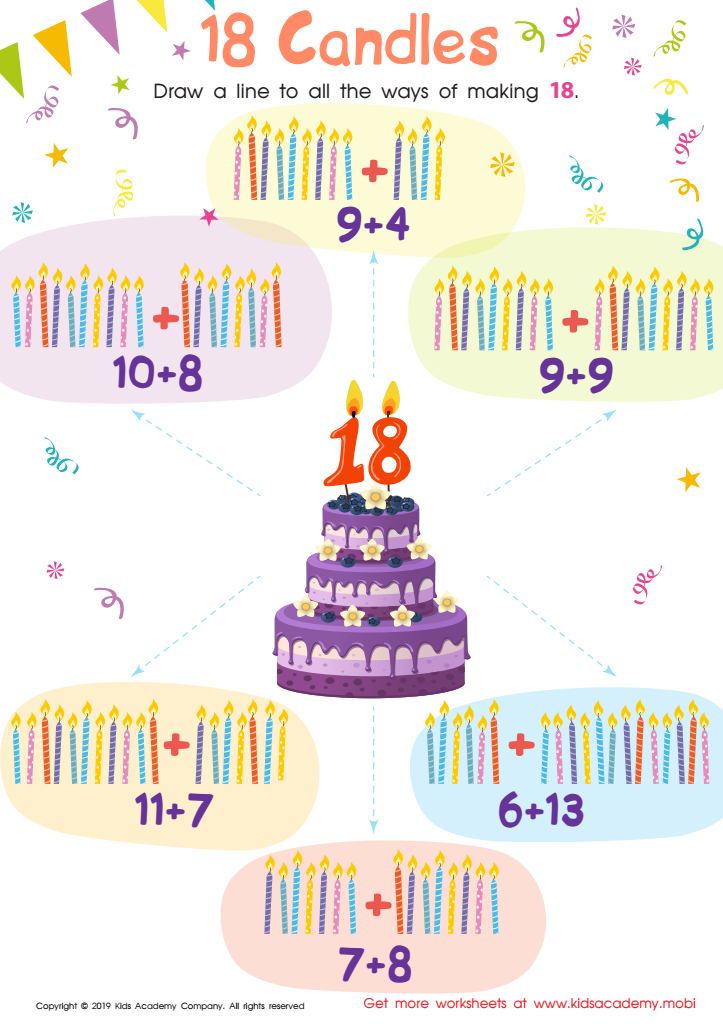
18 Candles Worksheet
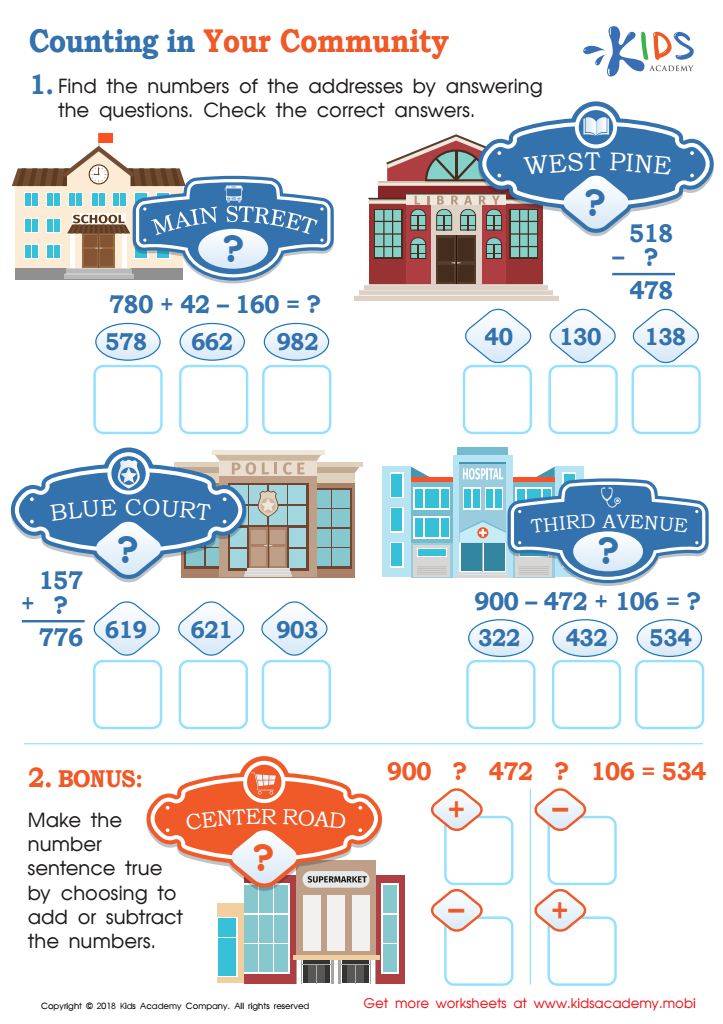
Counting in Your Community Worksheet








Counting practice and normal addition for children aged 4-7 serve as foundational pillars for their future mathematical understanding. Parents and teachers should prioritize these activities because they significantly impact a child's cognitive development and lifelong learning. Counting acts as the child's first introduction to numbers and helps them understand the sequence and the concept of quantities. This early exposure enhances number sense, a critical building block for more advanced mathematical concepts.
Engaging young learners in normal addition bolsters their problem-solving abilities and analytical thinking. By learning to add numbers, children start recognizing patterns, understanding number relationships, and enhancing their memory and concentration skills. These fundamental skills are not only crucial for mathematics but also benefit reading and comprehension abilities.
Moreover, consistent practice in counting and addition lays the groundwork for confidence in math. Positive early experiences with math can lead to a positive attitude toward the subject, mitigating math anxiety and establishing a "can-do" mindset. Teachers and parents play an essential role by creating supportive, playful environments and presenting math lessons through fun, engaging activities that make learning both enjoyable and effective. Early proficiency in these basic skills ensures children are well-prepared for more complex mathematical challenges as they progress through their education.