Matching skills Normal Geometry Worksheets for Ages 4-7
3 filtered results
-
From - To
Explore our collection of Matching Skills Normal Geometry Worksheets designed for children ages 4-7. These engaging and educational worksheets help young learners develop essential geometry skills through fun matching exercises. With a focus on shapes, patterns, and spatial awareness, our worksheets provide a foundational understanding of geometry concepts in an enjoyable format. Perfect for early childhood education, these activities support cognitive development and fine motor skills. Ideal for classroom and home use, our printable worksheets make learning geometry an exciting adventure for your little ones. Visit Kids Academy now to download these valuable educational resources!
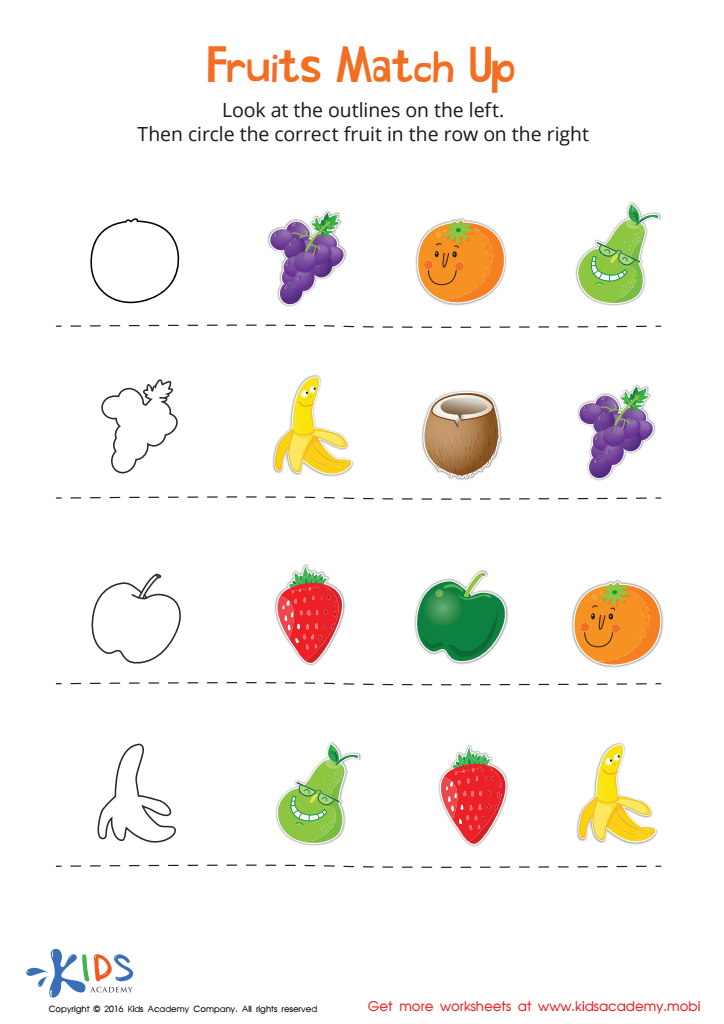
Fruits Match Up Worksheet
 Assign to My Students











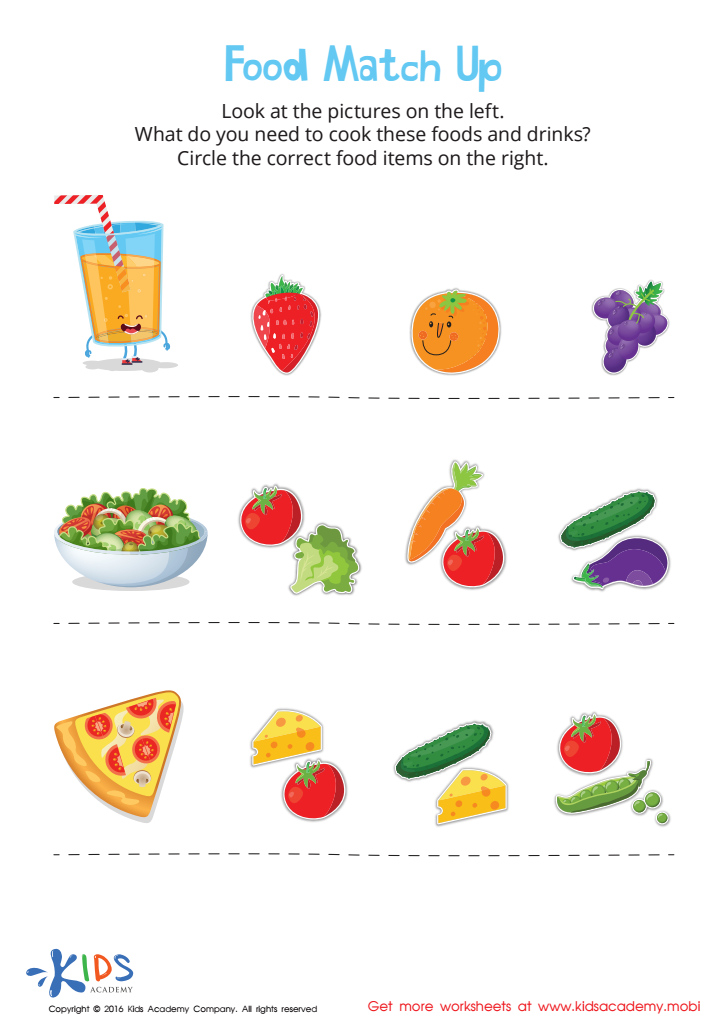
Food Match Up Worksheet
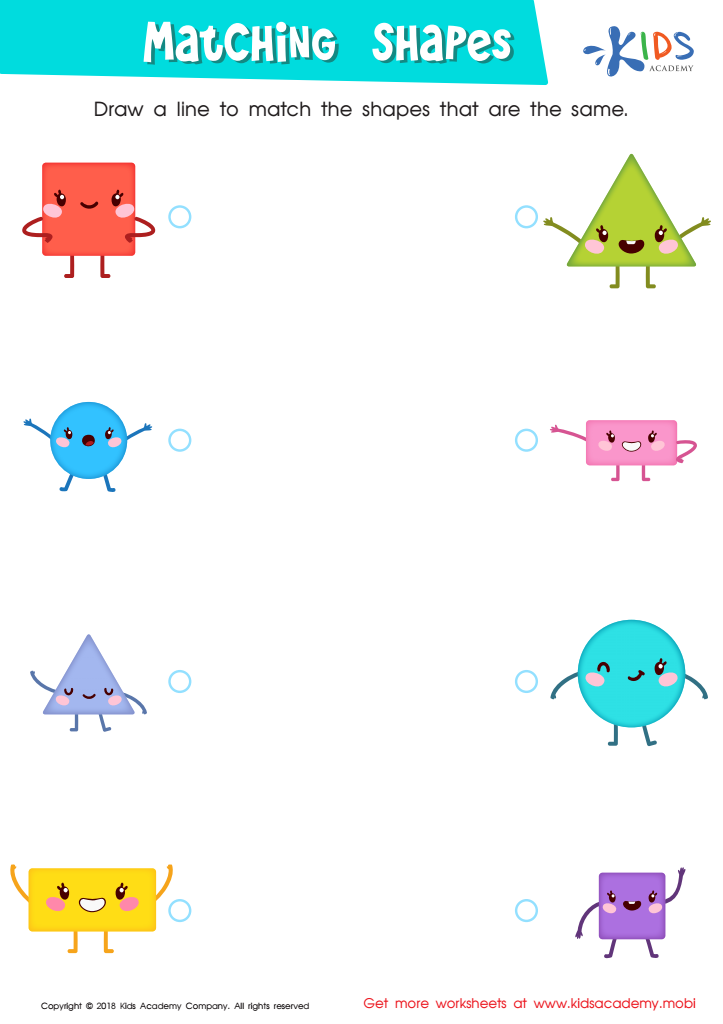
Matching Shapes Worksheet








Young children between the ages of 4-7 are at a crucial developmental stage where they constantly absorb new concepts and skills. Matching skills in normal geometry – such as recognizing and pairing shapes by their attributes – offer several benefits critical for early cognitive development.
Firstly, matching geometric shapes enhances cognitive abilities like attention to detail and problem-solving. Identifying similarities and differences between shapes fosters critical thinking, as children learn to categorize and differentiate between various forms. These skills are fundamental for academic progression and daily problem-solving.
Furthermore, matching exercises enhance visual-spatial intelligence. Understanding the relationship between shapes helps children mentally manipulate objects, paving the way for proficiency in subjects like mathematics, art, and even technology.
Socially, matching shapes can be a communal activity, encouraging teamwork and communication among peers. Excelling in these tasks can boost a child's confidence and motivate a love for learning.
Importantly, matching shapes also supports language development. As children describe, compare, and discuss shapes, they practice vocabulary and linguistic expression.
In essence, parents and teachers should pay attention to matching skills in normal geometry as it nurtures essential cognitive, social, and linguistic abilities. These foundational skills not only prepare children for future academic success but also equip them with critical life skills.








