Shape Recognition Normal Geometry Worksheets for Ages 4-7 - Page 2
26 filtered results
-
From - To
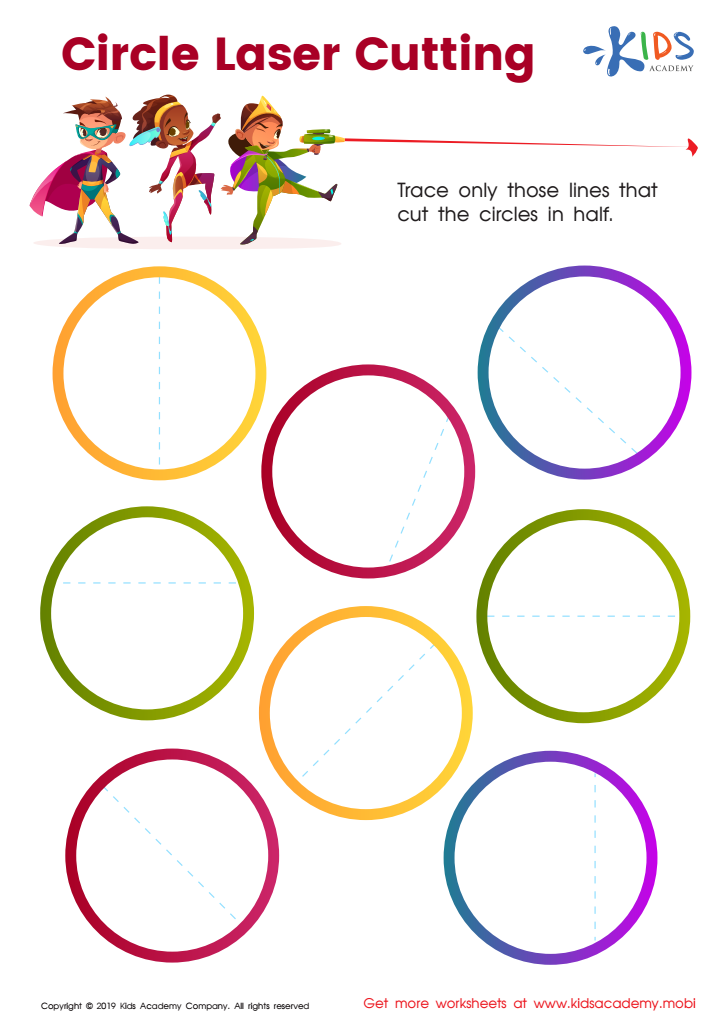
Circle Laser Cutting Worksheet
 Assign to My Students











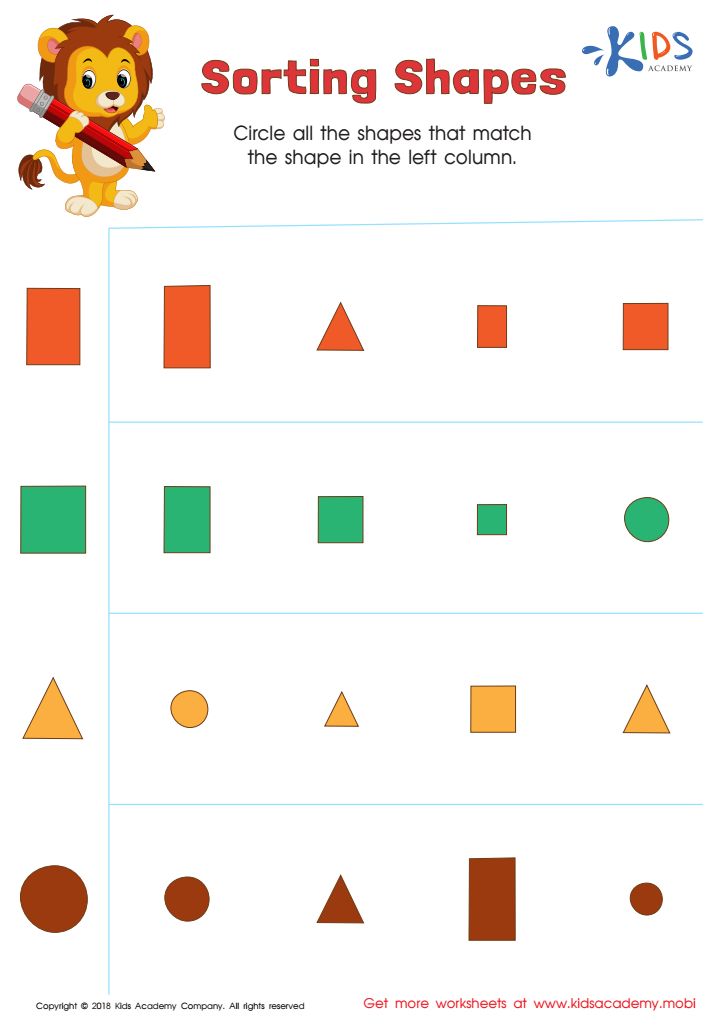
Sorting Shapes - Part 2 Worksheet








Shape recognition in early childhood, particularly for children aged 4 to 7, is crucial as it lays the foundational skills for future mathematical understanding and cognitive development. Advocating for normal geometry concepts, such as recognizing and classifying shapes, from an early age equips children with vital skills that transcend mathematics.
First, shape recognition enhances visual-spatial skills, which are essential for navigating the physical world and for tasks beyond geometry, such as reading and writing. When children identify and manipulate shapes, they develop critical thinking and problem-solving abilities. Second, mastering geometric concepts lays groundwork for advanced topics like measurement and spatial reasoning in later schooling, fostering robust mathematical literacy.
Furthermore, understanding shapes contributes to language development. It promotes vocabulary growth as children learn to describe, compare, and categorize shapes using specific terminology. This cognitive linking of visual elements with words enhances comprehension and expression.
Lastly, engaging children in geometric play fosters cooperation and social skills. Working with peers on shape-related activities nurtures communication, teamwork, and creativity. For these reasons, parents and teachers should recognize the importance of shape recognition and normal geometry as foundational elements in a child's educational journey, shaping confident, inquisitive learners who are well-prepared for future challenges.








