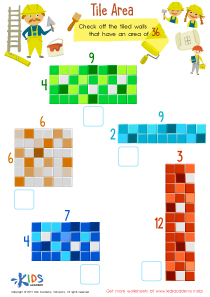
Developing counting skills Normal Numbers Worksheets for Ages 4-7
3 filtered results
-
From - To
Enhance your child's counting skills with our "Developing Counting Skills Normal Numbers Worksheets," designed specifically for ages 4-7. These engaging worksheets provide a fun and interactive approach to mastering numbers, helping young learners grasp essential math concepts through various activities. From counting objects to number recognition, each worksheet is crafted to boost confidence and comprehension. Ideal for home or classroom use, these resources promote critical thinking and problem-solving abilities while keeping children entertained. Empower your little ones with the foundational skills they need to succeed in math and beyond. Explore our collection and watch their counting skills flourish!
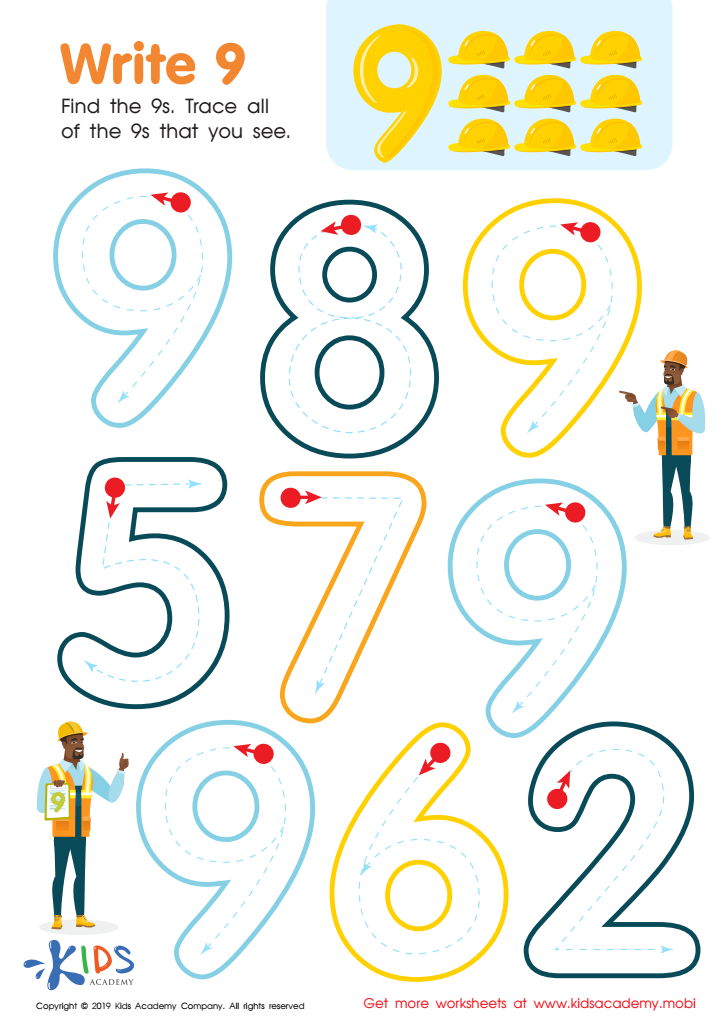
Write 9 Worksheet
 Assign to My Students
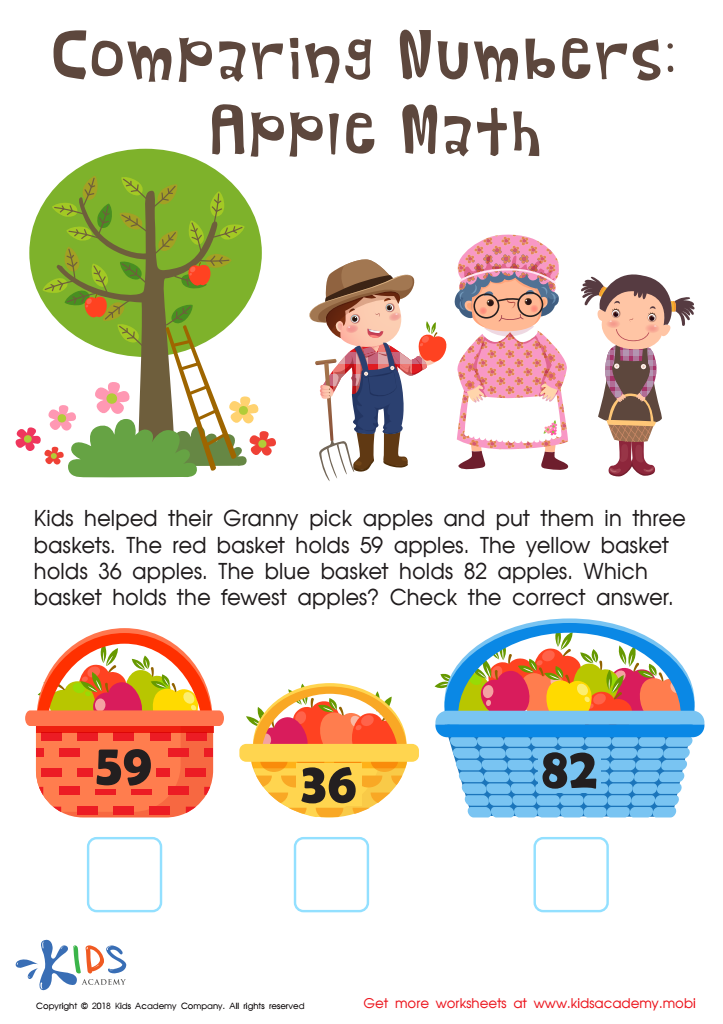
Apple Math Worksheet
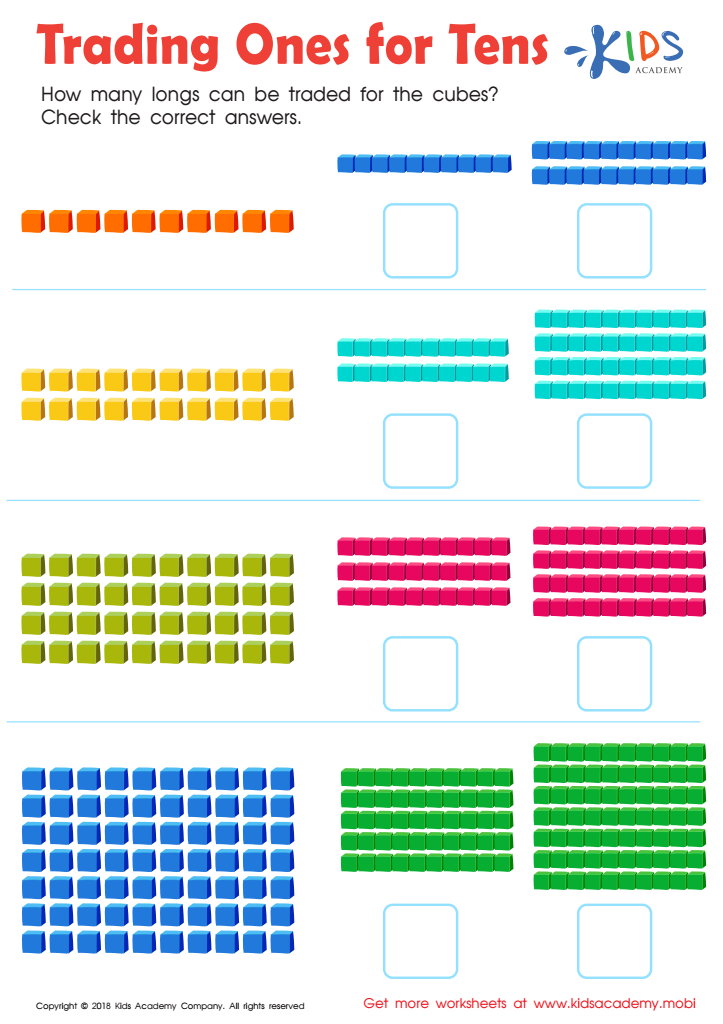
Trading Ones for Tens Worksheet: Part 2








Developing counting skills in young children aged 4-7 is essential for several reasons. First, counting forms the foundation for understanding mathematics. Mastering this basic skill helps children grasp more complex concepts, such as addition and subtraction, which are crucial for their academic journey. When children learn to count, they strengthen their numeracy skills, which influence their ability to solve problems and approach tasks logically.
Moreover, counting assists with cognitive development. It encourages critical thinking and enhances memory through activities like counting objects, which requires focus and accuracy. Additionally, early counting experiences promote confidence in children, helping them feel competent and ready to tackle more challenging math topics in the future.
Parents and teachers play a pivotal role in fostering a positive attitude toward numbers and math. Engaging children in counting games or everyday scenarios—such as counting items during grocery shopping—makes learning interactive and enjoyable. When educators recognize the importance of developing these foundational skills, they can create a supportive environment that encourages exploration and growth.
Ultimately, good counting skills lay the groundwork for a child’s ongoing academic success, empowering them for future learning opportunities both in and out of the classroom.