Basic subtraction skills Normal Math Worksheets for Ages 4-7
3 filtered results
-
From - To
Unlock your child's mathematical potential with our Basic Subtraction Skills Normal Math Worksheets, designed specifically for ages 4-7. These engaging worksheets provide a playful and interactive approach to learning subtraction, helping young learners grasp essential concepts through relatable examples and bright visuals. Each worksheet encourages practice in a fun way, reinforcing foundational math skills while building confidence. Ideal for both classroom settings and home learning, our worksheets cater to various learning styles, making subtraction accessible and enjoyable. Empower your child to master subtraction basics with our comprehensive resources and watch them excel in their math journey!
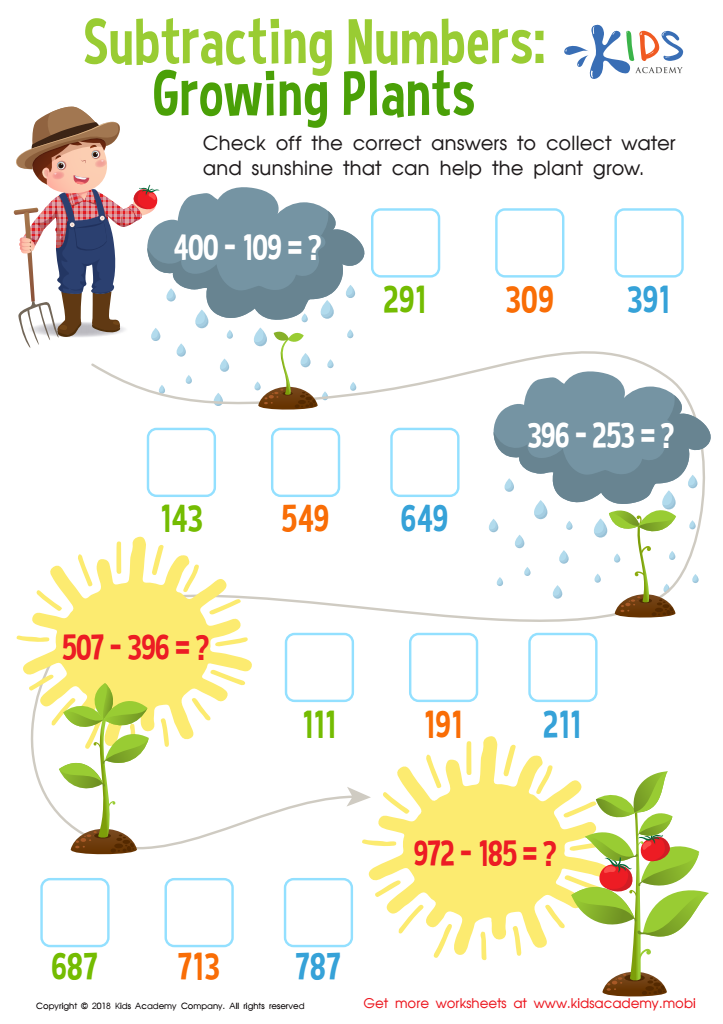
Subtracting Numbers: Growing Plants Worksheet
 Assign to My Students
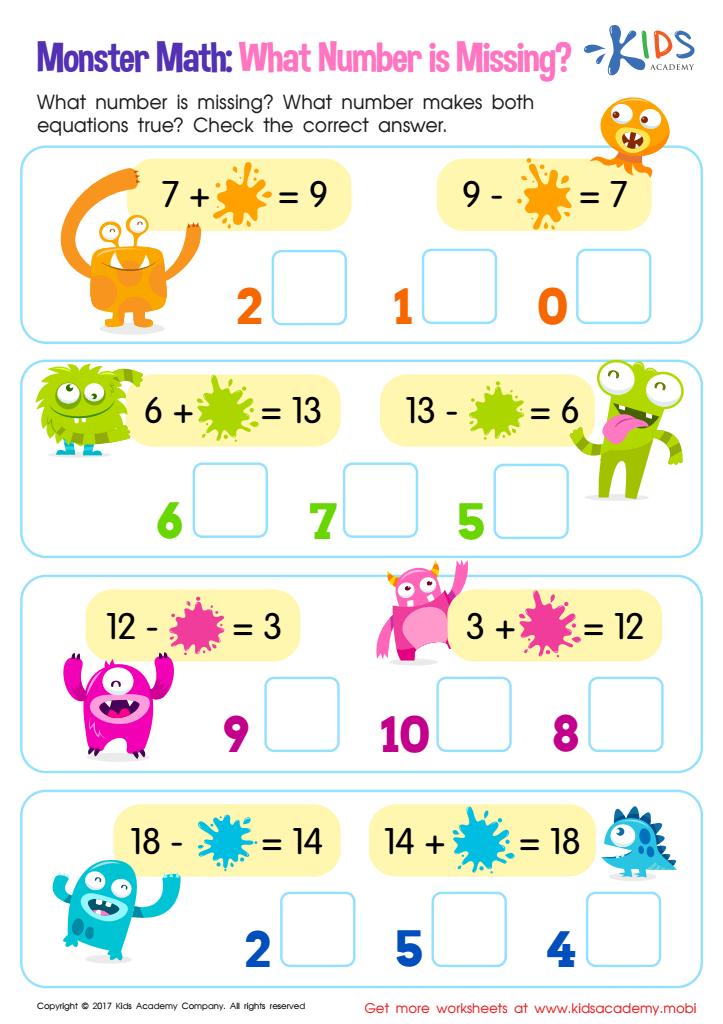
Missing Number: Monster Math Worksheet
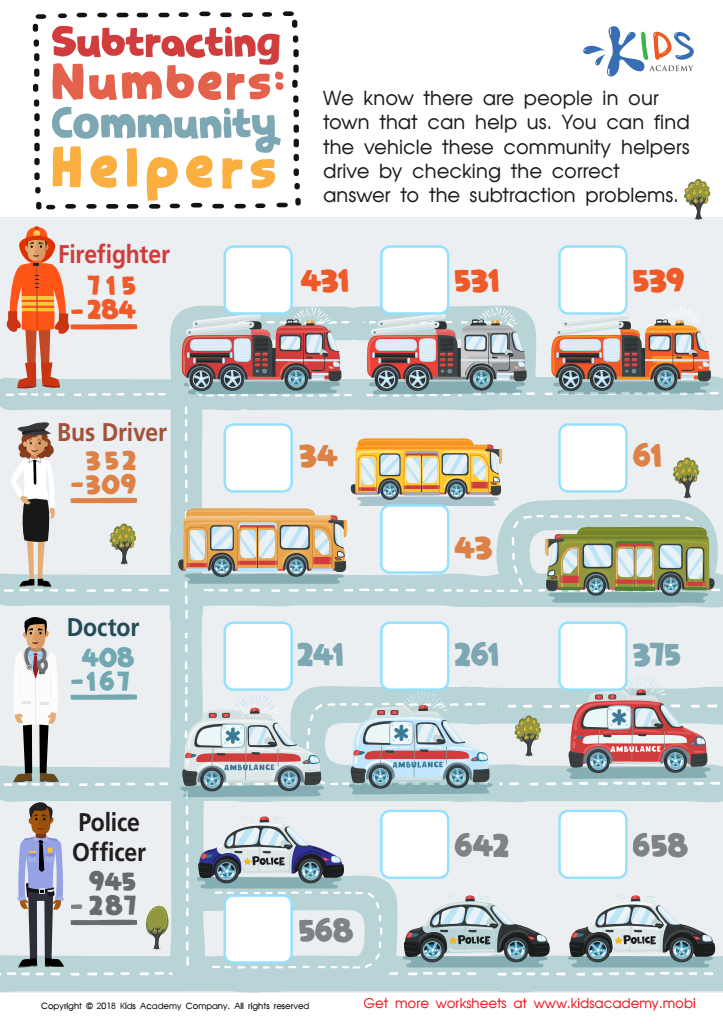
Subtracting Numbers: Community Helpers Worksheet







Basic subtraction skills form the foundation for a child's overall mathematical understanding and cognitive development, making it essential for parents and teachers to prioritize this learning for children aged 4-7. At this crucial developmental stage, children are beginning to explore numbers and engage with mathematical concepts, making basic subtraction an ideal starting point. Mastery of subtraction enhances number sense, helping children to understand relationships between numbers and develop critical thinking skills.
Subtraction skills are not just about numbers; they cleanly fit into real-life scenarios, such as sharing and comparing quantities, which makes learning relevant and engaging. When children grasp these concepts, they build confidence in their math abilities, setting a positive tone for future mathematical learning.
Furthermore, mastering basic subtraction helps nurture problem-solving skills and perseverance, as children learn to tackle challenges step by step. Parents and teachers can foster enthusiasm by using creative methods such as games and hands-on activities. A solid grasp of subtraction not only strengthens academic performance in math but also lays the groundwork for more complex operations as children progress through school. Investing in these fundamental skills leads to lasting benefits, ensuring that children are well-equipped for future learning experiences.








