Comparison Skills Normal Math Worksheets for Ages 4-7
3 filtered results
-
From - To
Introduce your child to essential math concepts with our Comparison Skills Normal Math Worksheets, tailored for ages 4-7. These engaging printable resources help young learners understand and practice comparing sizes, quantities, and numbers in a fun, interactive way. Our worksheets are designed to build a strong foundation in early math, featuring colorful illustrations and age-appropriate exercises. Perfect for preschool and early elementary students, these activities will boost your child’s confidence in math while encouraging critical thinking and problem-solving skills. Visit Kids Academy and unlock the potential of your child with our expert-crafted comparison worksheets.
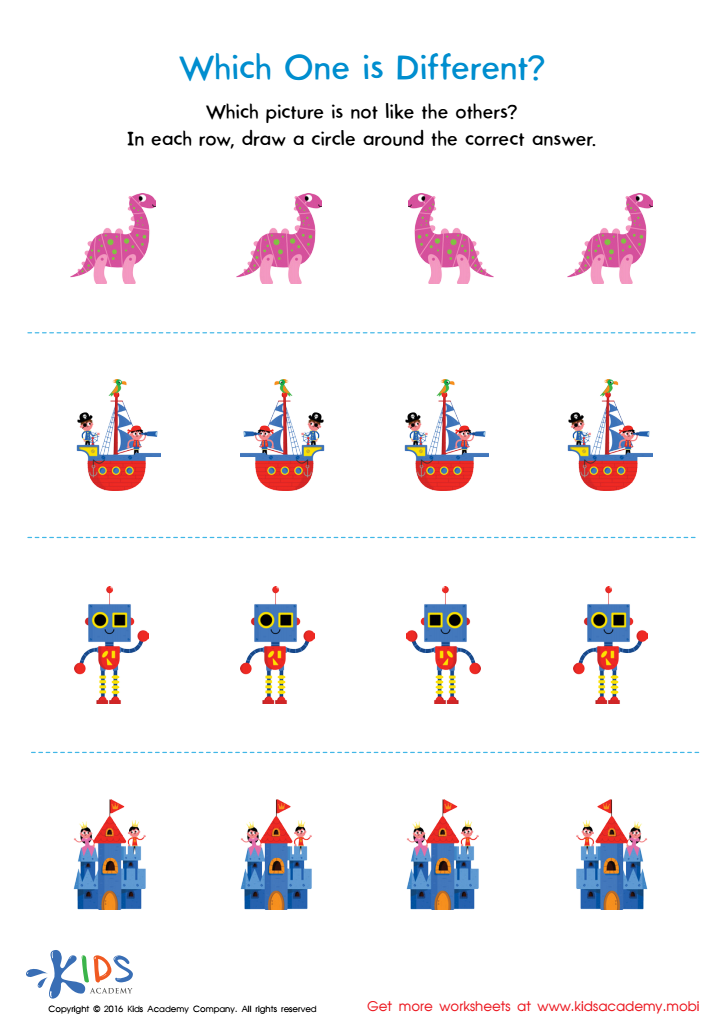
Which One Is Different Worksheet
 Assign to My Students
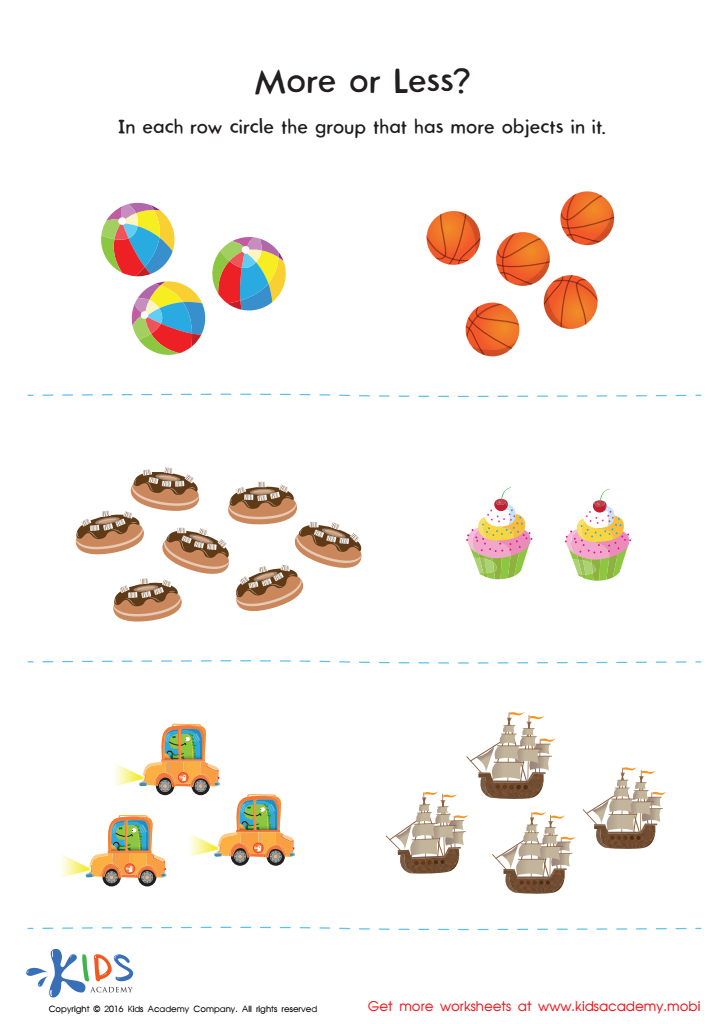
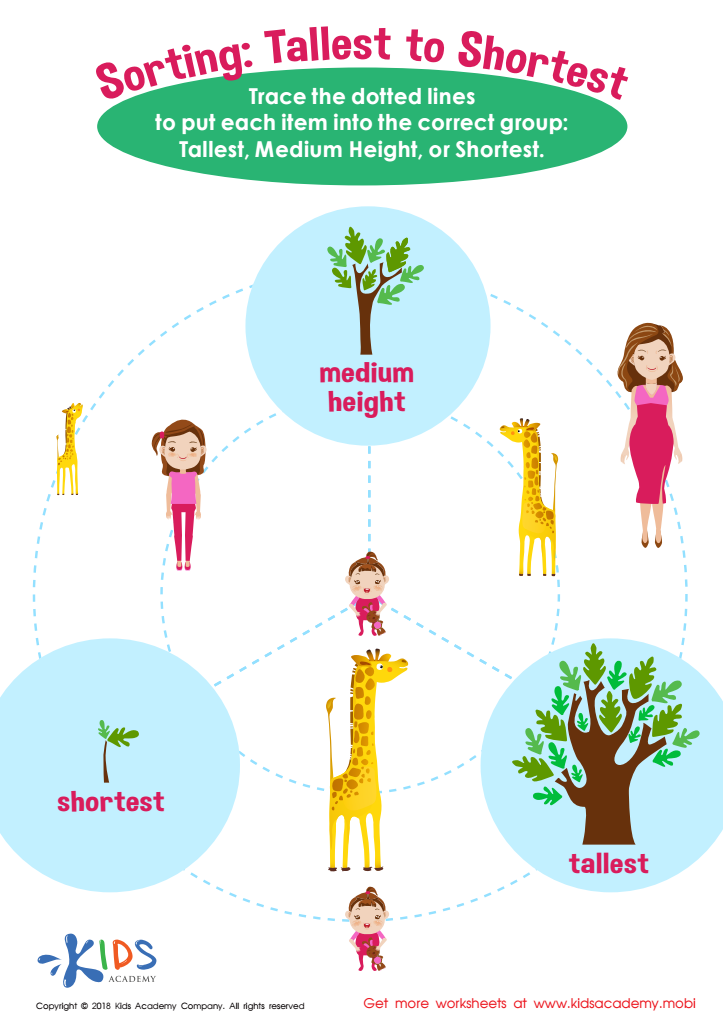
Sorting: Tallest to Shortest Worksheet






Comparison skills in early math are vital for children aged 4-7 as they lay a critical foundation for more complex mathematical understanding. At this stage, kids learn to compare quantities, sizes, lengths, and numbers, which builds their conceptual understanding of numerical relationships. When children grasp comparison skills, they can easily identify which of two numbers is bigger or smaller, understand simple patterns, and make basic estimations, fostering critical thinking and problem-solving abilities.
For parents, these skills are equally important outside school—shopping, cooking, or playing games involve comparing items and quantities. Encouraging these skills at home helps children integrate mathematical thinking into daily life, making learning practical and relatable.
Teachers benefit by incorporating comparison skills into lessons, ensuring that students are well-prepared for advanced math topics. With strong comparison abilities, kids are more confident and perform better in school, reducing anxiety around mathematics. Comparing skills also tie into other subjects like science and social studies, where children might compare measurements or data, broadening their learning and application horizons.
In summary, nurturing comparison skills from an early age equips children with essential tools for academic success and everyday decision-making, making it an area deserving of parents' and teachers' attention.








