Developing counting skills Normal Math Worksheets for Ages 4-7
3 filtered results
-
From - To
Enhance your child's counting skills with our engaging Normal Math Worksheets designed specifically for ages 4-7! These thoughtfully crafted activities provide a fun and interactive way to help young learners master essential counting concepts. Each worksheet features vibrant illustrations and varied exercises that focus on numbers, counting objects, and recognizing quantities. Whether you're at home or in the classroom, our resources encourage hands-on learning and cognitive development. Equip your little ones with the foundational math skills they need for future success. Explore our collection today and turn counting into a playful adventure that sparks curiosity and creativity!
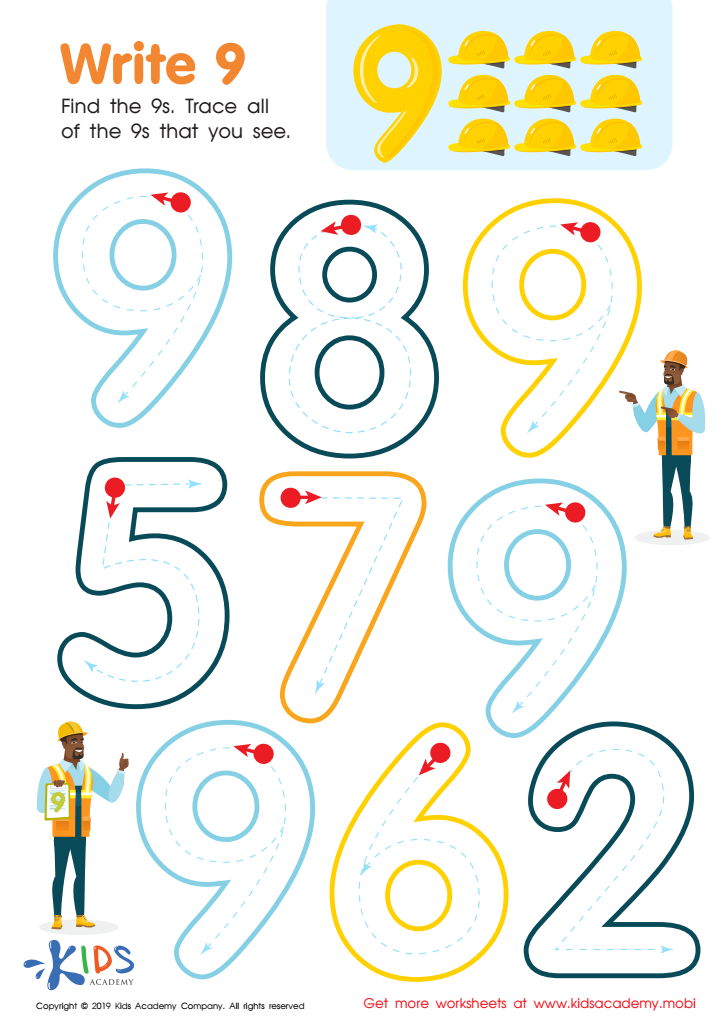
Write 9 Worksheet
 Assign to My Students
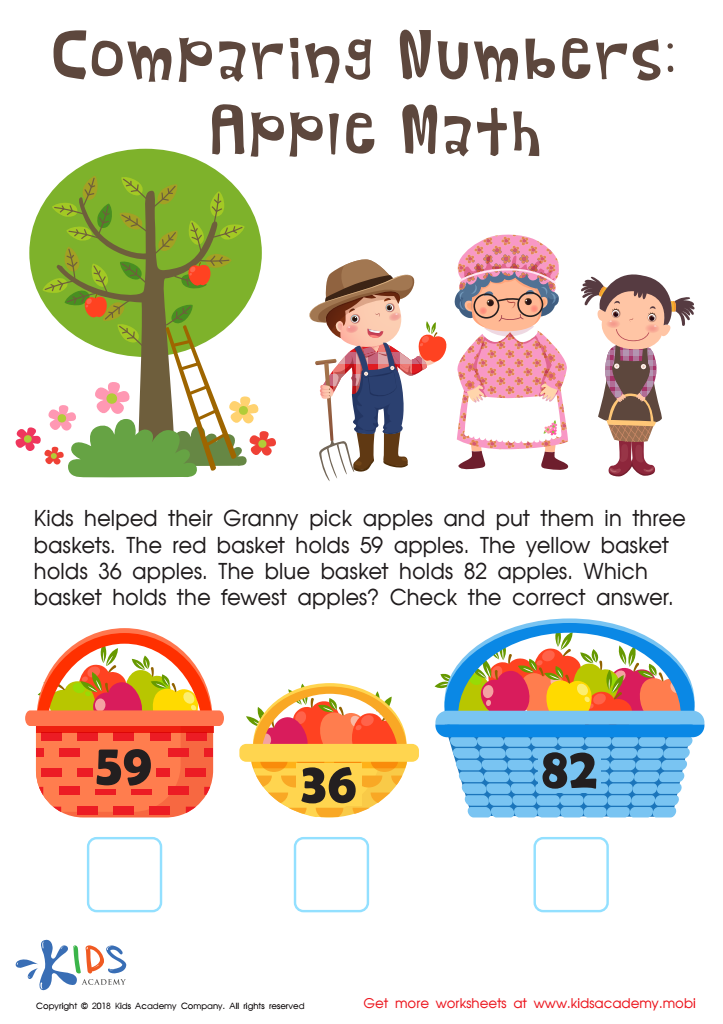
Apple Math Worksheet
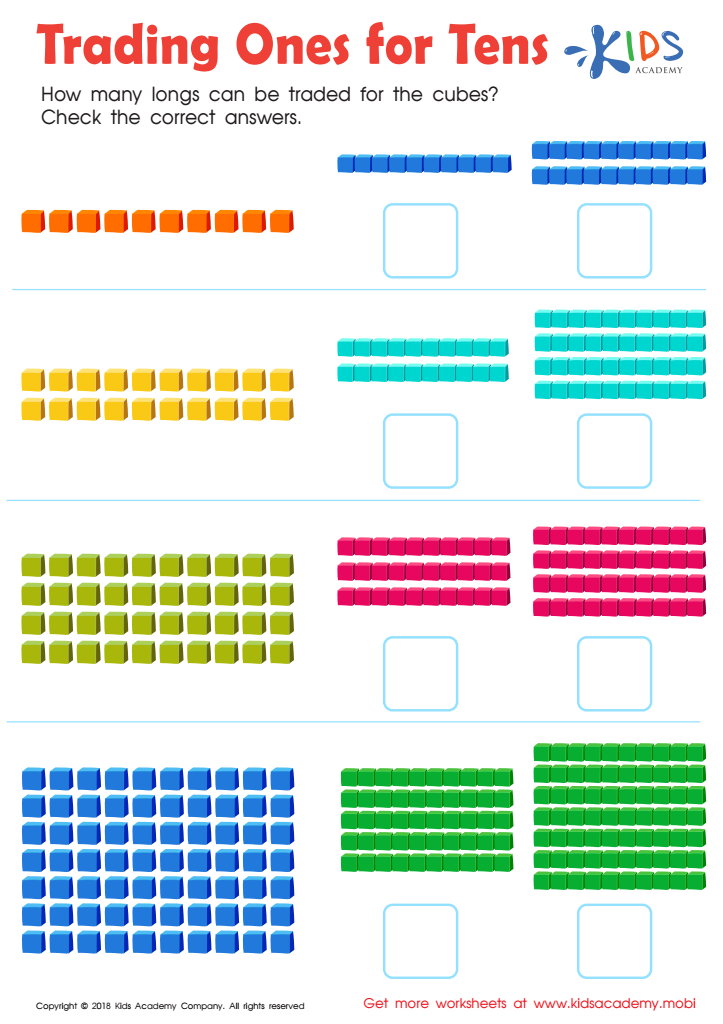
Trading Ones for Tens Worksheet: Part 2





.jpg)


Developing counting skills in children aged 4-7 is crucial for several reasons. Firstly, counting is foundational to understanding basic mathematical concepts. At this age, children are beginning to grasp number recognition, quantity comparison, and simple additions and subtractions. Mastery of counting lays the groundwork for more complex operations they will encounter in later grades.
Secondly, counting skills promote critical thinking and problem-solving abilities. Engaging in counting activities encourages children to analyze patterns and relationships between numbers, enhancing their cognitive development.
Furthermore, these skills have practical applications in everyday life. Count-related tasks such as organizing toys, sharing snacks, or even simple cooking measurements equip children with real-world skills that foster independence and confidence.
Parents and teachers can play a pivotal role by providing engaging counting activities through games, songs, and interactions, making learning fun. This nurturing approach helps instill a positive attitude toward math, making children more eager to learn as they progress.
In conclusion, investing in counting skills during these formative years not only boosts children’s mathematical abilities but also nurtures essential life skills and prepares them for academic success. It’s a vital step toward a future of confident learners and problem solvers.








