Mental math practice Normal Math Worksheets for Ages 4-7
5 filtered results
-
From - To
Welcome to our Mental Math Practice Worksheets page, tailored specifically for children aged 4-7! These engaging, printable worksheets are designed to boost your child's arithmetic skills and enhance their confidence in math. Featuring a variety of fun activities, students will practice essential addition, subtraction, and number recognition through interactive exercises. Our thoughtfully crafted materials encourage kids to think on their feet and develop quick problem-solving skills—all while keeping learning enjoyable. Ideal for both classroom and home use, these worksheets pave the way for a solid math foundation. Explore our collection of mental math worksheets today and watch your child's math ability soar!
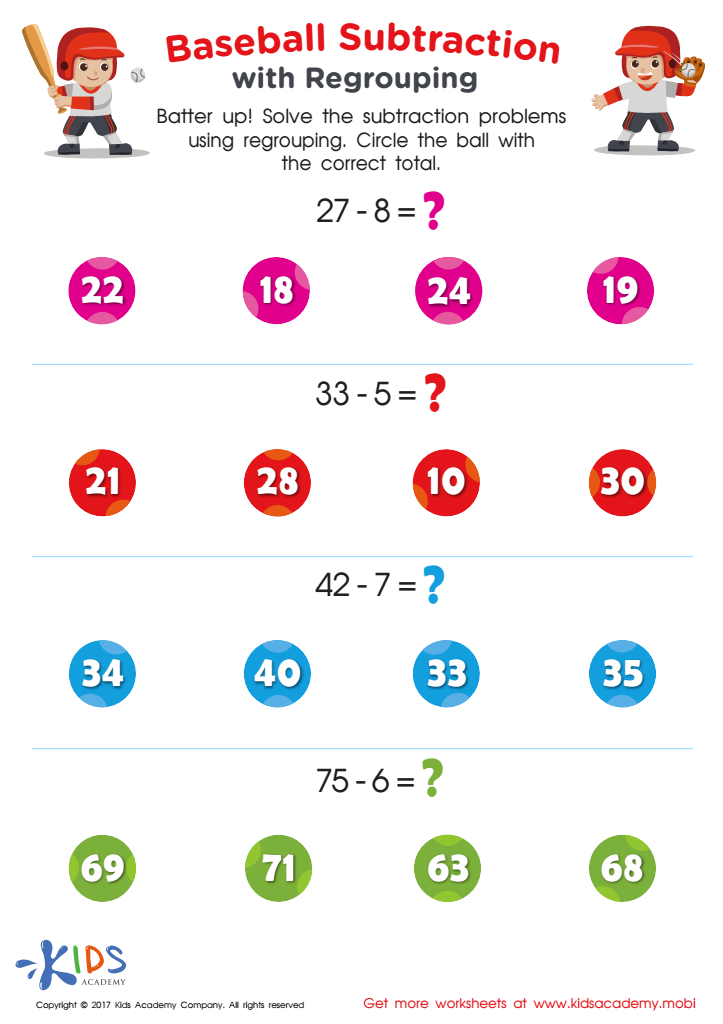
Subtraction With Regrouping for 2nd Grade Worksheet
 Assign to My Students
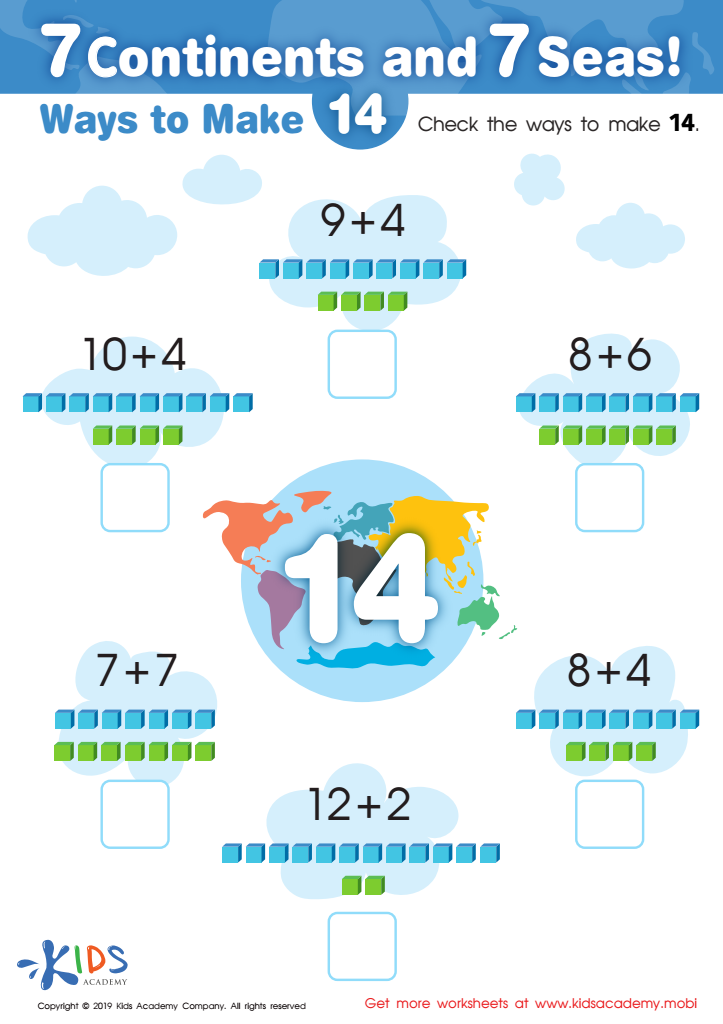
7 Continents and 7 Seas Worksheet
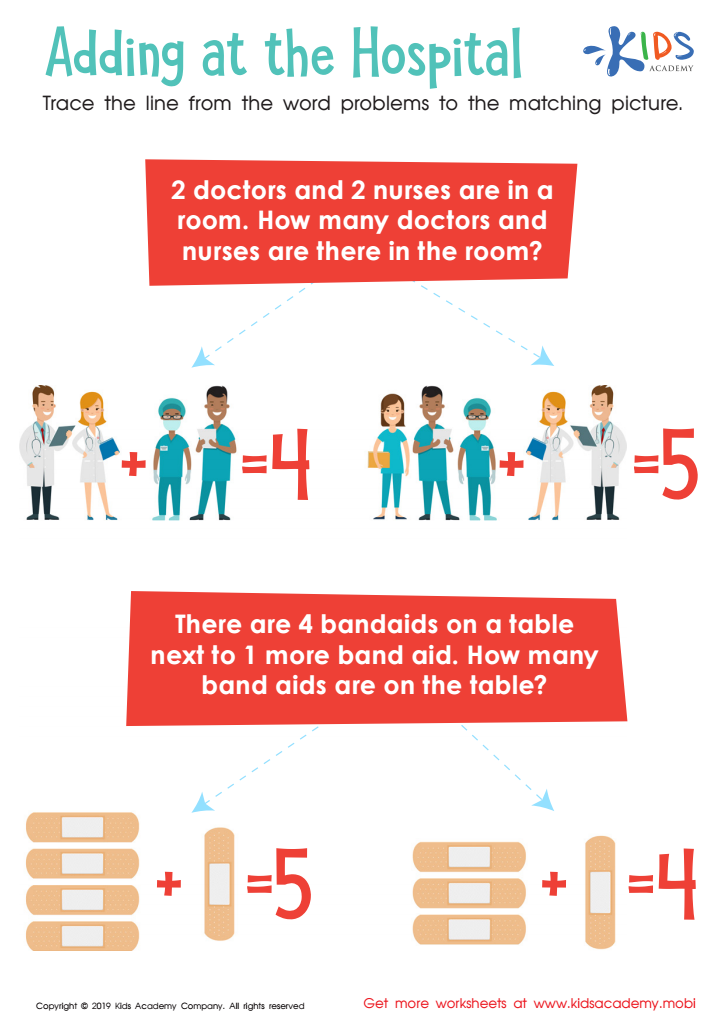
Adding at the Hospital Worksheet
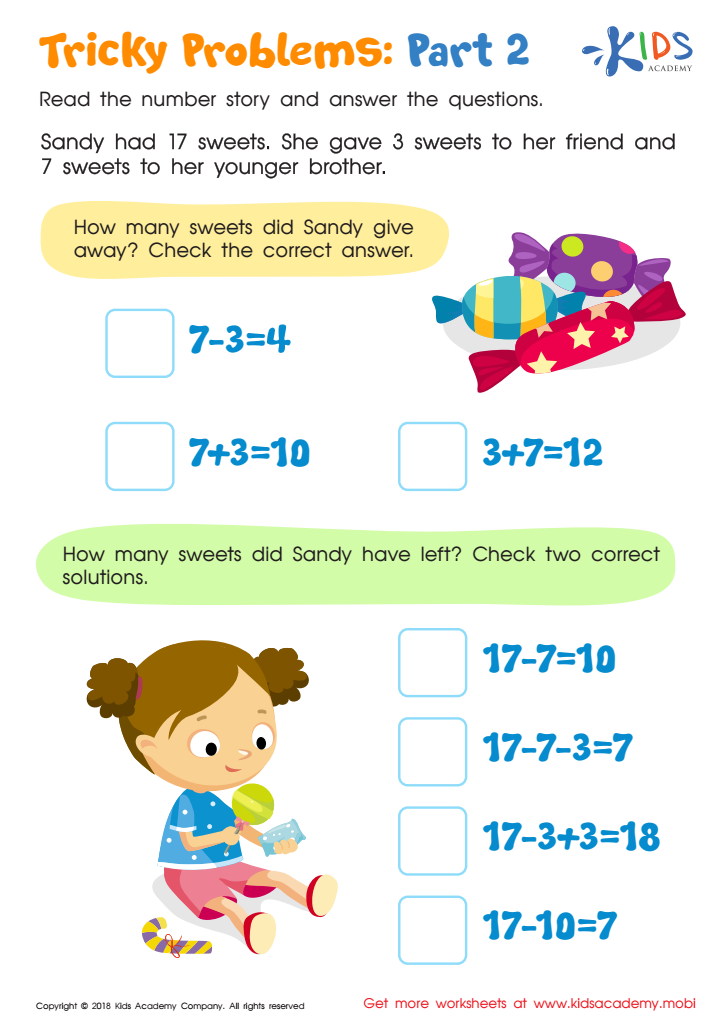
Tricky Problems Worksheet: Part 2
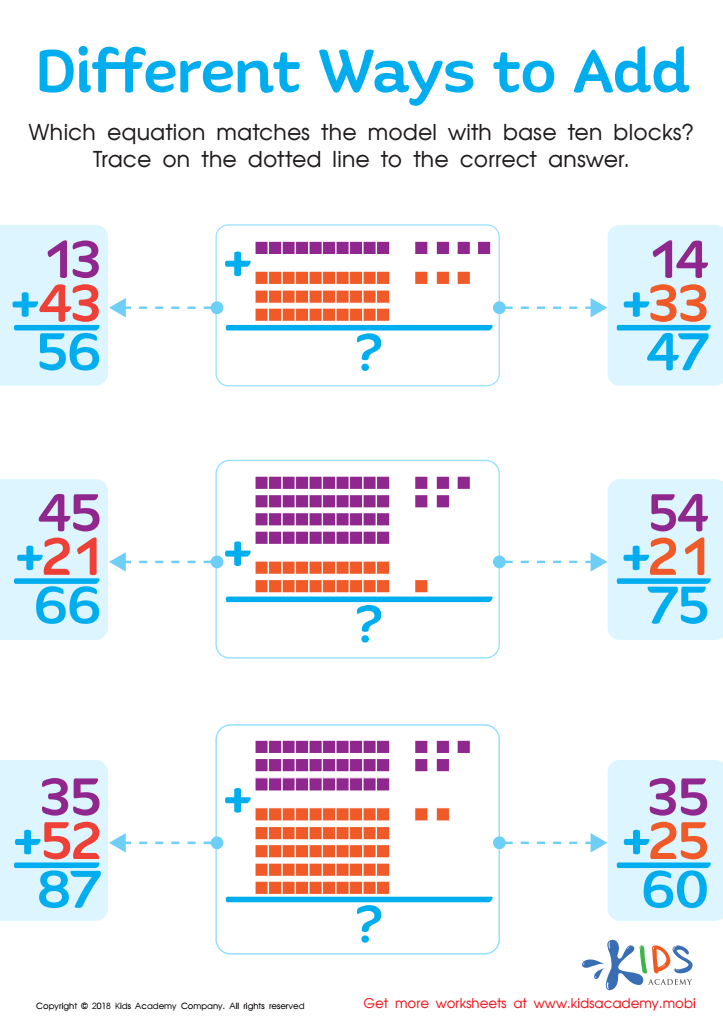
Different Ways to Add Worksheet








Mental math practice is crucial for children aged 4-7, and both parents and teachers should prioritize it for several reasons. First, developing mental math skills helps foster number sense, which is foundational for all future mathematical learning. Young children learn to recognize patterns, relationships, and basic operations without relying solely on calculators or pen-and-paper methods.
Second, mental math encourages critical thinking and problem-solving skills, as children learn to approach mathematical concepts flexibly and creatively. This enhances their confidence in tackling math problems and reduces anxiety associated with math lessons.
Furthermore, engaging children in mental math can be a fun and interactive process. Simple games and activities not only make math enjoyable but also strengthen communication and social skills as children share and collaborate on challenges.
Additionally, mental math practice boosts brain development. Studies show that regular mental exercises improve cognitive functions, such as memory, attention, and concentration, which benefit learning across all subjects.
Lastly, essential math practices developed during these early years lay the groundwork for advanced calculations later in life, promoting academic success. In nurturing a strong foundation in mental math, parents and teachers enable children to approach future mathematical concepts with confidence and enthusiasm.








