Number comparison Normal Math Worksheets for Ages 4-7
5 filtered results
-
From - To
Explore our engaging Number Comparison Math Worksheets, designed specifically for children ages 4-7. These worksheets help young learners develop essential math skills by comparing numbers using fun activities tailored to their age group. Featuring colorful graphics and interactive exercises, our worksheets encourage students to recognize greater and lesser values while boosting their confidence in numerical understanding. Ideal for classrooms or at-home learning, these resources simplify math concepts, making learning enjoyable and effective. Perfect for parents and educators seeking to enhance early math proficiency, our worksheets provide a strong foundation for future mathematical endeavors. Start the journey toward math mastery today!
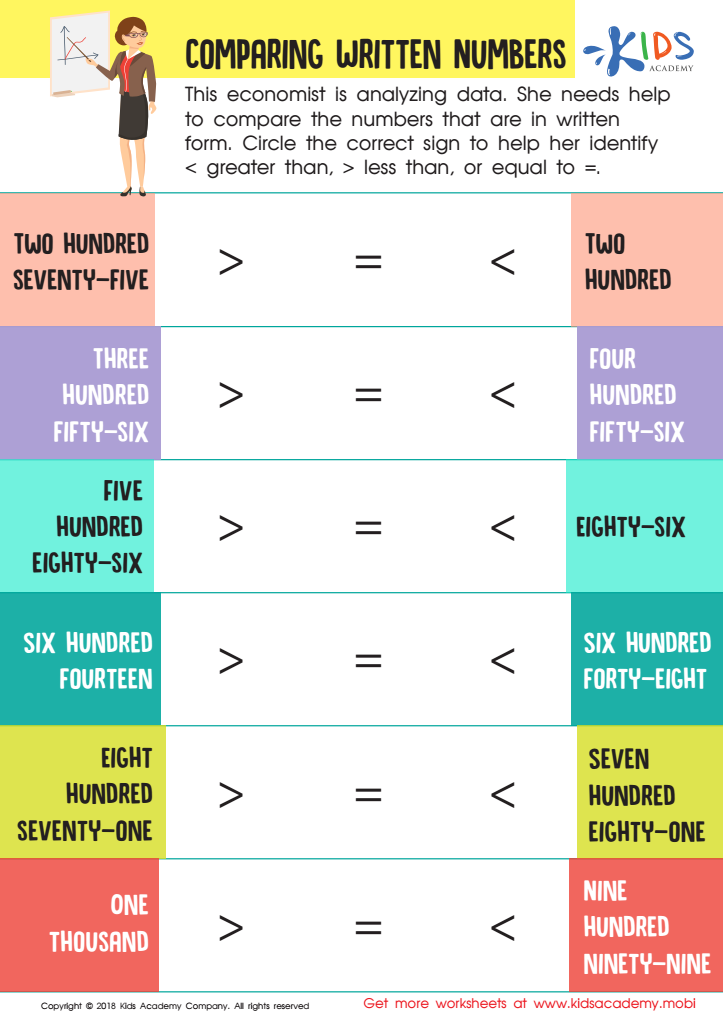
Comparing Written Numbers Worksheet
 Assign to My Students
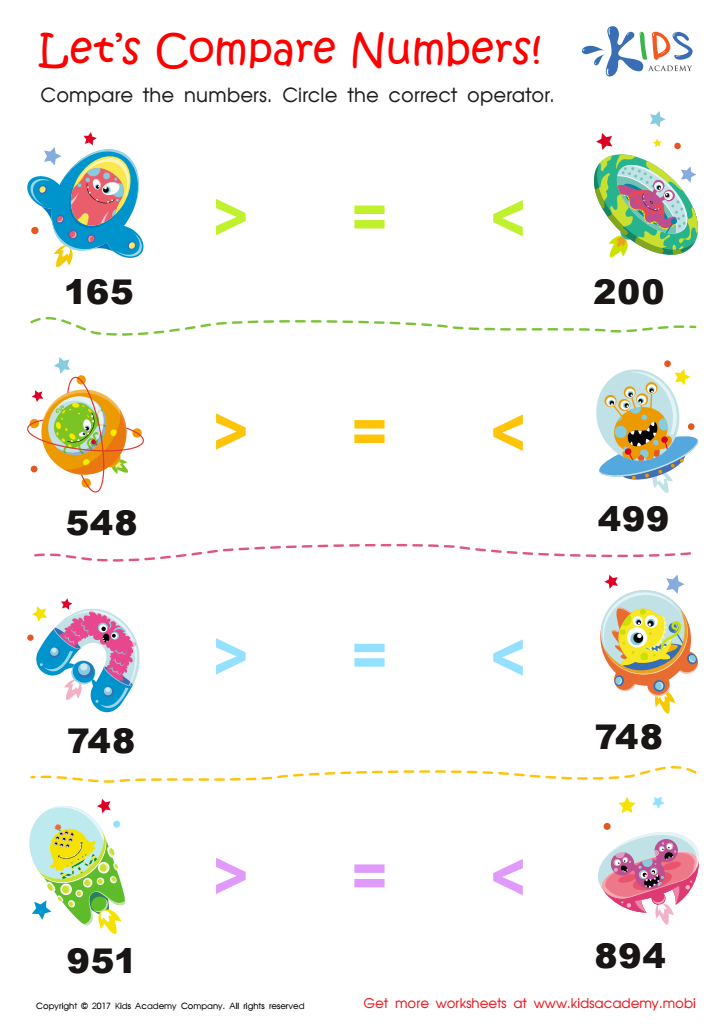
Comparing Numbers Worksheet for 2nd Grade
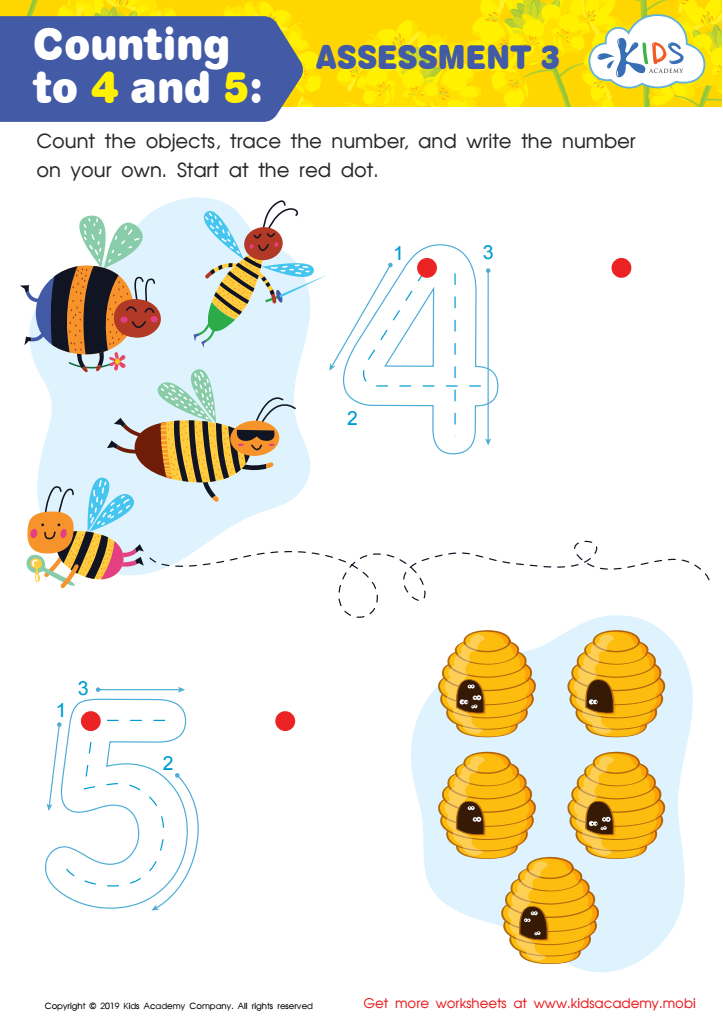
Counting to 4 and 5: Assessment 3 Worksheet
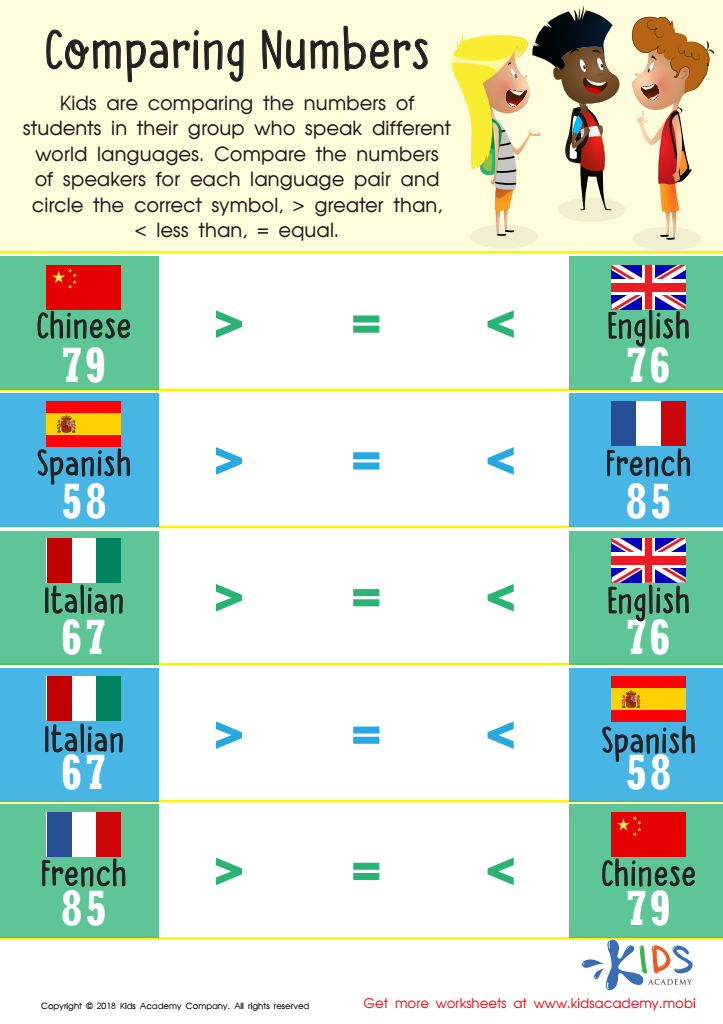
Comparing Numbers Worksheet for 1st Grade
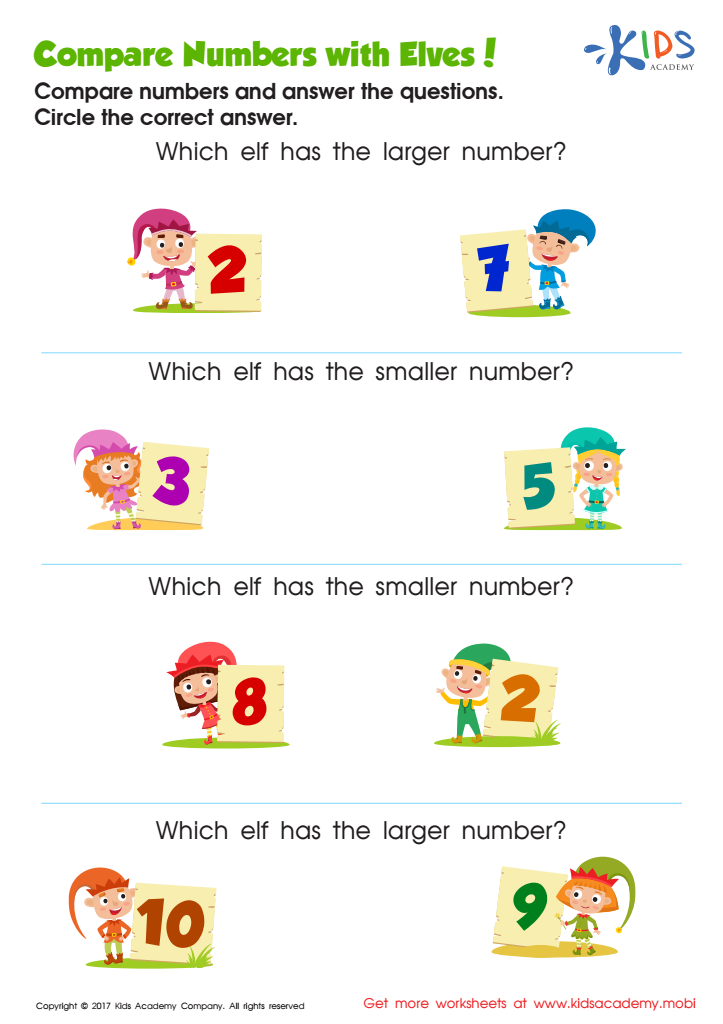
Comparing Numbers Worksheet for Kindergarten







Number comparison is a fundamental mathematical skill that involves evaluating and distinguishing between different quantities and values. For children aged 4-7, mastering this concept is crucial as it lays the foundation for more advanced mathematical understanding. Parents and teachers should care about fostering proficiency in number comparison for several reasons.
Firstly, it enhances critical thinking and problem-solving skills. By learning to compare numbers, children develop logical reasoning, enabling them to make informed decisions about quantities. This is the base of not just mathematics but also other disciplines in their academic journey.
Secondly, number comparison builds confidence. When children can accurately identify which number is larger or smaller, they feel a sense of accomplishment that encourages them to tackle more complex problems.
Furthermore, early proficiency in number comparison is linked to future success in math. Research shows that early mathematical skills correlate with academic performance later on.
Lastly, the ability to compare numbers is integral in daily life, from budgeting to cooking. By emphasizing this skill in early education, parents and teachers equip children with abilities that extend beyond the classroom, nurturing responsible and numerate individuals in society. Ultimately, fostering these skills during early development opens doors for future learning and personal growth.








