Recognizing number patterns Normal Math Worksheets for Ages 4-7
4 filtered results
-
From - To
Introduce your child to the magic of mathematics with our “Recognizing Number Patterns” worksheets for ages 4-7. These vibrant, engaging worksheets from Kids Academy are designed to build foundational math skills in young learners through fun and interactive activities. Children will learn to identify and predict number sequences, enhancing their problem-solving abilities and critical thinking. Perfect for preschool to 1st grade, the exercises encourage curiosity and confidence in math by progressively challenging kids at their own pace. Whether used in the classroom or at home, these worksheets are an excellent resource for making early math education enjoyable and effective.
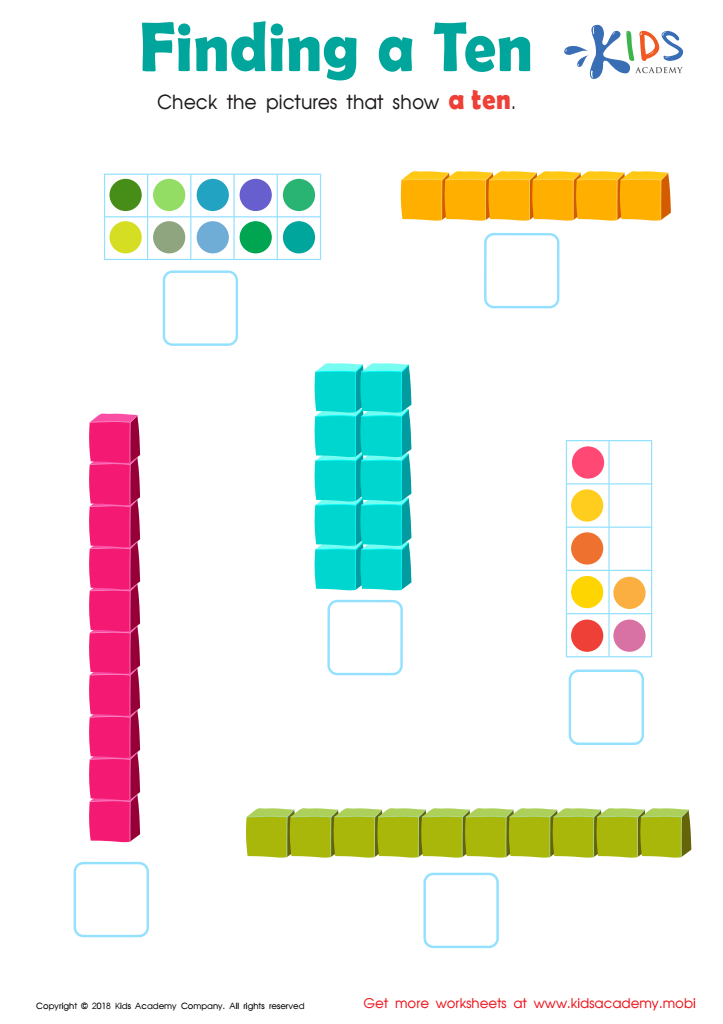
Finding a Ten Worksheet
 Assign to My Students
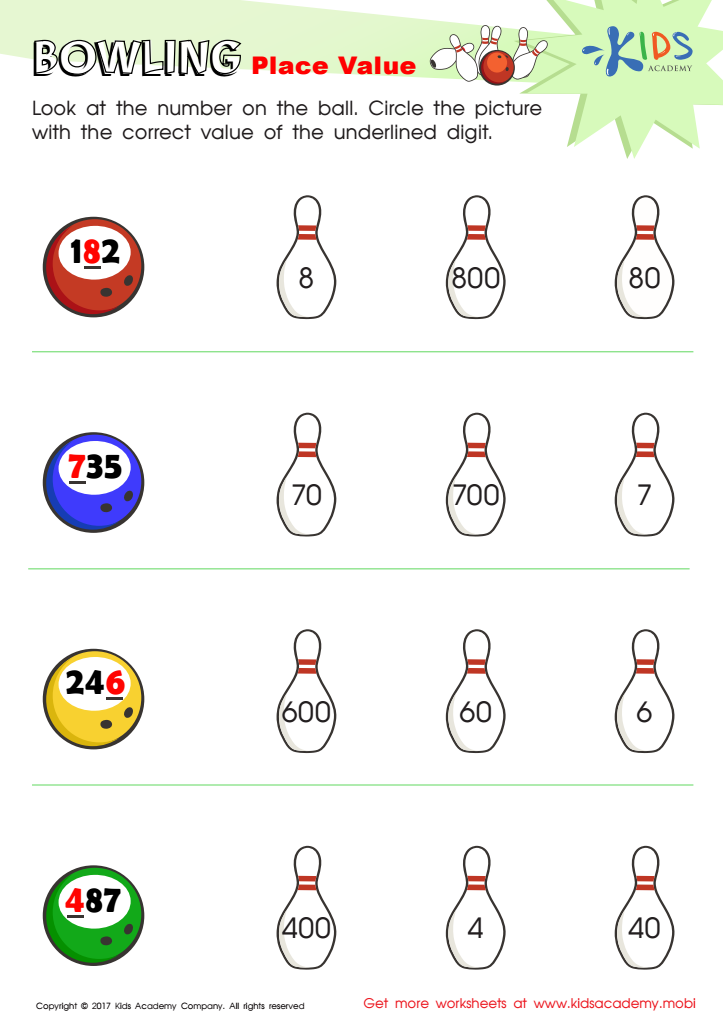
Place Value Worksheet
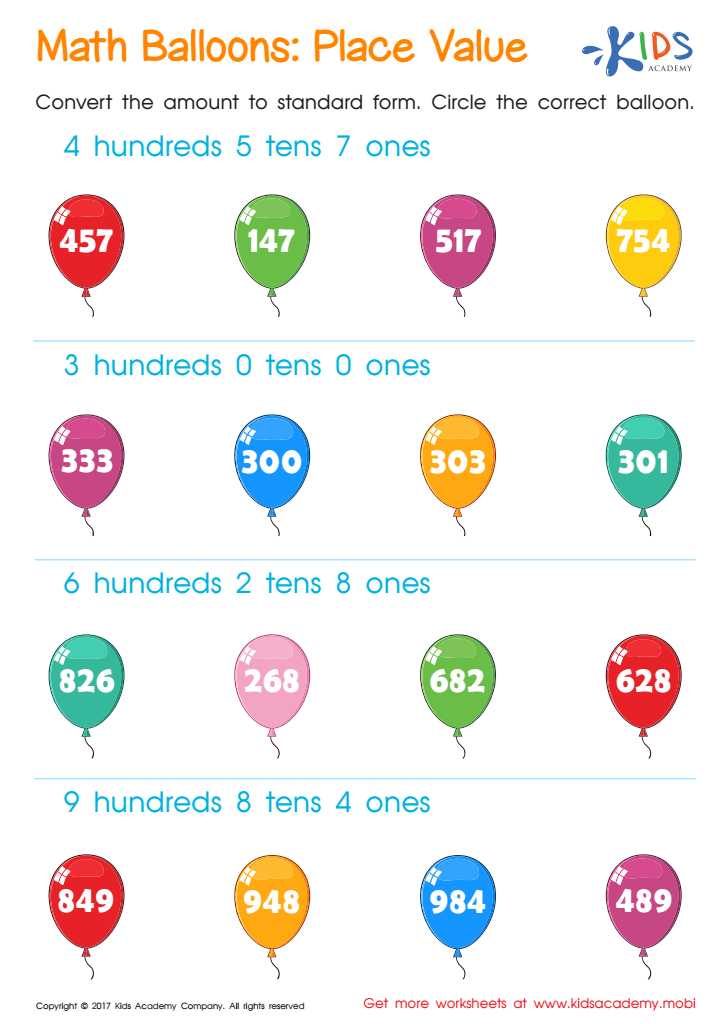
Place Value Printable Worksheet
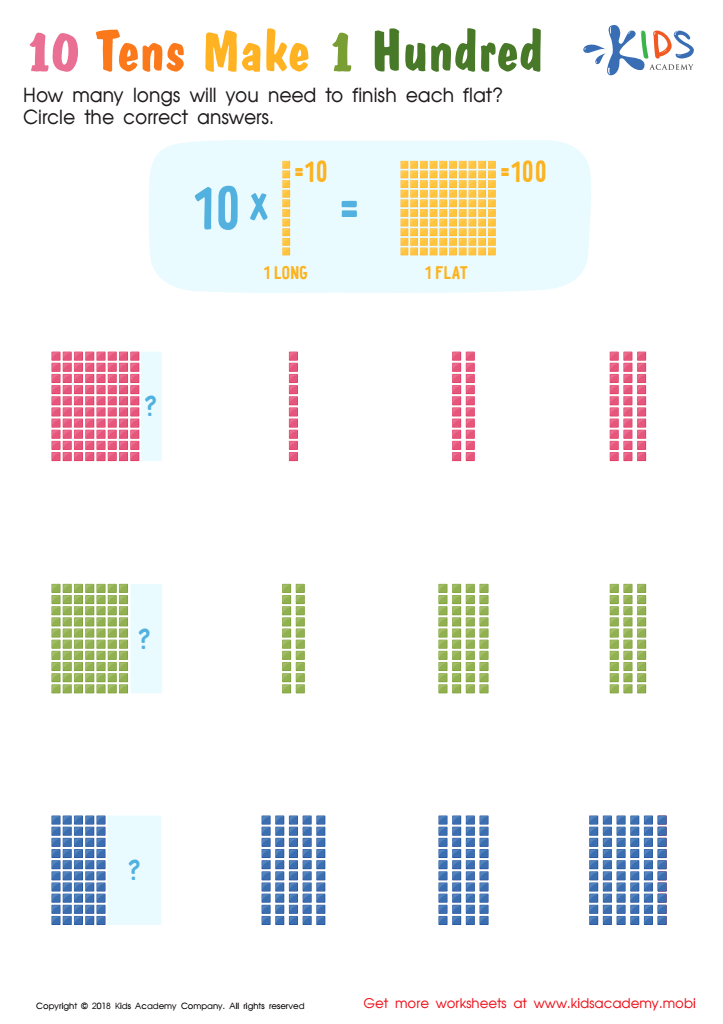
10 Tens Make 1 Hundred Worksheet








Recognizing number patterns is crucial for young children aged 4-7 because it lays the foundation for strong mathematical understanding and problem-solving skills. Number patterns are sequences of numbers that follow a specific rule or set of rules, and identifying these helps children grasp the underlying concepts of mathematics, such as addition, subtraction, and multiplication, in a more intuitive way.
For parents, integrating number patterns into everyday activities promotes a stimulating home learning environment, encouraging curiosity and a love for math. This can range from noticing patterns in everyday objects, like counting steps or sorting toys, to simple exercises that promote number recognition and counting.
For teachers, introducing number patterns in the classroom through engaging activities enhances cognitive development and reinforces key mathematical principles. It enables children to make predictions, develop logical thinking, and understand relationships between numbers. These skills are fundamental building blocks that will support more complex mathematical concepts as the children grow older. For instance, recognizing the pattern in a sequence like 2, 4, 6, 8 helps children comprehend the concept of even numbers and multiplication by 2.
Equipping young learners with the ability to recognize and work with number patterns fosters a sense of confidence in their mathematical abilities and contributes to a robust, long-term understanding of math.








