Recognizing Patterns Normal Math Worksheets for Ages 4-7
3 filtered results
-
From - To
Discover engaging "Recognizing Patterns" worksheets designed for children aged 4-7. These worksheets make learning math fun, helping young learners develop essential pattern recognition skills through colorful illustrations and interactive exercises. Each activity encourages critical thinking, boosts cognitive abilities, and fosters a solid foundation for more advanced math concepts. With a variety of exercises tailored for early learners, children can identify, extend, and create patterns confidently. Ideal for at-home practice or classroom settings, these resources are perfect for nurturing your child's mathematical journey. Download and watch as your child becomes a pattern pro while enjoying valuable learning time!
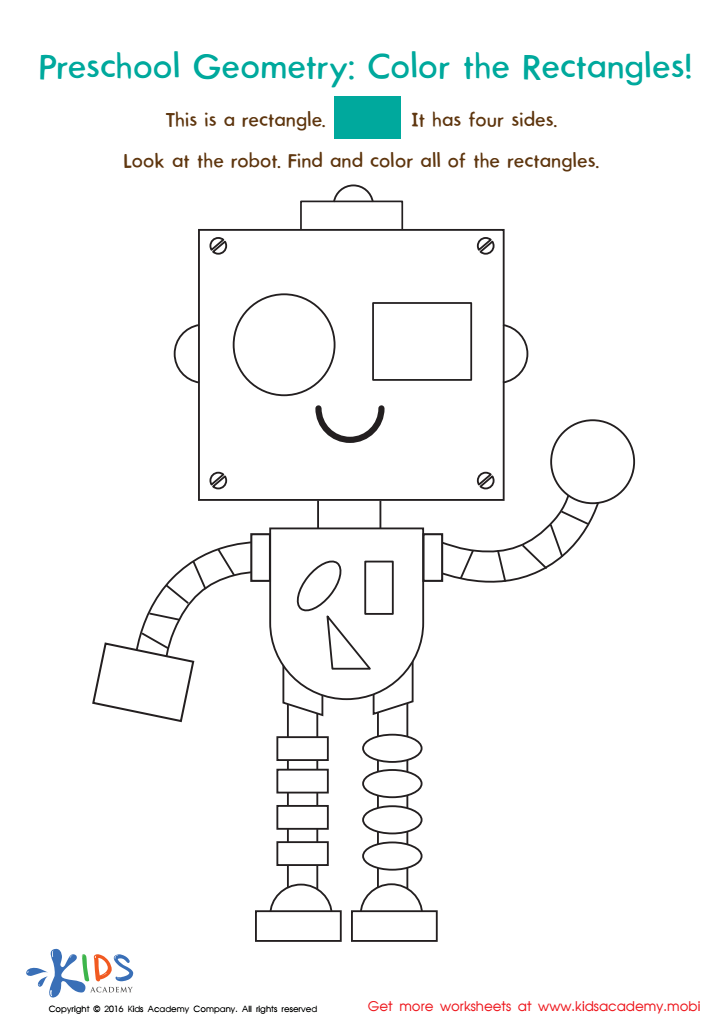
Geometry Worksheet
 Assign to My Students
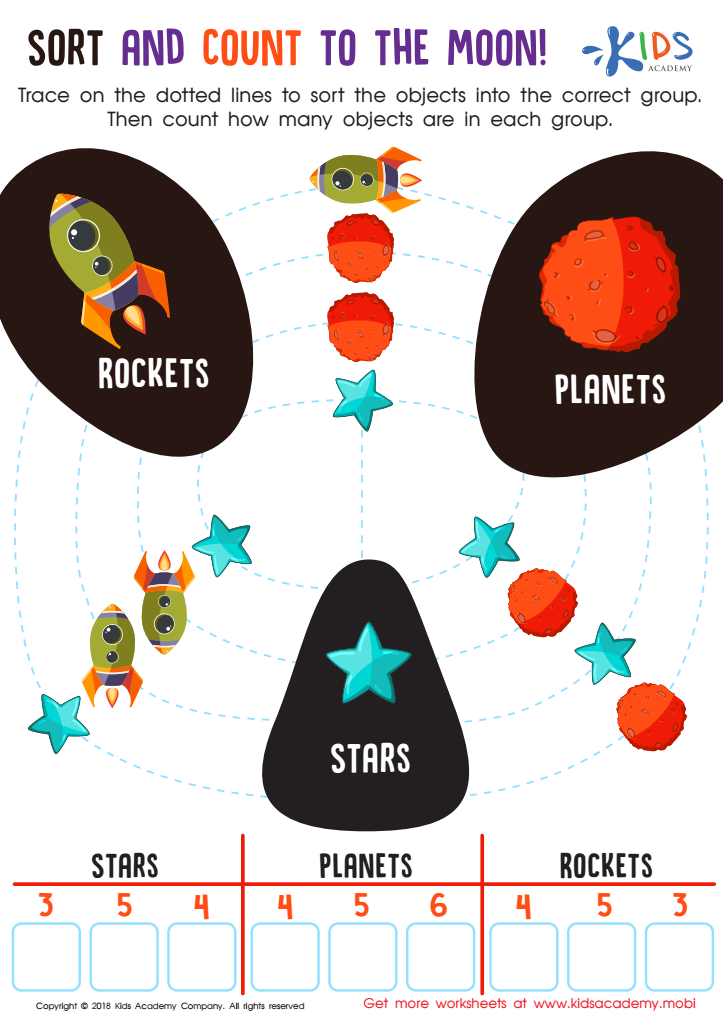
Sort and Count to the Moon Worksheet
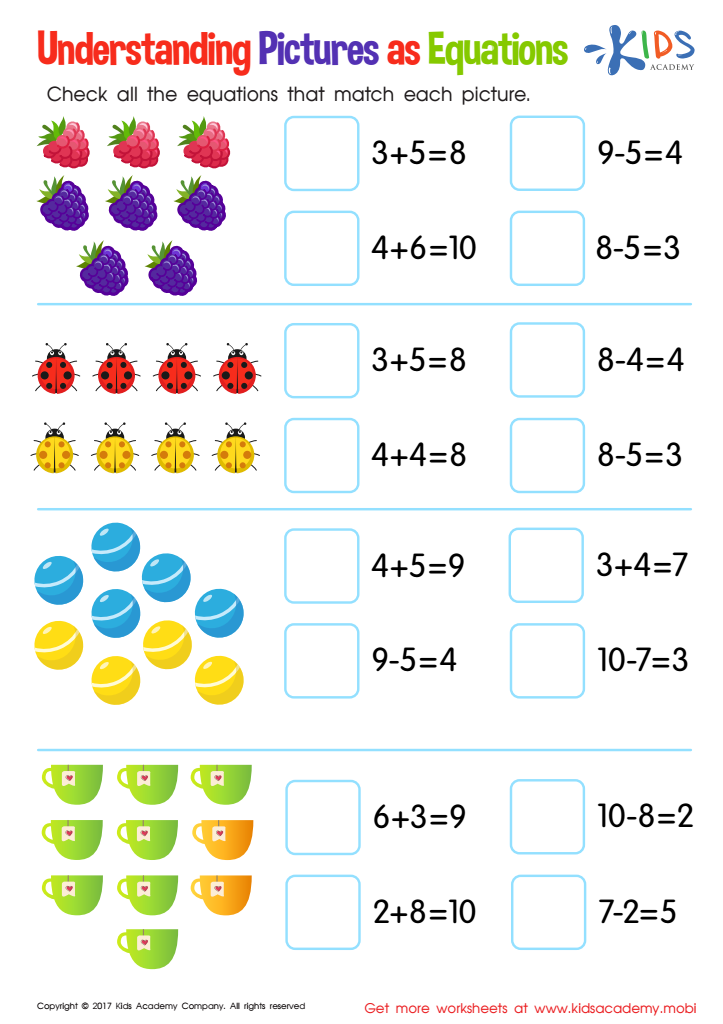
Understanding Pictures as Equations Worksheet







Recognizing patterns is a foundational skill in early mathematics that plays a crucial role in cognitive development for children aged 4-7. For parents and teachers, this skill is essential for cultivating logical thinking and problem-solving abilities. When children learn to identify, create, and extend patterns, they develop critical analytical skills that will benefit them in more complex mathematical concepts in the future, such as addition, subtraction, and even algebra.
Patterns make sense of the world around us, helping children to categorize and predict outcomes. Engaging in pattern recognition enhances observational skills, builds memory, and encourages attention to detail. These activities not only enhance mathematical skills but also contribute to overall developmental competencies such as language acquisition and social skills as children share their findings with peers and adults.
Furthermore, early exposure to pattern-related activities nurtures a positive attitude toward math, reducing future math anxiety. This willingness to engage with mathematical concepts sets a strong educational foundation. By prioritizing pattern recognition, parents and teachers help cultivate a skill that is not merely academic; it also fosters resilience, critical thinking, and creativity in young learners. Thus, recognizing patterns is a vital stepping stone towards lifelong learning in mathematics and beyond.








