Understanding Quantities Normal Math Worksheets for Ages 4-7
3 filtered results
-
From - To
"Understanding Quantities: Normal Math Worksheets for Ages 4-7" enhance early math skills, letting young learners grasp essential concepts of numbers and quantities seamlessly. Specially designed for children aged 4-7, these printable worksheets from Kids Academy offer engaging activities that build foundational numeracy. Through playful exercises, kids learn to count, compare, and associate numbers with corresponding quantities. Our expertly crafted resources make learning enjoyable, fostering confidence in math at an early age. Tailored to maintain a child's interest and attention, these worksheets provide an excellent stepping stone toward a robust mathematical journey. Start exploring today for effective, fun, and educational experiences!
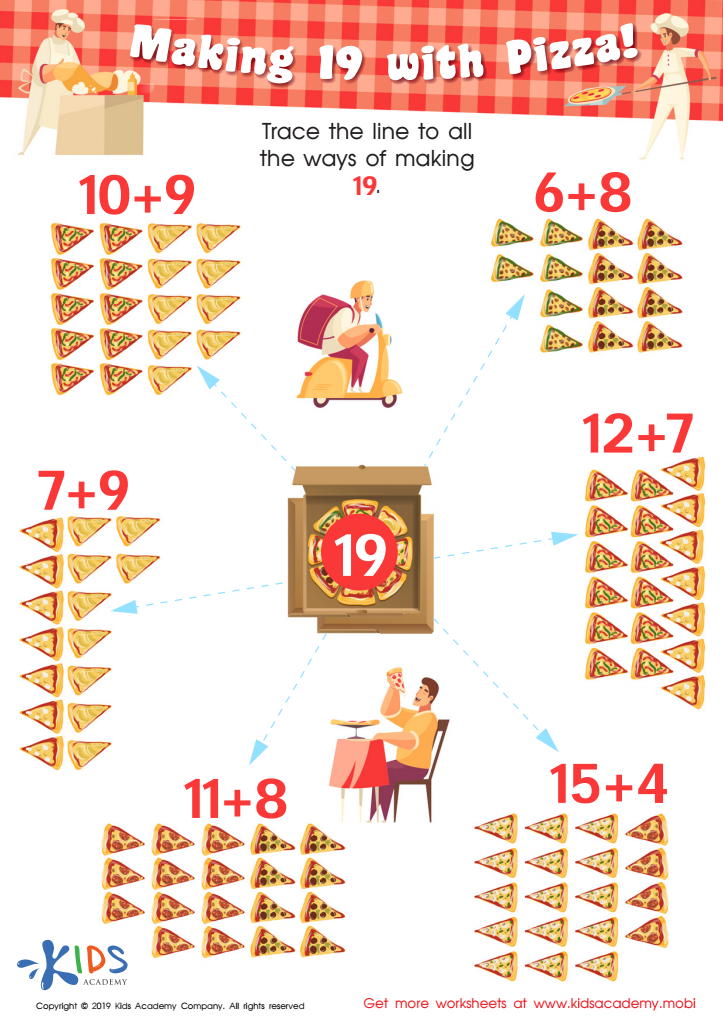
Making 19 with Pizza! Worksheet
 Assign to My Students
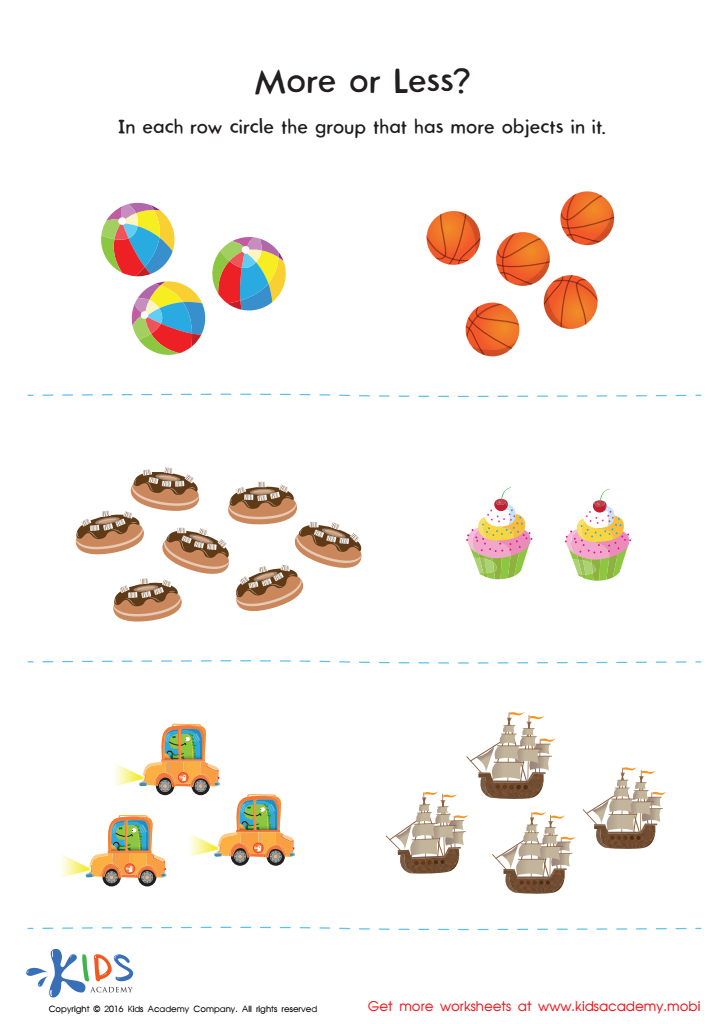
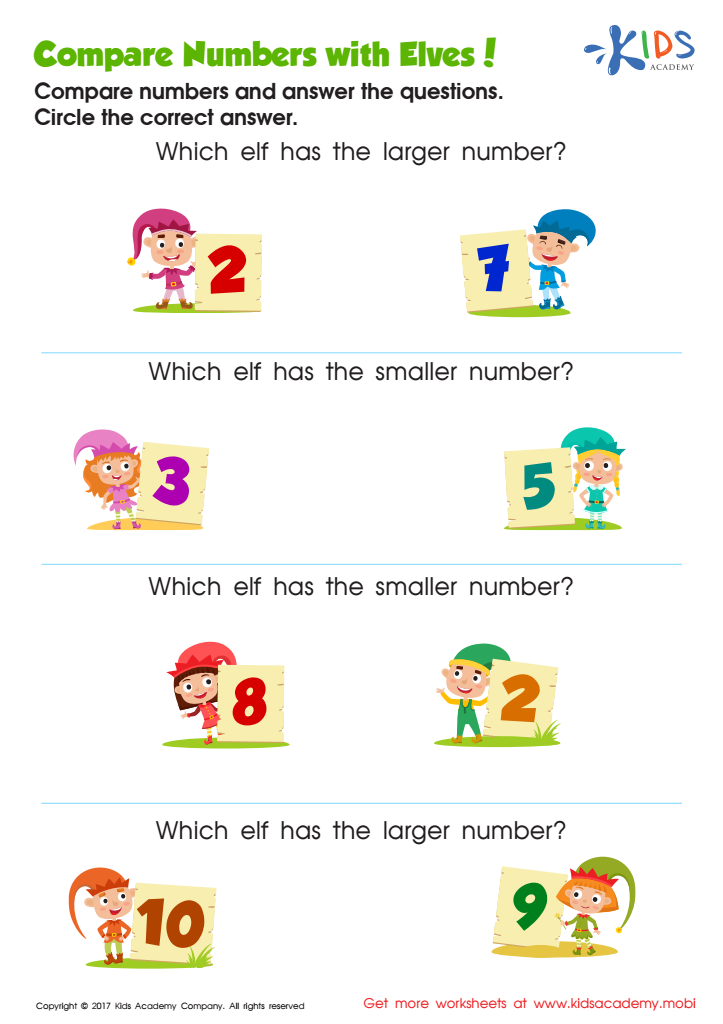
Comparing Numbers Worksheet for Kindergarten








Understanding quantities is foundational for children ages 4-7 as it significantly influences their future mathematical proficiency and overall cognitive development. During these formative years, their brains are remarkably plastic, making this the ideal time to introduce vital concepts.
Firstly, a strong grasp of quantities aids in number sense, which is essential for performing arithmetic operations confidently and accurately as children progress in school. Basic skills such as counting, recognizing numbers, and understanding 'more than' or 'less than' concepts are prerequisites for more complex mathematical concepts.
Moreover, understanding quantities is tied to daily life skills. Children learn to share equally, understand time, measure ingredients, and grasp spatial relationships—all necessary for effective problem-solving and decision-making in practical situations.
Early exposure to quantities also fuels logical thinking and pattern recognition. These skills offer a critical advantage not only in math but also in science, technology, and even literacy. Children are better equipped to follow sequences in a story or predict outcomes, enhancing their overall academic success.
Lastly, reinforcing these concepts boosts a child's confidence and fosters a positive attitude towards learning. When parents and teachers actively support quantity comprehension, they set children up for a lifelong appreciation and understanding of math, critical for personal and professional growth.








