Critical Thinking Normal Matching Worksheets for Ages 4-7
4 filtered results
Difficulty Level
Grade
Age
-
From - To
Subject
Activity
Standards
Enhance your child's critical thinking skills with our engaging Normal Matching Worksheets, designed specifically for ages 4-7! These fun worksheets aim to spark creativity and analytical reasoning through interactive activities that involve matching colors, shapes, and objects. Tailored for early learners, our colorful and visually appealing resources cultivate cognitive development while reinforcing essential concepts in a playful manner. Ideal for classroom or home learning, these worksheets promote independence and foster a love for problem-solving. Download now and give your child the tools they need for ongoing success in their educational journey! Explore our exciting collection today!
Favorites
With answer key
Interactive
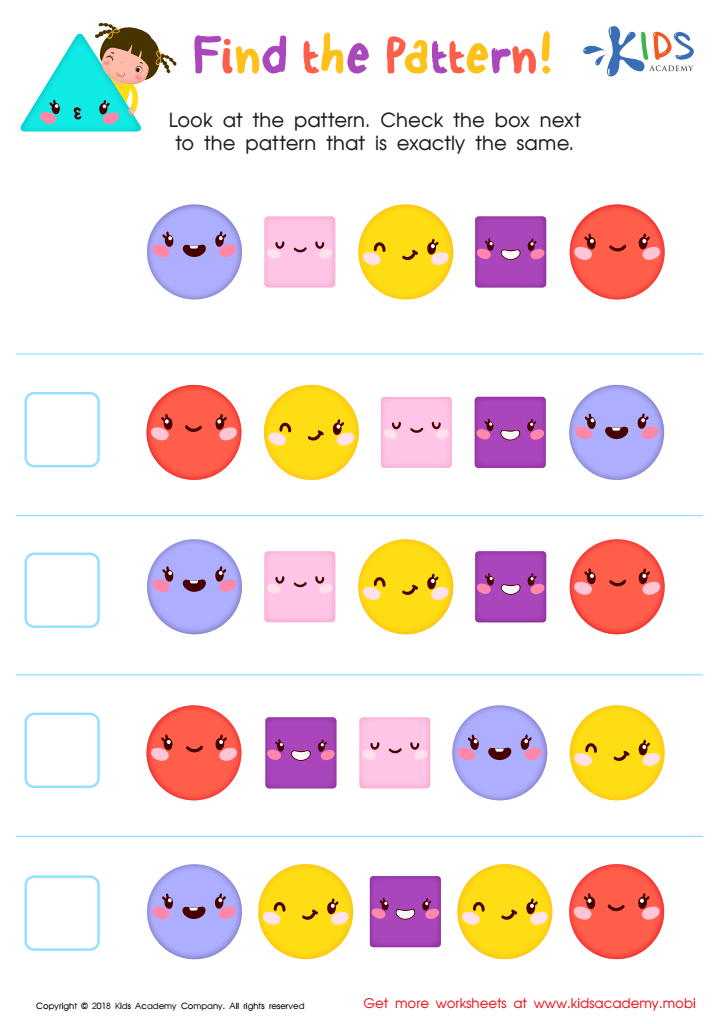
Find the Pattern Worksheet
This colorful pattern worksheet is perfect for testing your kids' pattern recognition. The bright colors will keep them engaged, while they check the box next to the pattern that is the same. Ask your kids to identify the colors used and see how well they can spot similarities!
 Assign to My Students
Find the Pattern Worksheet
Worksheet

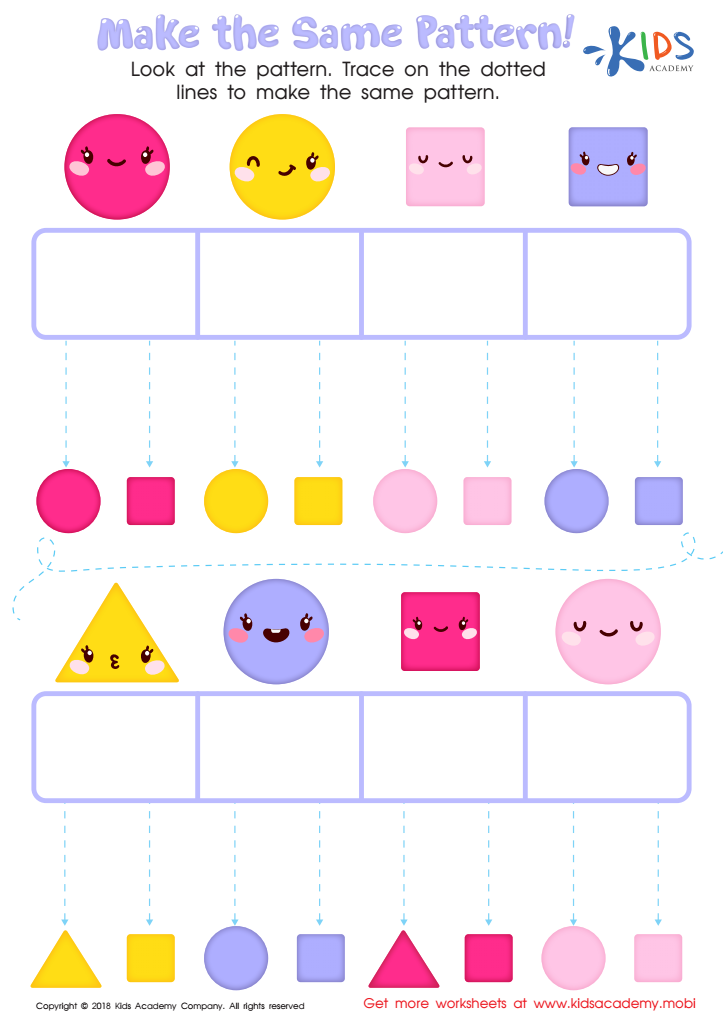
Make the Same Pattern Worksheet
Help your child look at the patterns in the tracing sheet and guide them to trace the dotted lines to match the shapes. This exercise tests their ability to copy pictures correctly, so emphasize the importance of paying attention to the instructions and details.
Make the Same Pattern Worksheet
Worksheet

The Four Seasons Worksheet
Tell your child to circle things that remind them of each season. The tree has four squares, one for each season. Some things in each square match the season, others don't. Ask if any are out of place. Help them circle only items that remind them of that season.
The Four Seasons Worksheet
Worksheet
Join Kids Academy for Free
Who is primarily going to use this learning content?








Critical Thinking Normal Matching, aimed at children aged 4-7, focuses on enhancing essential cognitive skills such as reasoning, problem-solving, and decision-making. Parents and teachers should care about this developmental milestone for several reasons.
First, early engagement in critical thinking skills sets the foundation for future learning. During this age, children's brains are highly adaptable, making it an ideal period to cultivate these skills. By encouraging kids to analyze and connect information, educators and parents foster an environment of curiosity and exploration, empowering children to ask questions and find answers independently.
Second, critical thinking teaches children to evaluate situations objectively and consider multiple perspectives, which is vital in today’s interconnected world. Developing these skills contributes to emotional intelligence and social interactions, enabling children to communicate effectively and collaborate with peers.
Finally, as children learn to think critically, they become more competent learners and confident decision-makers. Supportive adults can guide them in recognizing patterns and drawing conclusions, laying the groundwork for a lifelong love of learning.
In summary, nurturing critical thinking in early childhood is crucial for academic success and essential life skills, making it a top priority for parents and teachers alike.