
Fine Motor Skills Normal Matching Worksheets for Ages 4-7
4 filtered results
Difficulty Level
Grade
Age
-
From - To
Subject
Activity
Standards
Enhance your child's hand-eye coordination and dexterity with our Fine Motor Skills Normal Matching Worksheets, perfect for ages 4-7. These engaging activities are designed to boost fine motor development while making learning fun. Children will enjoy matching pictures, numbers, and shapes, which not only prepares them for writing but also supports critical thinking and concentration. Crafted by education experts, these worksheets are ideal for preschool through early elementary children. Whether at home or in the classroom, they serve as a valuable tool to help your child build essential skills for future academic success. Explore and download now!
Favorites
With answer key
Interactive
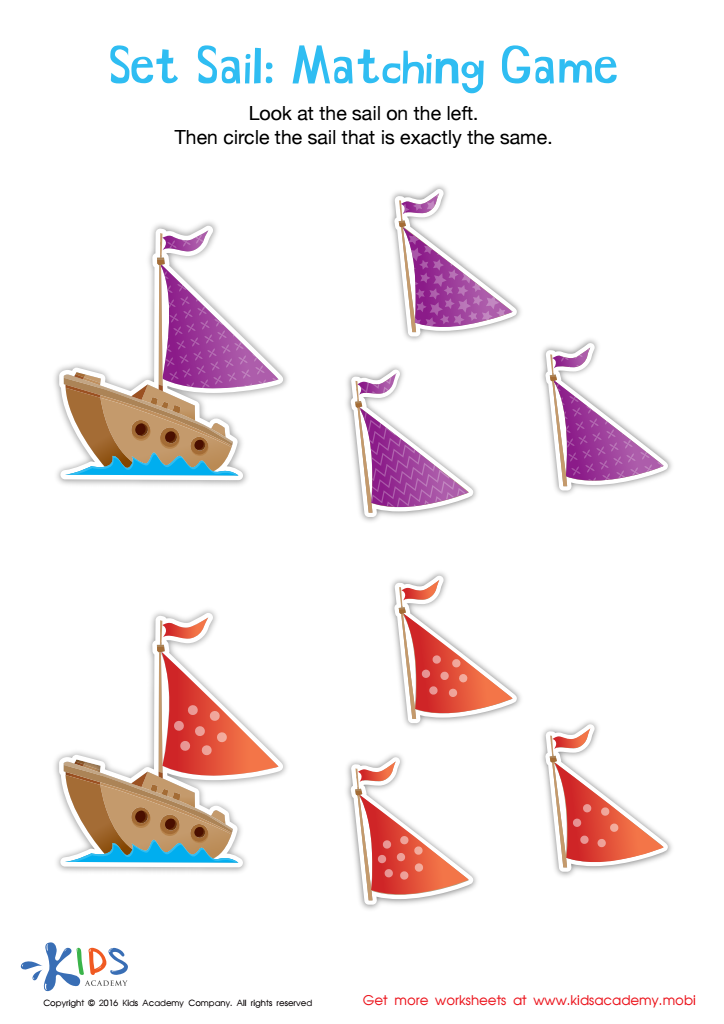
Set Sail Worksheet
Set sail with this fun matching game for toddlers! Kids will love finding the same pattern on the sails, improving their problem-solving and counting skills. Enjoy this bright and engaging worksheet!
 Assign to My Students
Set Sail Worksheet
Worksheet
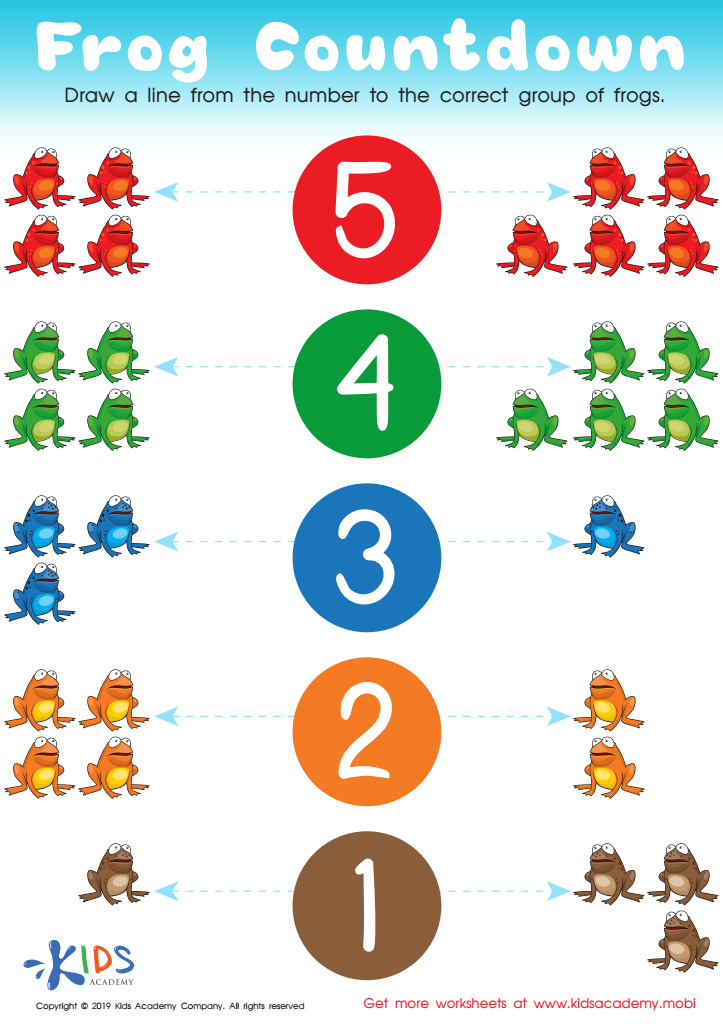
Frog Countdown Worksheet
Make learning fun for kids with traceable printouts! This exercise has kids counting frogs and drawing a line to match the number. Expand their knowledge with activities like this, beyond the basics they learn in school. Help them explore new ways of learning and make it enjoyable.
Frog Countdown Worksheet
Worksheet
Join Kids Academy for Free
Who is primarily going to use this learning content?








Fine motor skills are crucial for children aged 4-7 as they are fundamental for a child's overall development and academic success. When a child has well-developed fine motor skills, such as the ability to use their fingers and hands to perform tasks accurately, they are better equipped to handle classroom activities and self-care routines. These skills enable children to do tasks like writing, cutting with scissors, buttoning shirts, and tying shoelaces. Proficiency in these activities leads to greater independence and confidence.
For academic achievement, fine motor skills are directly linked to handwriting and drawing, both of which are essential for learning and assessment in school. Children who struggle with fine motor skills might find it challenging to form letters, use classroom tools, and complete assignments on time, which can impact their learning and cause frustration.
Furthermore, fine motor skill development is related to cognitive growth because it involves brain areas responsible for planning, focus, and coordination. Supporting children in refining these skills not only prepares them academically but also enhances their problem-solving and critical-thinking abilities.
Therefore, parents and teachers should give attention to fine motor skills by engaging children in activities that promote hand-eye coordination, such as playing with building blocks, coloring, and using child-sized tools. This approach fosters a whole-rounded development crucial for a child's success both in and out of the classroom.








