Matching skills Normal Matching Worksheets for Ages 4-7
4 filtered results
-
From - To
Discover our "Normal Matching Worksheets for Ages 4-7," designed to enhance your child's matching skills through engaging activities. Tailored for early learners, these worksheets feature colorful graphics and fun scenarios that make learning enjoyable. Children will develop their cognitive abilities as they connect related images, words, and concepts, boosting their memory and attention to detail. Ideal for home or classroom use, our worksheets cater to various learning styles and ensure a well-rounded educational experience. Empower your child with the foundational skills necessary for academic success while having fun! Explore our collection now and support your child's learning journey.
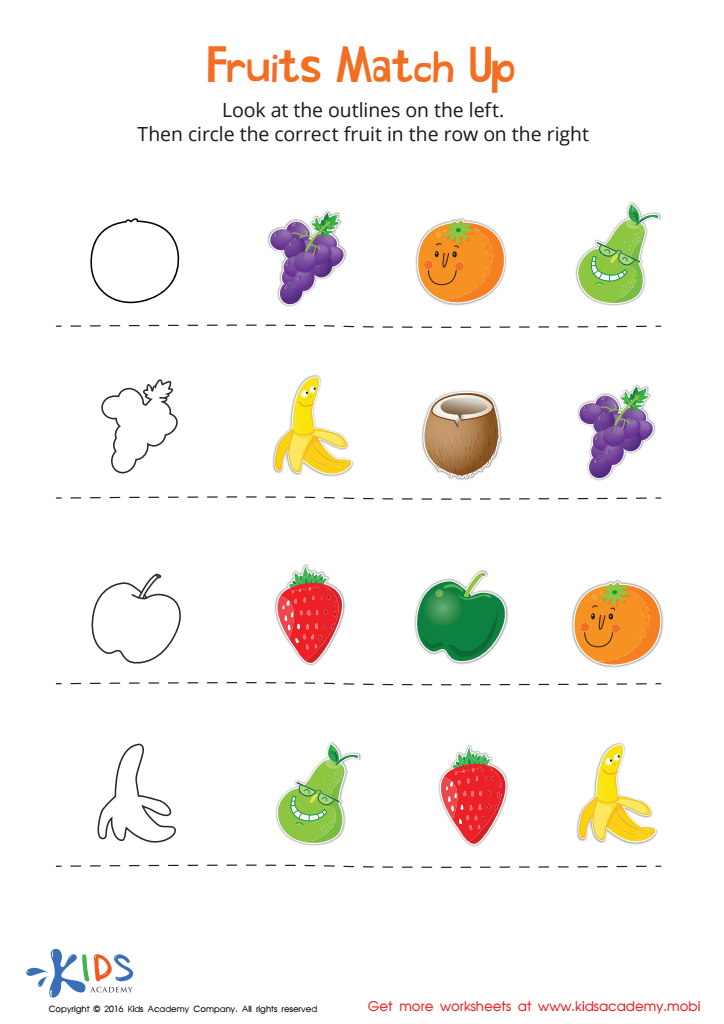
Fruits Match Up Worksheet
 Assign to My Students
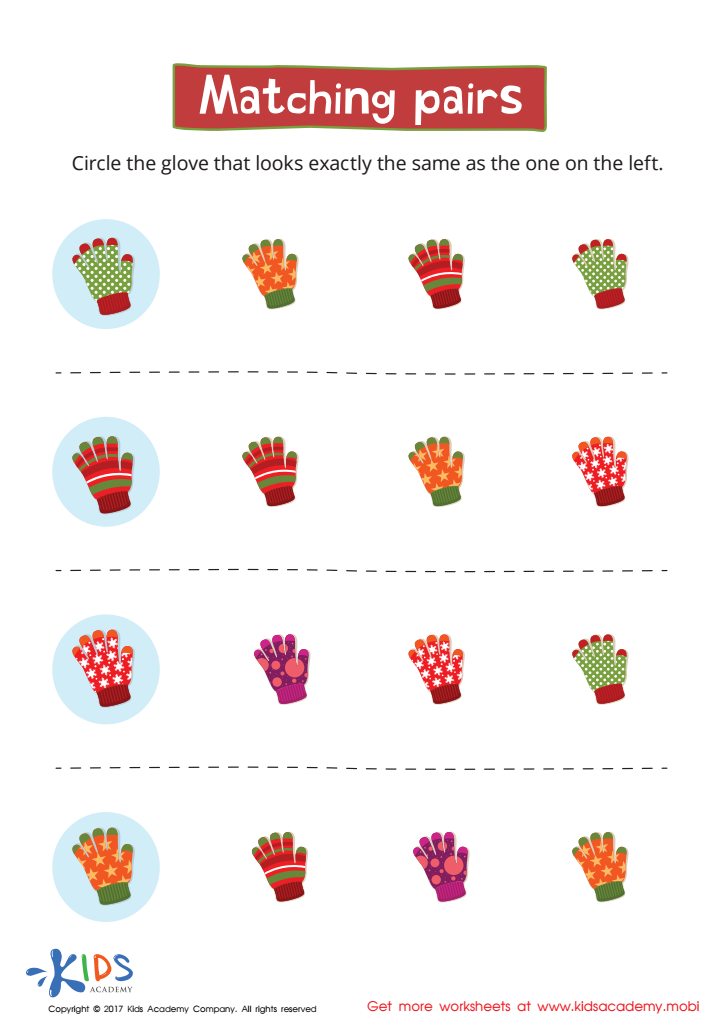
Matching: Matching Pairs Worksheet
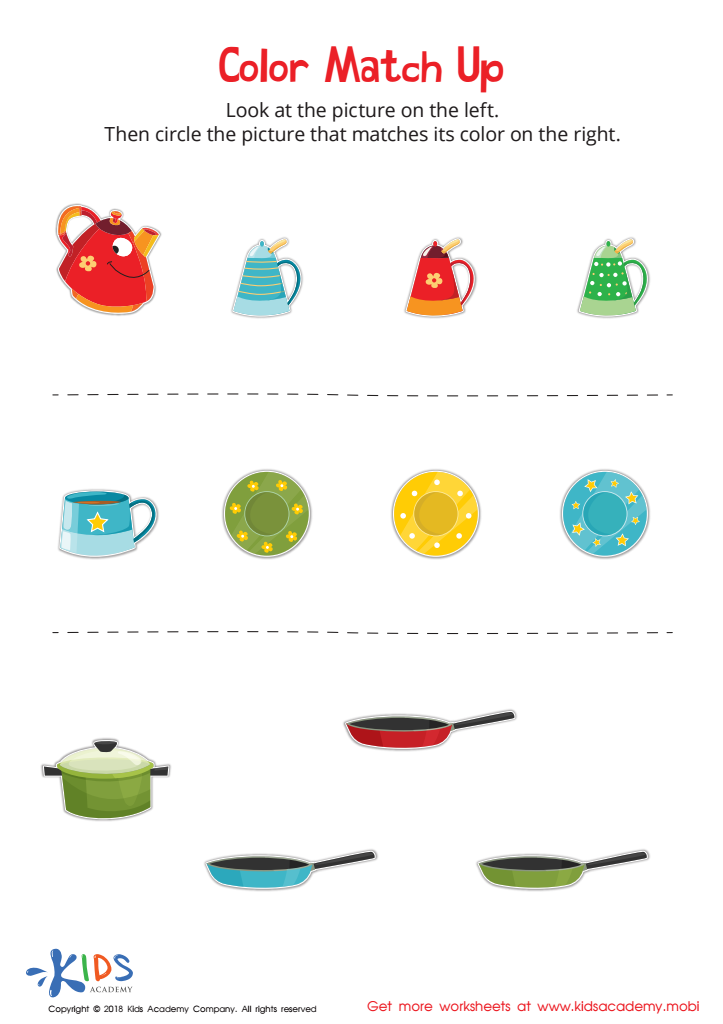
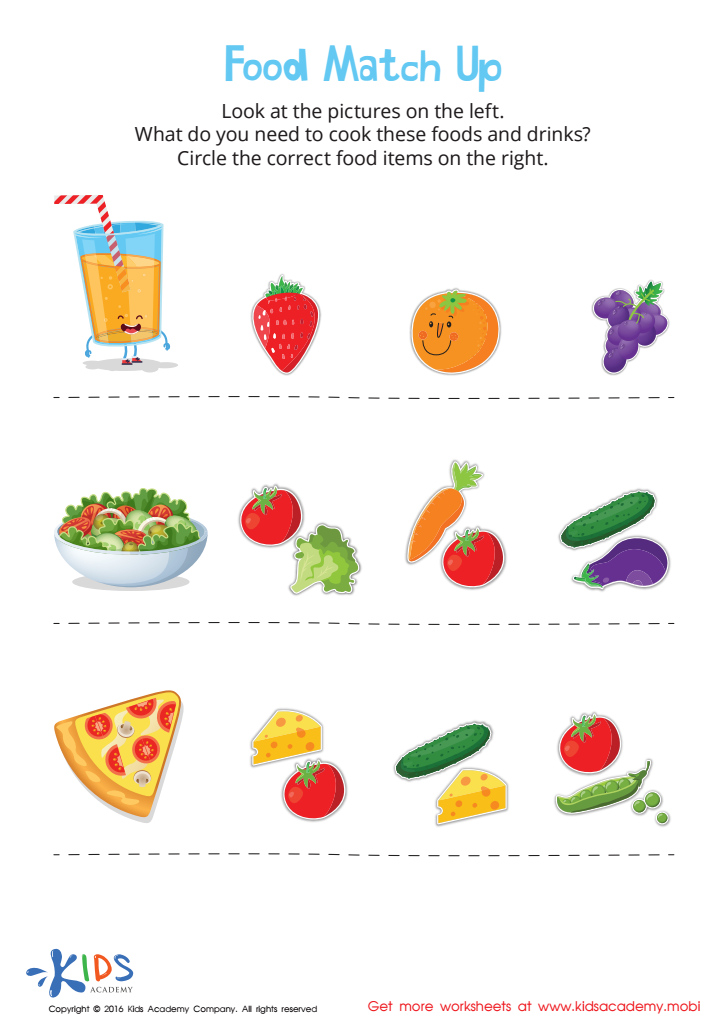
Food Match Up Worksheet








Parents and teachers should care about matching skills, especially "Normal Matching," for children ages 4-7 because these skills form the foundation for a range of cognitive and social development activities. At this developmental stage, children are enhancing their ability to recognize similarities and differences between objects, which is crucial for categorization, problem-solving, and critical thinking. Normal matching activities, such as pairing pictures, colors, or shapes, help reinforce visual perception, strengthen memory, and promote logical reasoning.
In addition, matching skills encourage language development as children articulate their thought processes while discussing their choices. These activities can also enhance fine motor skills through manipulation of objects, fostering coordination and dexterity.
Furthermore, normal matching can serve as a social tool, promoting interaction among peers during group activities. Collaborating to find matches encourages teamwork, communication, and empathy.
Incorporating matching skills into early childhood education supports holistic development while creating an engaging learning environment. By prioritizing these skills, parents and teachers can help lay the groundwork for future academic success and lifelong learning. Overall, fostering matching skills in young children is essential for their overall growth and readiness for more complex educational challenges.








