Normal Numbers 11–20 Worksheets for Ages 4-7
4 filtered results
Difficulty Level
Grade
Age
-
From - To
Subject
Activity
Standards
Explore our engaging "Normal Numbers 11–20 Worksheets" designed specifically for children ages 4-7. These worksheets provide a fun and interactive way for young learners to understand and practice numbers 11 to 20. Each activity promotes essential counting skills, number recognition, and early math proficiency while keeping kids entertained. With colorful illustrations and age-appropriate exercises, your child will enhance their learning experience through tracing, filling in the blanks, and simple problem-solving tasks. Perfect for teachers and parents, our printable worksheets are an excellent resource to help build a strong numerical foundation and foster a love for math in young learners.
Favorites
With answer key
Interactive
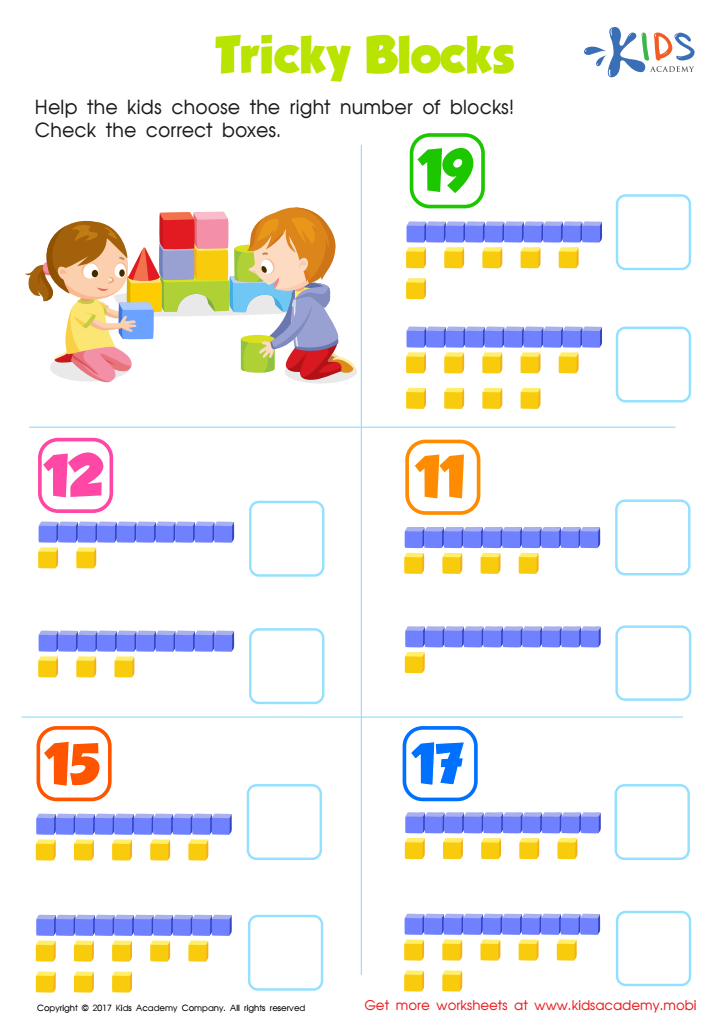
Tricky Blocks Worksheet
Help your child count with this printable worksheet. You'll be able to explain the technicalities of each answer as you work together to count the boxes and choose the correct number in the spaces provided. This will help your child better understand the concept and will go faster than if they do it alone.
 Assign to My Students
Tricky Blocks Worksheet
Worksheet
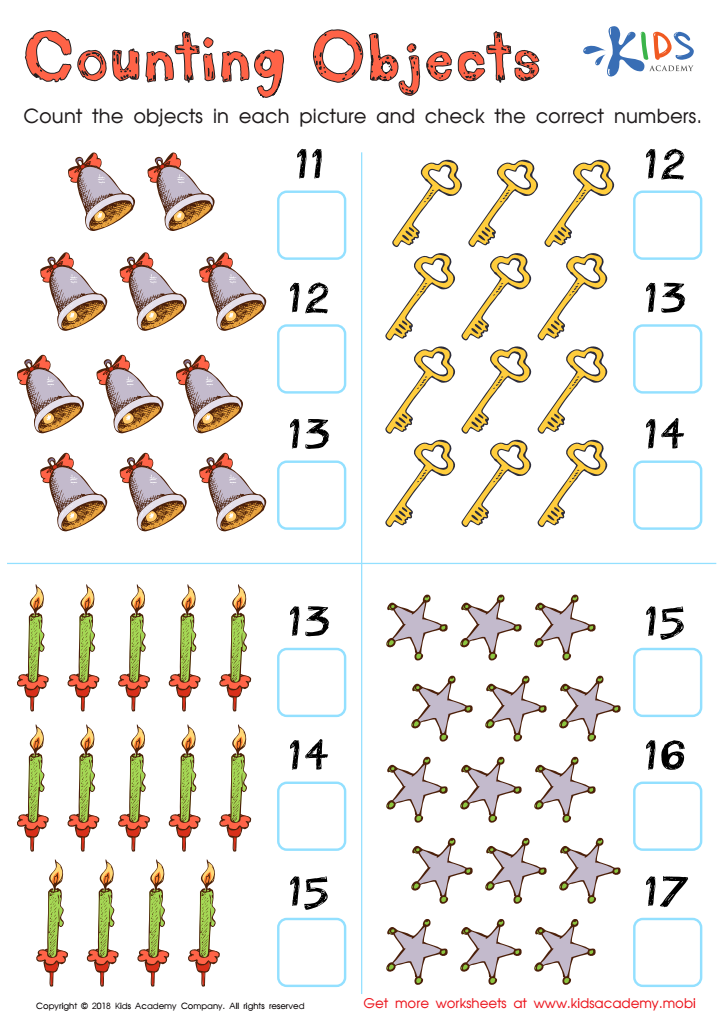
Counting Numbers Worksheet For Kindergarten
This worksheet is a great way to get your child practicing foundational math skills. With bright pictures to count, counting numbers just got a lot more fun! Get them ready for future math success and help them hone their early math skills.
Counting Numbers Worksheet For Kindergarten
Worksheet
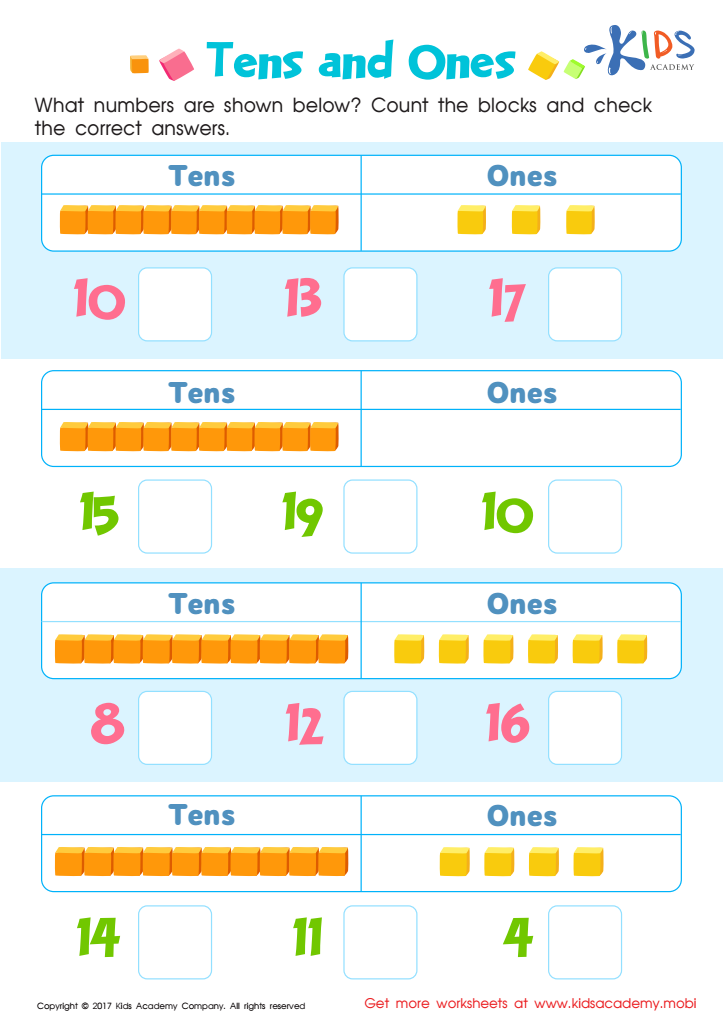
Tens and Ones Worksheet
Help your child make math fun with this worksheet! Count the blocks on both sides and enter the total in the box below the figures. This will help them overcome any math-related anxieties they might have and let them enjoy the learning process.
Tens and Ones Worksheet
Worksheet
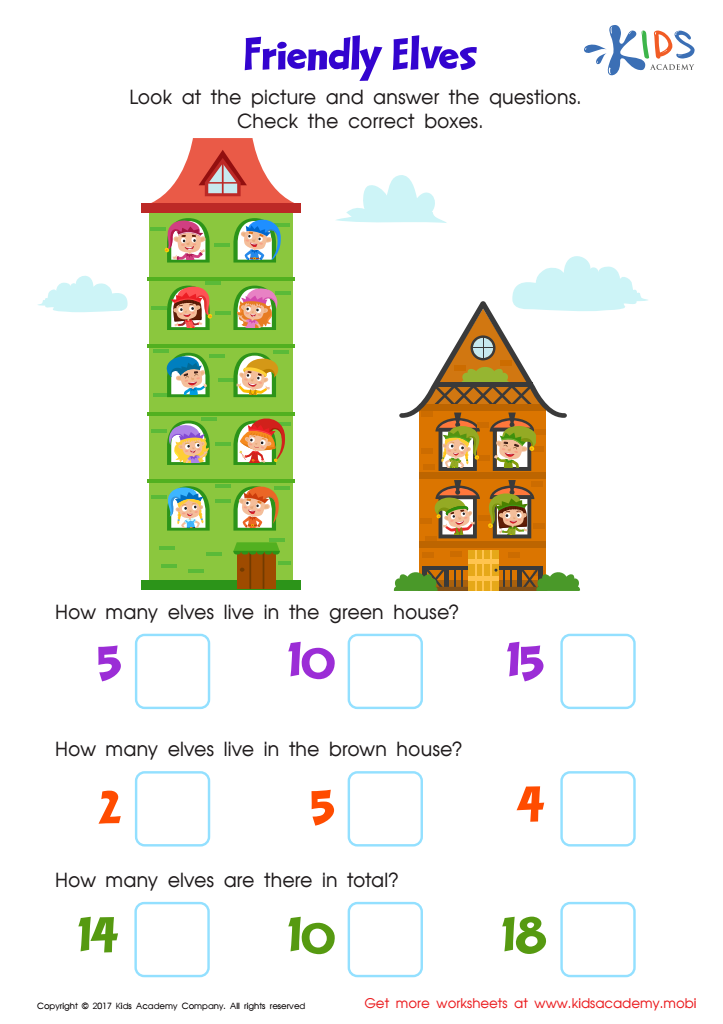
Place Value: Friendly Elves Worksheet
This fun worksheet teaches kids to count elves, answer questions about houses, and practice math! Look at the picture and count the elves in each house. How many are in the green and brown house? Tick the correct answer boxes. Perfect for young learners!
Place Value: Friendly Elves Worksheet
Worksheet
Join Kids Academy for Free
Who is primarily going to use this learning content?



Understanding normal numbers from 11 to 20 is crucial for children ages 4-7 as it forms a foundational aspect of their early mathematical development. This range introduces young learners to more complex counting, transitions from the simpler number sets (1-10) to a broader numerical understanding. Grasping these numbers helps children develop essential skills such as addition, subtraction, and number recognition.
Fostering familiarity with numbers 11 to 20 strengthens a child’s confidence in math, which is vital for their overall academic success. This understanding encourages pattern recognition, facilitates learning about place value, and aids in the comprehension of mathematical concepts, such as greater than or less than.
Moreover, integrating these skills into everyday activities promotes practical learning. Children with strong numerical foundations tend to perform better in subsequent math learning, leading to less anxiety and greater enjoyment in the subject.
Parents and teachers should prioritize normal numbers 11 to 20 to ensure children are not only prepared for future mathematical challenges but are also equipped with critical thinking and problem-solving skills they will carry throughout their academic journey. Supporting this learning aligns with fostering engaged, confident learners who view math as a tool for understanding their world.