Analytical skills Normal Reading Worksheets for Ages 4-7
5 filtered results
-
From - To
Boost your child's analytical skills with our engaging Normal Reading Worksheets designed for ages 4-7. These worksheets are perfect for young learners to develop critical thinking while enhancing their reading abilities. Each activity features colorful illustrations and fun prompts that encourage children to analyze stories, identify patterns, and make connections. With a variety of tasks aimed at fostering comprehension and reasoning, these resources make learning enjoyable and interactive. Ideal for classroom use or at-home practice, our worksheets can help your child gain confidence in their analytical skills, laying a solid foundation for future academic success. Explore our collection today!
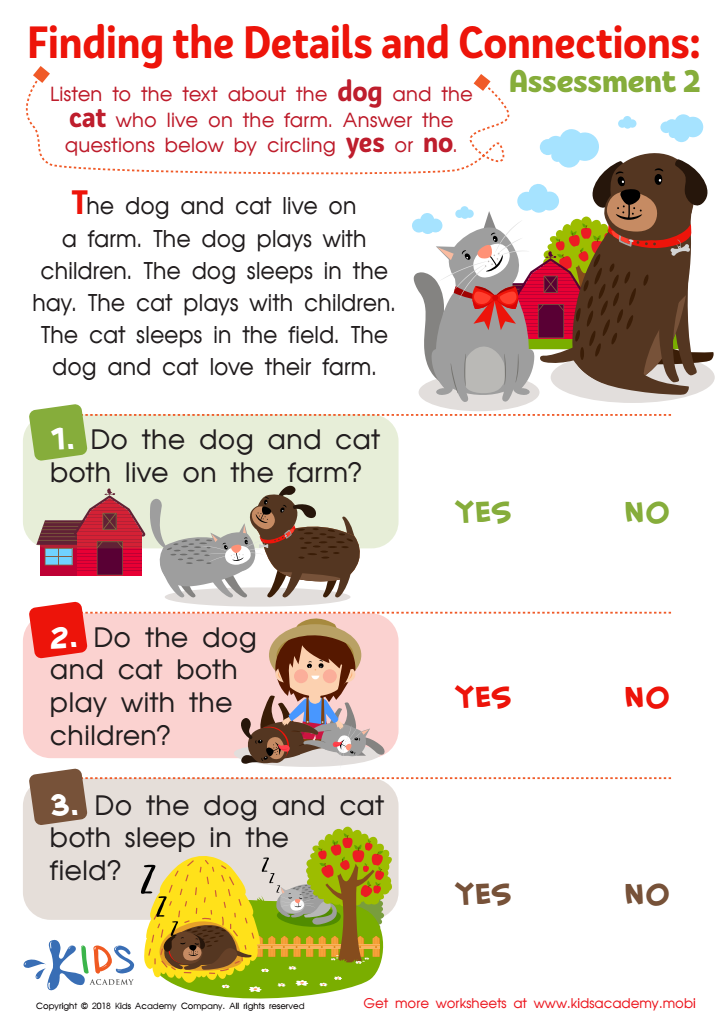
Finding the Details and Connections: Assessment 2 Worksheet
 Assign to My Students
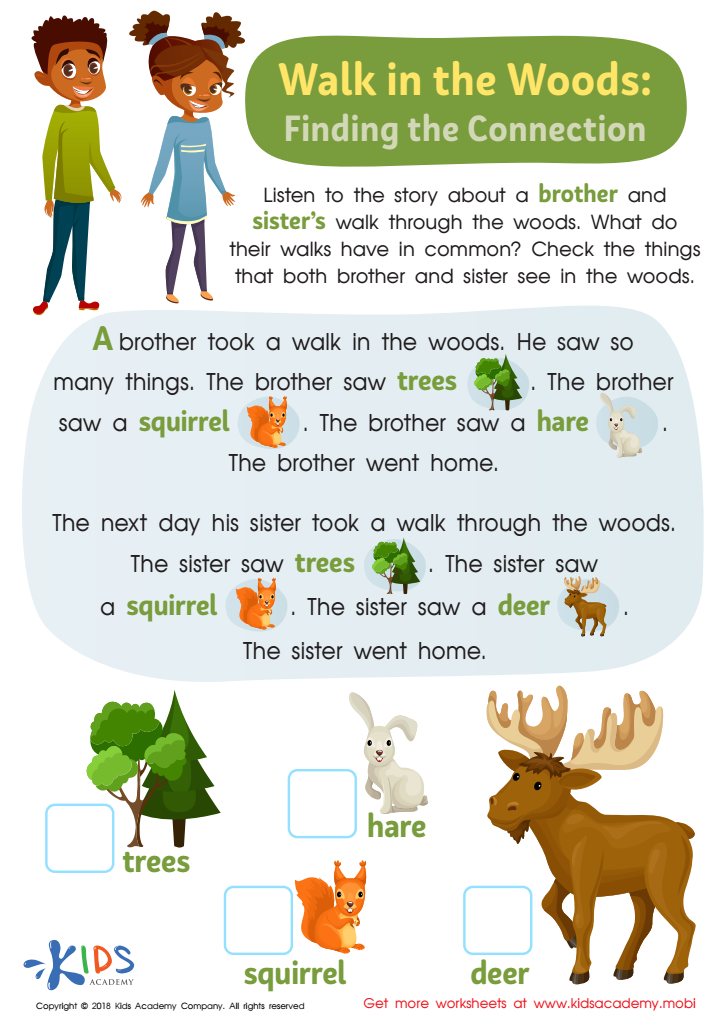
Walk In the Woods: Finding Connections Worksheet
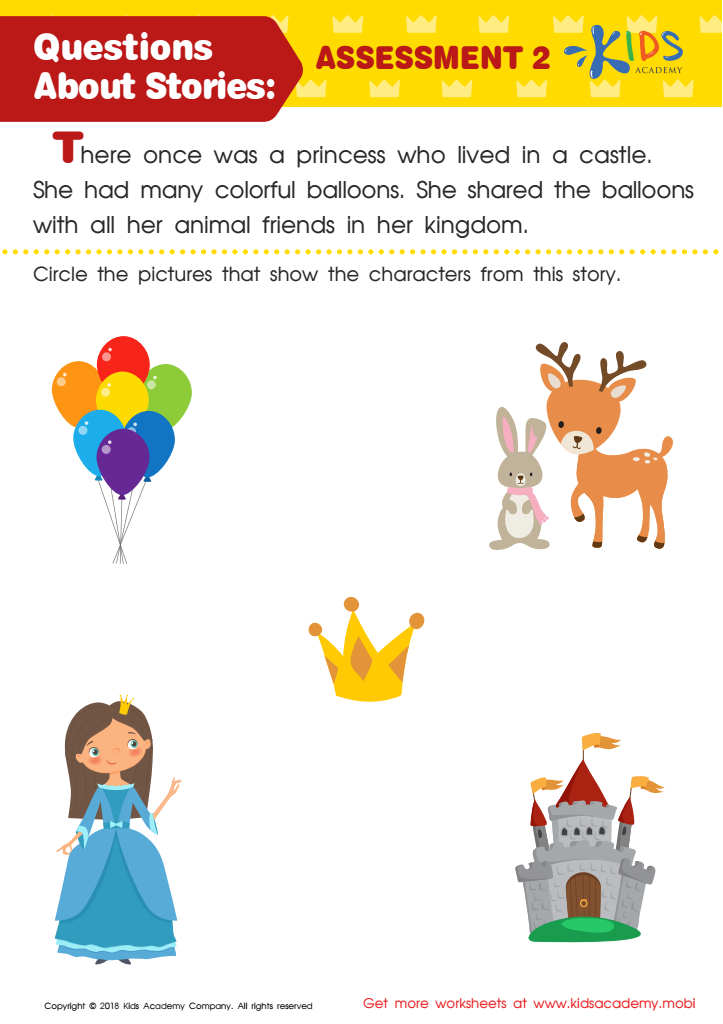
Questions About Stories: Assessment 2 Worksheet
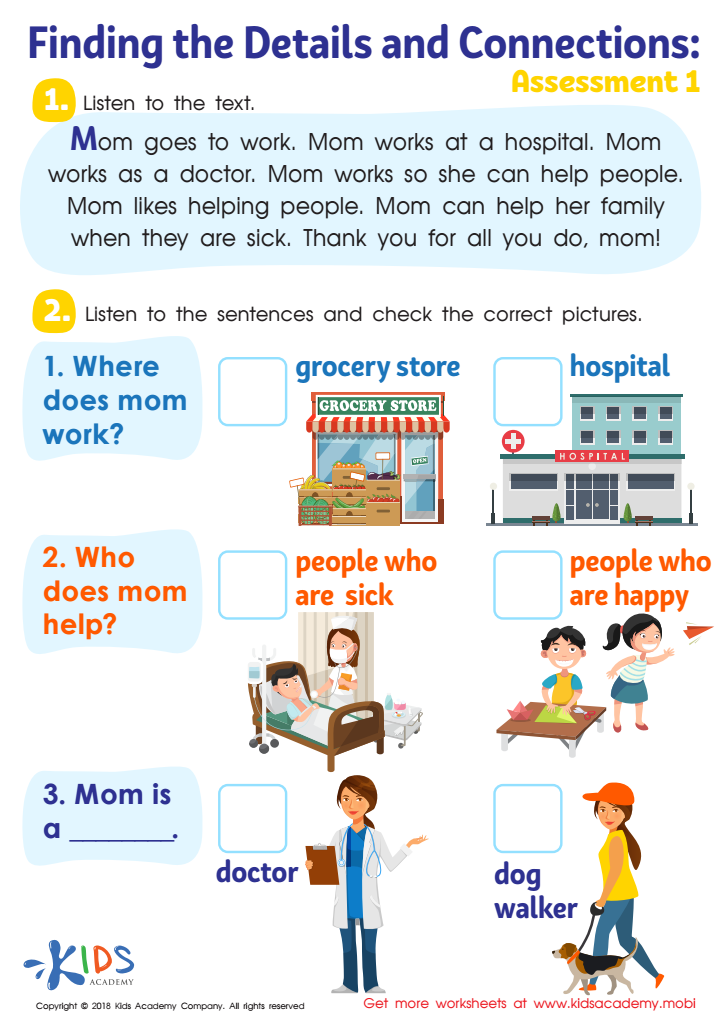
Finding the Details and Connections: Assessment 1 Worksheet
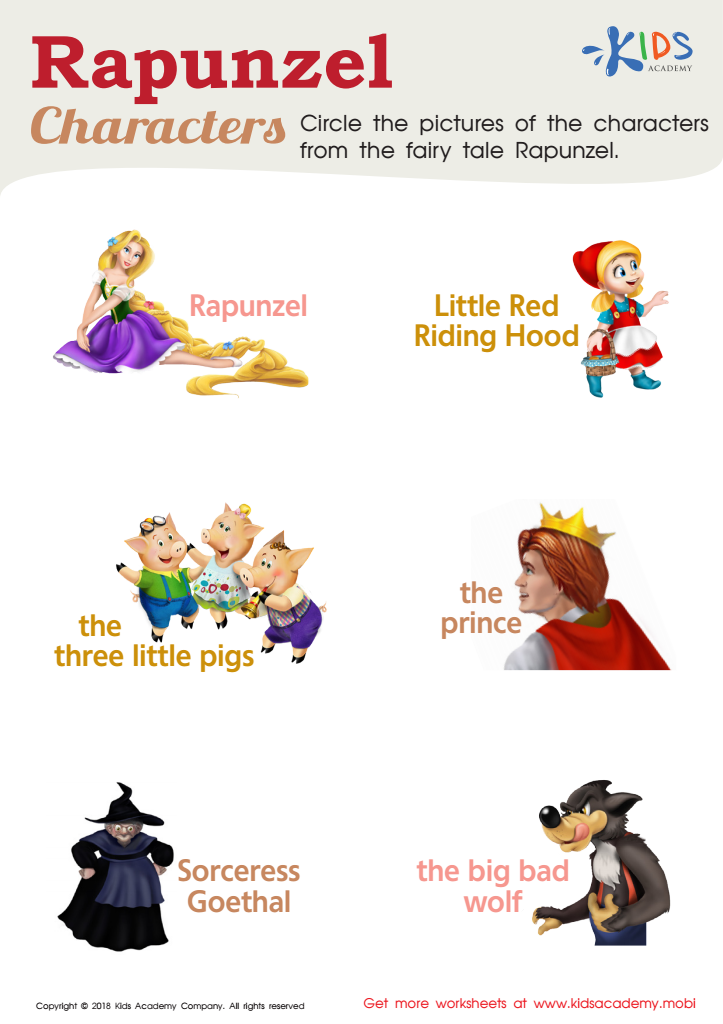
Rapunzel Characters Worksheet








Parents and teachers should care about analytical skills in early readers aged 4-7 because these skills lay the foundation for successful learning and problem-solving throughout a child's life. Developing analytical skills at this age helps children make sense of the world around them. When children engage with books and stories, they learn to identify patterns, make predictions, and draw conclusions based on the information presented.
At this age, children are naturally curious, and nurturing their analytical skills can enhance their critical thinking abilities. This fosters a love for learning, encouraging them to ask questions and explore ideas further. As they learn to analyze texts, they enhance comprehension, which is crucial for academic success in reading and other subjects.
Moreover, strong analytical skills are essential not just in academics, but in everyday life. Children learn to make decisions, solve puzzles, and tackle challenges effectively. Encouraging parents and educators to prioritize these skills means investing in a child's future, equipping them with the tools they need to navigate various situations. By fostering analytical thinking through reading, we create thoughtful learners who are prepared to face a complex world.








