Analytical skills Normal Reading Fiction Worksheets for Ages 4-7
5 filtered results
-
From - To
Unlock the magic of storytelling while building critical analytical skills with our engaging Normal Reading Fiction Worksheets for ages 4-7. Tailored to captivate young minds, these worksheets help little learners explore exciting tales while enhancing their comprehension, critical thinking, and analytical abilities. Each activity encourages children to delve deeper into stories, examining characters, setting, plot, and underlying themes. Perfect for early-grade readers, these worksheets develop a solid literacy foundation and ignite a lifelong love for reading and learning. Discover a fun and educational way to spark imagination and intellectual growth with our expertly crafted resources!
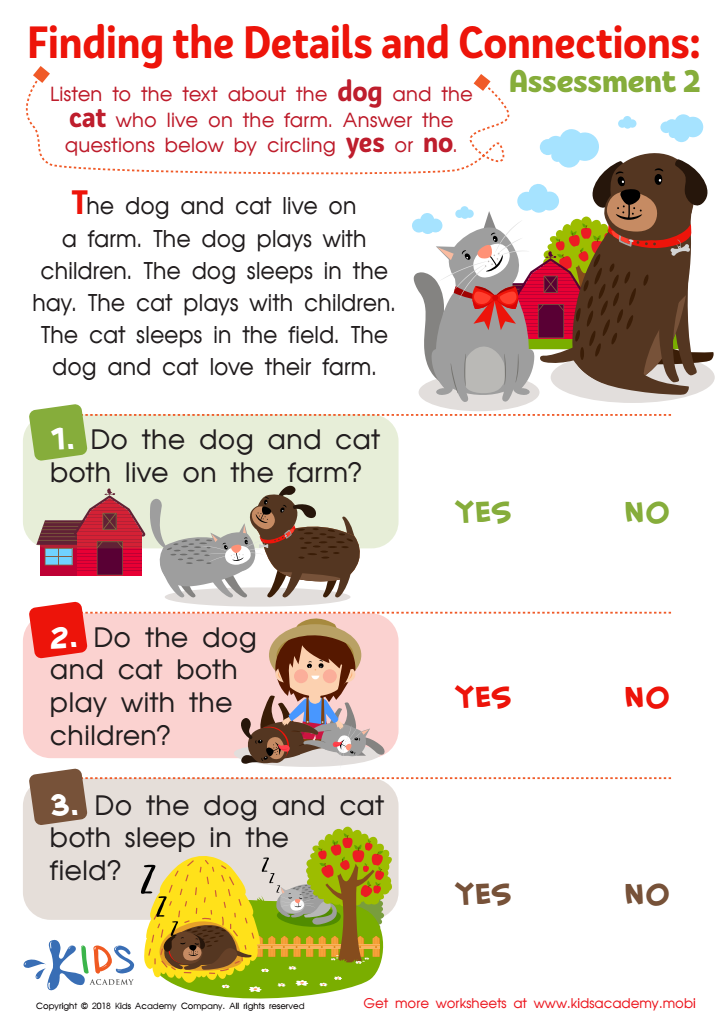
Finding the Details and Connections: Assessment 2 Worksheet
 Assign to My Students
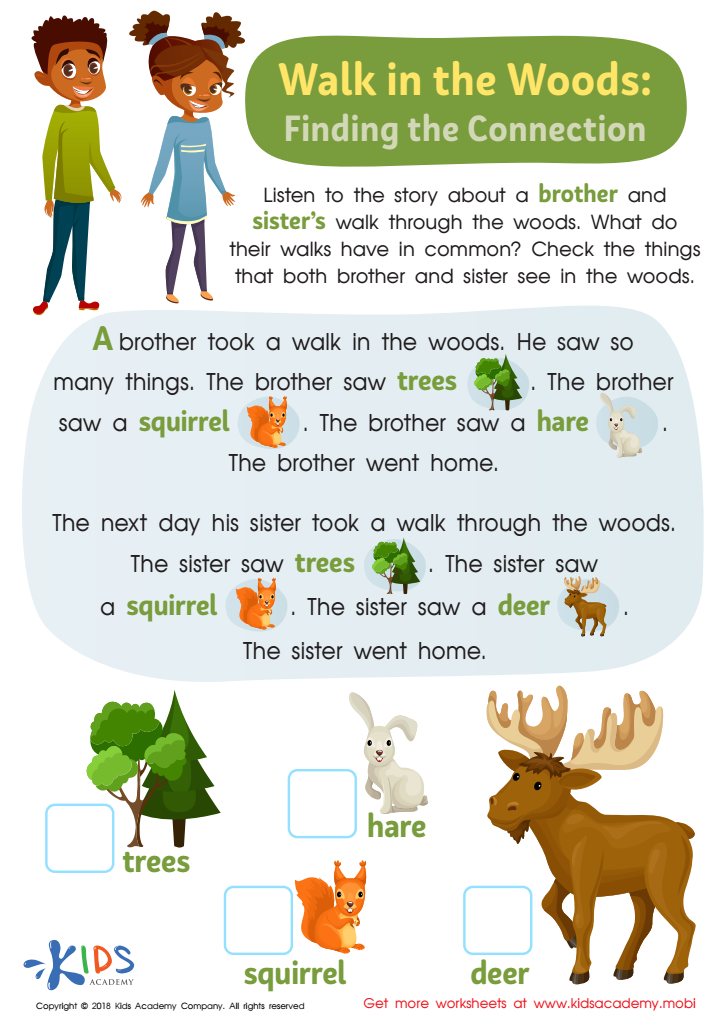
Walk In the Woods: Finding Connections Worksheet
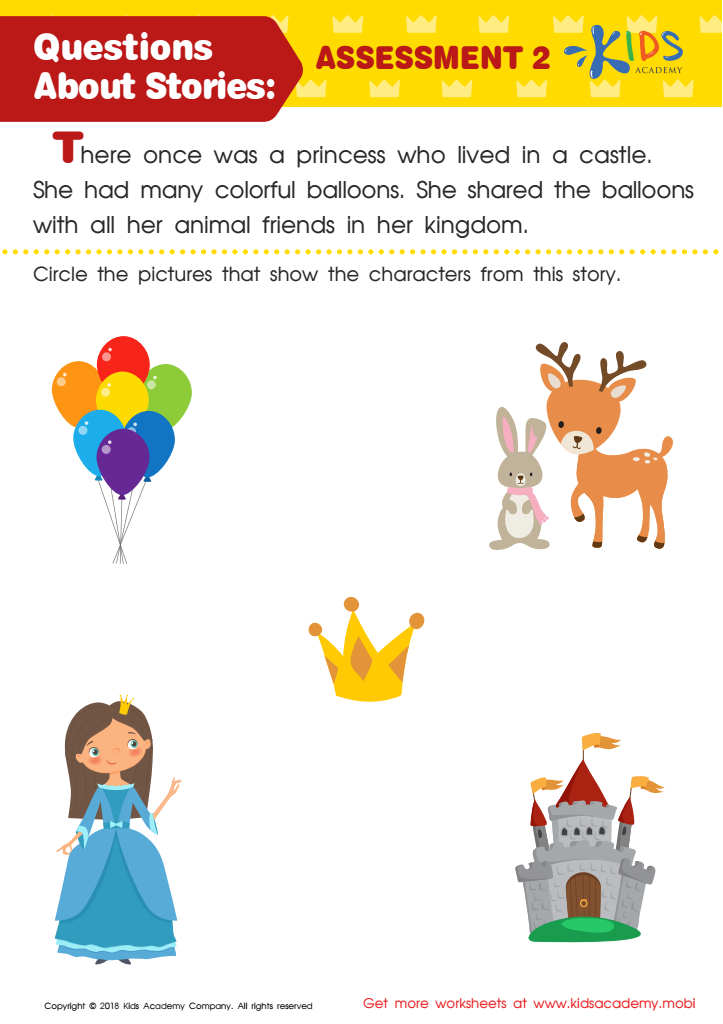
Questions About Stories: Assessment 2 Worksheet
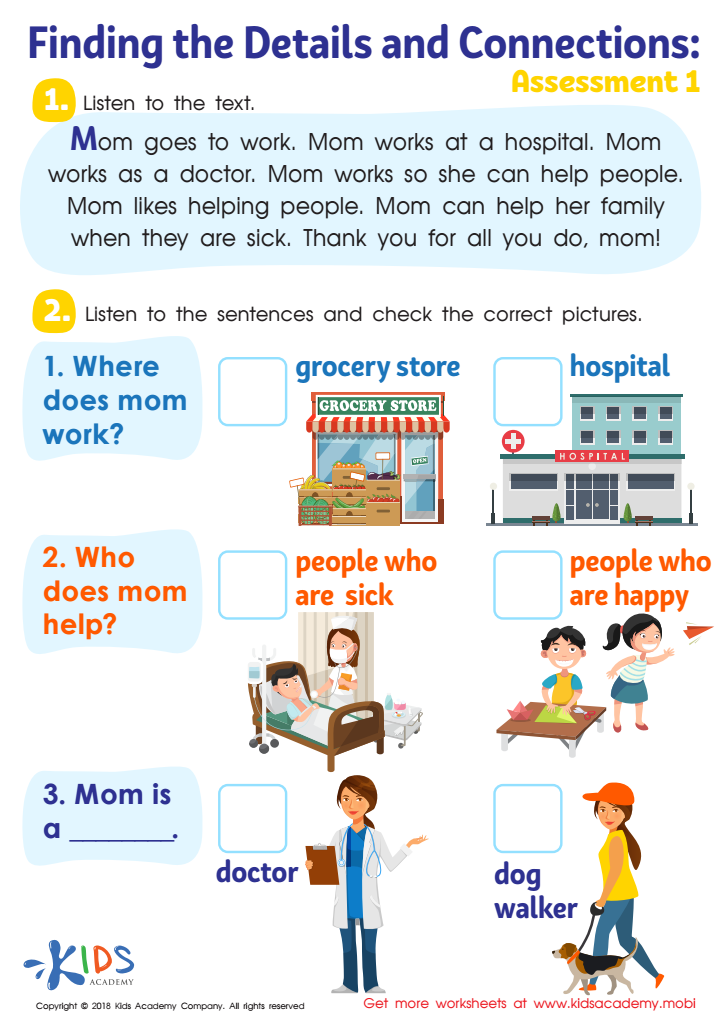
Finding the Details and Connections: Assessment 1 Worksheet
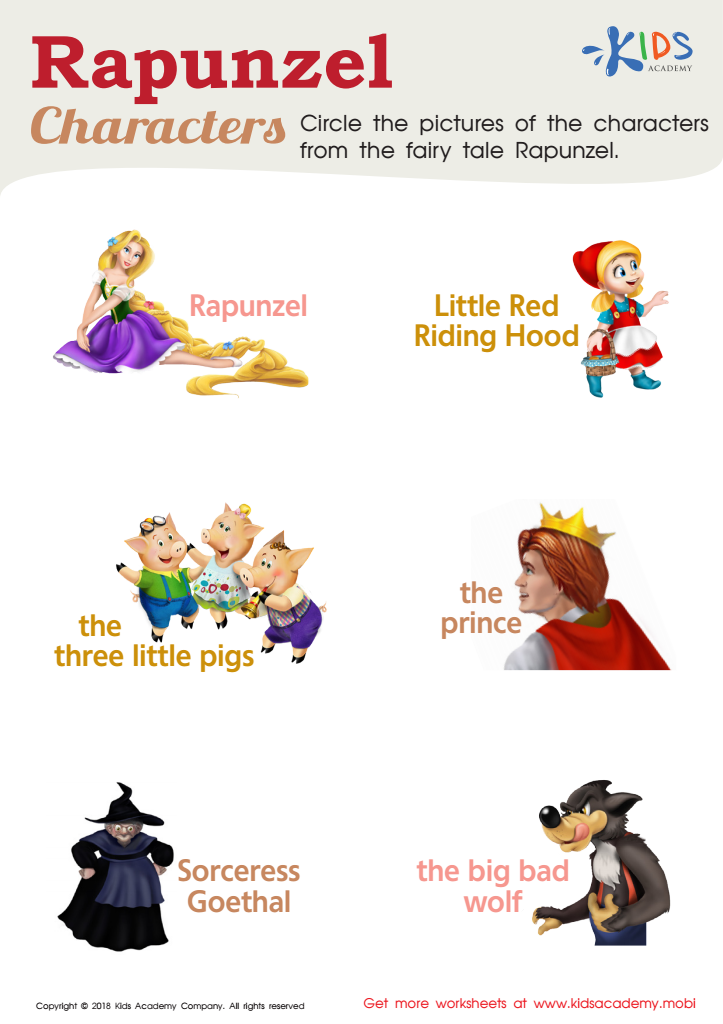
Rapunzel Characters Worksheet


.jpg)



.jpg)

Parents and teachers should prioritize the development of analytical skills through normal reading of fiction for children aged 4-7, as it plays a pivotal role in their cognitive and emotional development. Engaging young minds with stories helps enhance their ability to think critically and make sense of the world around them. Fiction allows children to explore diverse perspectives and understand complex characters, fostering empathy and a deeper comprehension of human behavior and emotions.
At this crucial stage, children's brains are especially adaptable, making it an ideal time to develop these vital skills. Analyzing story elements such as plot, setting, and character motivations during reading sessions helps sharpen young minds' analytical abilities. This lays a solid foundation for more advanced comprehension and reasoning skills needed in later academic tasks.
Furthermore, reading fiction stimulates imagination and creativity, along with boosting vocabulary and language skills. Rich, descriptive narratives provide context for new words and ideas, helping children to articulate thoughts and express themselves more clearly.
In sum, parents and teachers should value the role of analytical skills in early reading because it cultivates not only academic readiness but also emotional intelligence and social awareness, partnering to develop well-rounded, thoughtful, and imaginative individuals.







