Moral understanding Normal Reading Fiction Worksheets for Ages 4-7
4 filtered results
-
From - To
Enhance your child’s moral understanding with our engaging Normal Reading Fiction Worksheets, specifically designed for ages 4-7. These worksheets encourage young learners to explore important moral themes and concepts through fun, age-appropriate stories. By analyzing characters and scenarios, children develop critical thinking and empathy, equipping them with the skills to navigate real-life situations. Our printable worksheets not only promote reading skills but also foster discussions about right and wrong, helping kids build a strong moral compass. Perfect for home or classroom use, these resources inspire children to think deeply while enjoying the magic of storytelling. Start nurturing essential life skills today!
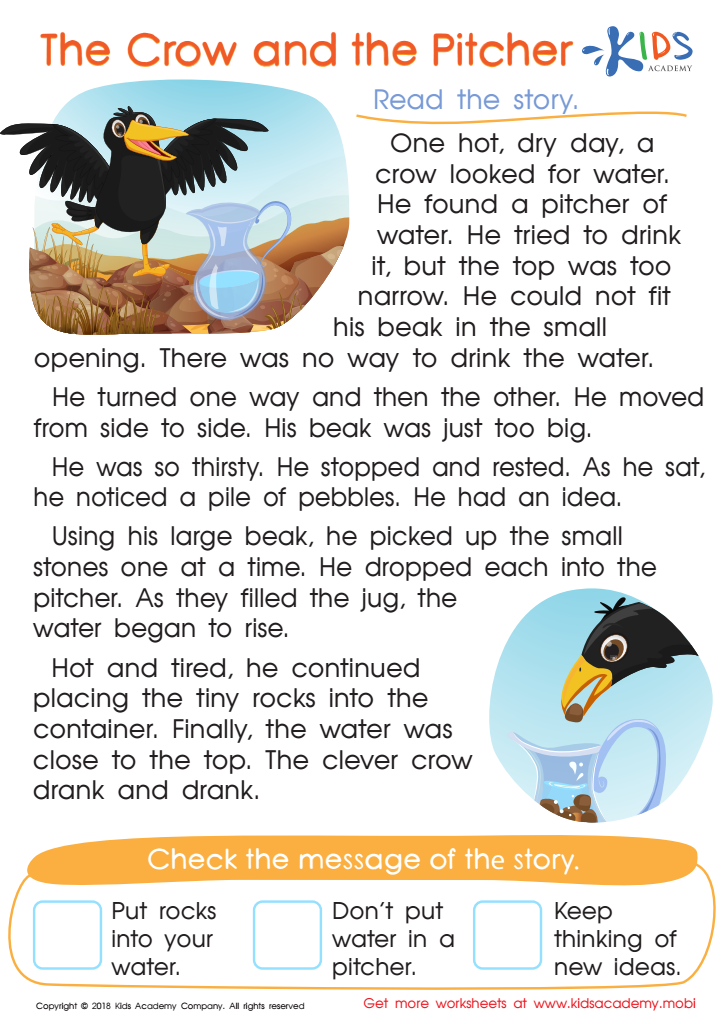
The Crow and the Pitcher Worksheet
 Assign to My Students
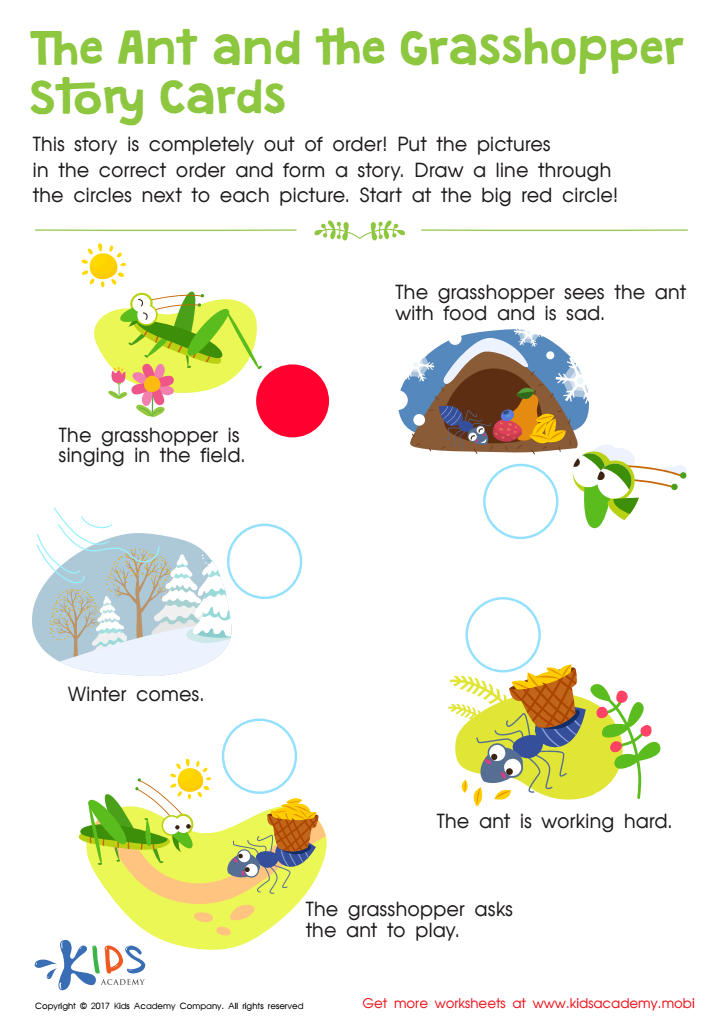
The Ant and The Grasshopper Worksheet
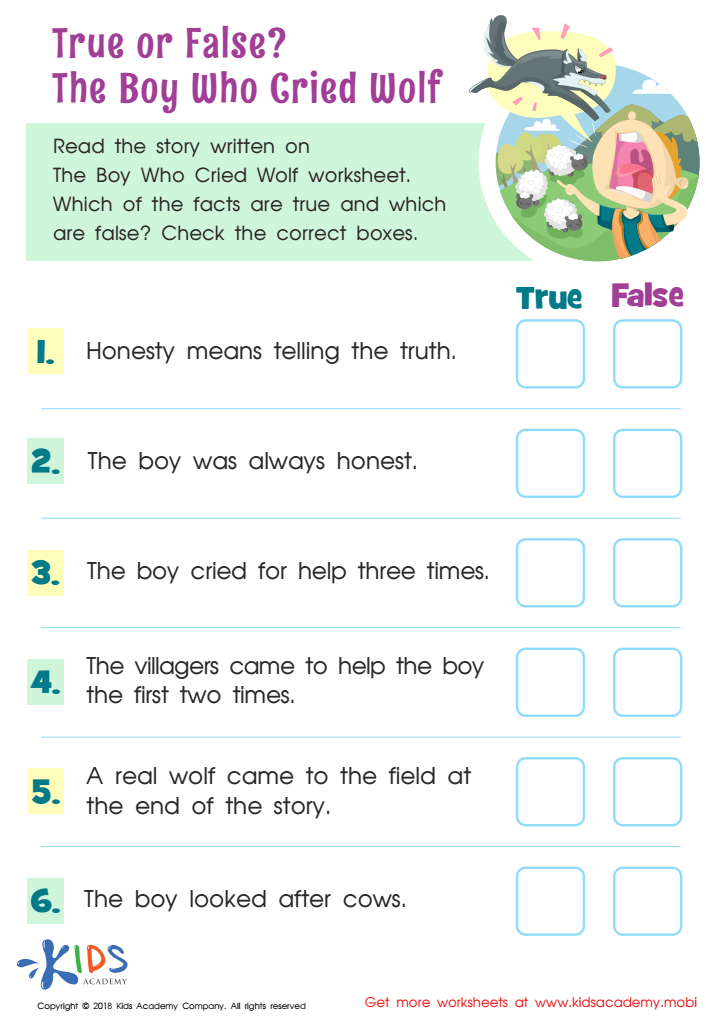
True or False? The Boy Who Cried Wolf Worksheet
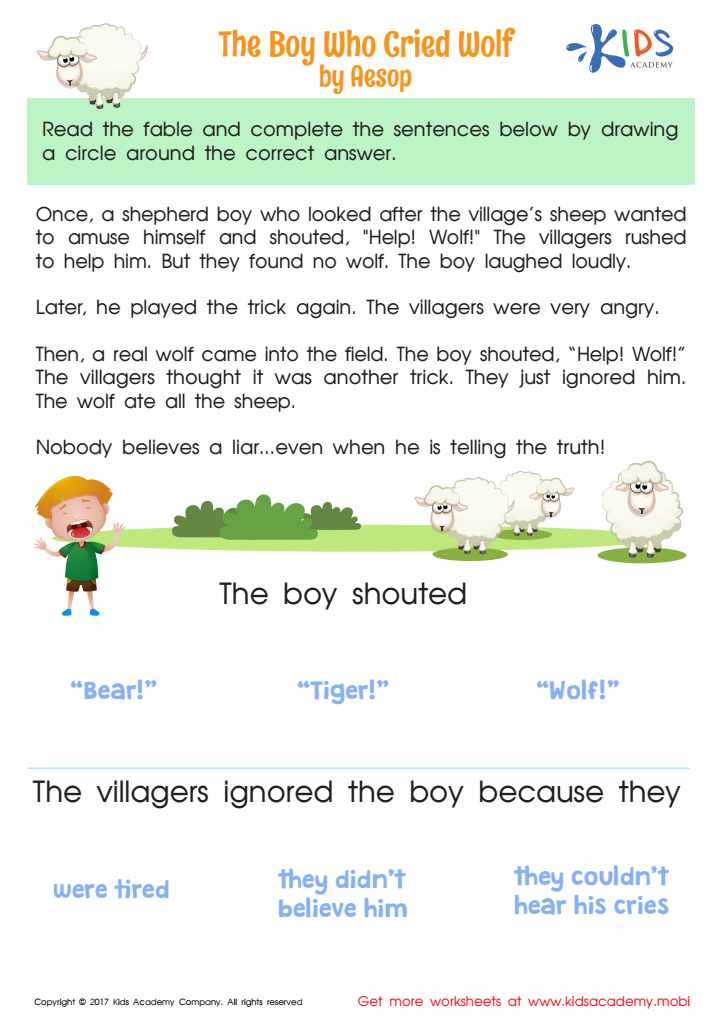
The Boy Who Cried Wolf Worksheet








Parents and teachers should care about moral understanding in reading fiction for children ages 4-7 because it plays a crucial role in their social-emotional development. At this age, children's cognitive abilities are rapidly developing, and they begin to comprehend complex concepts such as kindness, empathy, fairness, and consequences. Engaging with stories that illustrate moral dilemmas or virtuous behavior helps children recognize the feelings and perspectives of others, fostering empathy and compassion.
Moreover, reading morally rich fiction cultivates critical thinking skills, allowing children to question characters' decisions in the story and relate those situations to their own lives. This reflective process encourages them to develop their own moral frameworks and make informed choices as they grow.
Additionally, reading together fosters quality bonding time, providing parents and teachers an opportunity to discuss important values and lessons in a safe environment. By integrating moral understanding into reading activities, educators and caregivers provide a well-rounded approach to literacy that goes beyond basic comprehension. This nurturance aids in crafting responsible, compassionate individuals who are not only skilled communicators but also empathetic participants in society. Ultimately, fostering moral understanding through fiction lays the groundwork for healthy interpersonal relationships in the future.







