Sight word recognition Normal Sight Words Worksheets for Ages 4-7
5 filtered results
-
From - To
Boost your child's reading skills with our engaging Sight Word Recognition Worksheets, designed for ages 4-7. These expertly crafted worksheets focus on helping young learners identify and memorize common sight words, transforming them into confident readers. Our resources utilize fun activities and vibrant visuals to make learning enjoyable and effective. Ideal for preschoolers, kindergarteners, and first graders, these worksheets will strengthen your child's foundational reading abilities, paving the way for future academic success. Give your child the tools they need to thrive with our top-rated Sight Word Recognition Worksheets!
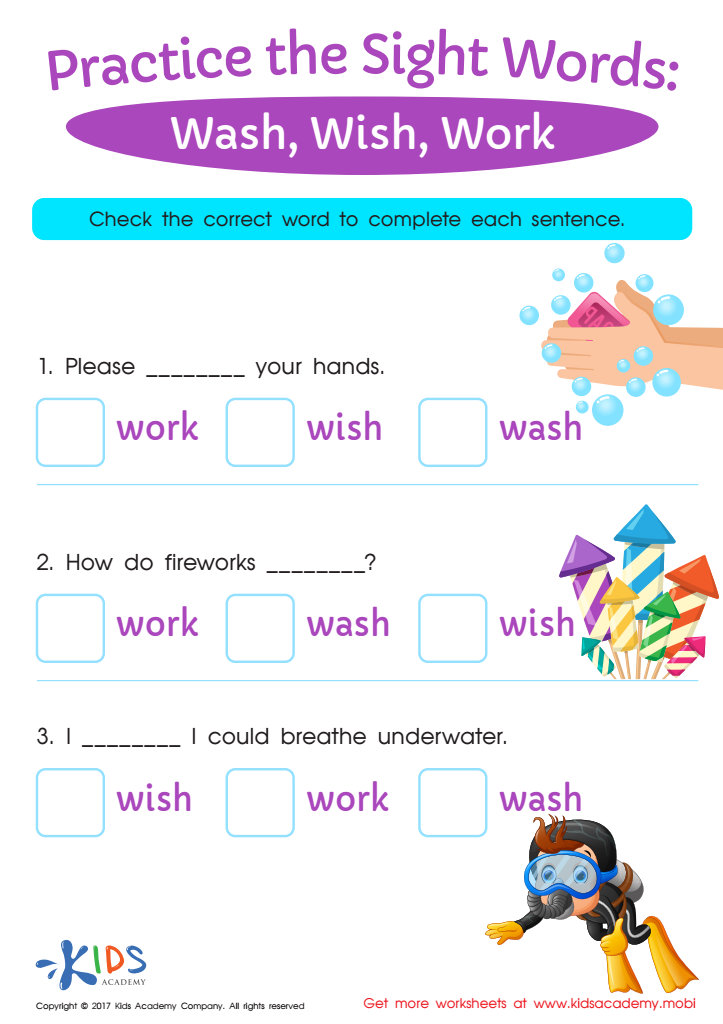
Wash, Wish, Work Sight Words Worksheet
 Assign to My Students






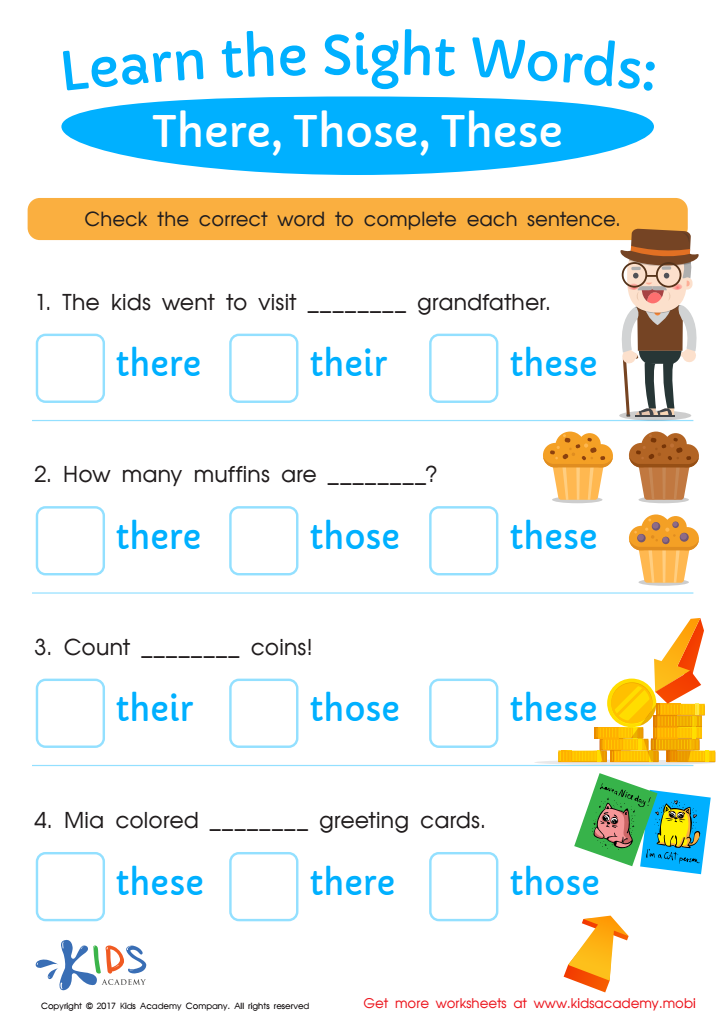
There, Those and These Sight Words Worksheet
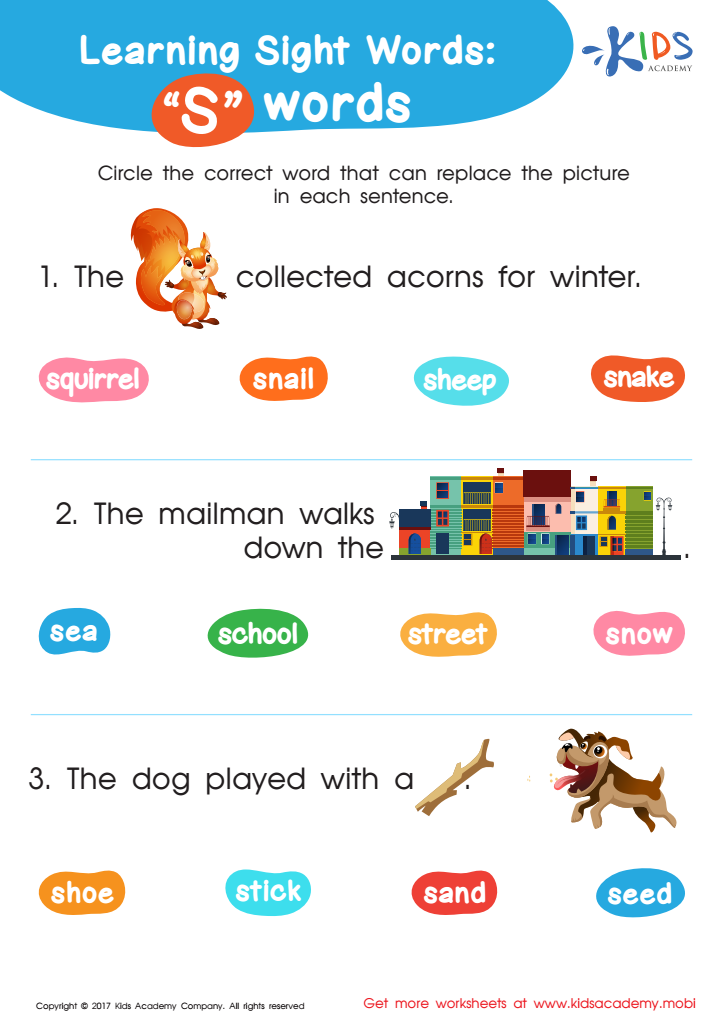
S Words Sight Words Worksheet
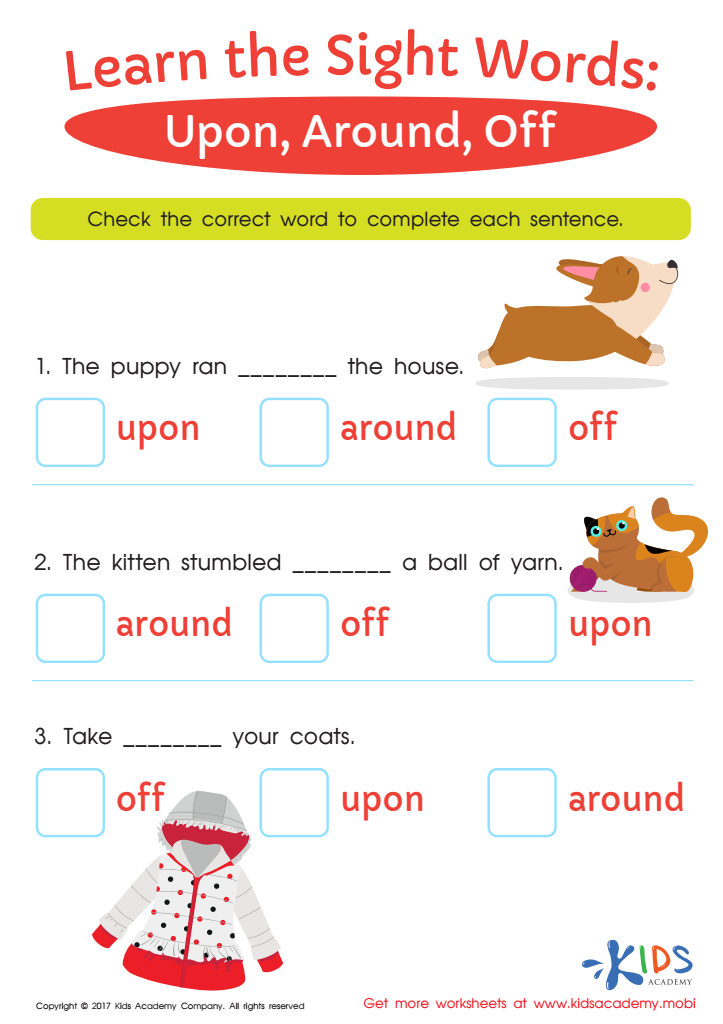
Upon, Around, Off Sight Words Worksheet
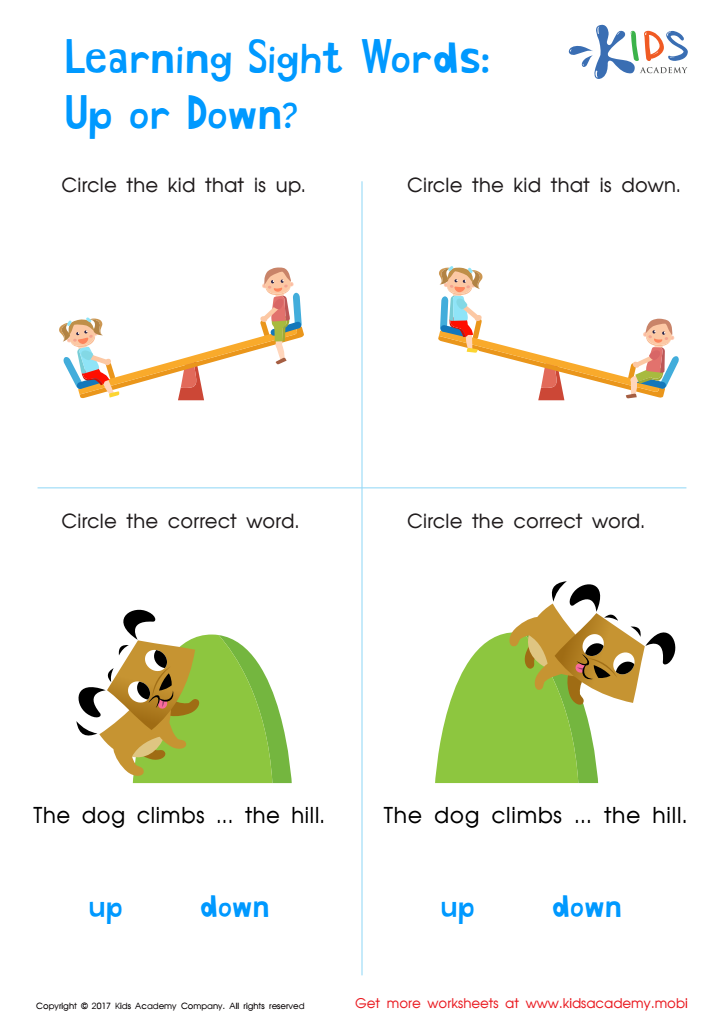
Up or Down Printable Sight Words Worksheet








Sight word recognition is a critical building block in early childhood literacy, particularly for children aged 4-7. These are words that appear frequently in texts and often do not follow phonetic rules, making them hard to decode with general reading strategies. Mastery of sight words significantly enhances a child's reading fluency and comprehension. By quickly recognizing these words, young readers can focus their cognitive resources on understanding the text's meaning rather than decoding individual words.
For parents and teachers, prioritizing sight word recognition can make reading more enjoyable and less frustrating for children, ultimately fostering a love for reading. When children feel confident in their ability to read, they are more likely to engage with books and other reading materials, promoting lifelong literacy skills. Also, this practice serves as a foundation for learning more complex words and syntactic structures in later grades, ensuring a smoother academic progression.
Moreover, proficient sight word recognition plays a pivotal role in school success across subjects. Textbooks, instructions, and worksheets in various disciplines require reading competency. Hence, fostering early sight word proficiency equips children with the essential skills needed not just for reading but for learning in general, building their confidence and enthusiasm in both academic and real-world settings.