
Observation skills Normal Science Worksheets for Ages 4-7
6 filtered results
Difficulty Level
Grade
Age
-
From - To
Subject
Activity
Standards
Enhance your child's learning journey with our Observation Skills Normal Science Worksheets designed specifically for ages 4 to 7. These engaging worksheets encourage young learners to develop essential observation skills, fostering curiosity about the world around them. From colorful illustrations to interactive activities, each worksheet promotes critical thinking and meticulous observation. Kids will explore nature, identify patterns, and describe their findings in a fun, age-appropriate format. Ideal for both classroom settings and at-home learning, these resources provide a solid foundation in scientific inquiry. Help your child discover the joy of learning science through observation today!
Favorites
With answer key
Interactive
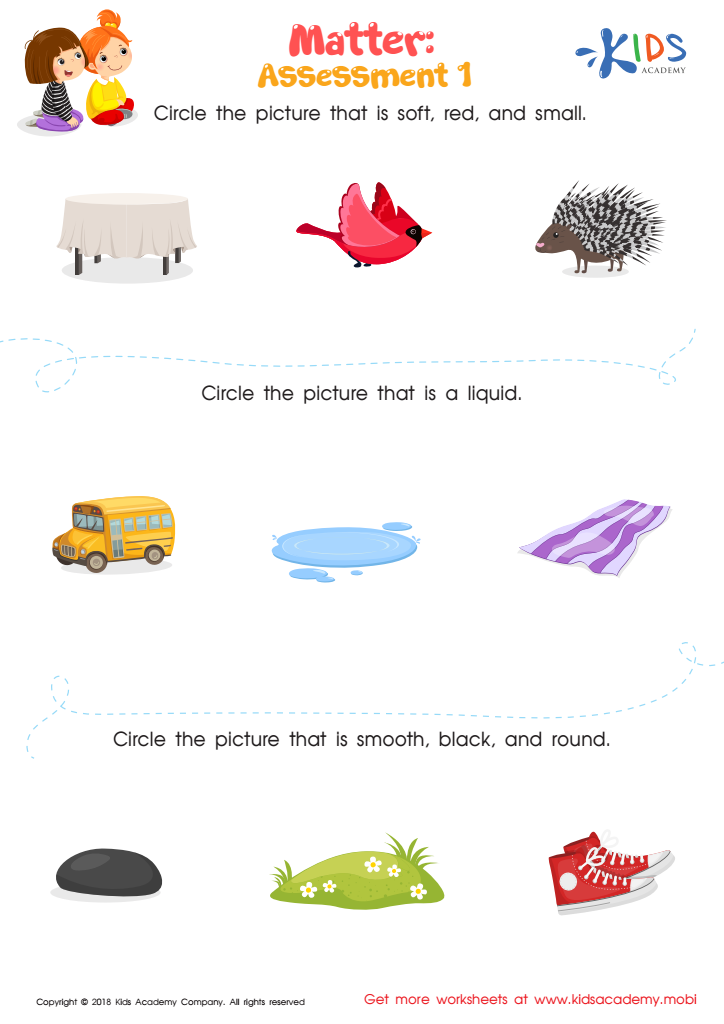
Matter: Assessment 1 Worksheet
Have your children learn that anything that has weight and takes up space is matter. Examples include buses, tables, people, animals, and more. Use this worksheet to help them identify the objects and circle the soft, red, and small one; the liquid; and the smooth, black, and round one.
 Assign to My Students
Matter: Assessment 1 Worksheet
Worksheet
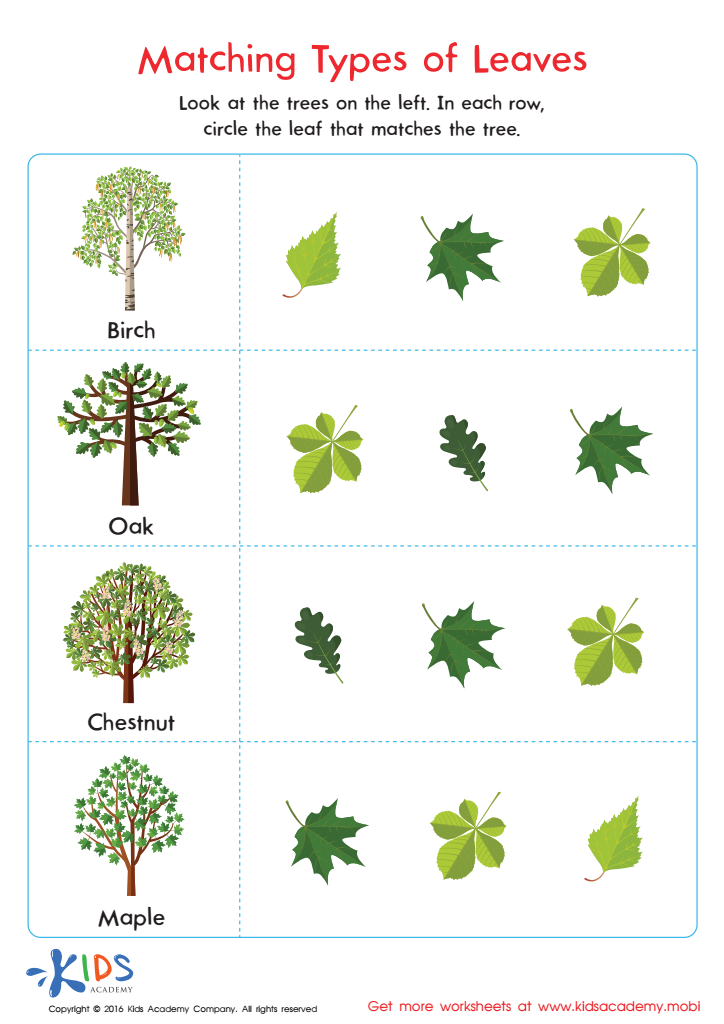
Matching Types of Leaves Printable
Trees are beautiful and essential to life. Show your child the joy of learning about them with this leaf worksheet. It teaches tree identification and encourages observing nature. Expand the learning with additional activities about trees!
Matching Types of Leaves Printable
Worksheet
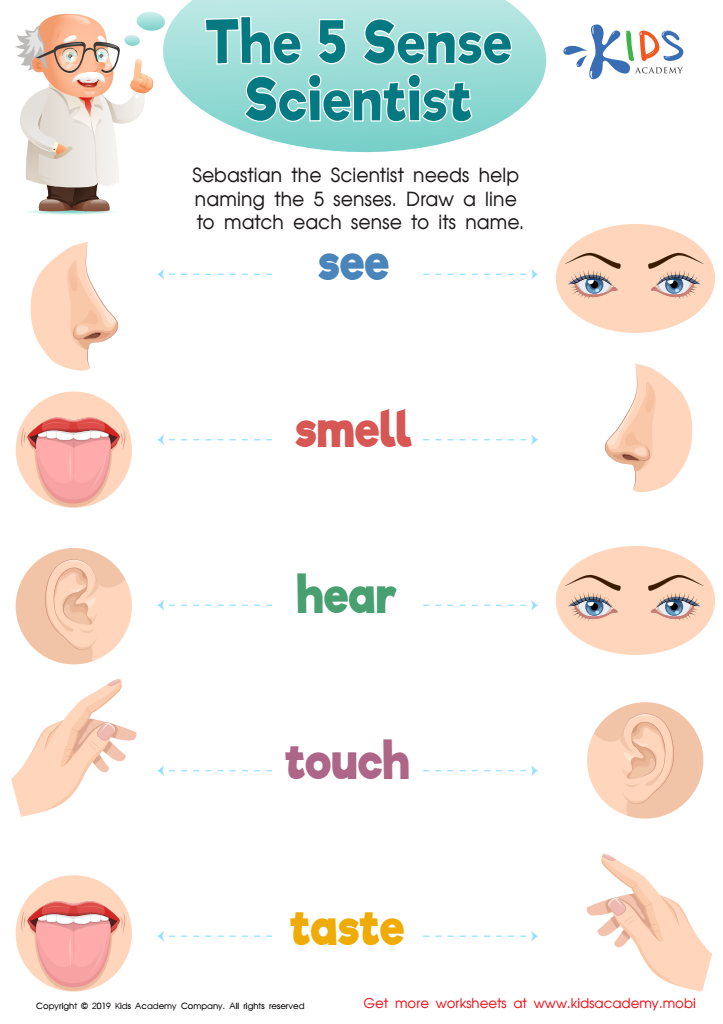
The 5 Sense Scientist Worksheet
Our young children will have fun learning about their five senses with this free Sense Scientist worksheet. Helping Sebastian the Scientist, they'll name the five senses and use traceable lines to connect each picture with its correct sense. Colorful words and pictures will create a memorable picture representation.
The 5 Sense Scientist Worksheet
Worksheet
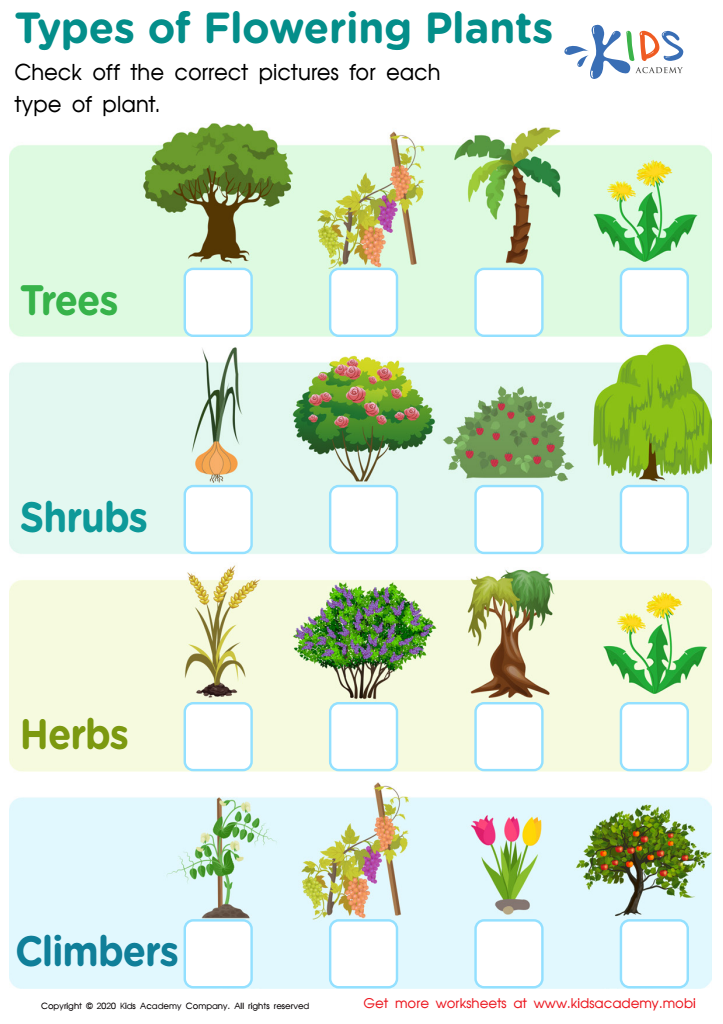
Types of Flowering Plants Worksheet
Help kids explore the variety of plants around them! Have them discover trees, shrubs, herbs, and vines with this fun science worksheet. Print it and let them match the plant pictures to their correct names. It's an exciting learning experience that'll let them check off the right images and explore the botanical world.
Types of Flowering Plants Worksheet
Worksheet
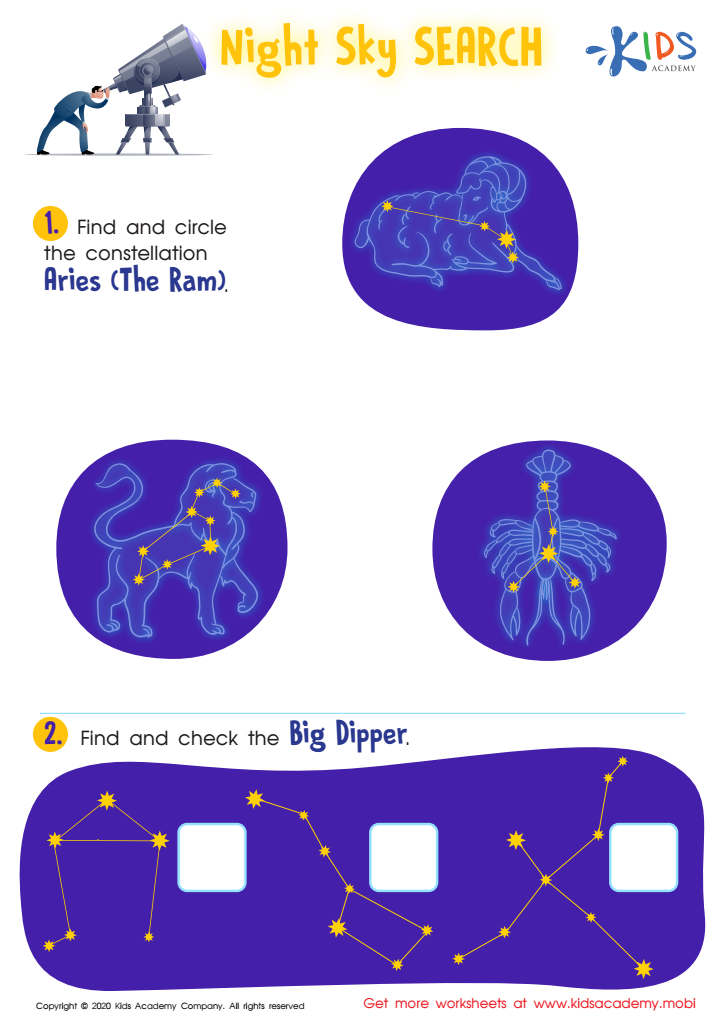
Night Sky Search Worksheet
Gaze up into the night sky and spot the stars! Your little astronomer can learn about Aries and Big Dipper constellations with this science worksheet. Simply find the ram for Aries and check the box for Big Dipper. Then, when the weather is right, go outside and look for them in the night sky!
Night Sky Search Worksheet
Worksheet
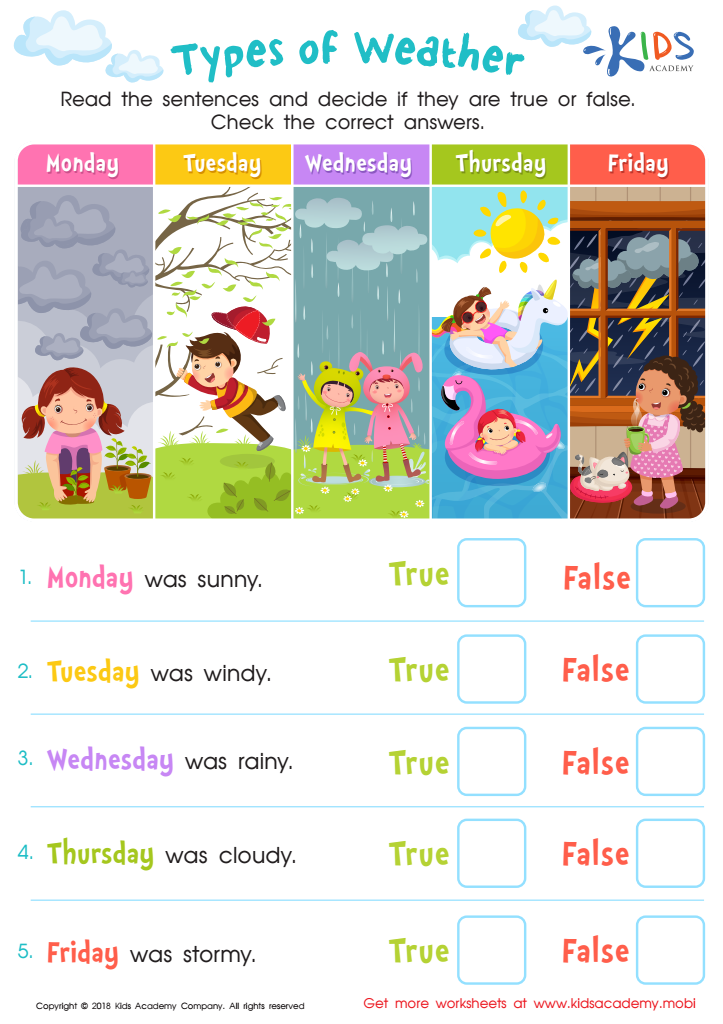
Types of Weather Worksheet
This worksheet will test your child's knowledge of the weather. Show them the pictures of five days of the week, each with a different weather and ask them to describe it. Then read the sentences and ask if they're true/false. Help them find the right answers.
Types of Weather Worksheet
Worksheet
Join Kids Academy for Free
Who is primarily going to use this learning content?



.jpg)



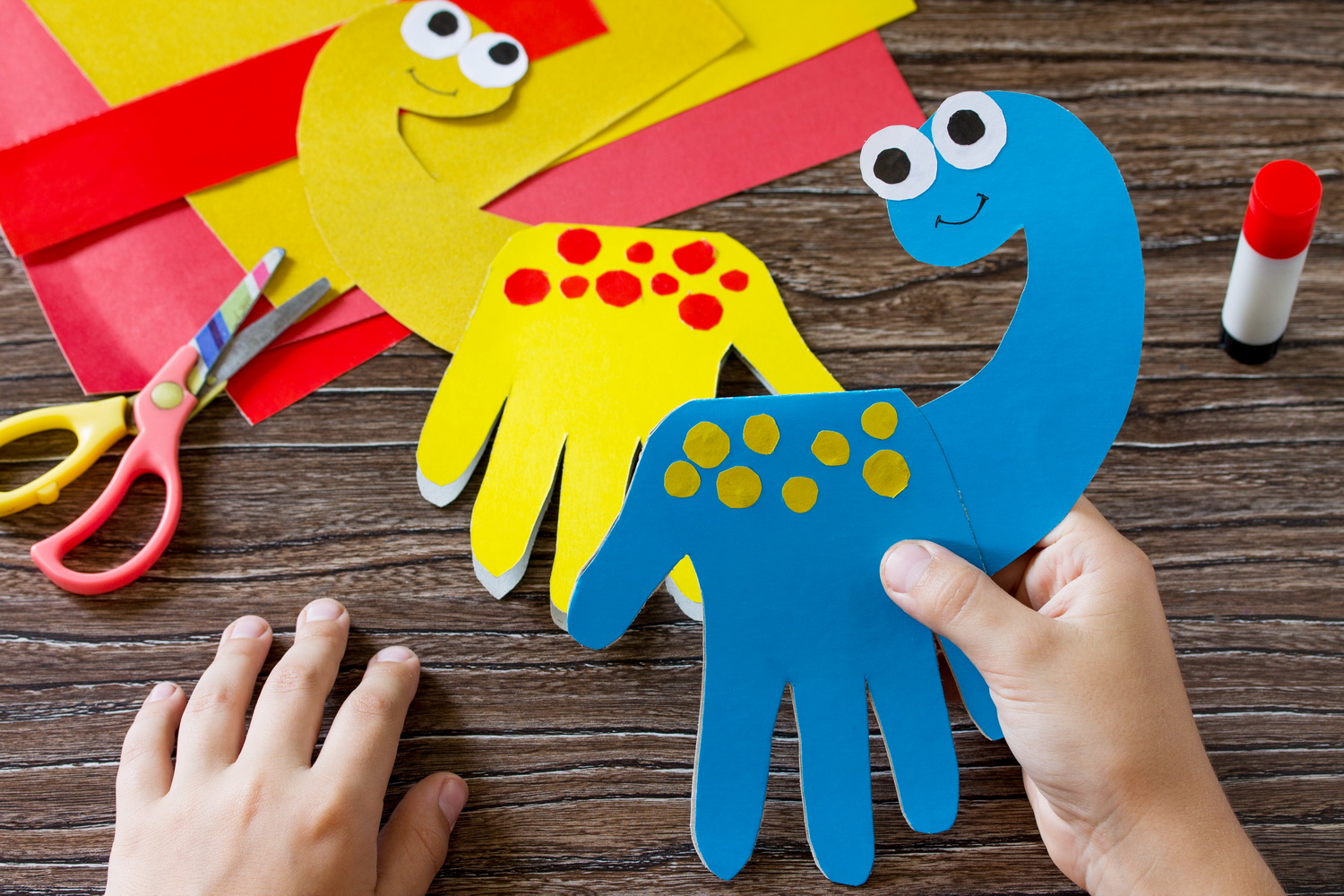
Observation skills are crucial for children aged 4-7 as they form the foundation for scientific inquiry and critical thinking. During this developmental stage, children have innate curiosity about their surroundings, and nurturing this inquisitiveness through structured observation helps them to explore concepts in “Normal Science.” These observation skills allow young learners to notice details, ask questions, and collect information about the world around them.
When parents or teachers emphasize observation, they empower children to make connections between what they see and what they learn. This begins their journey of forming hypotheses, conducting simple experiments, and deriving conclusions—all essential steps in the scientific method.
Moreover, robust observation skills enhance a child’s ability to communicate. By articulating their findings and thoughts effectively, children develop language skills alongside cognitive growth. Engaging in observation encourages creativity, imagination, and a sense of wonder, fostering a lifelong love for learning.
Lastly, these skills contribute to social-emotional development as children collaborate with peers, enhancing their teamwork abilities. In essence, prioritizing observation skills not only stimulates scientific understanding in young learners but also promotes holistic development critical for their future academic and personal success.







