Recognizing Patterns Normal Science Worksheets for Ages 4-7
3 filtered results
-
From - To
Explore our engaging "Recognizing Patterns Normal Science Worksheets" designed for children ages 4-7. These worksheets focus on helping young learners identify and understand patterns in their everyday environment, fostering early scientific thinking and problem-solving skills. Through fun and interactive activities, kids will practice recognizing sequences in nature, shapes, and colors, while enhancing their observational abilities. Perfect for home or classroom use, our worksheets promote concentration, creativity, and cognitive development. Download and provide your child with a delightful learning experience that encourages curiosity and introduces foundational science concepts through the joy of pattern recognition! Suitable for young explorers eager to learn!
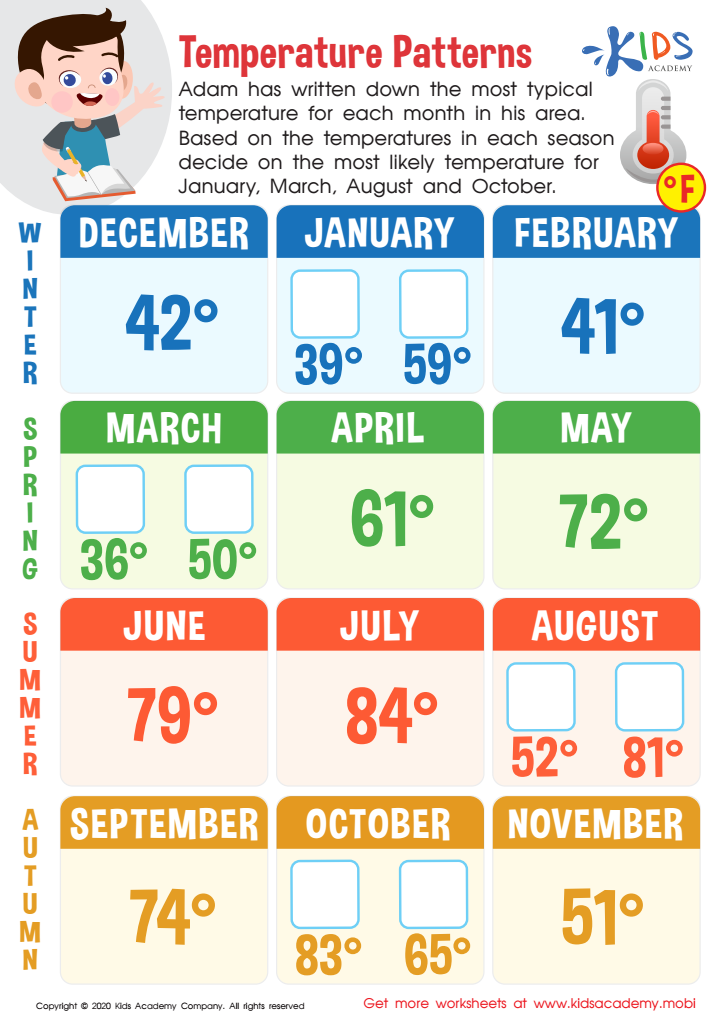
Temperature Patterns Worksheet
 Assign to My Students
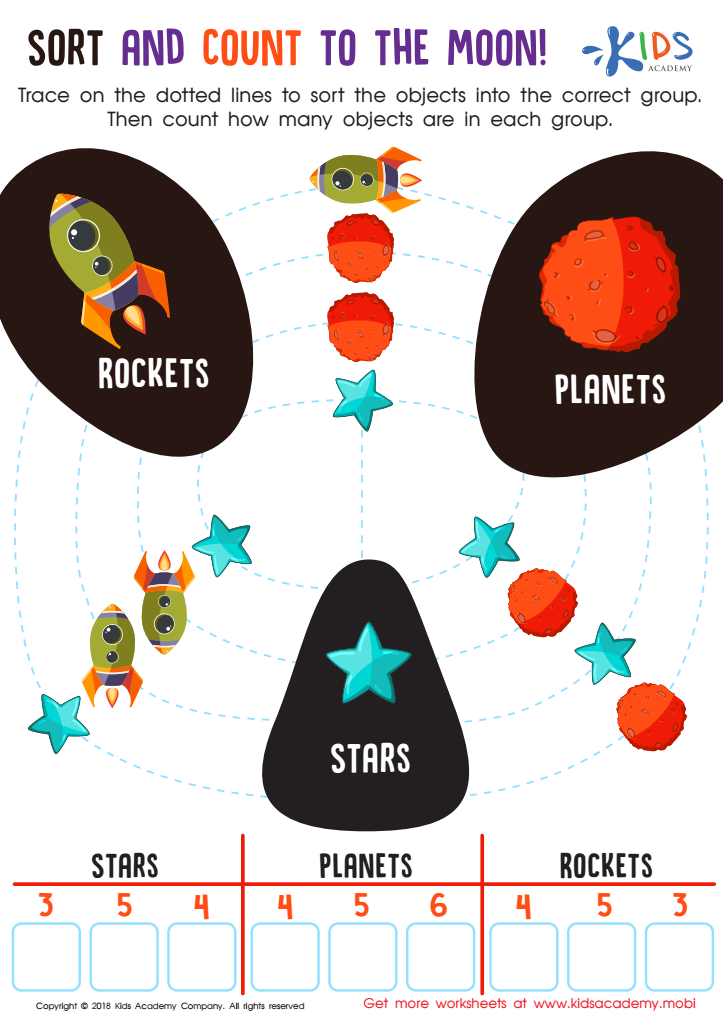
Sort and Count to the Moon Worksheet
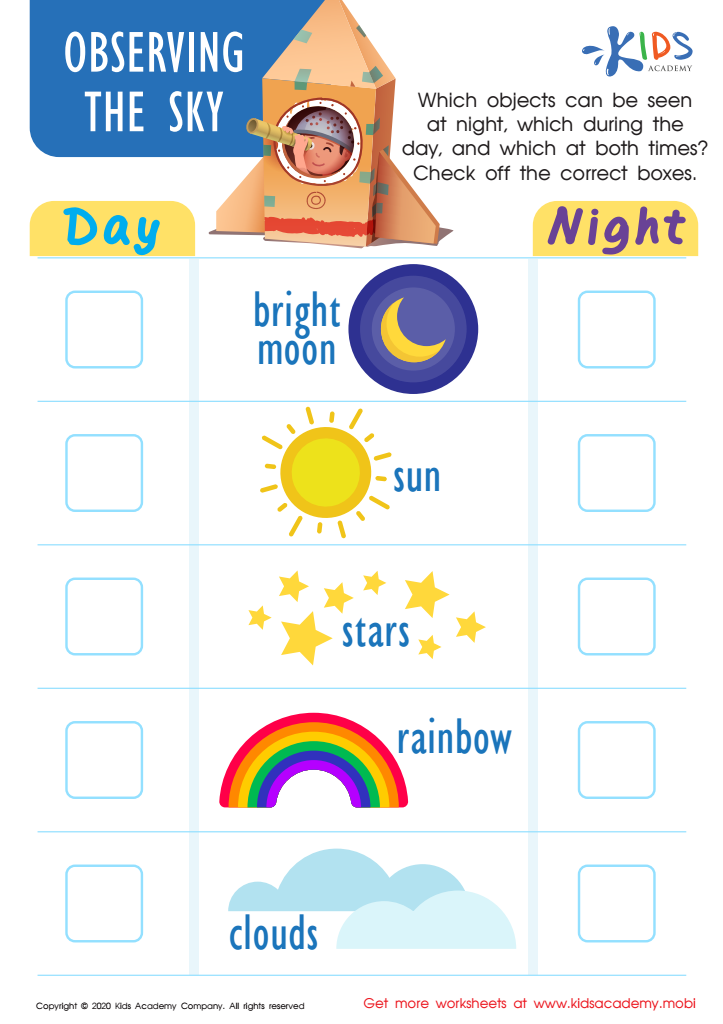
Observing the Sky Worksheet







Recognizing patterns is a fundamental skill that serves as a building block for various mathematical concepts and cognitive development in young children aged 4-7. Parents and teachers should care about this skill because it enhances critical thinking and problem-solving abilities. By identifying and understanding patterns, children learn to make predictions, foster logical reasoning, and develop their analytical skills, which are essential for future learning in both mathematics and science.
Additionally, recognizing patterns is not limited to numbers; it extends to shapes, colors, and even social interactions, enriching a child's understanding of the world around them. Early exposure to patterns helps in the development of early numeracy skills, such as counting and sequencing, while also reinforcing the importance of observation and comparison.
Furthermore, engaging with patterns allows children to express creativity, as they can create their own patterns in art, music, or storytelling. When parents and teachers emphasize pattern recognition, they support a child's cognitive growth and prepare them for the complexities of higher learning. Ultimately, nurturing this skill fosters a lifelong love of learning, making it a critical focus for educational development in these formative years.







