Understanding natural resources Normal Science Worksheets for Ages 4-7
4 filtered results
-
From - To
Discover our "Understanding Natural Resources Normal Science Worksheets" designed specifically for children ages 4-7. These engaging worksheets help young learners explore the concept of natural resources through fun activities and illustrations. With easy-to-understand questions and playful exercises, kids will identify various natural resources, learn their importance in everyday life, and develop critical thinking skills. Ideal for teachers and parents, these worksheets encourage curiosity about the environment while providing an educational foundation. Empower your child’s science learning journey today with interactive resources that make understanding the world around them exciting and accessible! Perfect for home or classroom use.
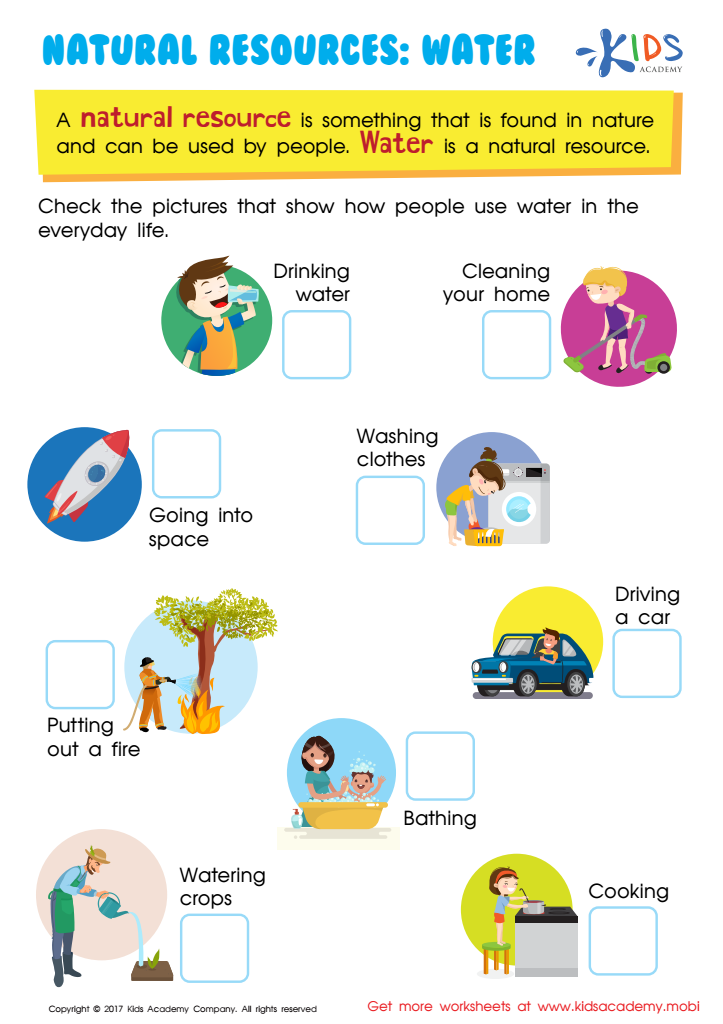
Natural Resources: Water Worksheet
 Assign to My Students
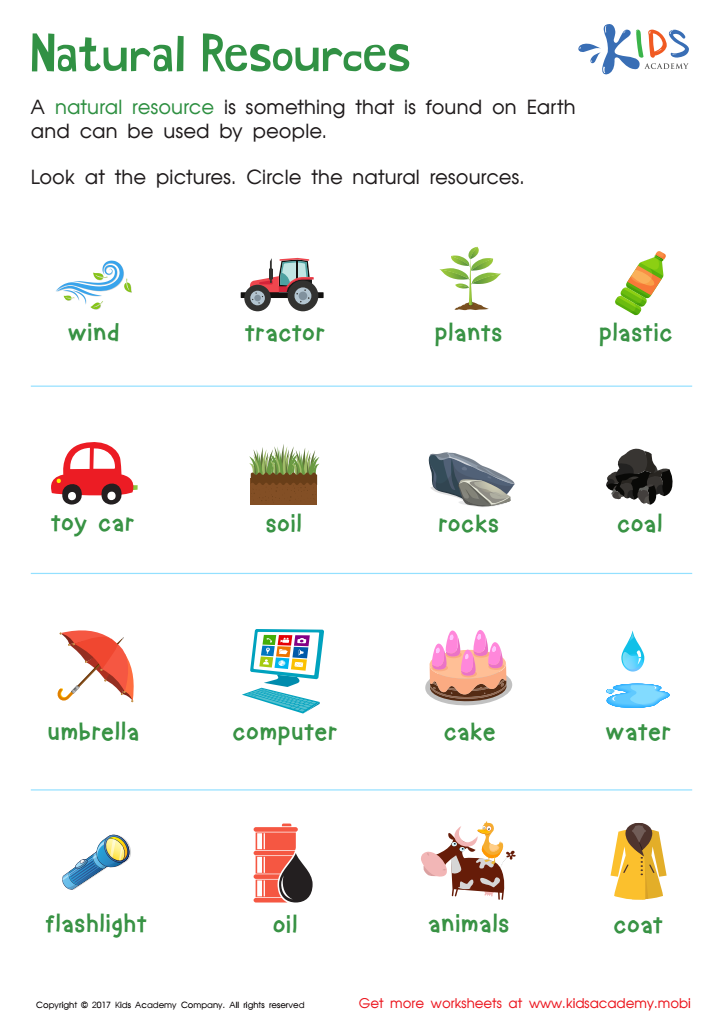
Natural Resources Worksheet
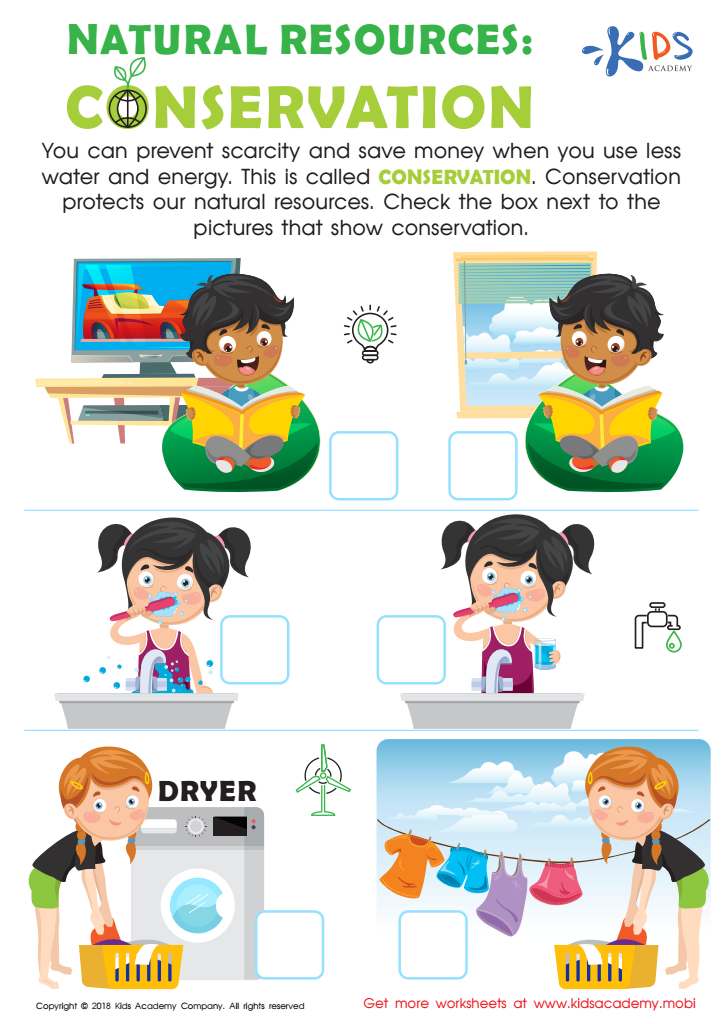
Natural Resources: Conservation Worksheet
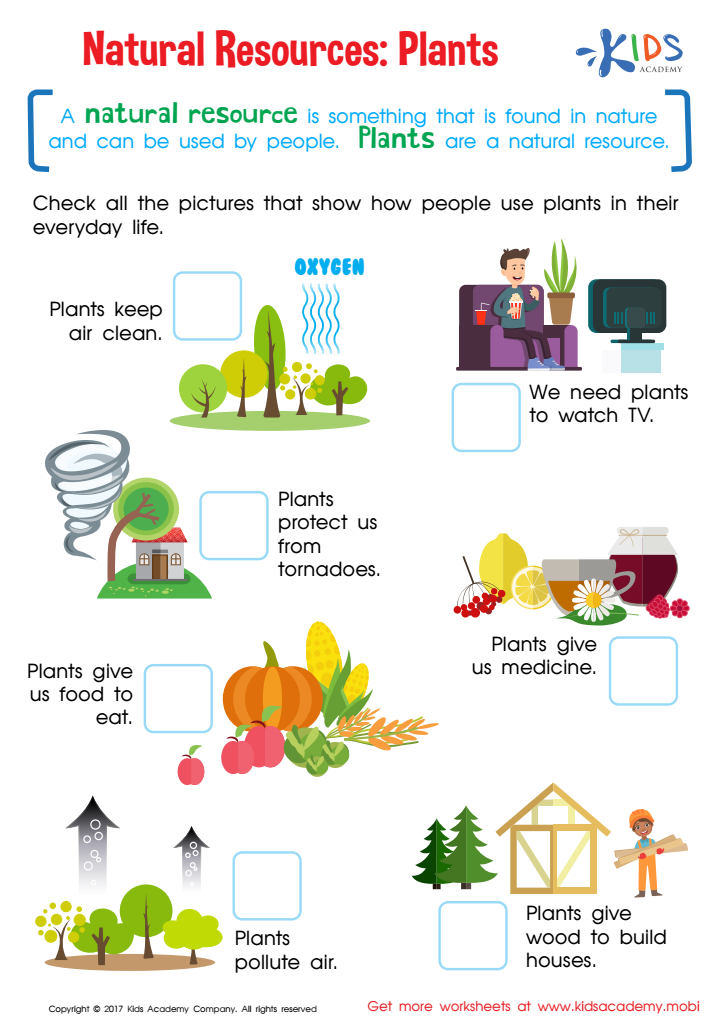
Natural Resources: Plants Worksheet






Understanding natural resources is vital for young children aged 4-7, and parents and teachers play a crucial role in fostering this awareness. At this age, children are naturally curious and eager to learn about the world around them. Introducing the concept of natural resources helps them appreciate the environment and encourages them to develop responsible habits early on.
Teaching young learners about natural resources like water, trees, and minerals fosters a sense of stewardship. It instills values of conservation and sustainability, highlighting the importance of respecting and protecting the planet. Additionally, these lessons can promote critical thinking and problem-solving skills as children learn to identify and assess the use of resources in their daily lives.
Moreover, understanding natural resources supports interdisciplinary learning. It integrates science with social studies, art, and even math when they measure and explore ecosystems. Encouraging discussions about where food comes from, how products are made, and the role of energy cultivates a holistic understanding of their world.
Ultimately, when parents and teachers prioritize natural resource education, they empower children to become informed and engaged citizens who will contribute positively to society and the environment. This foundational knowledge shapes a more sustainable future for all.







