
Space knowledge Normal Space Worksheets for Ages 4-7
4 filtered results
Difficulty Level
Grade
Age
-
From - To
Subject
Activity
Standards
Discover the wonders of the cosmos with our "Space Knowledge Normal Space Worksheets for Ages 4-7." Perfectly designed for young explorers, these engaging worksheets introduce basic space concepts, from planets and stars to astronauts and rockets. Each fun and educational printable activity enhances a child’s understanding of science and ignites their curiosity about the universe. Ideal for budding astronomers, our age-appropriate resources ensure children develop foundational space knowledge while honing essential learning skills. Embark on an interstellar journey with our colorful, easy-to-follow worksheets and watch your child's interest in space take off!
Favorites
With answer key
Interactive
 Assign to My Students
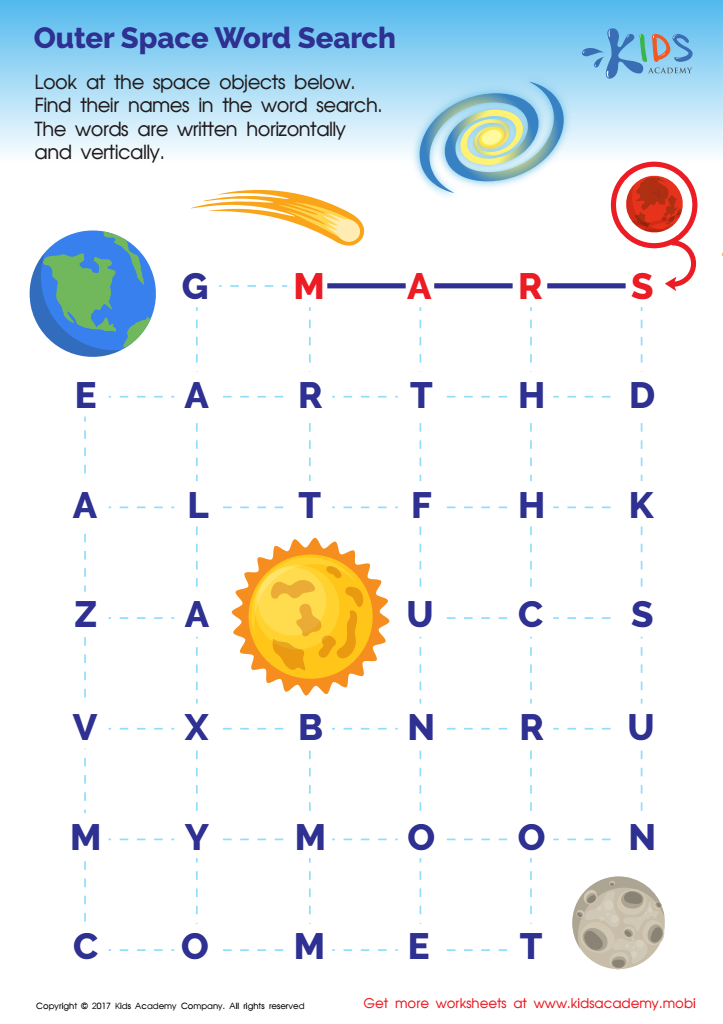
Outer Space Word Search Printable
Test your child's space knowledge with this fun outer space word search printable! With pictures as clues, they'll hardly realize they're learning and thinking hard. Let them have a blast finding each of the words!
Outer Space Word Search Printable
Worksheet
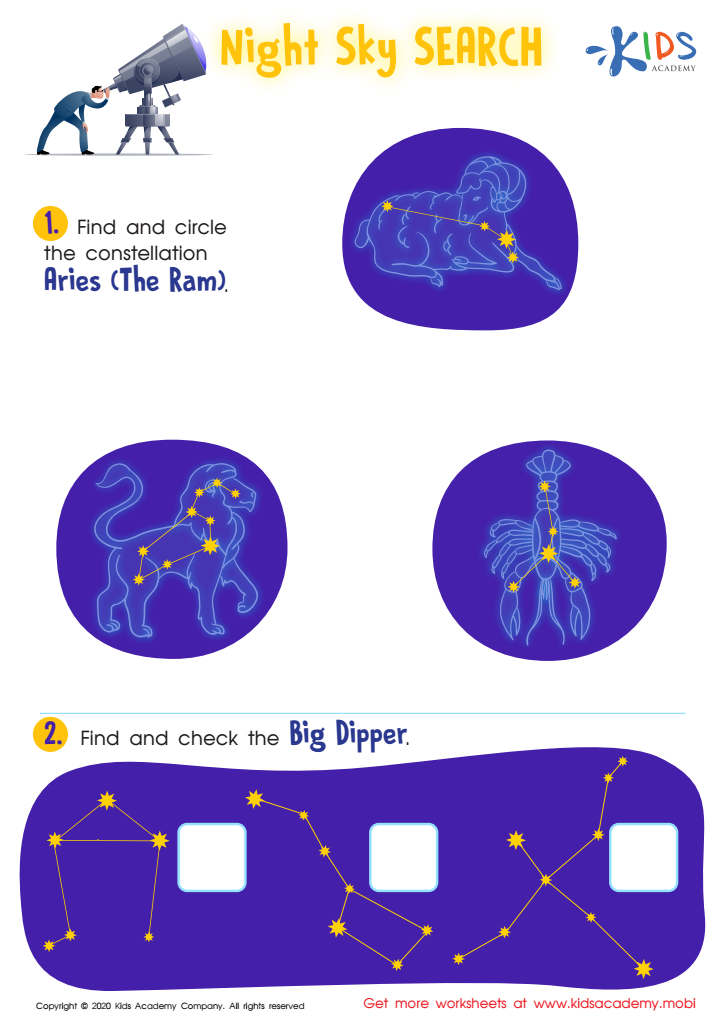
Night Sky Search Worksheet
Gaze up into the night sky and spot the stars! Your little astronomer can learn about Aries and Big Dipper constellations with this science worksheet. Simply find the ram for Aries and check the box for Big Dipper. Then, when the weather is right, go outside and look for them in the night sky!
Night Sky Search Worksheet
Worksheet
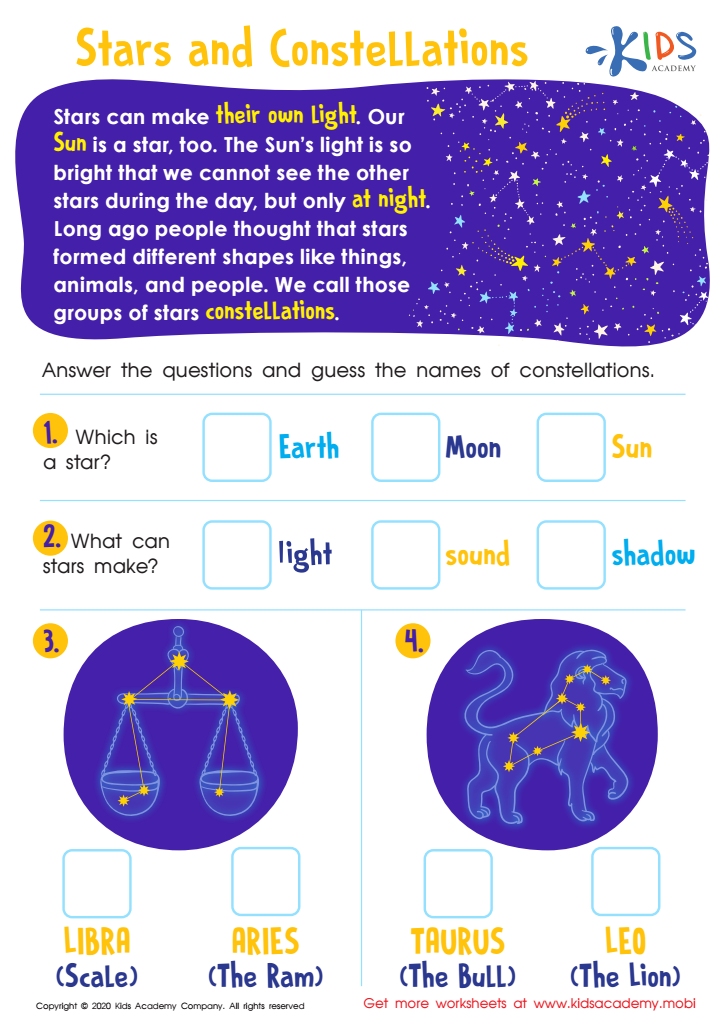
Stars and Constellations Worksheet
Learn about stars and constellations with this entertaining worksheet! Read the passage at the top of the page to gain an understanding of stars, then test your child's knowledge with the questions below. Check the right answers and finish this science worksheet with your child - they'll be amazed that stars can make their own light, just like the sun!
Stars and Constellations Worksheet
Worksheet
Join Kids Academy for Free
Who is primarily going to use this learning content?








Introducing space knowledge to children aged 4-7 holds significant value and fosters a sense of curiosity and wonder, which is fundamental at this impressionable stage. Parents and teachers should care about promoting space education for several reasons.
Firstly, learning about space ignites curiosity and inspires children to ask questions, fostering a habit of inquiry that is crucial for lifelong learning. Space topics encourage kids to use their imagination, which enhances creativity and problem-solving skills.
Secondly, introducing space concepts early on helps build a foundation for understanding science, technology, engineering, and mathematics (STEM). While the content for this age should be simple and engaging, it plants seeds for a deeper interest in these subjects later on.
Additionally, learning about the vastness of space can give children a sense of perspective. They begin to perceive the world as part of a larger universe, which can foster a sense of global citizenship and stewardship for the Earth.
Moreover, modern society benefits from space exploration and technology in countless ways (e.g., satellites, GPS). Familiarity with space can accordingly instill an appreciation for scientific advancements and technological ingenuity.
In summary, by incorporating space knowledge into early education, parents and teachers can nurture curiosity, instigate a love for STEM, instill valuable perspectives on our world, and help children appreciate the marvels of exploration and discovery.







