Community awareness Normal Community Worksheets for Ages 4-7
3 filtered results
Difficulty Level
Grade
Age
-
From - To
Subject
Activity
Standards
Discover the "Community Awareness Normal Community Worksheets" designed for children aged 4-7! These engaging worksheets introduce young learners to the concept of community, helping them understand their role and the importance of social connections. Featuring vibrant illustrations and interactive activities, these resources make learning about neighborhoods, local services, and teamwork fun and enjoyable. Ideal for parents and educators, the worksheets encourage critical thinking, observation skills, and community involvement in a developmentally appropriate way. Foster a sense of belonging and responsibility in your child while supporting their social studies education with these invaluable tools. Explore, learn, and grow together!
Favorites
With answer key
Interactive
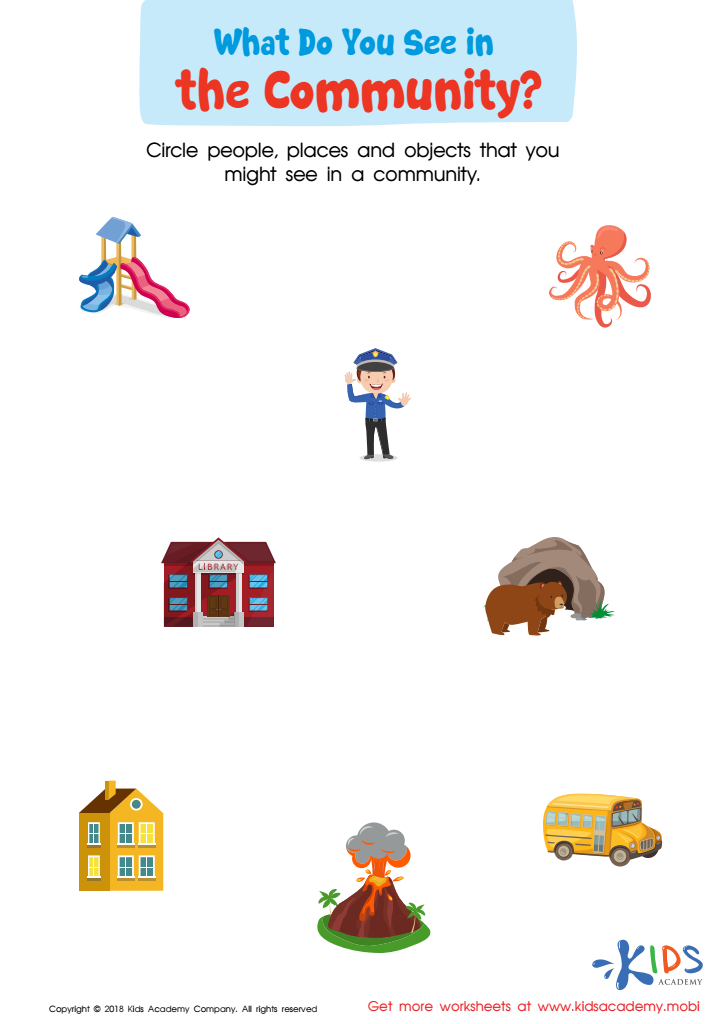
What Do You See in the Community Worksheet
This free social studies PDF can help your children learn about their local community. They'll identify its members, places and objects using engaging and recognizable pictures. As they trace circles around them, they'll also practice fine motor skills. It's a great way to introduce social science concepts and help them understand the importance of community.
 Assign to My Students
What Do You See in the Community Worksheet
Worksheet
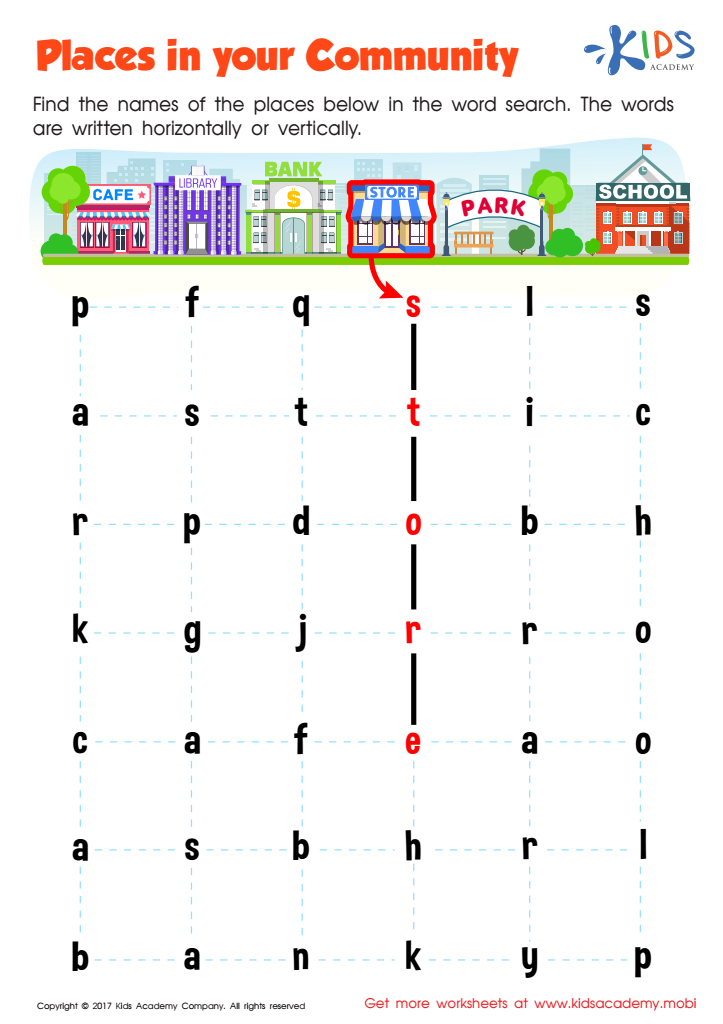
Places in Your Community Worksheet
Find and circle words related to common places in your community, like library, fire station, and more. Practicing vocabulary and spelling, your child will gain a better understanding of their community.
Places in Your Community Worksheet
Worksheet
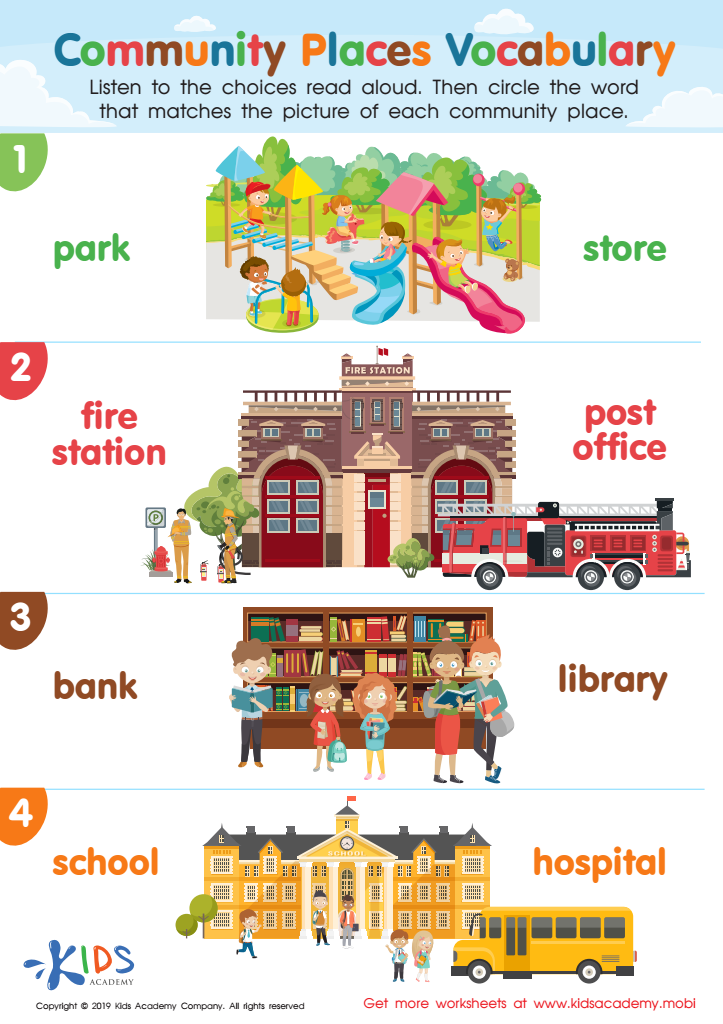
Community Places Vocabulary Worksheet
Help your kids identify community places with this fun worksheet. Ask them to listen to the choices read aloud and circle the word that matches the picture. This activity encourages dialogue about different people, places, and things in their community and the places they love to visit.
Community Places Vocabulary Worksheet
Worksheet
Join Kids Academy for Free
Who is primarily going to use this learning content?




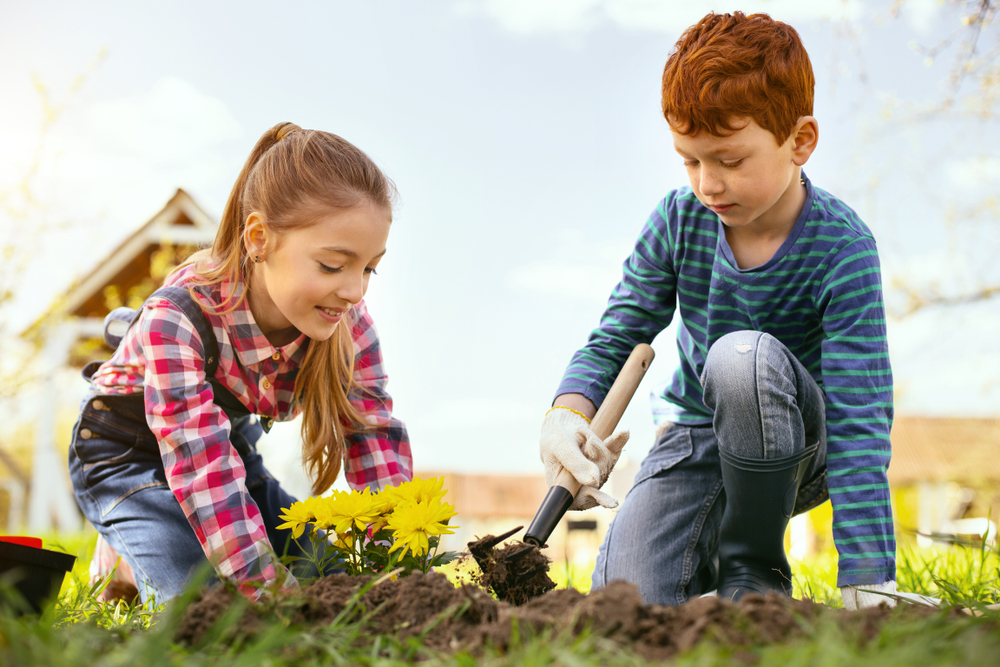



Parents and teachers should prioritize community awareness for children aged 4-7 as it lays the foundation for social development and civic understanding. At this formative age, children are naturally curious about their surroundings and eager to learn how they fit into their community. By fostering awareness, adults can help children develop a sense of belonging and responsibility.
Understanding their community enables young learners to recognize and appreciate diversity, leading to empathy and respect for others. For instance, through simple activities like local clean-ups or visits to community centers, children can grasp the importance of collaboration and teamwork. These experiences not only teach them about their environment but also instill values like respect for nature and social responsibility.
Additionally, community awareness can enhance children's learning across subjects. Engaging with local history, culture, and resources enriches their intellectual curiosity while helping improve critical thinking skills. When children see their community as a living classroom, they are more likely to develop a lifelong commitment to being active participants in society.
Ultimately, fostering community awareness in young children empowers them to grow into informed, compassionate, and active citizens, contributing positively to the world around them.