Normal Good Citizenship Worksheets for Ages 4-7
6 filtered results
-
From - To
Introduce your young learners to the principles of good citizenship with our engaging Normal Good Citizenship Worksheets for Ages 4-7. Designed to enhance understanding of essential social values, these worksheets encourage children to explore cooperation, respect, and community involvement. Through fun activities and colorful illustrations, kids will learn how to be responsible citizens, share with others, and appreciate diversity. Perfect for home or classroom use, these worksheets promote valuable life skills, helping early learners develop a sense of belonging and responsibility in their communities. Foster positive civic engagement and ensure a bright future for your little ones with our comprehensive worksheets!
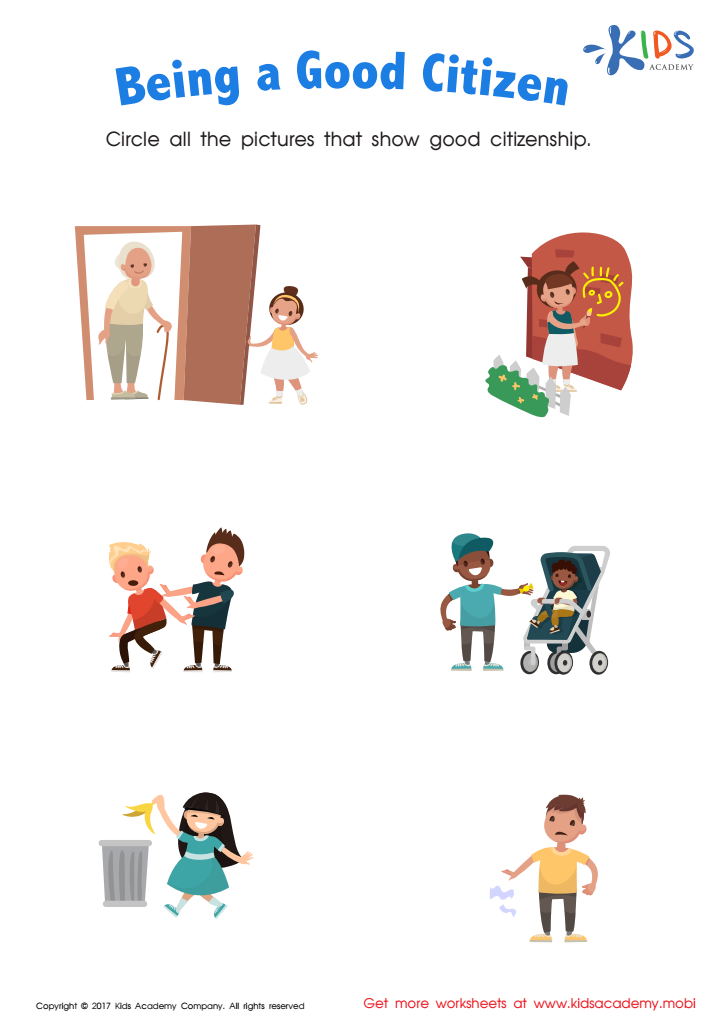
Being a Good Citizen Printable
 Assign to My Students
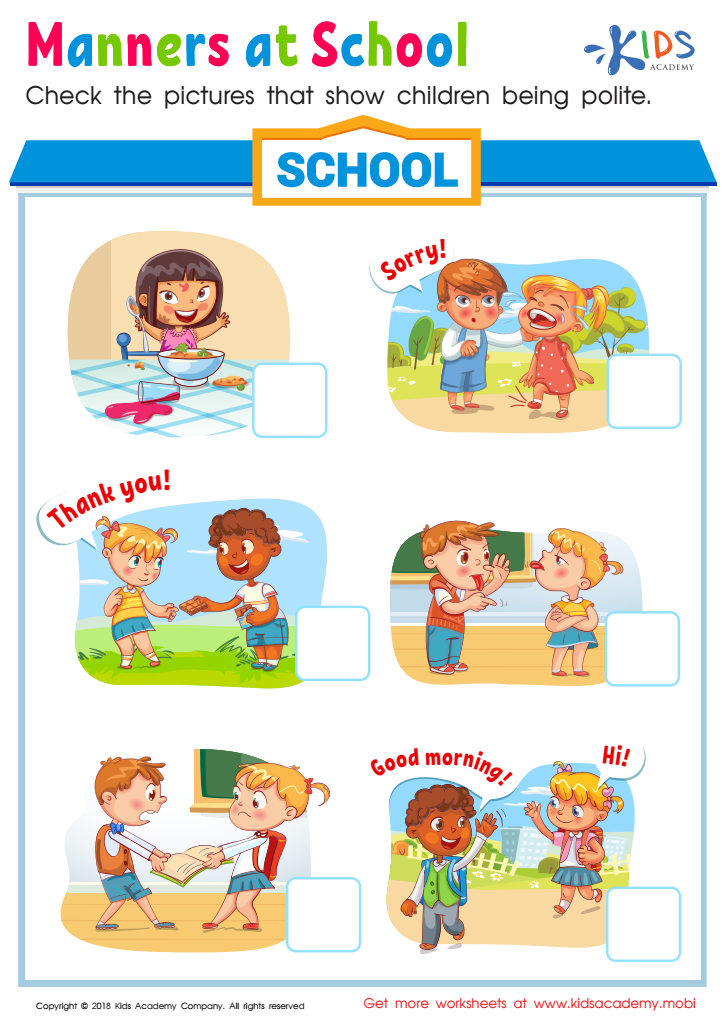
Manners at School Worksheet
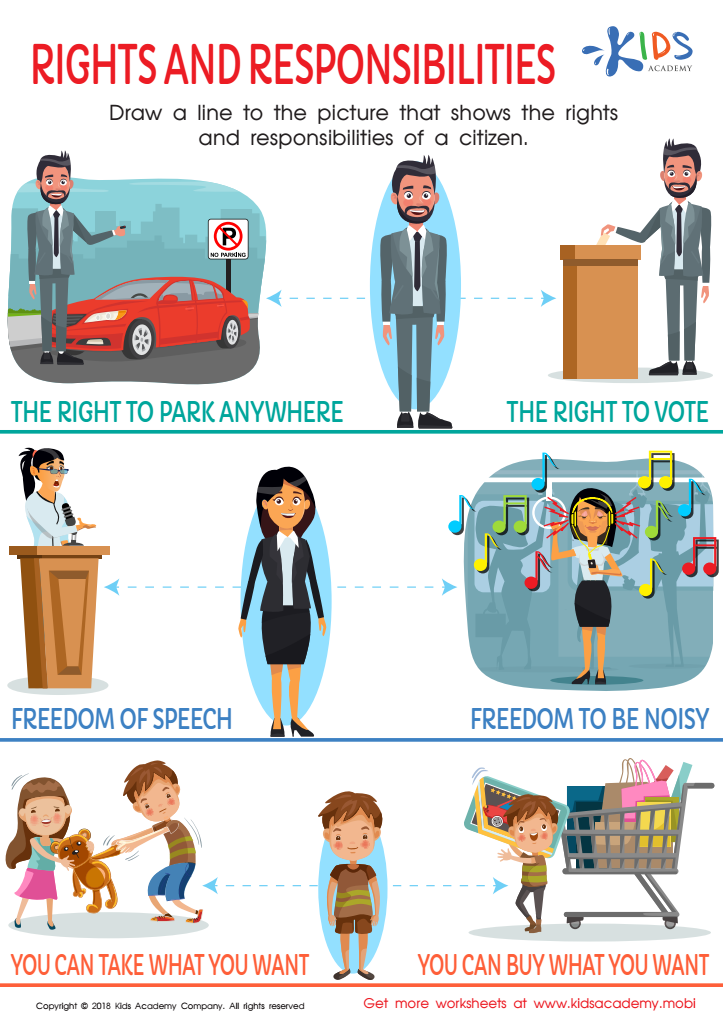
Rights and Responsibilities Worksheet
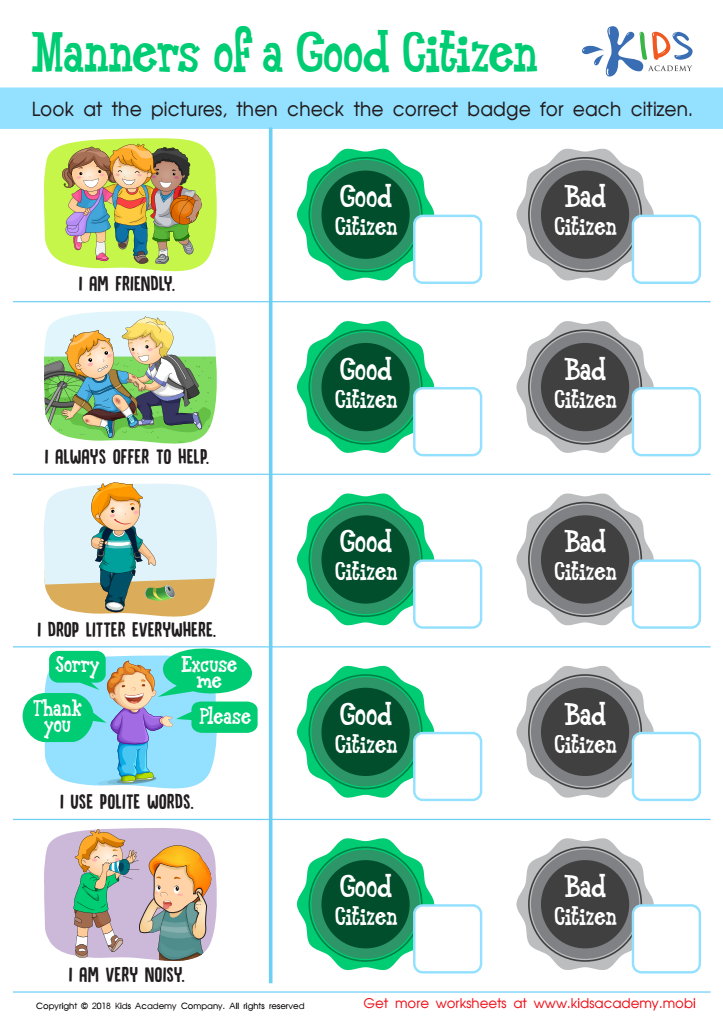
Manners of a Good Citizen Worksheet
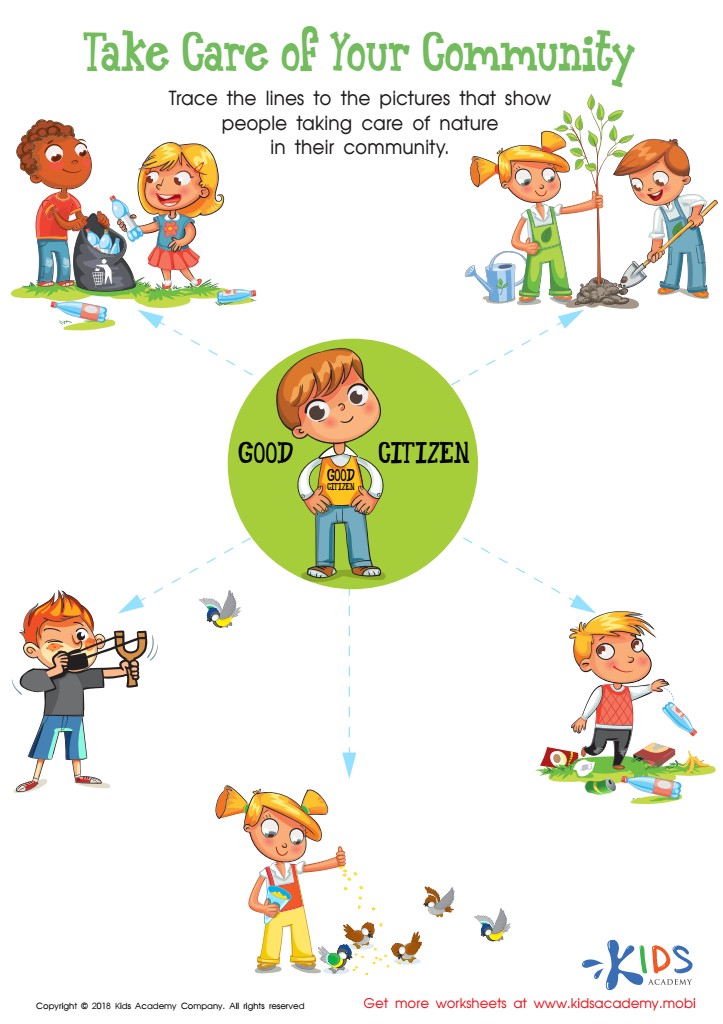
Take Care of your Community Worksheet
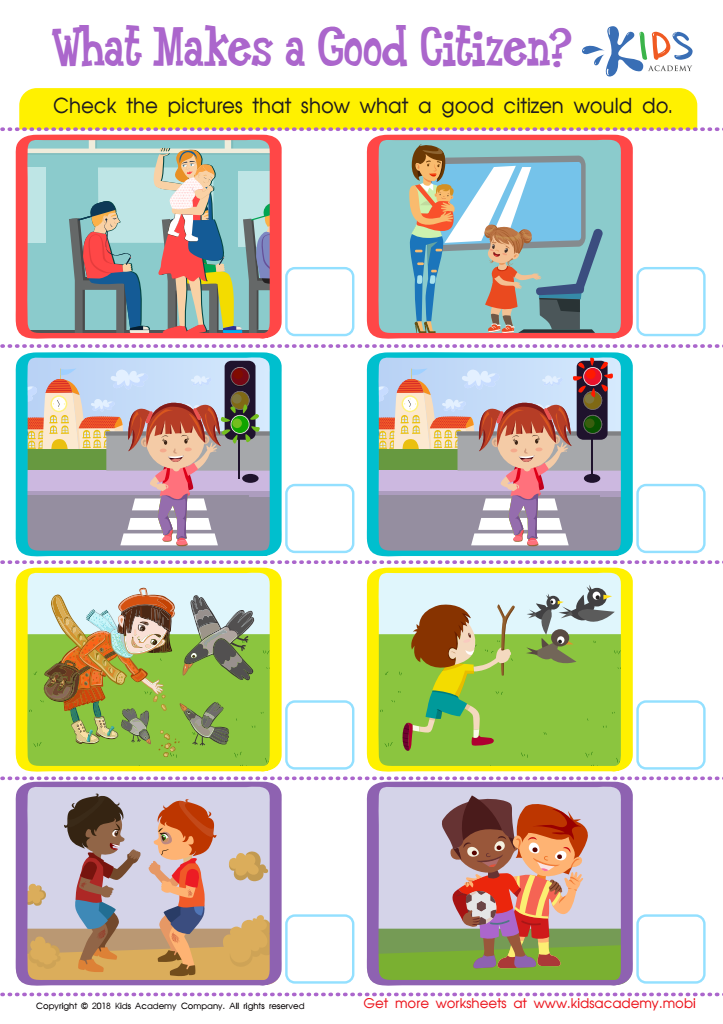
What Makes a Good Citizen? Worksheet


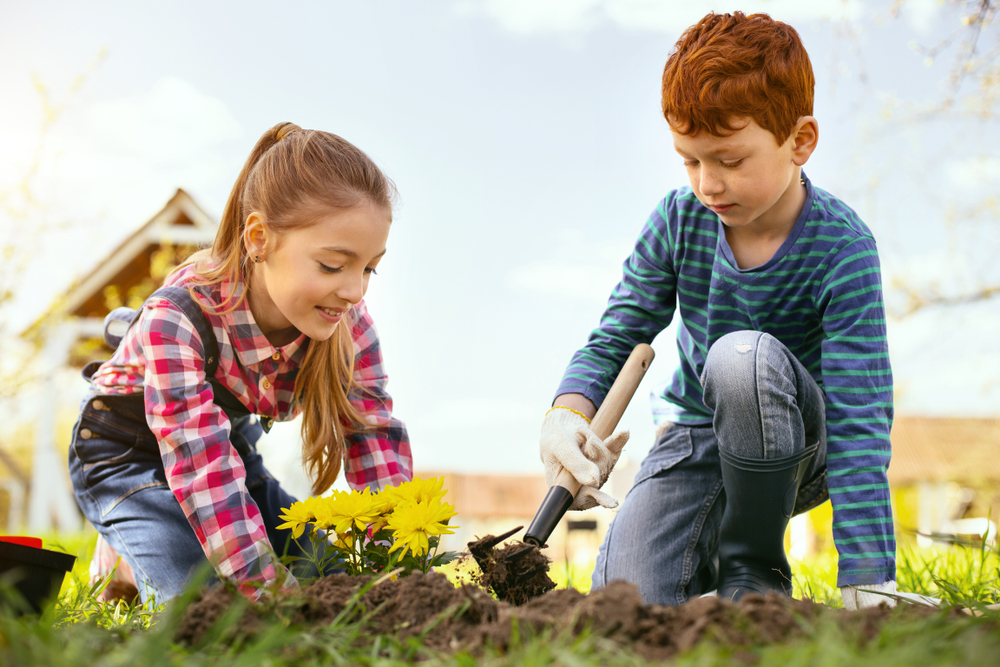

Normal Good Citizenship is crucial for children ages 4-7 as it lays the foundation for healthy social interactions and community awareness. At this young age, children are absorbing values and behaviors from their surroundings, making it the perfect time to instill qualities like empathy, respect, and responsibility. Teaching good citizenship can enhance their emotional intelligence, helping them understand the consequences of their actions on others.
Engaging in simple citizenship activities allows children to practice sharing, taking turns, and listening to others, which fosters essential social skills. For example, parents and teachers can encourage group activities that promote teamwork, where kids learn to collaborate, support one another, and celebrate differences.
Furthermore, emphasizing normal good citizenship teaches children about their role in the community. When they understand concepts like service and helping others, they develop a sense of belonging and responsibility. This not only nurtures their character but also prepares them to be thoughtful, engaged citizens as they grow older.
In summary, promoting good citizenship in early childhood is vital for developing socially responsible individuals, fostering positive relationships, and creating compassionate communities led by future generations. It is an investment into a child’s personal growth and the wellbeing of society as a whole.








