Filters

6 filtered results

Clear all filters
Favorites
With answer key
Interactive

6 filtered results

Difficulty Level

Grade


Unlock your child's potential with our engaging Critical Thinking Normal History Worksheets designed for ages 4-7! These thoughtfully crafted worksheets introduce young learners to the world of history, encouraging them to think critically about past events and figures. Each activity is tailored to promote comprehension, reflection, and connection, fostering essential skills as they explore key historical concepts. With vibrant visuals and interactive tasks, children will make learning fun and meaningful while developing their analytical abilities. Perfect for home or classroom use, these worksheets support early education's vital need for critical thinking and history knowledge in an accessible, enjoyable format. Explore today!

Check out this FREE Trial Lesson on History for age 4-7!

American History

Favorites
With answer key
Interactive
  • 4-7
  • Critical Thinking
  • History
  • Normal
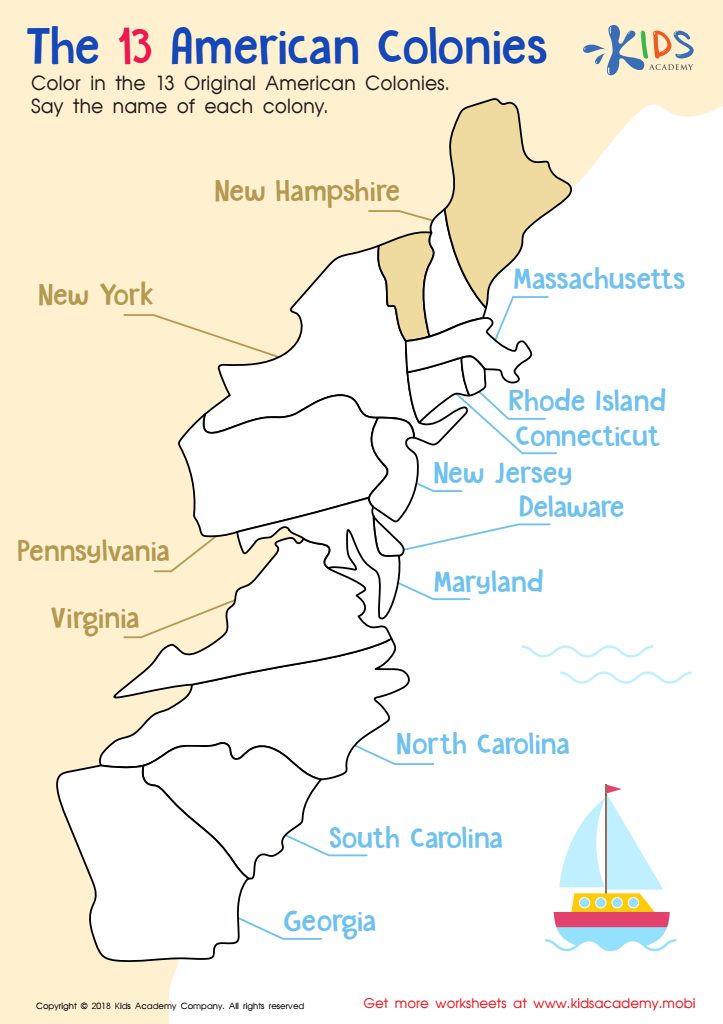
The 13 American Colonies Worksheet

The 13 American Colonies Worksheet

Ensure kids are knowledgeable in maths, English, science, history, and geography. Test their American knowledge: Can they name the 13 Original American Colonies? Use the worksheet; have them color each colony and name it out loud.
Download (PDF)
Assign to My Students
The 13 American Colonies Worksheet
Worksheet
Cute Printable History Worksheet

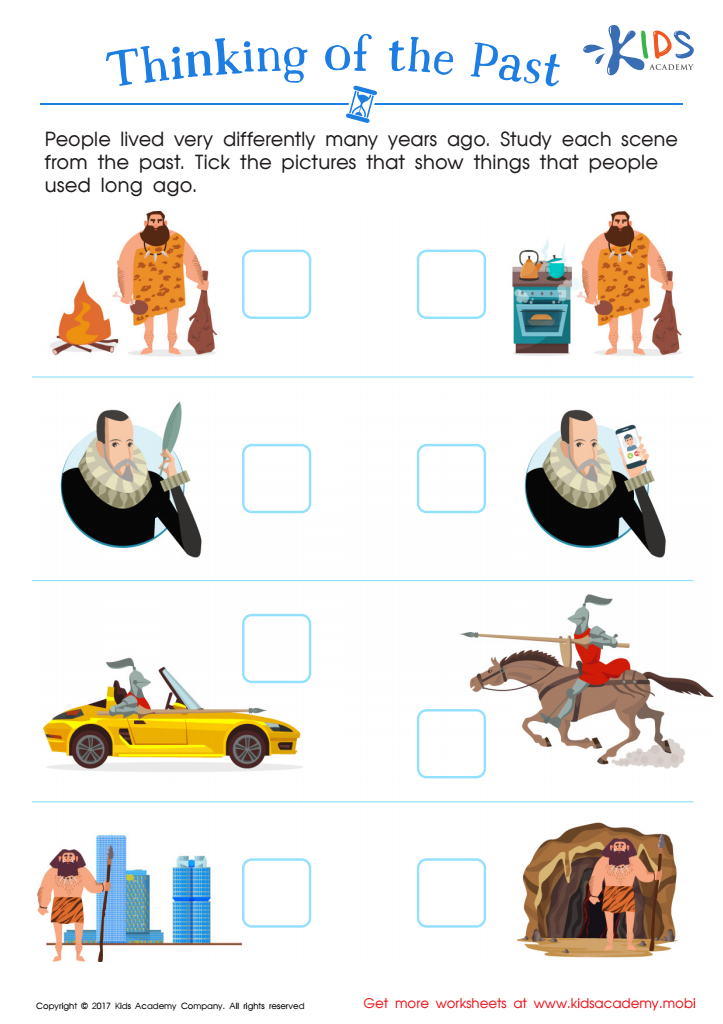
Thinking Past Printable

Bring the past to life for your kid with this fun worksheet! They'll use logic to choose the right answer, learning about different eras and how people lived in them. With a colorful caveman and modern skyscraper side by side, they won't even realize they're building historical knowledge.
Thinking Past Printable
Worksheet
Free printable Thanksgiving worksheet

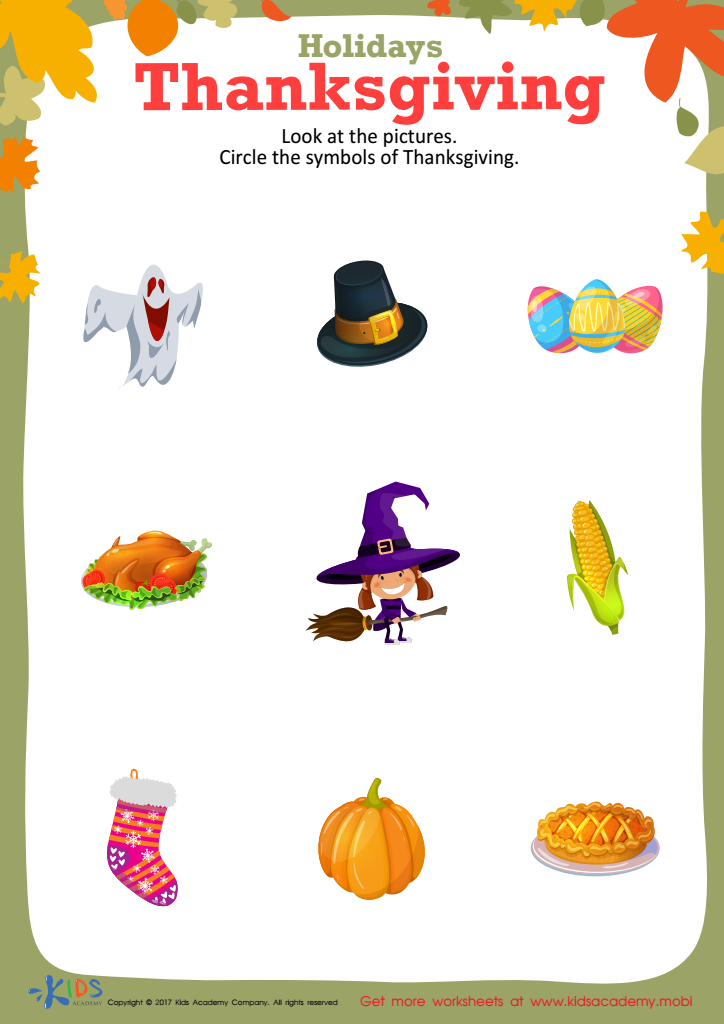
Thanksgiving Holiday Printable

Thanksgiving is here! Celebrate by showing appreciation and giving thanks. Teach your kids about the iconic symbols of the holiday with this free printable worksheet. Enjoy America's most famous feast!
Thanksgiving Holiday Printable
Worksheet
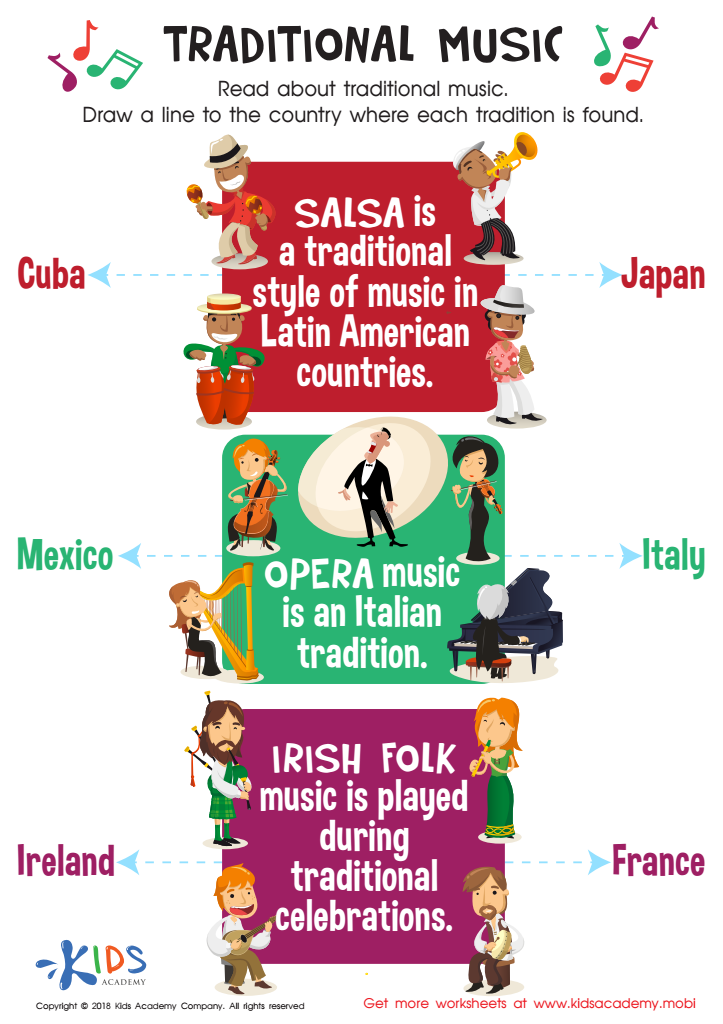
Traditional Music Worksheet

Traditional Music Worksheet

Exploring different countries' music is a great way for global learners to appreciate their place in the world. This worksheet helps them match music - like Salsa and Irish Folk - to various geographic regions with colorful visuals. It boosts reading comprehension while supporting their cultural understanding.
Traditional Music Worksheet
Worksheet
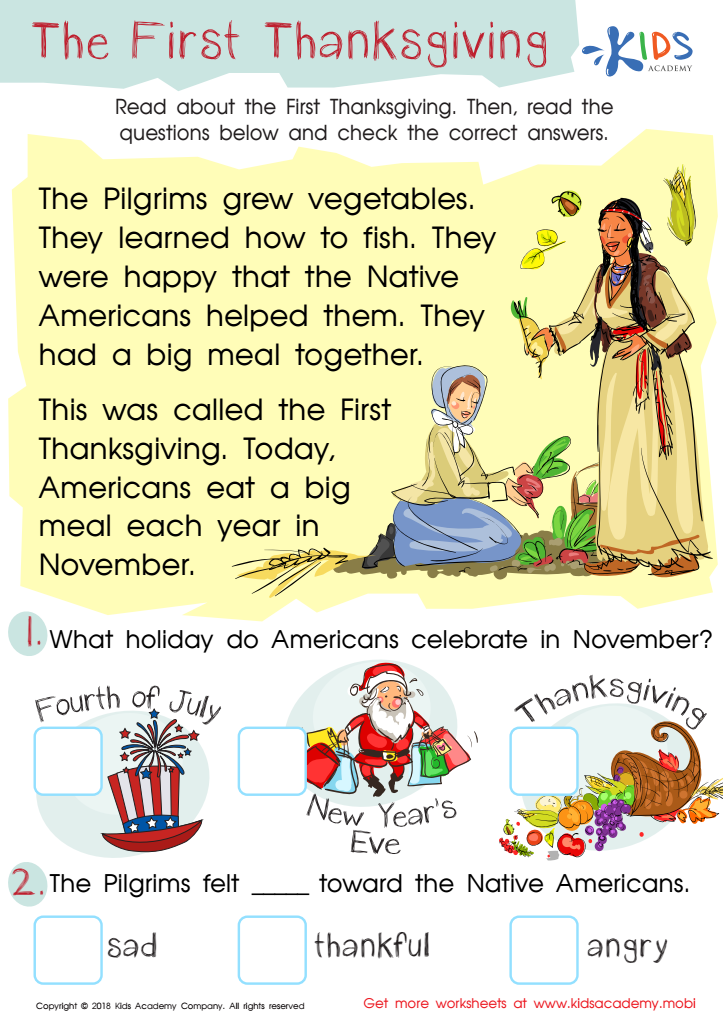
Assessment: First Thanksgiving Worksheet

Assessment: First Thanksgiving Worksheet

When the Pilgrims arrived in America in 1620, they met the Native Americans and formed a pact to live in harmony. The Native Americans taught the Pilgrims how to survive in the new land, which helped them celebrate the First Thanksgiving. Read this text to your children and help them answer the questions below.
Assessment: First Thanksgiving Worksheet
Worksheet
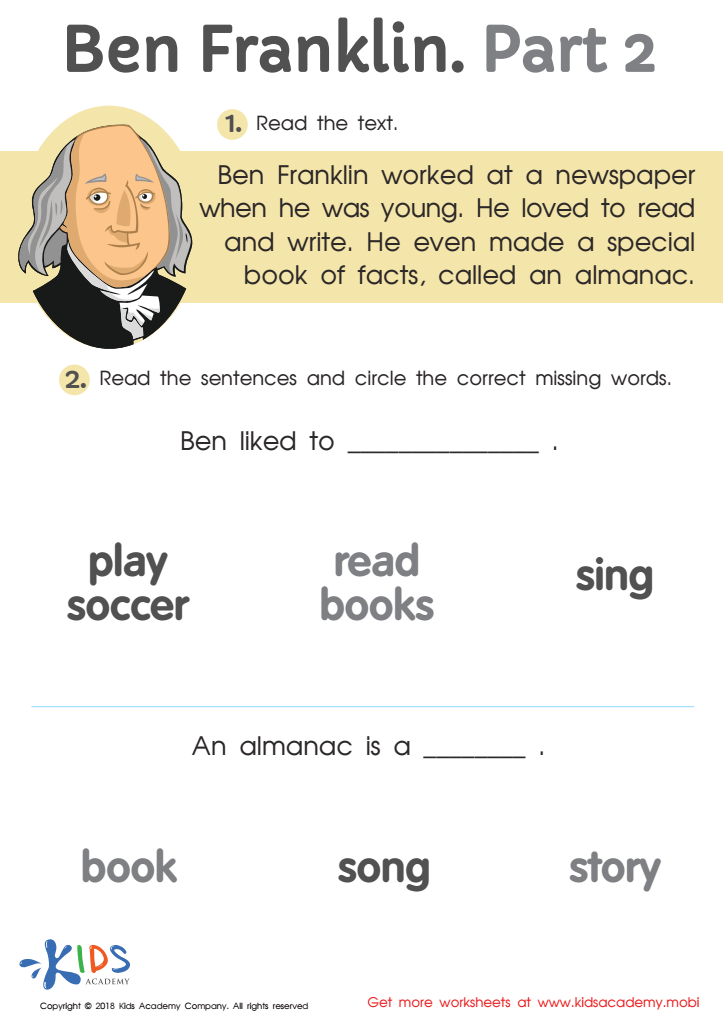
Ben Franklin Part 2 Worksheet


Ben Franklin Part 2 Worksheet

History is filled with great figures, like Benjamin Franklin. Let your kids in on the legacy by introducing them to the founder of the US fire department, diplomat, and inventor. Then, use a worksheet to have them fill in the blanks with the correct word to teach them more. Read the text, then read the sentences and have them circle the missing word.
Ben Franklin Part 2 Worksheet
Worksheet


Critical thinking skills are essential for children's development, particularly for ages 4-7, a key period for cognitive growth. Parents and teachers should prioritize teaching critical thinking through a framework like Critical Thinking Normal History as it fosters curiosity, problem-solving abilities, and decision-making skills. Engaging children in discussions about history, even at a simplified level, encourages them to analyze past events, understand cause and effect, and consider different perspectives.

Moreover, this approach helps cultivate a strong foundation for later academic success. By learning to think critically, children become more adept at asking questions, drawing connections, and making informed judgments in their daily lives. It also promotes social-emotional skills like empathy, as children learn to appreciate others’ viewpoints and experiences.

Additionally, in today’s information-rich world, providing children with the tools to discern credible information is crucial. Equipping them with critical thinking skills nurtures independent thinkers who can navigate challenges with confidence. Ultimately, fostering critical thinking through history education empowers young learners, preparing them not just for academic achievement, but for being thoughtful, informed citizens. Parents and teachers should prioritize these skills to help children thrive in an increasingly complex world.