Shape Recognition Normal Social Studies Worksheets for Ages 4-7
4 filtered results
-
From - To
Discover fun and educational Shape Recognition Normal Social Studies Worksheets, designed specifically for children ages 4-7. These engaging resources from Kids Academy help young learners identify and understand various shapes while incorporating key social studies concepts. Through interactive exercises and creative activities, children can develop essential skills that enhance their cognitive and observational abilities. Perfect for teachers and parents alike, these printable worksheets offer an enjoyable way to support early childhood education and promote a solid foundation in both shape recognition and social studies. Explore our collection to make learning both enjoyable and effective!
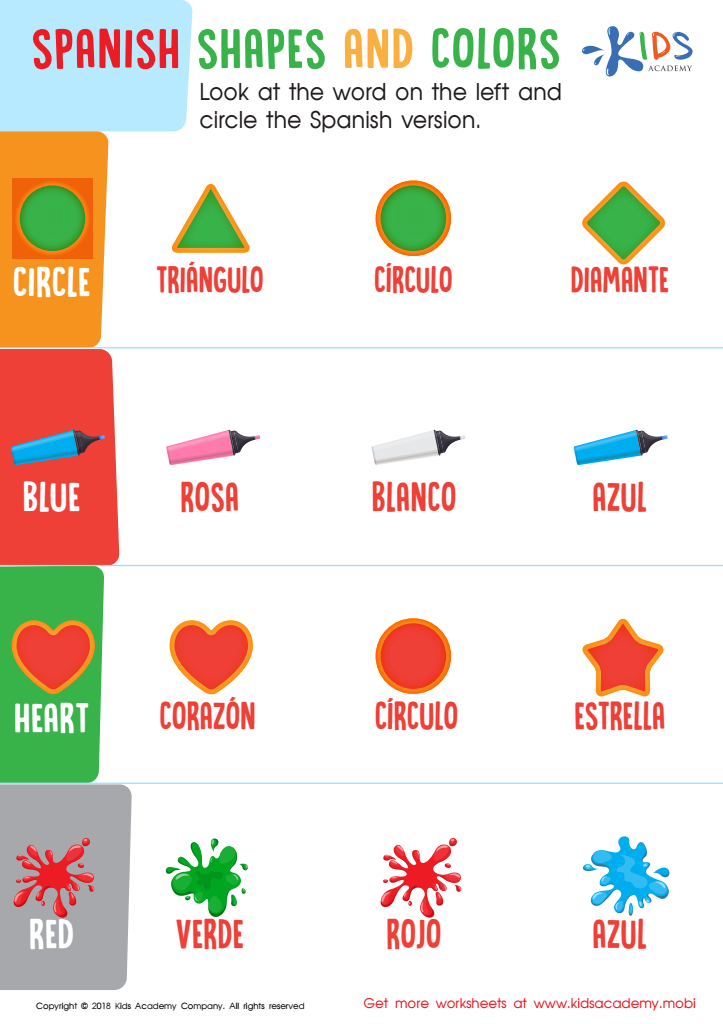
Spanish Shapes and Colors Worksheet
 Assign to My Students

Let's Check! Assessment Worksheet

Playground Worksheet
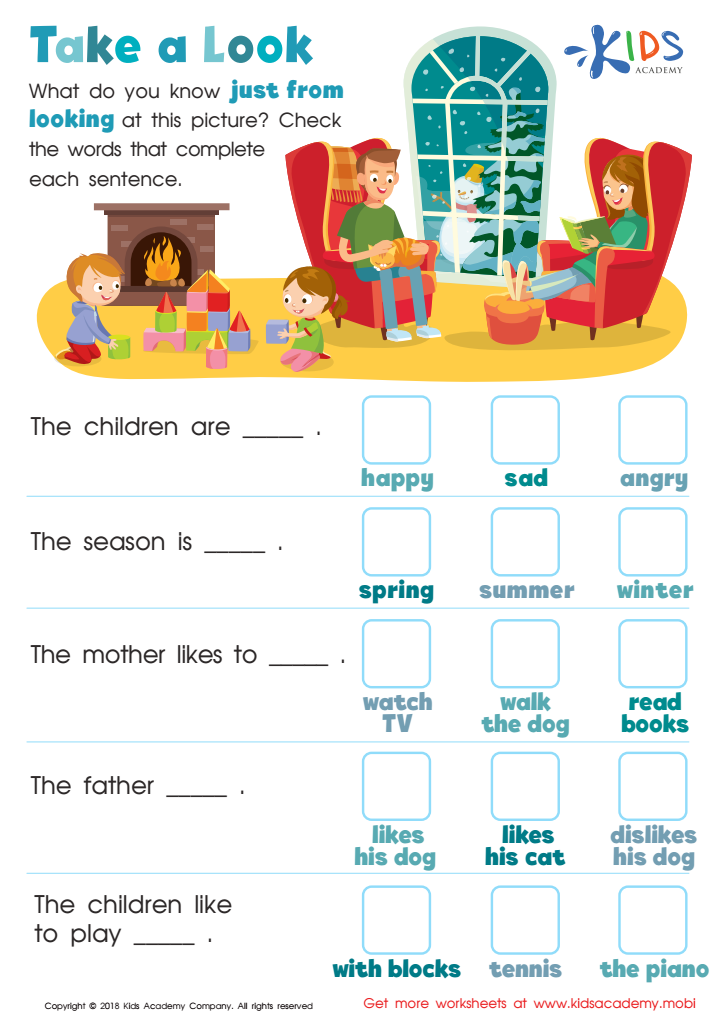
Take a Look - Part 1 Worksheet


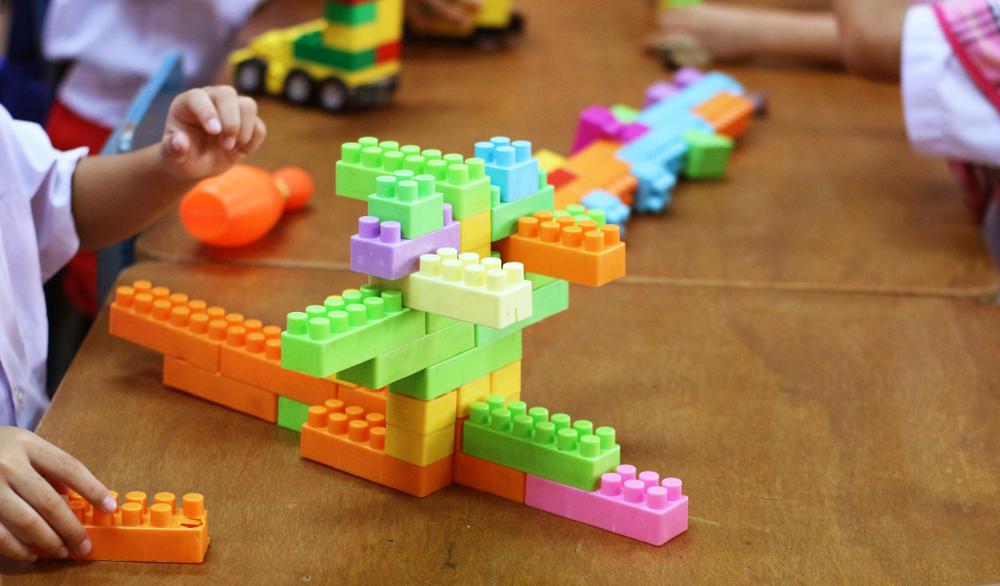





Shape recognition is a foundational skill for young children, particularly between the ages of 4-7. Parents and teachers should prioritize this area for several reasons. Firstly, recognizing different shapes is crucial for cognitive development. It helps children categorize and make sense of the world around them, enhancing their ability to differentiate, compare, and classify objects. This, in turn, supports both math and early literacy skills, as children learn to recognize patterns and symbols, an essential aspect of reading and mathematics.
In the context of social studies, understanding shapes can also assist children in various practical and social applications. For example, learning about shapes through maps and flags can foster an early interest in geography and cultures. Shapes can also be subtly introduced through activities that involve community structures such as buildings, roads, and even playgrounds.
Moreover, shape recognition is essential for developing visual-spatial skills and fine motor coordination, which are important for daily tasks. Teachers and parents who incorporate shape recognition in their curriculum or daily playtime offer children the tools they need for academic success and social competence. Activities that involve sorting, drawing, and constructing shapes can also support creativity and cooperative learning among peers, contributing to emotional and social development.
Hence, integrating shape recognition in early childhood education lays a solid foundation for a child’s overall development.