Filters

7 filtered results

Clear all filters
Favorites
With answer key
Interactive

7 filtered results

Difficulty Level

Grade


Explore our engaging Fine Motor Skills Normal Writing Worksheets designed specifically for children ages 4-7! These worksheets provide young learners with fun activities that promote the development of essential fine motor skills, crucial for writing and daily tasks. Each worksheet features delightful illustrations and varied exercises, helping kids improve their hand-eye coordination, dexterity, and control. Designed by educators, our resources ensure that children stay motivated while honing their writing abilities. Perfect for at-home practice or classroom use, our worksheets will empower your child with confidence as they embark on their writing journey. Start nurturing their skills today!

Check out this FREE Trial Lesson on Writing for age 4-7!

My Five Senses

Favorites
With answer key
Interactive
  • 4-7
  • Fine Motor Skills
  • Writing
  • Normal
Sight Word Worksheet: An

Cupid Maze: An Printable

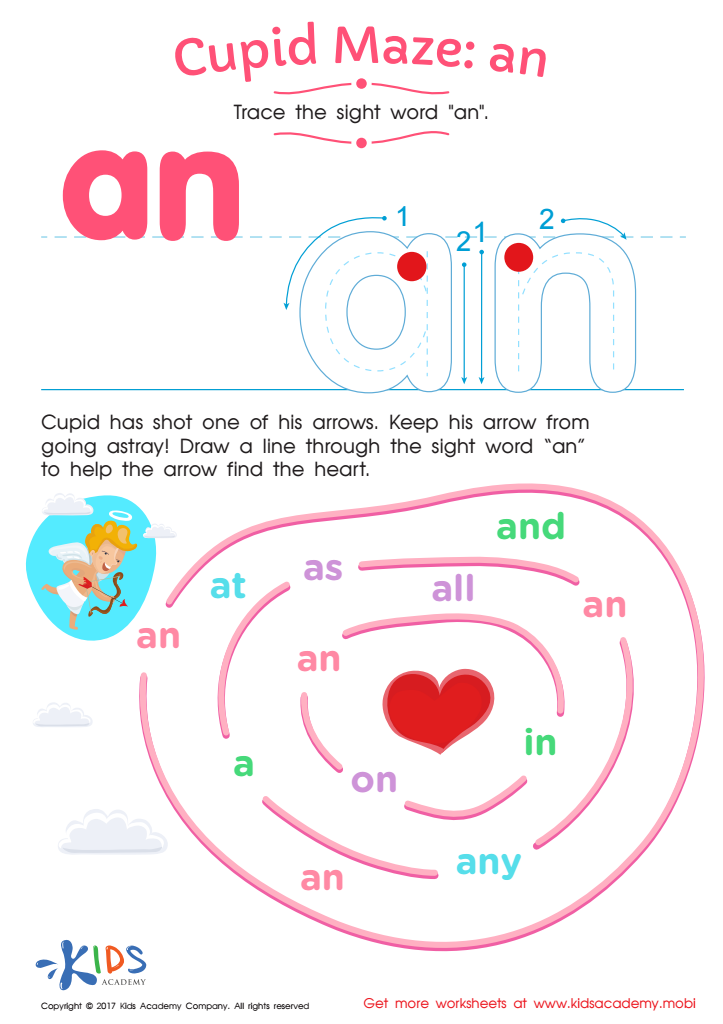
Get a cute and creative way to boost their reading with this Valentine's Day-themed sight word worksheet. Perfect for kids, it features a fun maze and the article "an".
Cupid Maze: An Printable
Worksheet
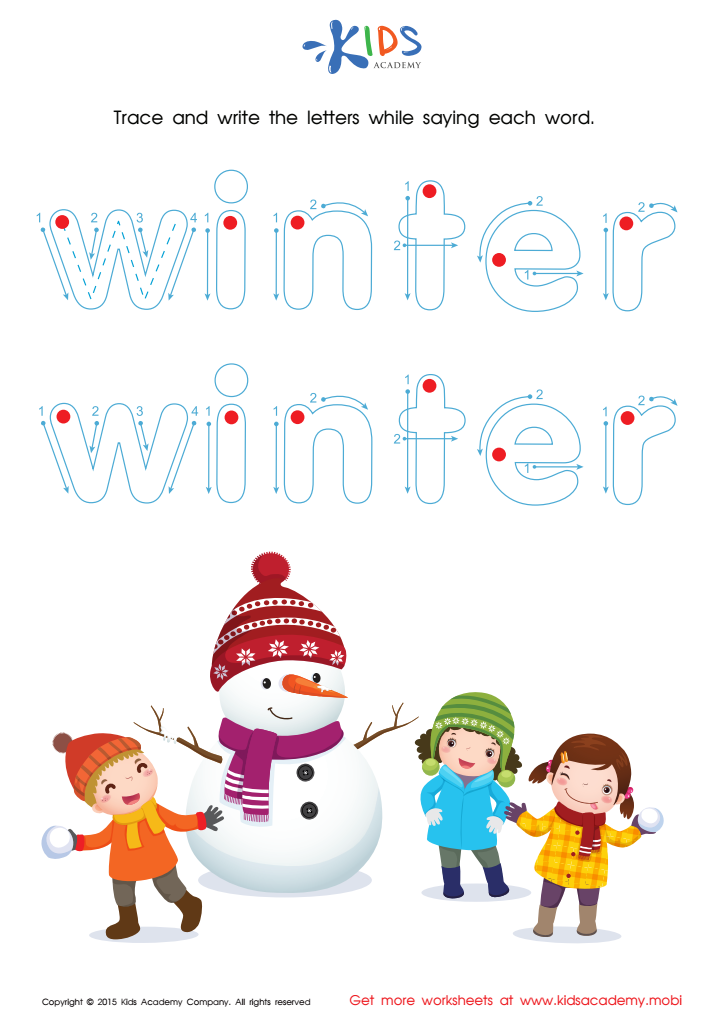
Tracing Winter Words : Snowman

Snowman Tracing Winter Words Worksheet
This free winter printable teaches handwriting and spelling with the word "snowman". It's a fun way to get your kid ready for Christmas cheer! Want more tracing worksheets? Check out here.
Snowman Tracing Winter Words Worksheet
Worksheet
Prickly Nature Printable Worksheet

Prickly Nature Worksheet

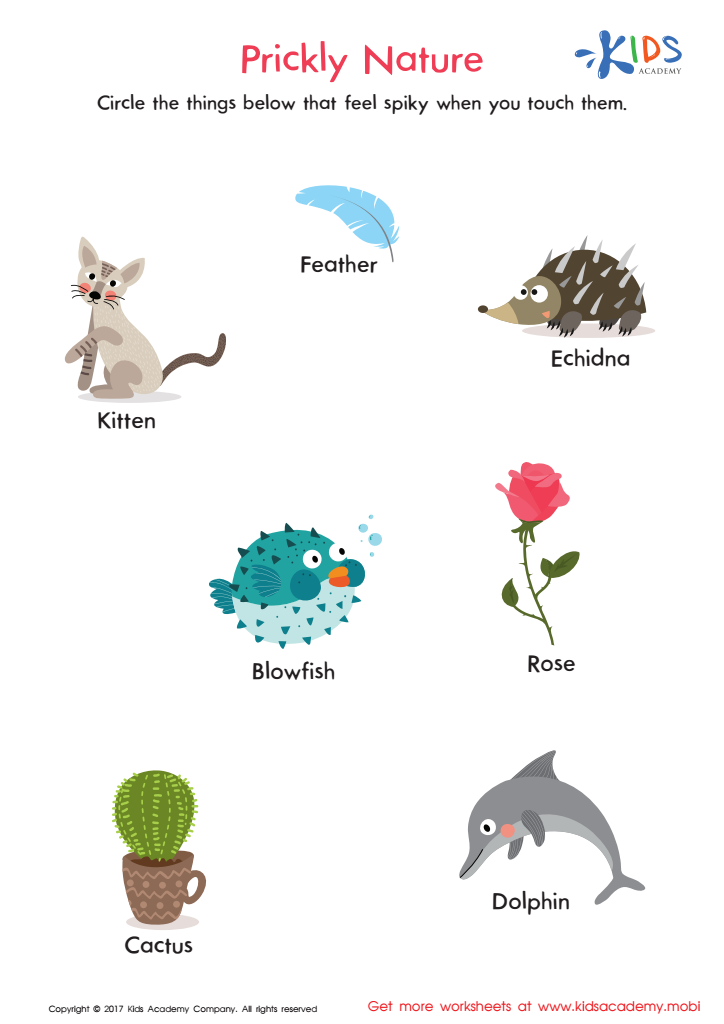
Help your child stay safe and enhance critical thinking skills with this prickly nature worksheet. It can help them recognize spiky objects in their environment by teaching them to differentiate between prickly and soft textures. Plus, your kid will learn how to admire and avoid them. Get started today!
Prickly Nature Worksheet
Worksheet
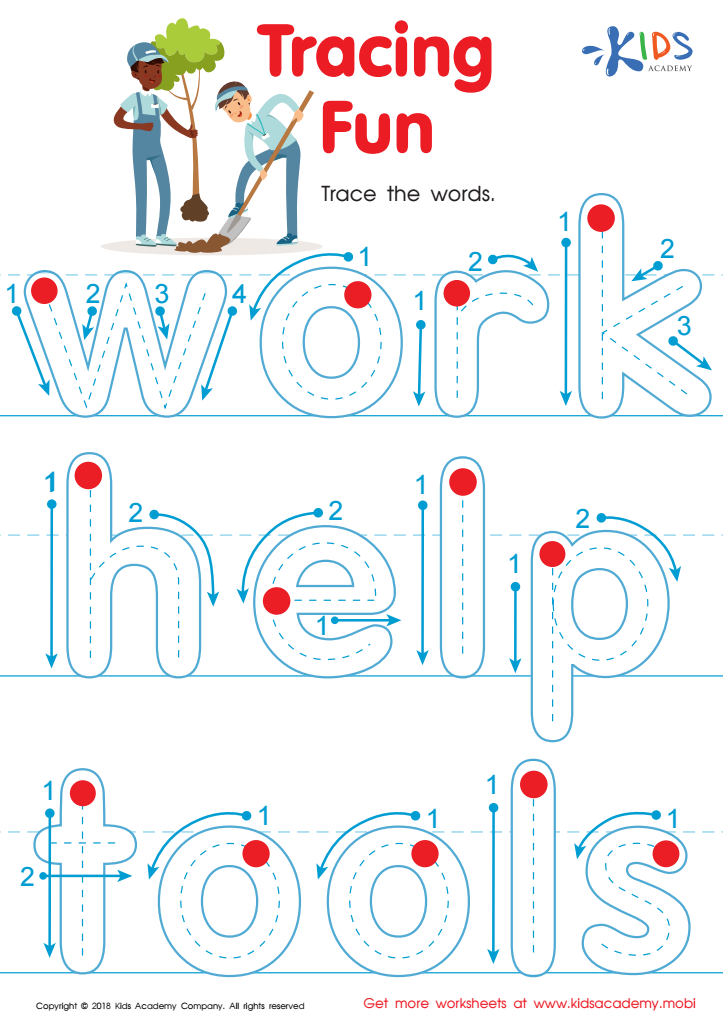
Tracing Fun Worksheet

Tracing Fun Worksheet

Believe it or not, good handwriting helps with reading! Starting at the top left and writing legibly builds reading skills. This free worksheet helps little learners practice basic sight words. Red dots show them where to start and the words provide reinforcement without them realising. An enjoyable way to boost their reading and writing.
Tracing Fun Worksheet
Worksheet
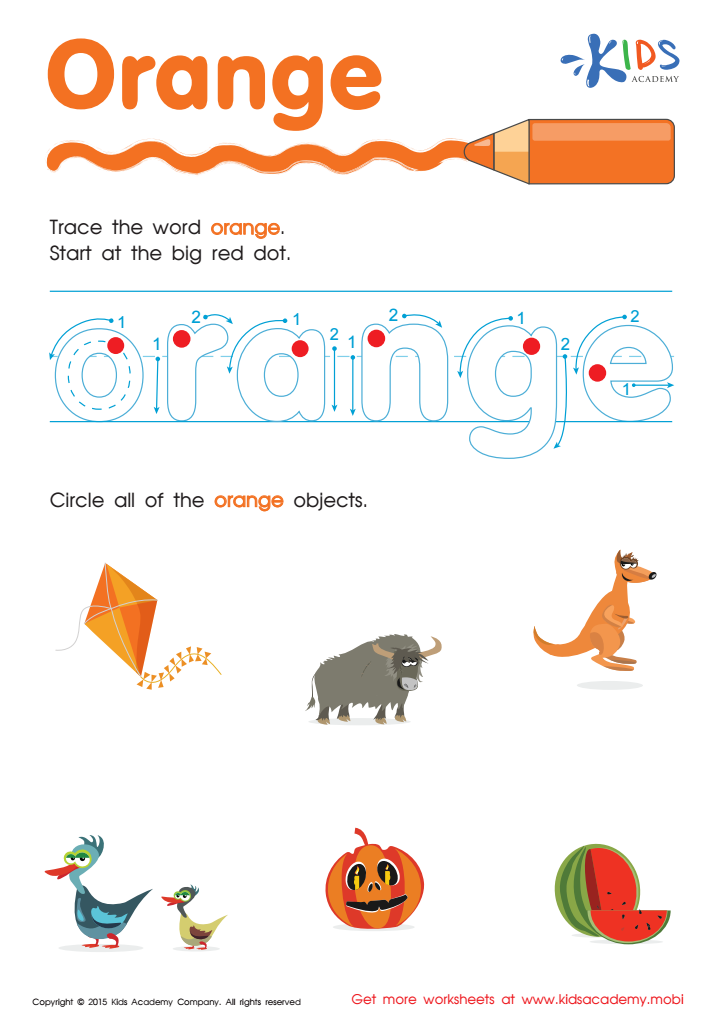
Handwriting PDF Worksheets | Tracing Color Words | Orange

Orange Tracing Color Words Worksheet

This worksheet will surely bring a smile to your kid's face, even if orange isn't their favorite color. Let them trace the word "orange" and use an orange crayon. Ask them to find orange objects in their room for even more fun. Handwriting practice has never been more fun and exciting!
Orange Tracing Color Words Worksheet
Worksheet
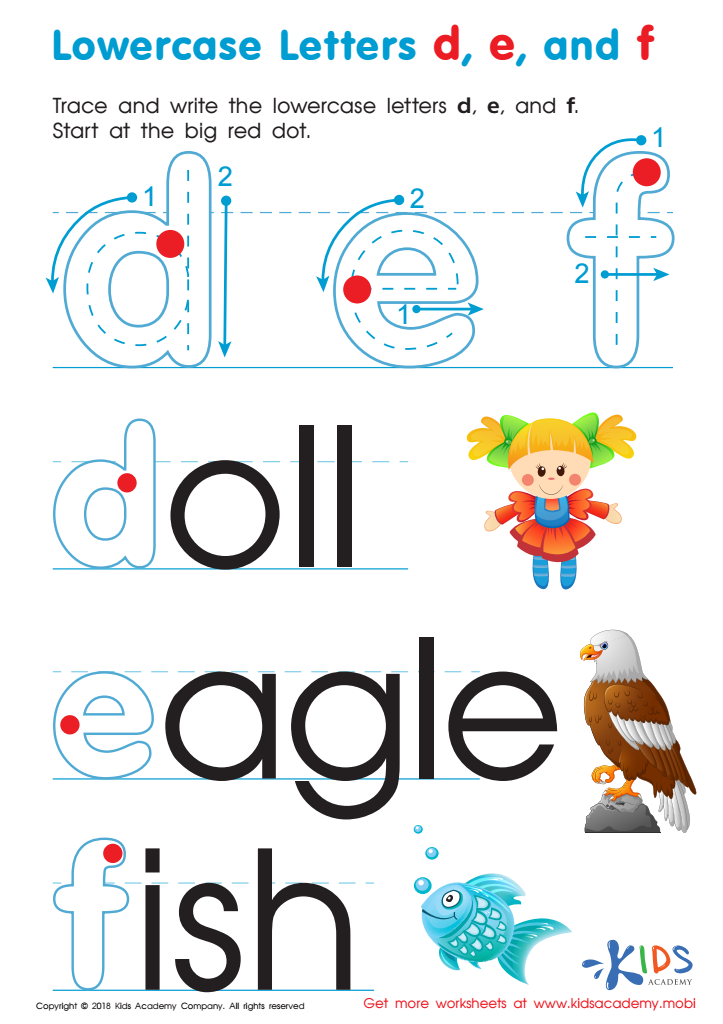
Lowercase Letters d e f Worksheet

Lowercase Letters d e f Worksheet

Help your child learn the alphabet letters by tracing and writing the lowercase letters d, e, and f. Begin at the big red dot and follow the dots. This worksheet will help your little one gain a better understanding of the letters.
Lowercase Letters d e f Worksheet
Worksheet
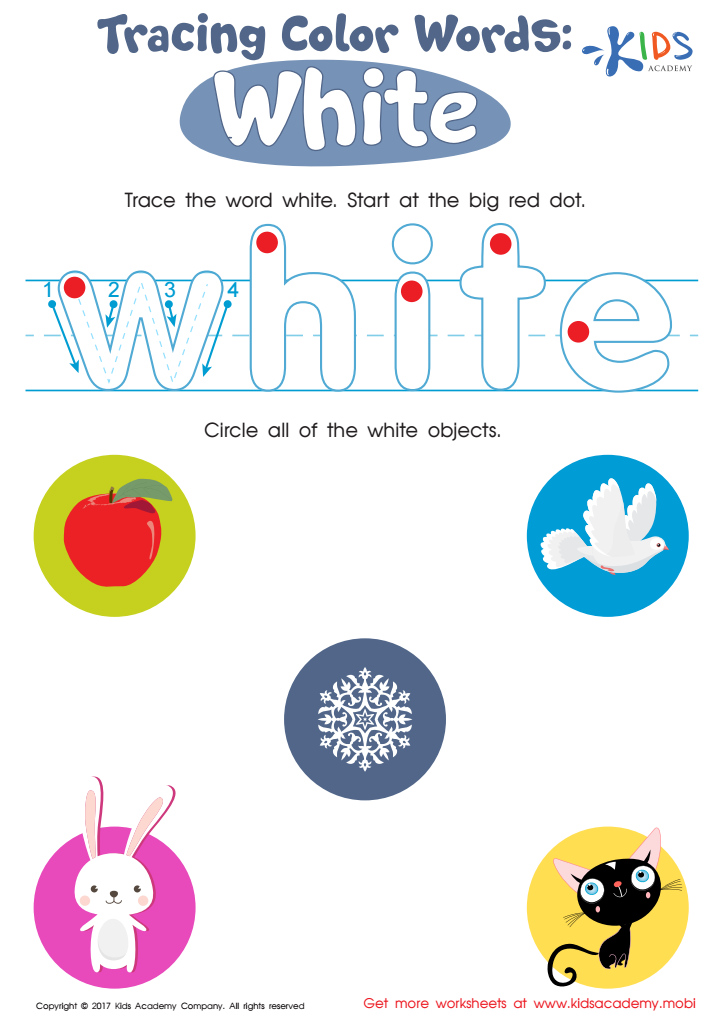
White Tracing Color Words Worksheet


White Tracing Color Words Worksheet

This fun worksheet helps children learn color words quickly. They trace the letters and circle pictures of the color. This helps them practice reading and identifying objects, and they can do it without needing to read phonetically. Download it now and watch your child's skill grow!
White Tracing Color Words Worksheet

Worksheet


Fine motor skills are essential in the development of children aged 4-7, as they directly impact a child's ability to perform everyday tasks. These skills involve the coordination of small muscles in the hands and fingers, which are critical for writing, drawing, and manipulating objects. For young children, developing normal writing skills during this stage fosters not only physical dexterity but also builds confidence and autonomy.

When children learn to write legibly, they also enhance their cognitive abilities as handwriting requires focus, memory, and coordination. This contributes to their academic success, especially in subjects that involve written expression. Moreover, fine motor skills are linked with visual perception, which is vital for a child's overall growth in literacy and numeracy.

Parents and teachers should actively engage in activities that promote fine motor skill development, such as art, crafts, and games that require hand-eye coordination. Encouraging practices that facilitate pencil grip and control can help children transition from pre-writing scribbles to forming letters and words. Ultimately, fostering strong fine motor skills lays the foundation for lifelong learning and skills necessary for future educational challenges. Hence, investing time in this area is crucial for nurturing well-rounded, capable young learners.