Word Recognition Normal Tracing Words Worksheets for Ages 4-7
7 filtered results
Difficulty Level
Grade
Age
-
From - To
Subject
Activity
Standards
Enhance your child's literacy journey with our Word Recognition Normal Tracing Words Worksheets for Ages 4-7! These expertly designed worksheets combine fun and learning to develop essential tracing and word recognition skills. Perfectly tailored for young learners, they help in identifying words, improving fine motor skills, and building reading confidence. Each sheet features engaging activities that make learning to read an enjoyable adventure. Ideal for classroom use or at-home practice, our worksheets provide a solid foundation for future academic success. Empower your child to excel in word recognition with these captivating and educational printable resources.
Favorites
With answer key
Interactive
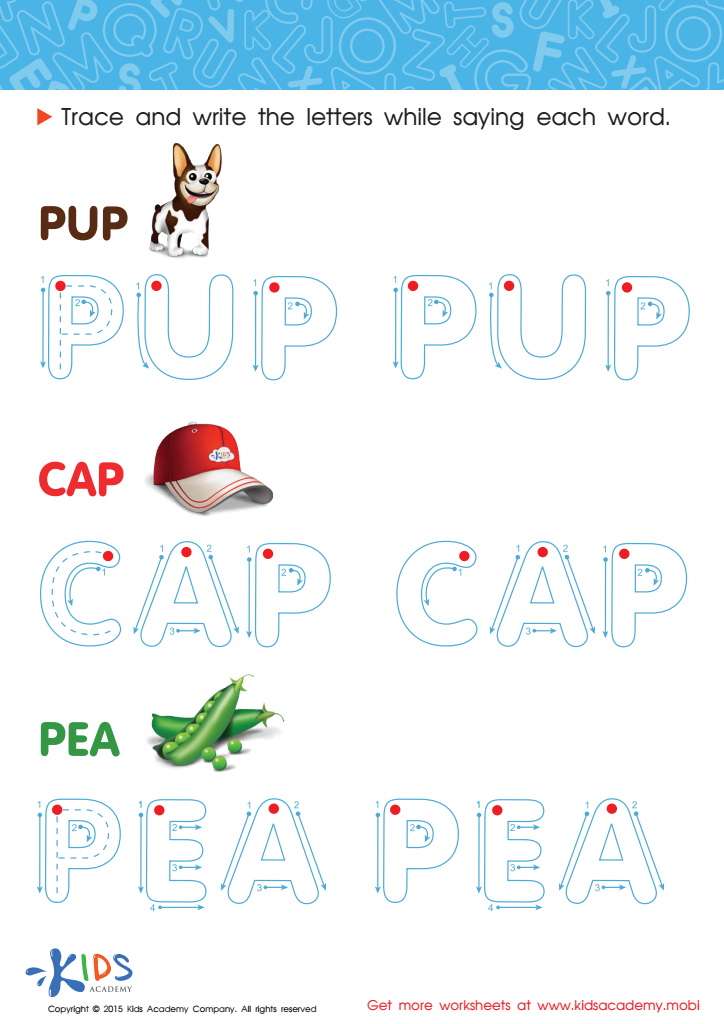
A Pup, a Cap and a Pea Spelling Worksheet
Practice tracing and writing with three new words. Carefully trace each word and try to remember it, then move on to the next one. Head to Kids Academy for more tracing worksheets!
Get your pencils ready! Let's practice tracing and writing three new words on Kids Academy's spelling worksheets. Carefully trace each line and remember the words. Pick more great worksheets on their website to continue practicing. Have fun!
 Assign to My Students
A Pup, a Cap and a Pea Spelling Worksheet
Worksheet
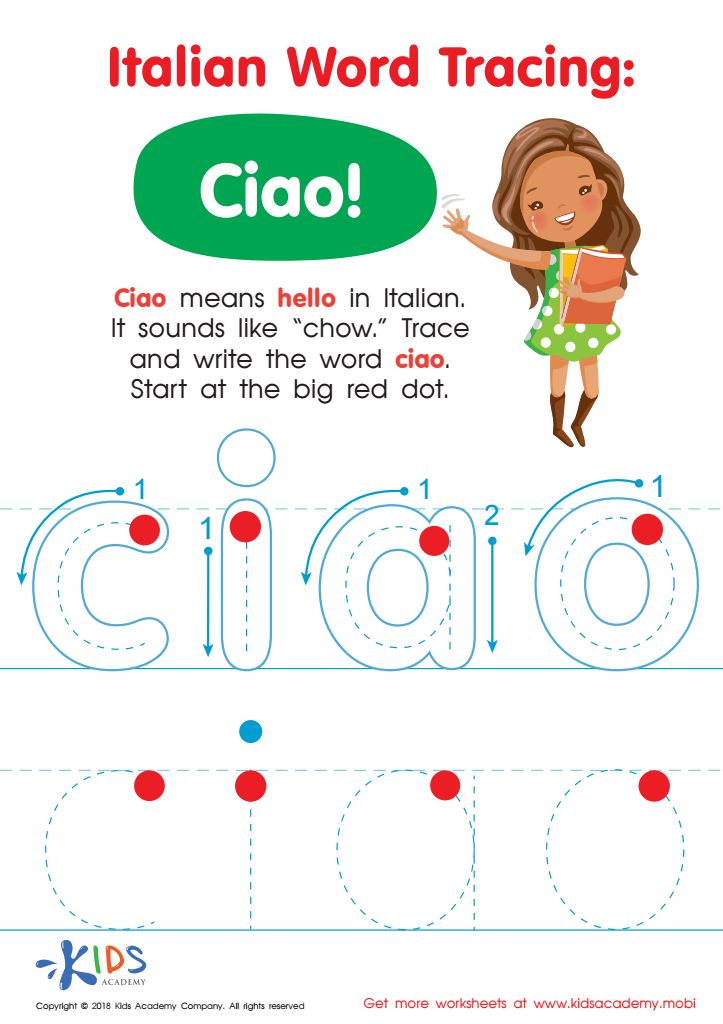
Italian Word Tracing: Ciao Worksheet
Help kids learn to greet people in different languages with this fun worksheet! Featuring the Italian word 'Ciao', it helps kids trace and learn the pronunciation. Plus, it teaches hand-eye coordination and fine-motor skills. Global connectivity can start with this activity!
Italian Word Tracing: Ciao Worksheet
Worksheet
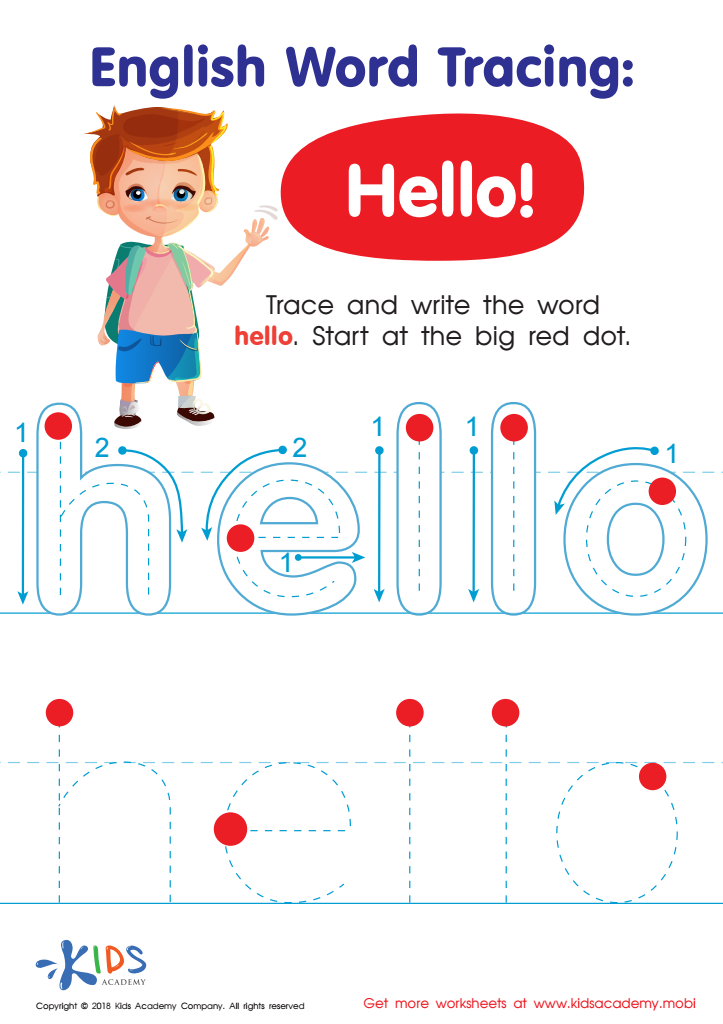
English Word Tracing: Hello Worksheet
Searching for free worksheets to help your kids refine their motor skills, handwriting and English word knowledge? Get this cheerful PDF! It offers your children the chance to practice tracing words like Hello, while following a top-to-bottom, left-to-right patterning.
English Word Tracing: Hello Worksheet
Worksheet
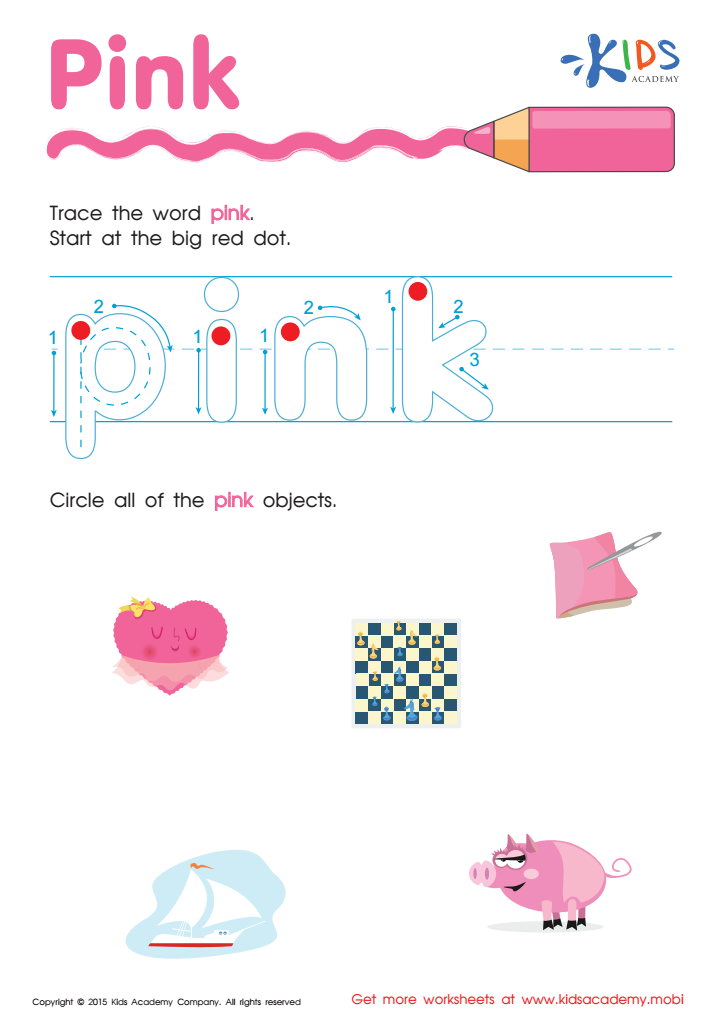
Pink Tracing Color Words Worksheet
Trace 'pink' with a pink crayon for an exciting handwriting lesson! Build fine motor skills and learn about sight words with this fun printable. Get creative and give it a splash of color for a colorful learning experience. For more tracing color words, explore here.
Pink Tracing Color Words Worksheet
Worksheet
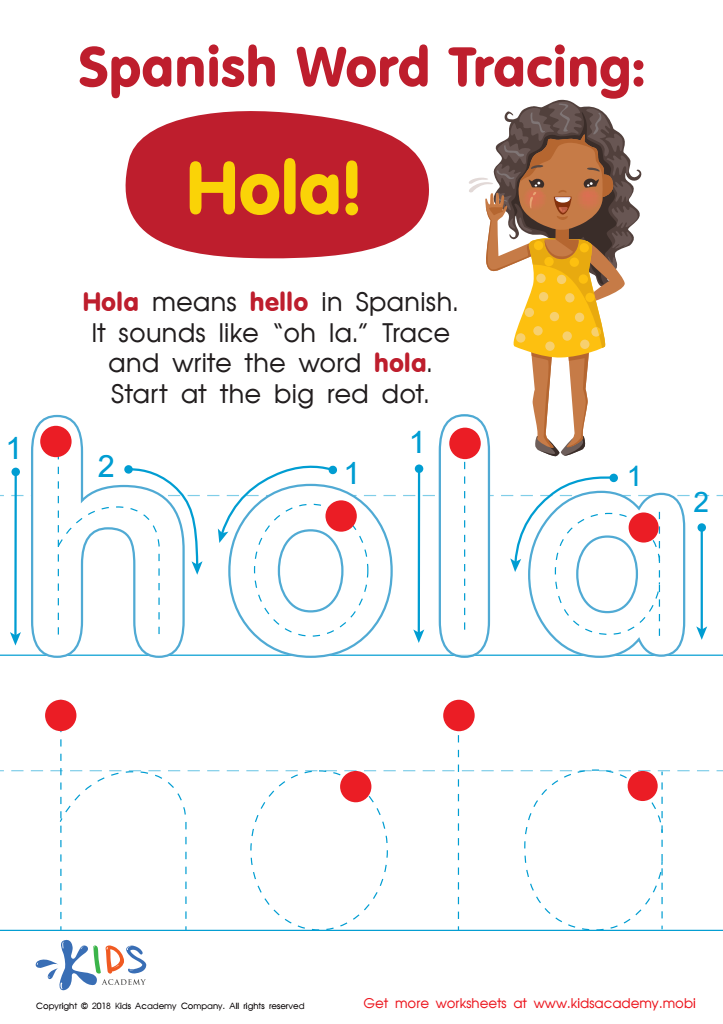
Spanish Word Tracing: Hola Worksheet
This PDF provides a fun way for students to learn "Hola" (Hello) in Spanish! Kids can practice fine motor and handwriting skills while they trace the letters. They'll get the hang of top-to-bottom, left-to-right patterning while they learn how to say and write in Spanish. With practice, they'll soon feel confident speaking and writing Spanish!
Spanish Word Tracing: Hola Worksheet
Worksheet
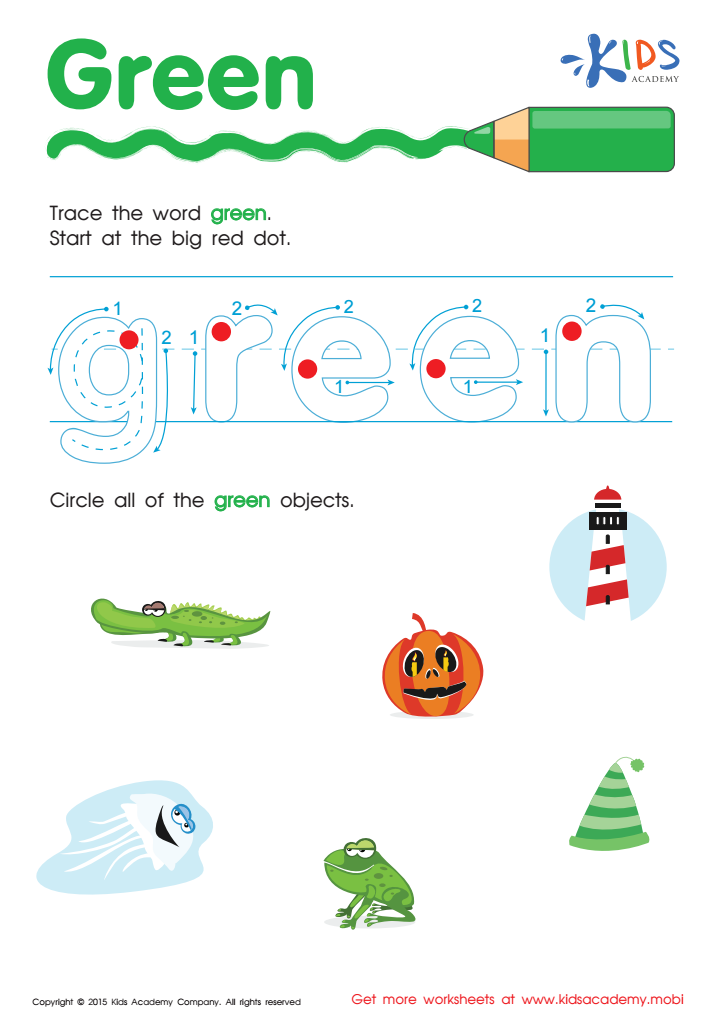
Green Tracing Color Words Worksheet
Encourage writing and spelling practice with this vibrant free handwriting worksheet. Have your child trace the new name of a primary color, "green," and circle green items in the picture. Ask them what else can be green for a challenging activity. Through this worksheet, your kindergartener can learn and play at the same time. For more free printables, look here.
Green Tracing Color Words Worksheet
Worksheet
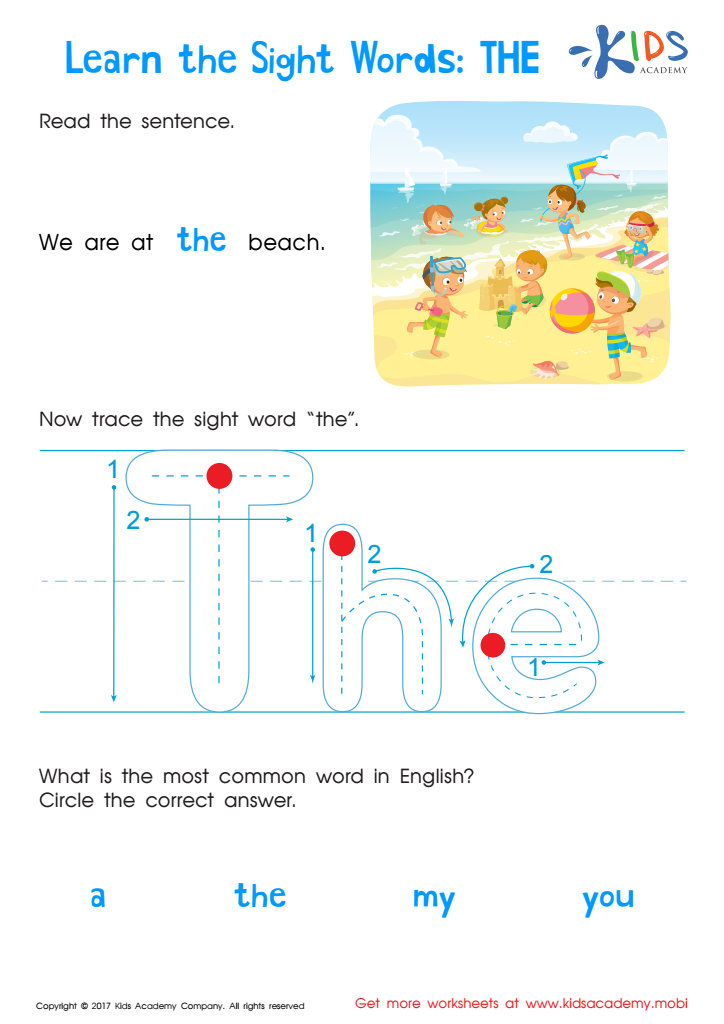
Sight Words: The Worksheet
Get the worksheet and start now.
The word "the" is an essential part of English. Teaching your child to read and write it is easy with this sight words worksheet. They'll practice reading the word, tracing it, and using it in sentences. It's the perfect way to take your child's language skills to the next level! Get the worksheet today.
Sight Words: The Worksheet
Worksheet
Join Kids Academy for Free
Who is primarily going to use this learning content?







Parents and teachers should care about Word Recognition Normal Tracing Words for children ages 4-7 because this foundational skill is crucial for their early literacy development. During this formative period, children learn to associate letters and sounds, a process integral to reading fluently. Engaging in word recognition activities, such as tracing letters and words, helps children develop fine motor skills and muscle memory needed for writing.
Moreover, these exercises promote familiarity with letter shapes and reinforce phonemic awareness, which is the understanding that spoken words are composed of individual sounds. This awareness is essential for decoding new words and reading confidently. As children recognize words effortlessly, they increase their reading speed and comprehension skills, enabling them to grasp more complex ideas and narratives in texts as they progress through school.
Investing time and effort in Word Recognition Normal Tracing Words also boosts children's confidence and instills a positive attitude towards reading and learning. This sets a strong foundation for academic success across various subjects. It fosters a love for reading, inviting them into a world of imagination, knowledge, and critical thinking. Ultimately, attentive parents and educators can significantly enhance a child's lifelong learning trajectory through these vital early literacy practices.