Motor skills development Normal Alphabet Worksheets for Ages 4-8
3 filtered results
-
From - To
Enhance your child's motor skills while they learn the alphabet with our engaging Normal Alphabet Worksheets designed for ages 4-8. These worksheets provide a fun and interactive way to develop fine motor skills, crucial for early childhood development. Each activity is crafted to strengthen hand-eye coordination, increase dexterity, and boost confidence in writing. With vibrant designs and age-appropriate content, children will enjoy tracing, coloring, and writing letters, ensuring a practical learning experience. Perfect for teachers and parents alike, our worksheets are a valuable resource for nurturing young learners’ creativity and essential skills, setting the foundation for academic success.
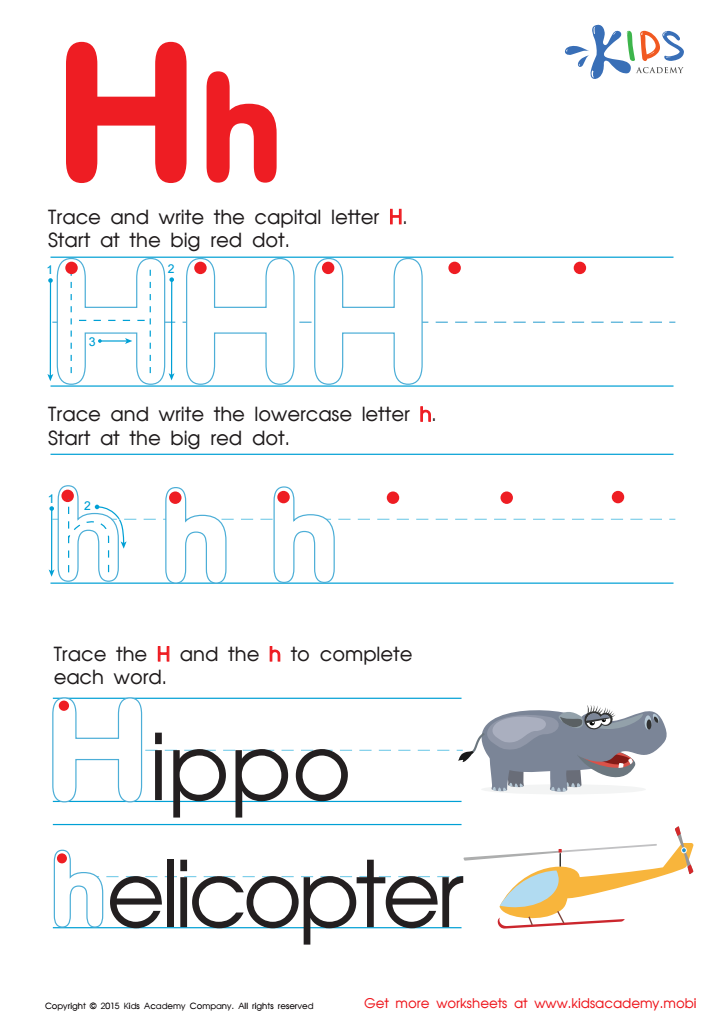
Letter H Tracing Page
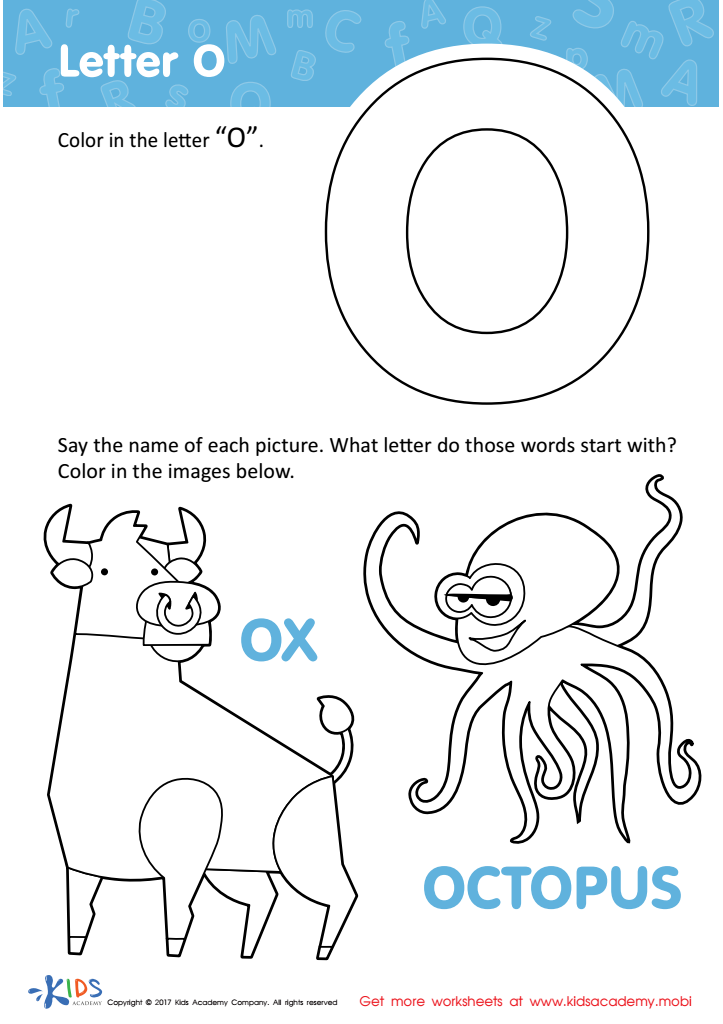
Letter O Coloring Sheet
 Assign to My Students
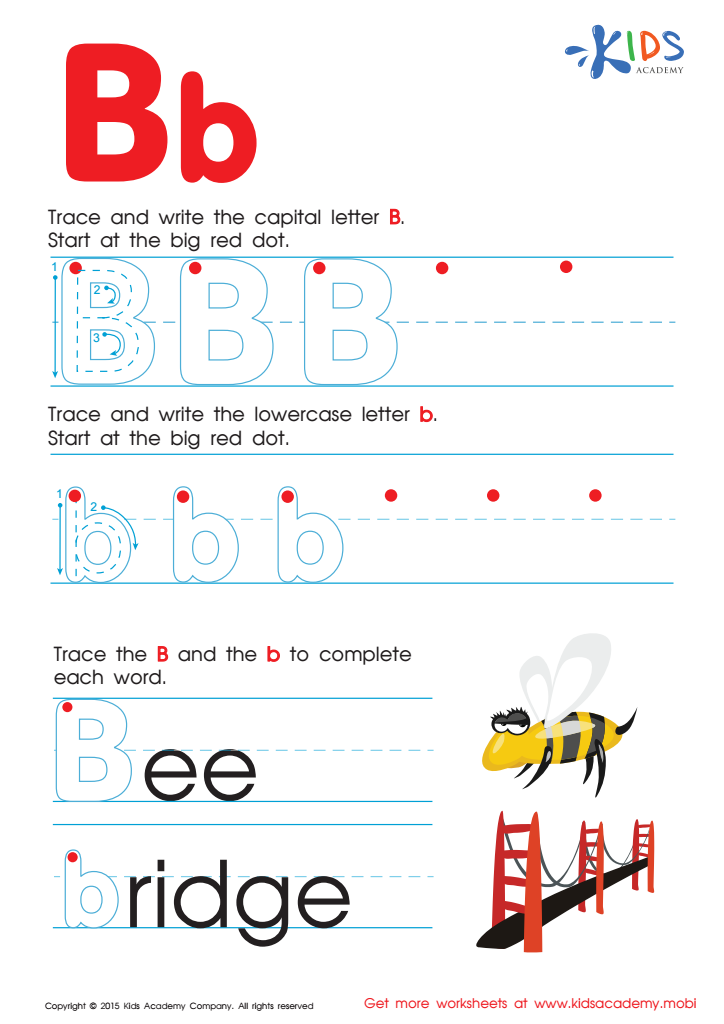
Letter B Tracing Page







Motor skills development is crucial for children aged 4-8, and both parents and teachers play a vital role in fostering this growth. Fine motor skills, which involve the use of small muscles in the hands and fingers, are essential for tasks like writing, drawing, and self-care activities such as buttoning shirts and tying shoelaces. Educators and caregivers should pay attention to this developmental stage, as appropriate motor skills enable children to express themselves more effectively and engage in classroom activities.
Gross motor skills, involving larger muscle groups, also significantly impact a child’s physical coordination and balance, affecting participation in sports and outdoor play. Engaging in activities that promote these skills helps boost a child's confidence, encourages independence, and stimulates cognitive development as children learn to explore their environment.
Furthermore, a strong foundation in motor skills can enhance social interactions, as children who are physically confident are often more inclined to join groups and participate in cooperative play. Overall, prioritizing motor skills development helps children build resilience and adaptability essential for future academic and life success, making it a key focus for both parents and teachers in the early educational landscape.







