Visual discrimination Normal Alphabet Worksheets for Ages 4-8
4 filtered results
-
From - To
Enhance your child's reading readiness with our Visual Discrimination Normal Alphabet Worksheets for ages 4-8. These expertly crafted worksheets boost early learning skills by helping children recognize letters and distinguish between similar shapes and patterns. Each worksheet is designed to engage young minds through fun and interactive activities that develop essential visual discrimination abilities. Perfect for preschool and early elementary students, our worksheets foster confidence and precision in letter identification, setting a strong foundation for reading and writing success. Download today to support your child’s educational journey with enjoyable and effective practice!
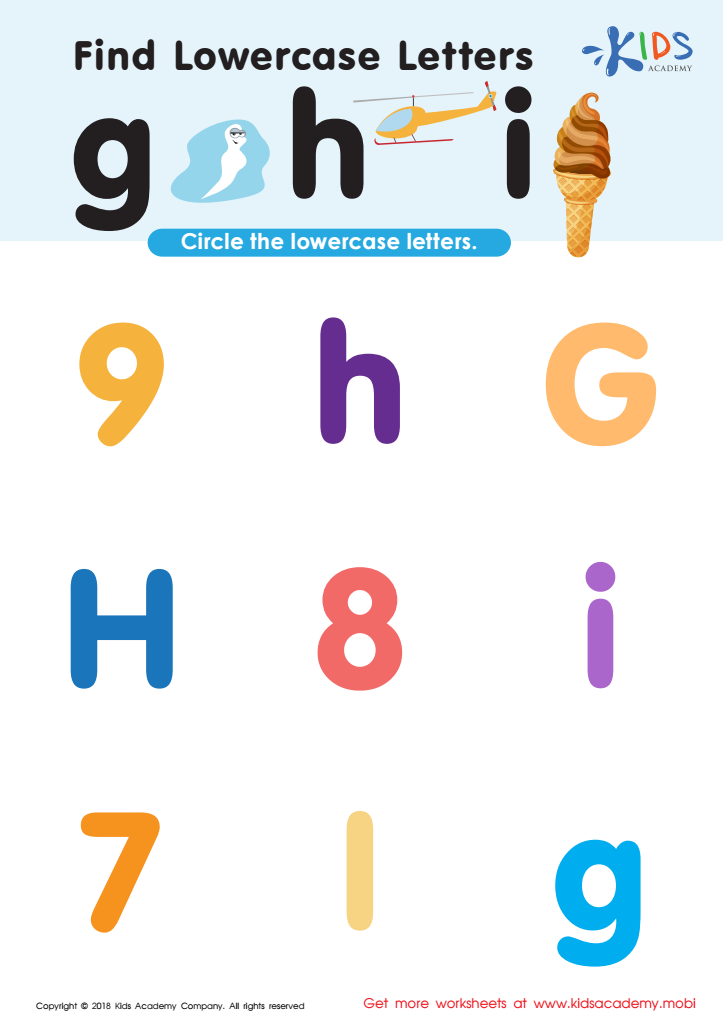
Find Lowercase Letters g h i Worksheet
 Assign to My Students
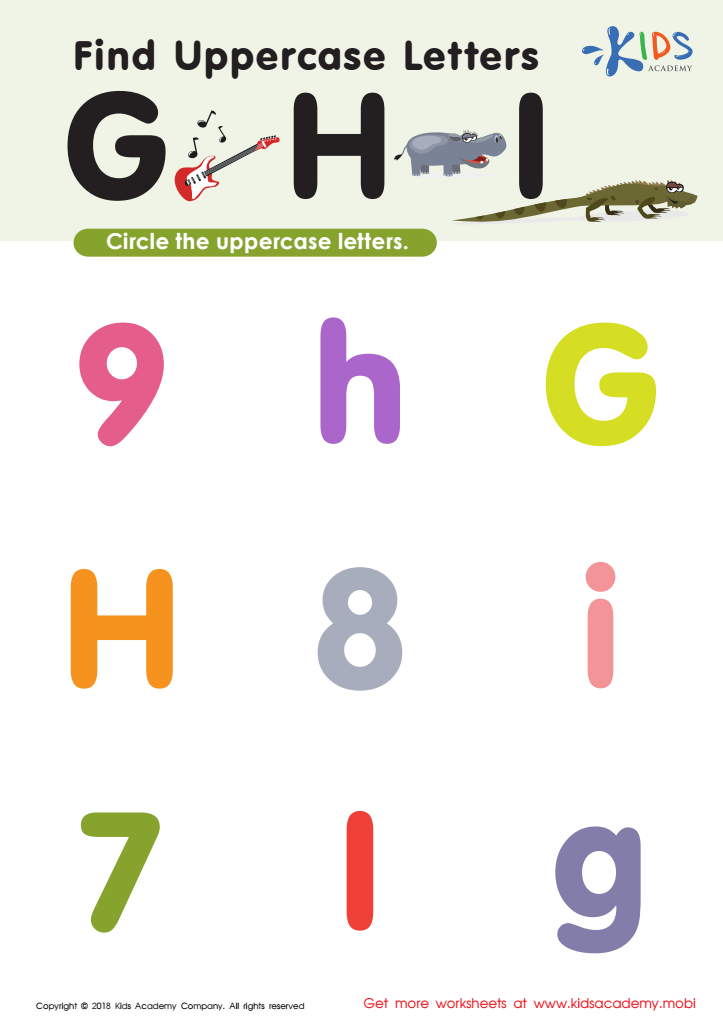
Find Uppercase Letters G, H, and I Worksheet
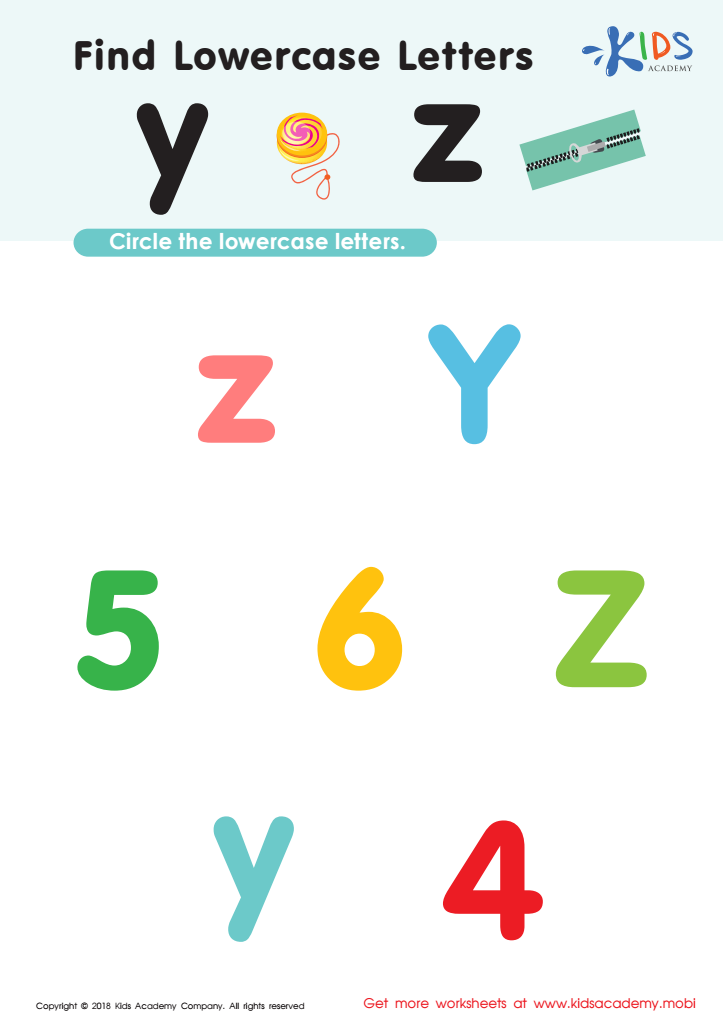
Find Lowercase Letters y z Worksheet

Find Uppercase Letters V, W, X Worksheet








Visual discrimination of the normal alphabet is a critical foundational skill for children ages 4-8, and parents and teachers should prioritize it for several key reasons. First, this ability enables children to distinguish between letters that look similar, such as "b" and "d" or "p" and "q". This skill is essential for accurate reading and writing, as misidentifying letters can lead to difficulties in word recognition and decoding, which are fundamental for literacy development.
Moreover, visual discrimination supports cognitive development by enhancing children's attention to detail and problem-solving abilities. When children can accurately distinguish letter shapes and patterns, they make connections more easily, which is important for spelling and reading fluency.
Teaching visual discrimination at an early age can also facilitate smoother transitions and reduce frustration as children tackle more complex reading tasks in higher grades. Early intervention in visual discrimination can help identify and support children with potential learning disabilities, like dyslexia, enabling timely and effective strategies that make a positive impact on their learning journeys.
Lastly, fostering visual discrimination through age-appropriate games and activities can be a fun and engaging way for children to learn, making education an enjoyable process rather than a chore. Overall, emphasizing visual discrimination lays a robust groundwork for academic success and lifelong learning.







