
Alphabetical order understanding Normal Letter Recognition Worksheets for Ages 4-8
3 filtered results
Difficulty Level
Grade
Age
-
From - To
Subject
Activity
Standards
Introducing our "Alphabetical Order Understanding and Normal Letter Recognition Worksheets" designed for children aged 4-8! These engaging worksheets provide young learners with essential skills in identifying letters and organizing them in alphabetical order. With colorful illustrations and interactive activities, children will develop their letter recognition abilities while enhancing their understanding of the alphabet's sequence. Ideal for homeschooling or classroom environments, our worksheets foster early literacy by making learning fun and accessible. Encourage your child's reading readiness and confidence as they explore the foundational elements of language through these thoughtfully crafted resources. Perfect for reinforcing reading skills and building a love for letters!
Favorites
With answer key
Interactive

Letter G Tracing Page
Get ready to trace the letter "G" – with a big red spot as the starting point, trace the lines and watch the letter appear. Uppercase and lowercase letters are both easy and fun to write. Give it a go and finish the word "go". Play the guitar and say "hello" to a funny ghost!
Letter G Tracing Page
Worksheet
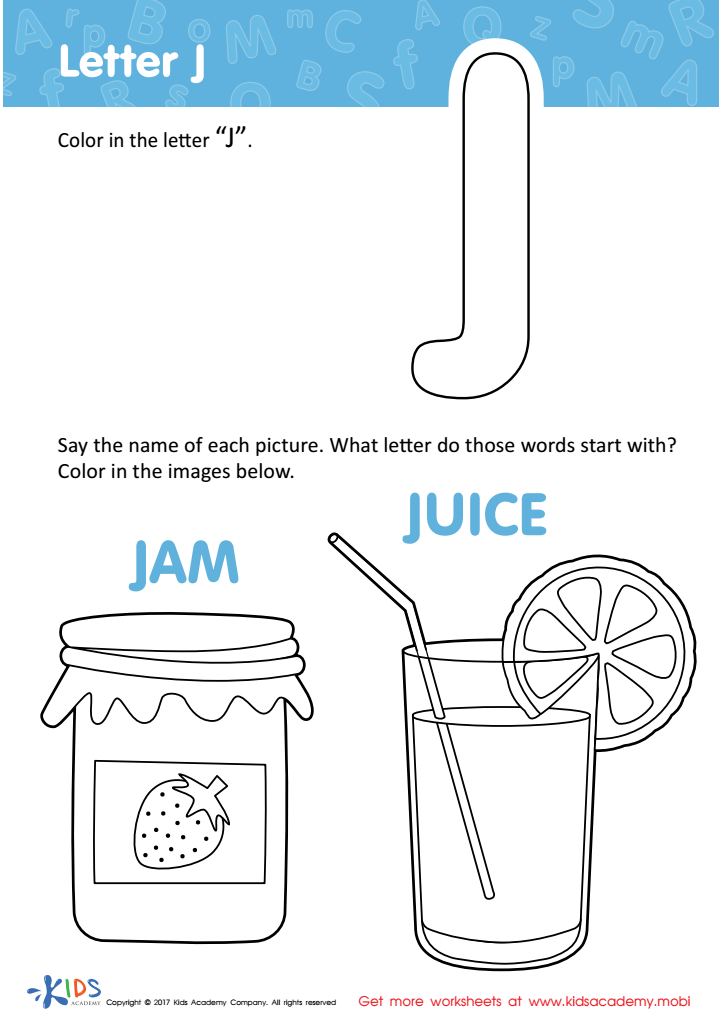
Letter J Coloring Sheet
Practice the letter 'J' with your little one with this fun coloring page! Pictures of jar, juice, jam and jelly make it an enjoyable experience for kids. Learning the letter and coloring is fun for even the youngest learners.
Download (PDF)
 Assign to My Students
Assign to My Students
Letter J Coloring Sheet
Worksheet
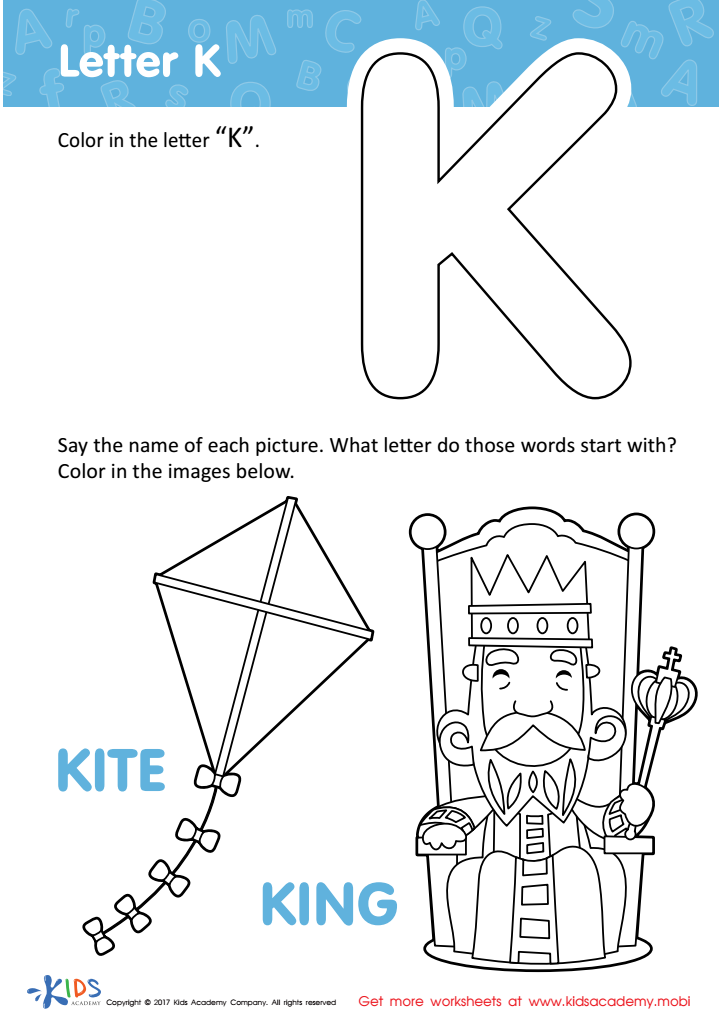
Letter K Coloring Sheet
This letter K coloring page captivates your child's creativity while learning the letter! Showcasing a king and kite, common words for their age group, it's sure to spark their imagination.
Download (PDF)
Assign to My Students
Assign to My Students
Letter K Coloring Sheet
Worksheet
Join Kids Academy for Free
Who is primarily going to use this learning content?








Understanding alphabetical order and normal letter recognition is crucial for children aged 4-8, as it lays the foundation for their reading and writing skills. At this age, children are like sponges, absorbing information rapidly. Recognizing the letters of the alphabet helps them make sense of words, enabling them to decode and comprehend text more effectively.
Alphabetical order aids in organizing information, which is vital for literacy development. For instance, when children learn to sequence letters, they can more easily find words in dictionaries or lists, fostering their research abilities and enhancing their learning experiences.
Moreover, familiarity with letters boosts children's confidence. When they recognize and can manipulate letters, they feel more comfortable exploring written material, fostering a love for reading. This enjoyment translates into more frequent practice, reinforcing their skills.
Parents and teachers should focus on interactive and fun approaches, such as alphabet games, songs, and storytelling, to engage children in their learning process. By nurturing letter recognition and an understanding of alphabetical order, caregivers help pave the way for future academic success, effective communication, and lifelong learning. Such foundational skills are essential for children's development in an increasingly text-driven world.








