Fine motor skills development Normal Letter Recognition Worksheets for Ages 4-8
3 filtered results
-
From - To
Enhance your child’s learning journey with our Fine Motor Skills Development Worksheets focused on Letter Recognition, tailored for ages 4-8. These engaging activities not only promote alphabet recognition but also strengthen fine motor skills essential for early writing. Designed to complement your child's educational growth, our worksheets feature fun, interactive exercises that allow kids to practice tracing, coloring, and identifying letters while refining their hand-eye coordination. Unlock the power of learning through play and help build a solid foundation in literacy with our expertly crafted resources. Explore our collection today and watch your child's confidence soar alongside their skills!
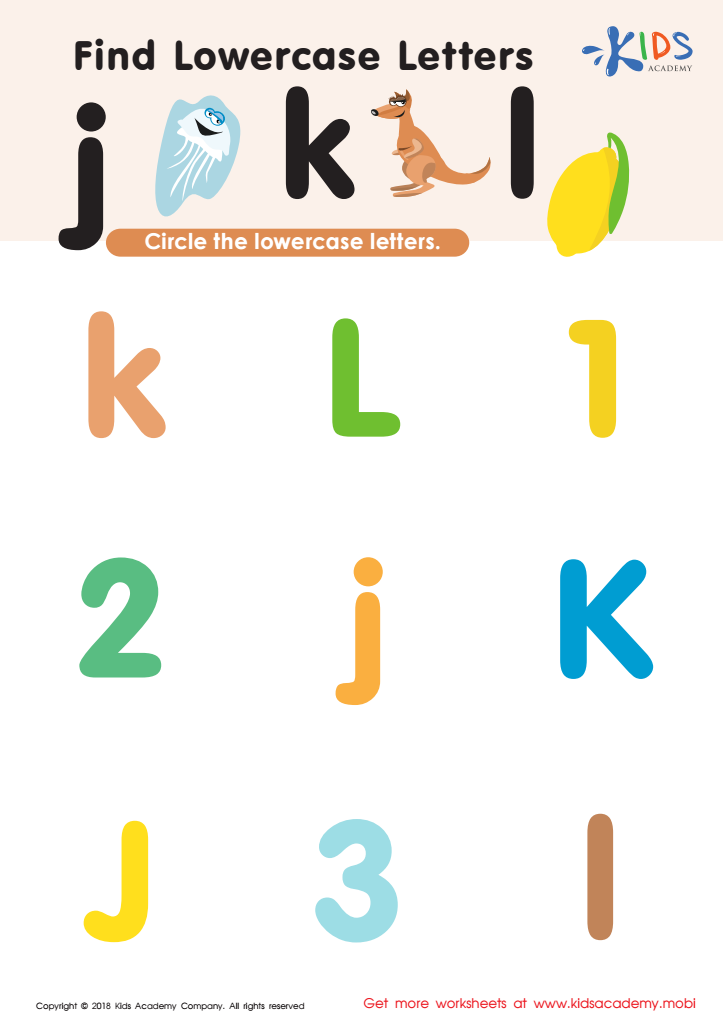
Find Lowercase Letters j k l Worksheet
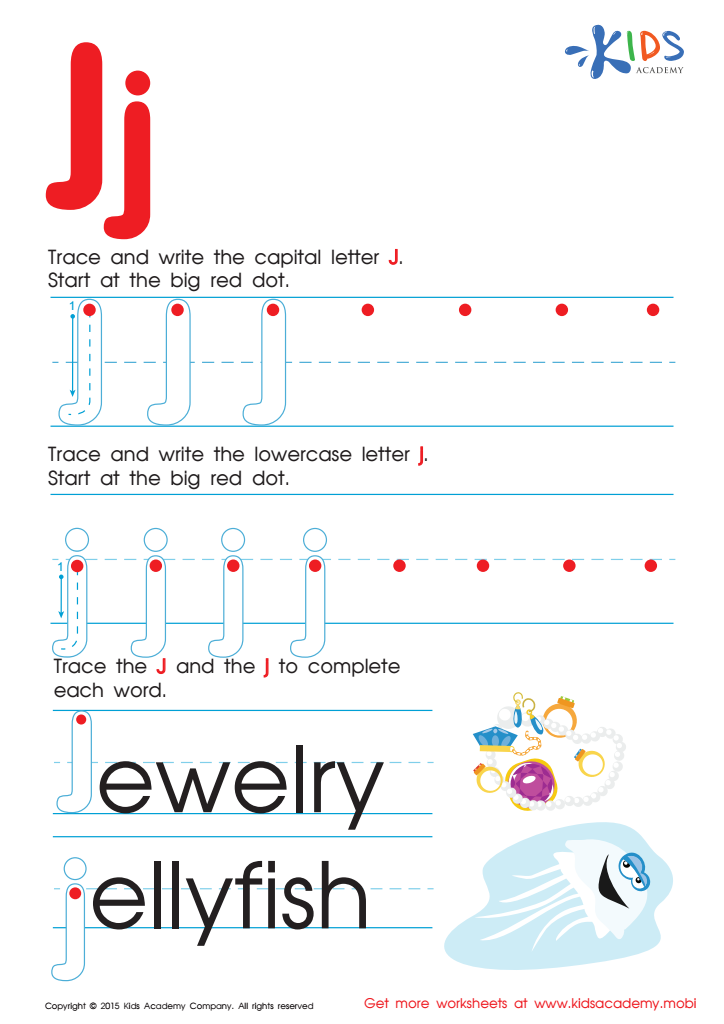
Letter J Tracing Page
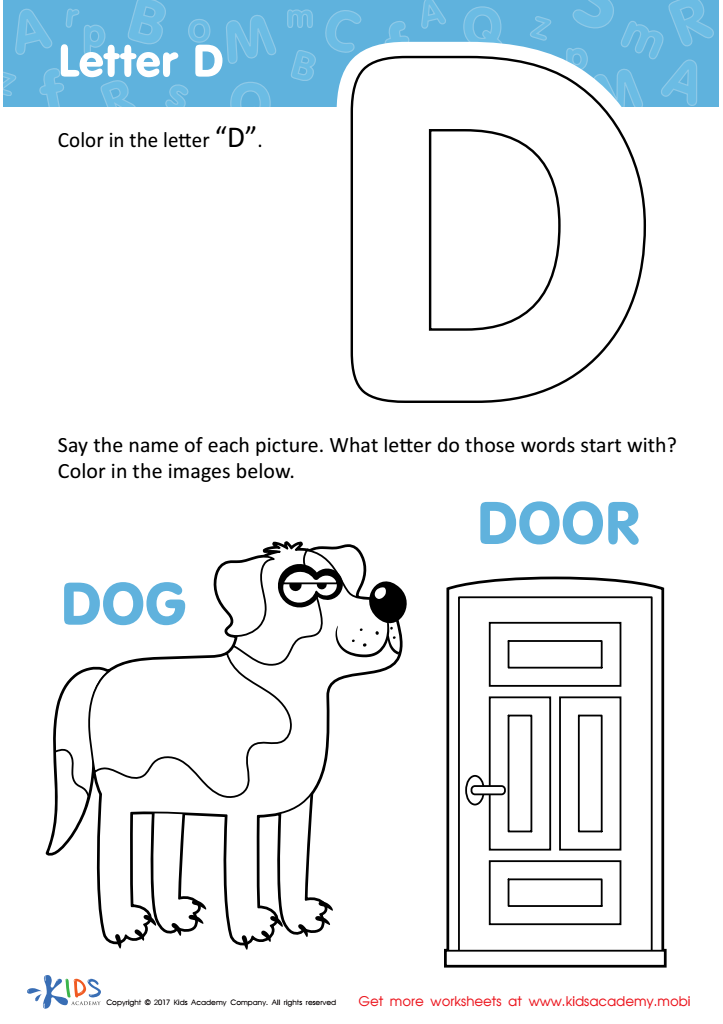
Letter D Coloring Sheet
 Assign to My Students








Fine motor skills and letter recognition are crucial developmental areas for children aged 4-8, directly impacting their academic success and overall growth. Fine motor skills involve the coordination of small muscles in the hands and fingers, essential for everyday tasks such as writing, buttoning shirts, or tying shoelaces. As children master these skills, they gain confidence, independence, and the ability to engage more fully in various activities.
Normal letter recognition during this age helps children identify letters and understand their sounds, laying the foundational stone for reading and literacy. Mastery of the alphabet not only supports phonemic awareness but also promotes spelling, writing, and overall communication skills, influencing educational outcomes in future schooling.
Parents and teachers should prioritize these areas because early attention can lead to lasting positive effects; children who struggle with fine motor skills or letter recognition may face challenges later in reading and writing. Conversely, strong abilities in these areas can foster a love for learning, critical thinking, and problem-solving skills. By focusing on fine motor development and supporting letter recognition, caregivers can create a nurturing environment that enables children to thrive academically and socially in their early years and beyond.








