
Letter-sound association Normal Letter Recognition Worksheets for Ages 4-8
5 filtered results
Difficulty Level
Grade
Age
-
From - To
Subject
Activity
Standards
Enhance your child's literacy skills with our engaging Letter-Sound Association Normal Letter Recognition Worksheets designed specifically for ages 4-8. These worksheets provide fun and interactive activities that promote letter recognition while helping kids connect letters to their respective sounds. Each worksheet features vibrant visuals and age-appropriate exercises to captivate young learners' attention. By practicing with these worksheets, children will build a solid foundation in reading and phonetics. Perfect for at-home learning or classrooms, our resources will make mastering the alphabet an enjoyable experience! Start your child’s reading journey today with our comprehensive and accessible letter recognition worksheets.
Favorites
With answer key
Interactive
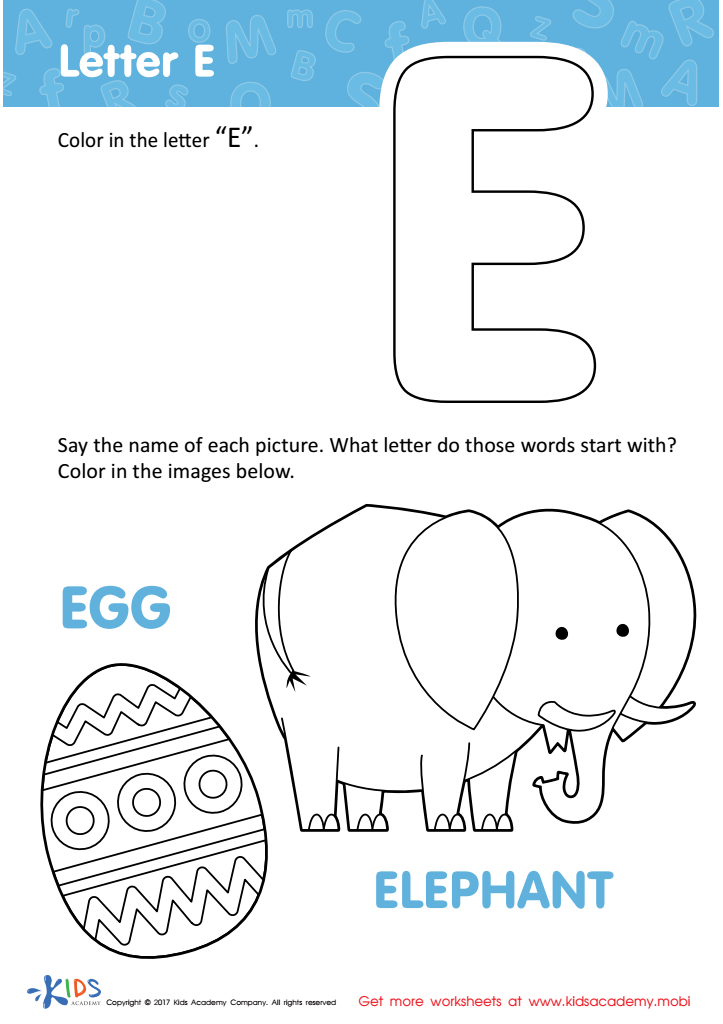
Letter E Coloring Sheet
Coloring pages are great for teaching kids the alphabet and words! This "E" page features a cute elephant and Easter egg. Kids will love it and learn the letter "E" at the same time. 80 words
Download (PDF)
 Assign to My Students
Assign to My Students
Letter E Coloring Sheet
Worksheet
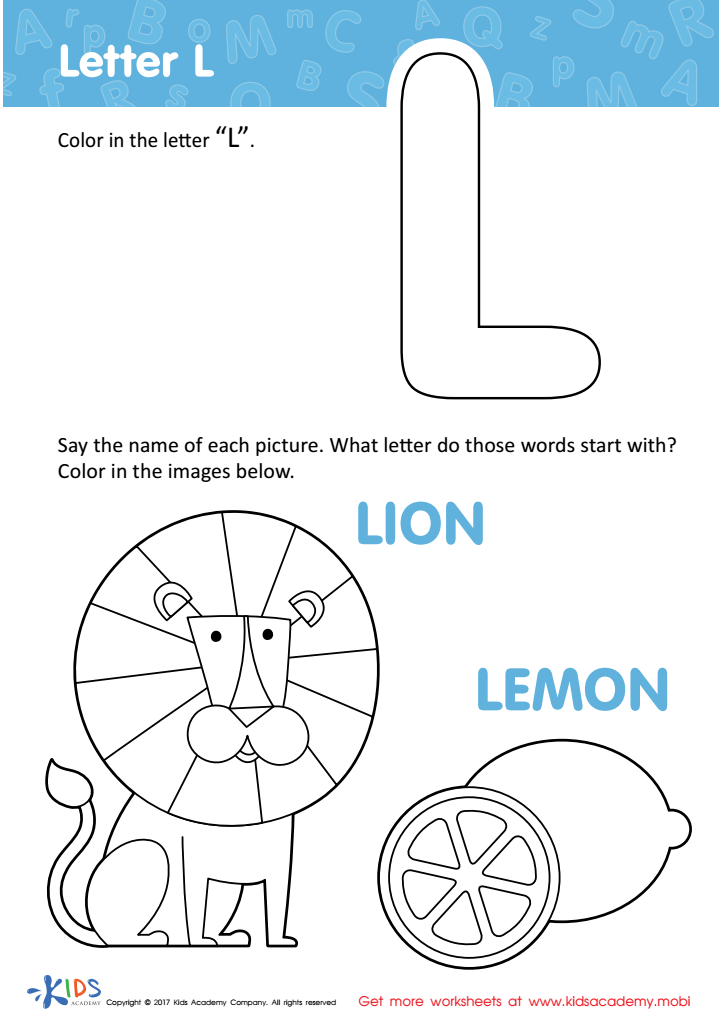
Letter L Coloring Sheet
Kids often struggle to say "L" and love it because so many things they love start with it! This coloring page combines the letter and fun images like a lemon and lion to teach and entertain!
Download (PDF)
Assign to My Students
Assign to My Students
Letter L Coloring Sheet
Worksheet

Lowercase Letters m n o Worksheet
Help your child learn the alphabet with letter tracing. Show them the difference between uppercase and lowercase letters by working through this free worksheet, tracing and writing lowercase m, n and o.
Lowercase Letters m n o Worksheet
Worksheet
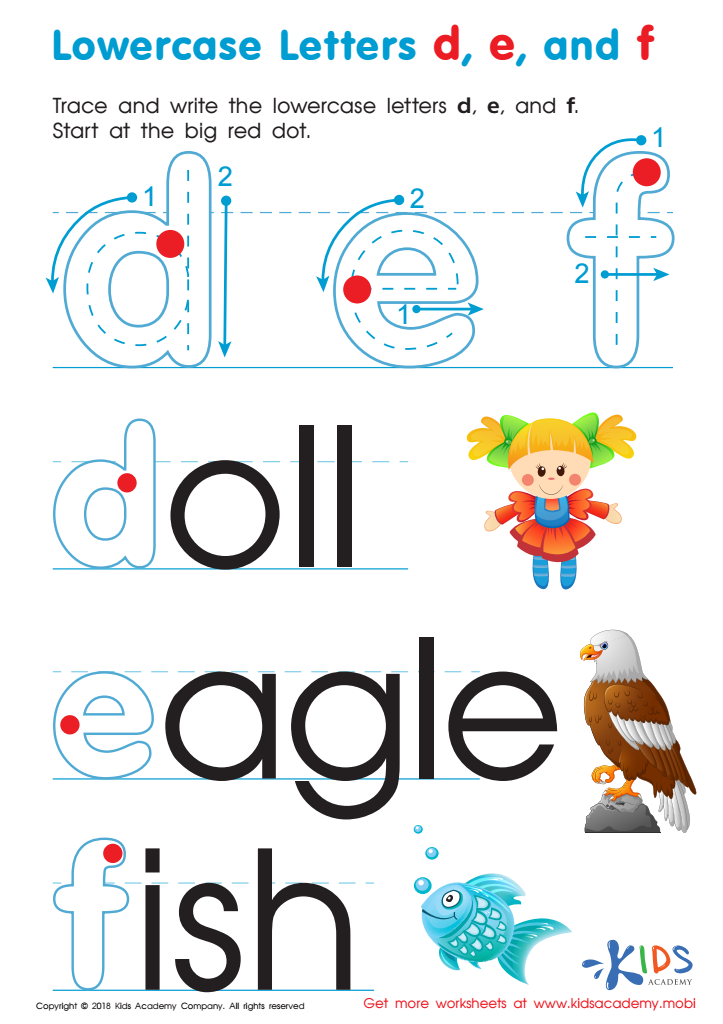
Lowercase Letters d e f Worksheet
Help your child learn the alphabet letters by tracing and writing the lowercase letters d, e, and f. Begin at the big red dot and follow the dots. This worksheet will help your little one gain a better understanding of the letters.
Lowercase Letters d e f Worksheet
Worksheet
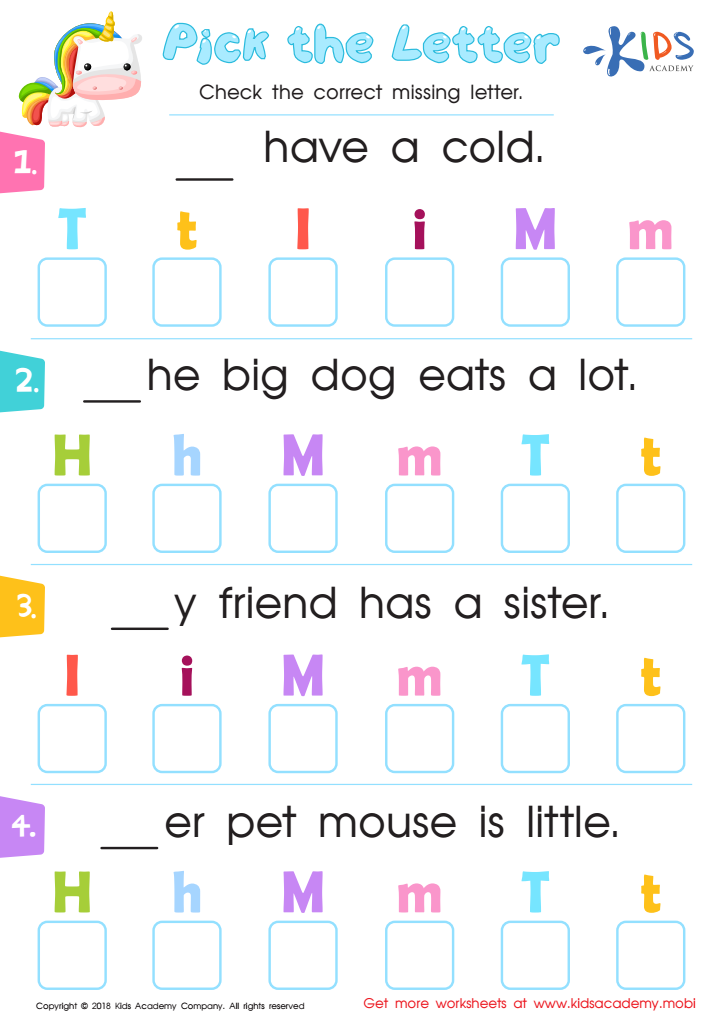
Pick the Letter Worksheet
Put your child's capitalization and reading skills to the test with this missing letter worksheet! Have them look at each sentence, note the blank and review the letters below. Find the uppercase letter that should start each sentence and check the boxes to complete. Fun and colorful, this worksheet is sure to keep your child engaged!
Pick the Letter Worksheet
Worksheet
Join Kids Academy for Free
Who is primarily going to use this learning content?








Letter-sound association and normal letter recognition are fundamental skills for children aged 4-8, forming the backbone of literacy development. As young learners begin to grasp the connections between letters and their corresponding sounds, they gain the tools necessary for reading and writing. This skill is crucial not only for academic achievement but also for building confidence in a child's ability to communicate effectively.
Parents and teachers should prioritize these skills because early literacy lays a foundation for future learning. Mastery of letter-sound relationships enables children to decode words, which is essential for reading fluency. Without this foundation, they may struggle with comprehension and engagement in later grades, potentially leading to a lifelong reluctance toward reading.
Additionally, cultivating strong letter recognition enhances vocabulary development and supports spelling skills. Engaged readers are more likely to develop critical thinking abilities and creativity, fostering a love for learning.
Moreover, fostering letter-sound association sets the stage for individual Growth, allowing children to explore diverse texts and express their thoughts more richly. By emphasizing these skills in early education, educators and parents can help ensure that children are robust readers and confident learners, equipped for success in school and beyond.








