Visual discrimination skills Normal Letter Recognition Worksheets for Ages 4-8
5 filtered results
-
From - To
Enhance your child's visual discrimination skills with our Normal Letter Recognition Worksheets, designed specifically for ages 4-8. These engaging resources help children accurately identify and differentiate between letters, a fundamental building block for reading and writing. Each worksheet offers fun activities that capture children's attention while promoting crucial early literacy skills. By practicing letter recognition, kids will also boost their memory and attention to detail. Our user-friendly format makes learning enjoyable, ensuring your little ones develop a strong foundation in literacy. Explore our collection today and watch your child grow more confident in their letter recognition abilities!
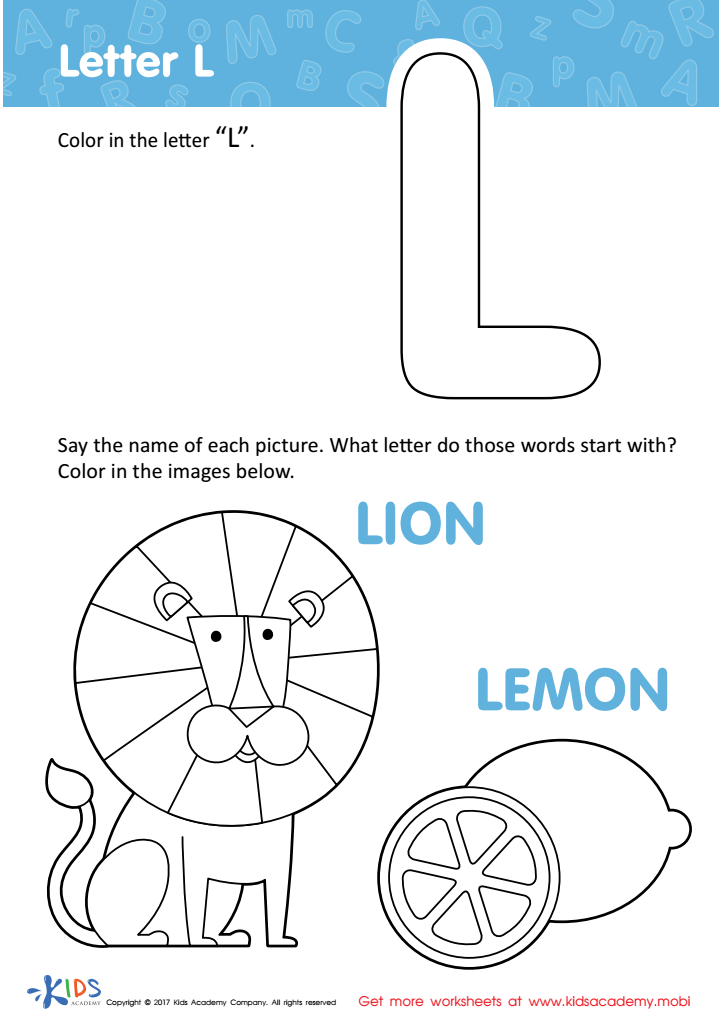
Letter L Coloring Sheet
 Assign to My Students
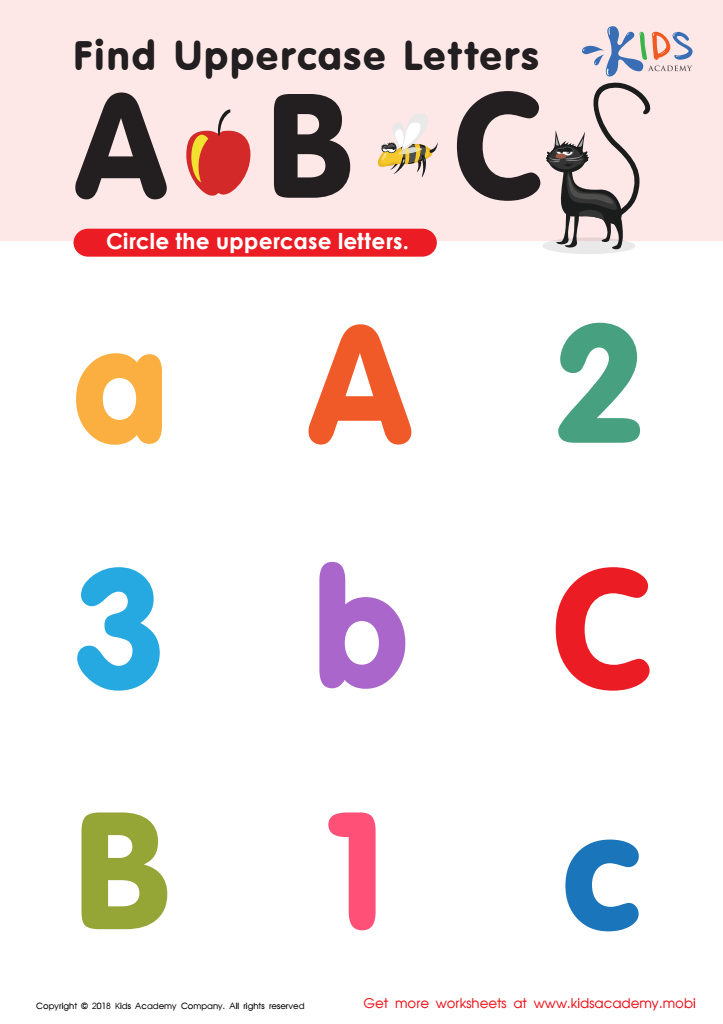
Find Uppercase Letters A, B, and C Worksheet
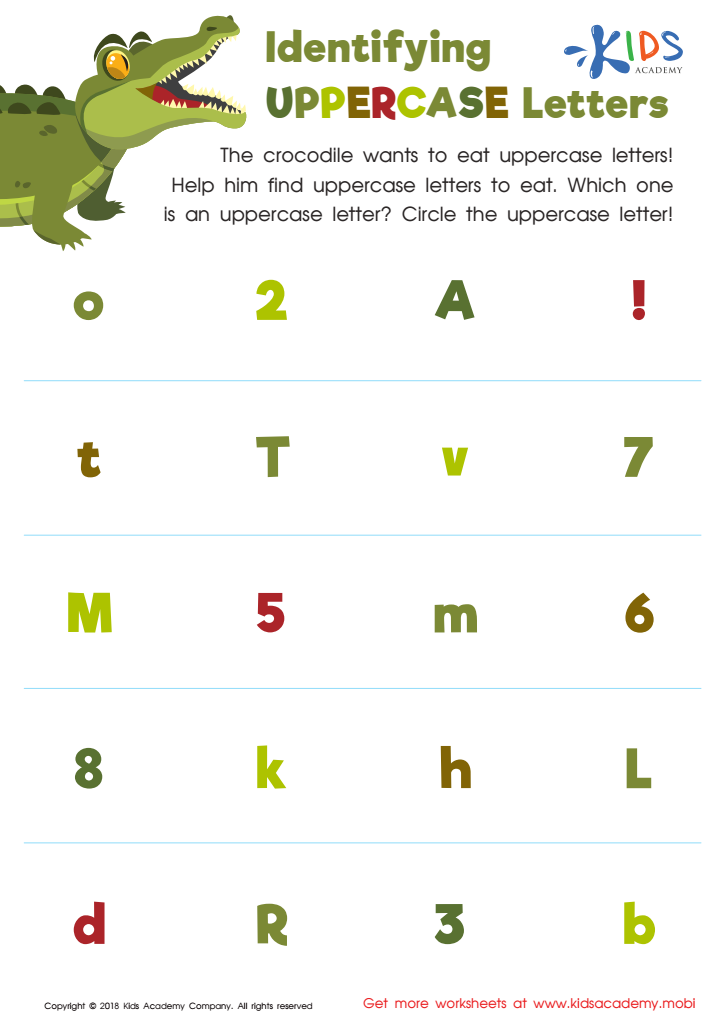
Identifying Uppercase Letters Worksheet

Find lowercase letters a b c Worksheet
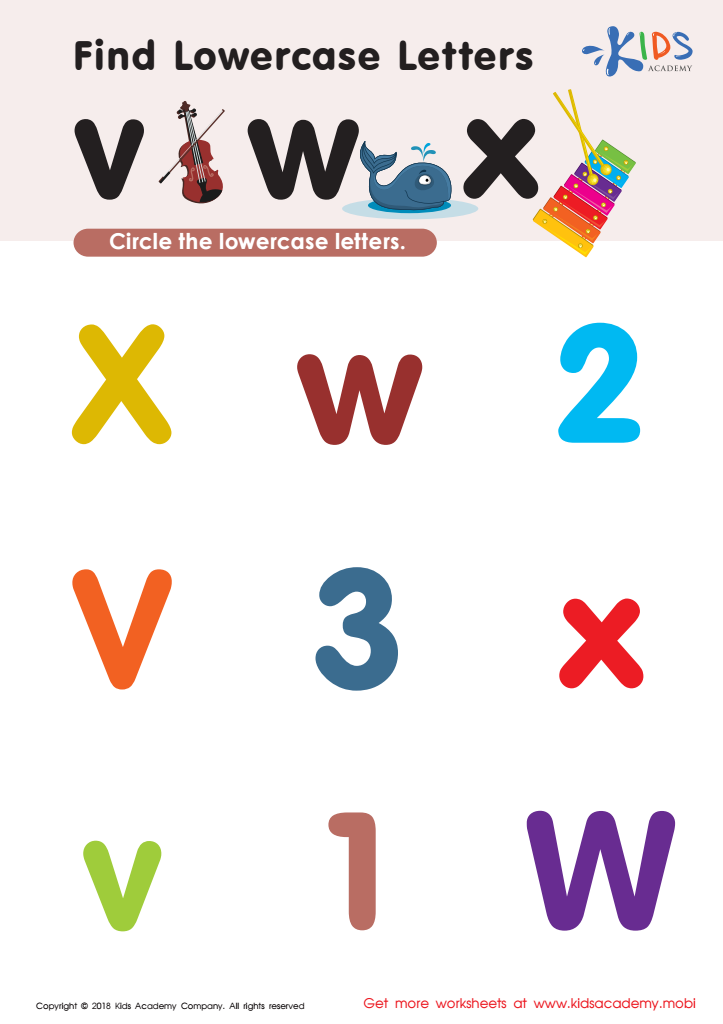
Find Lowercase Letters v w x Worksheet








Visual discrimination skills are crucial for young learners, particularly in the realm of letter recognition. For children aged 4-8, these skills enable them to identify and differentiate between similar letters, which is foundational for reading and writing. As parents and teachers, fostering these skills can significantly impact a child's academic success.
When children develop strong visual discrimination, they become more efficient in recognizing letters, words, and even shapes. This skill supports not just early literacy, but it also enhances their ability to follow directions, categorize information, and solve problems. Children who struggle with visual discrimination may face challenges in reading fluency and comprehension, leading to frustration and a lack of confidence in their abilities.
Moreover, promoting normal letter recognition isn’t just about cognitive development; it nurtures creativity and enthusiasm for learning. Engaging activities like letter matching games, interactive storytelling, or even arts and crafts can bolster these skills in a fun and relatable manner.
In summary, parents and teachers who prioritize visual discrimination skills and normal letter recognition can help ensure children are set up for success in their educational journey, fostering a lifelong love for reading and learning.








