Vocabulary development Normal Letter Sounds Worksheets for Ages 4-8
6 filtered results
-
From - To
Boost your child's reading and writing prowess with our Vocabulary Development Normal Letter Sounds Worksheets for Ages 4-8! Specifically designed for young learners, these engaging worksheets aim to enhance their understanding and recognition of basic letter sounds. By incorporating fun, interactive activities, children will seamlessly develop phonemic awareness, a foundation critical for early literacy. Ideal for both classroom use and homeschooling, these printable resources are perfect for guiding kids through the initial stages of their educational journey. Instill confidence and foster a love for learning—explore our expertly crafted worksheets today, and watch your child’s vocabulary flourish!
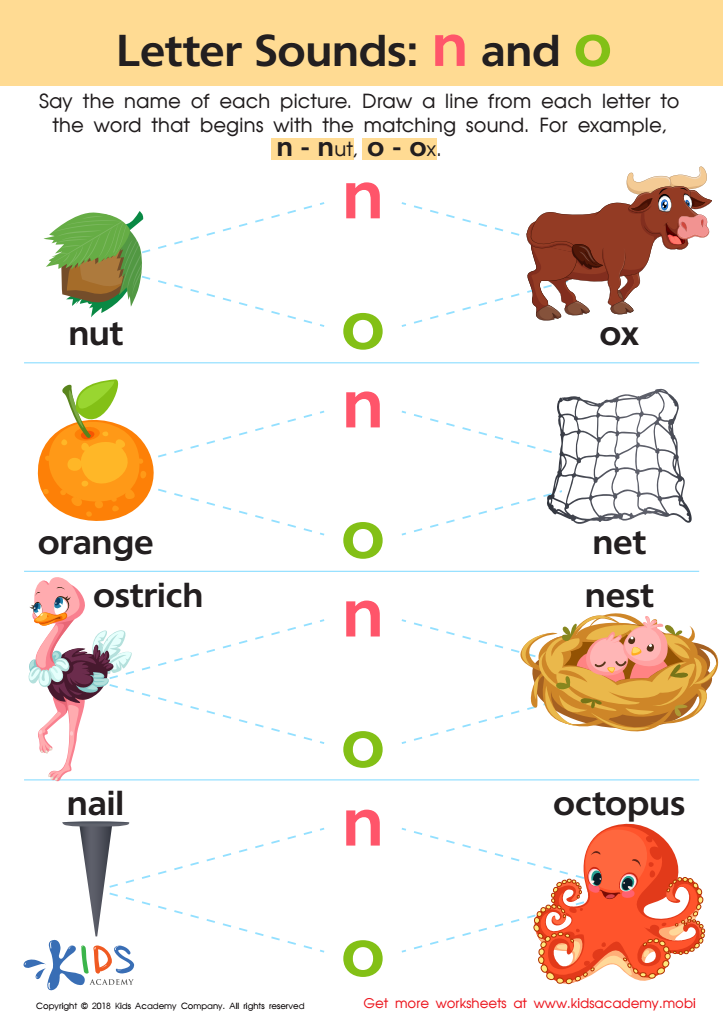
Letter N and O Sounds Worksheet
 Assign to My Students
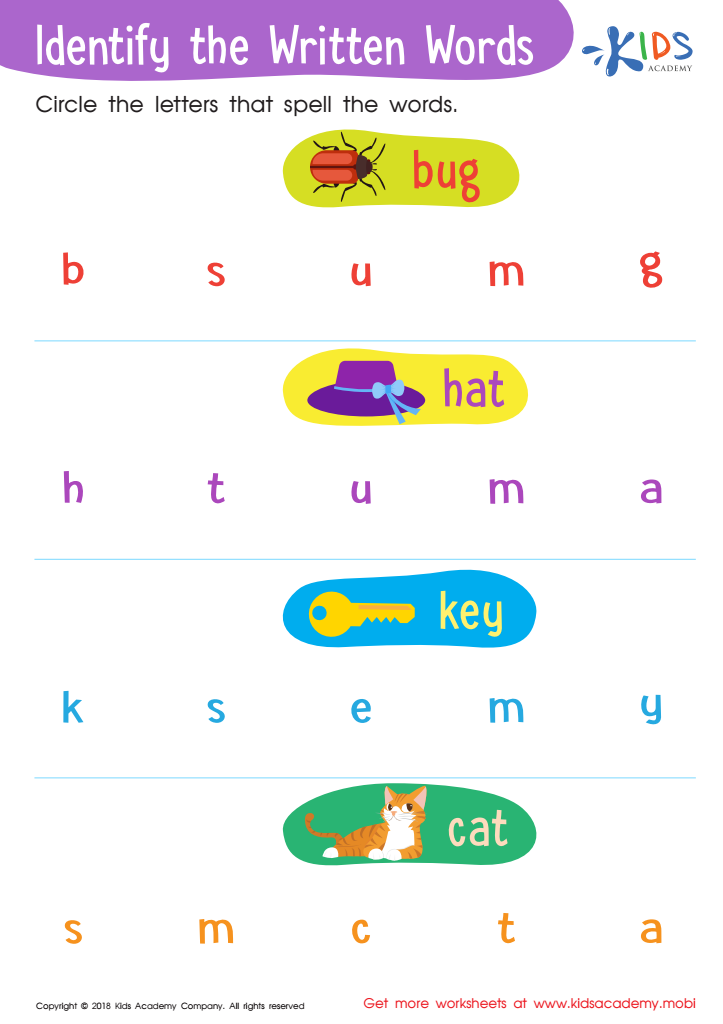
Identify the Written Words Worksheet
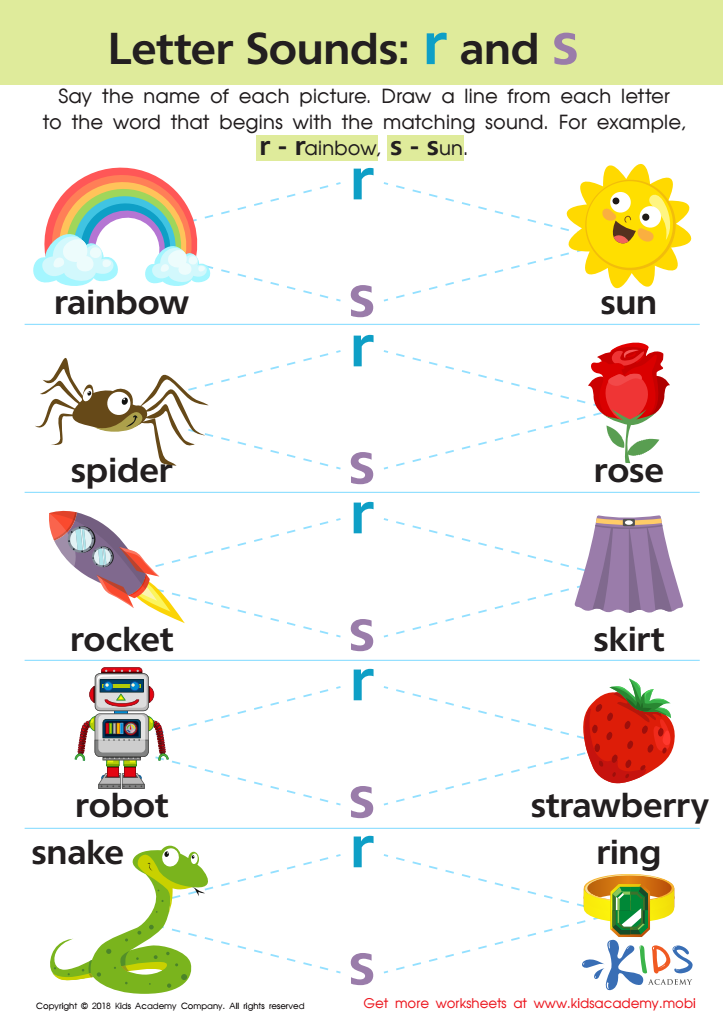
Letter R and S Sounds Worksheet
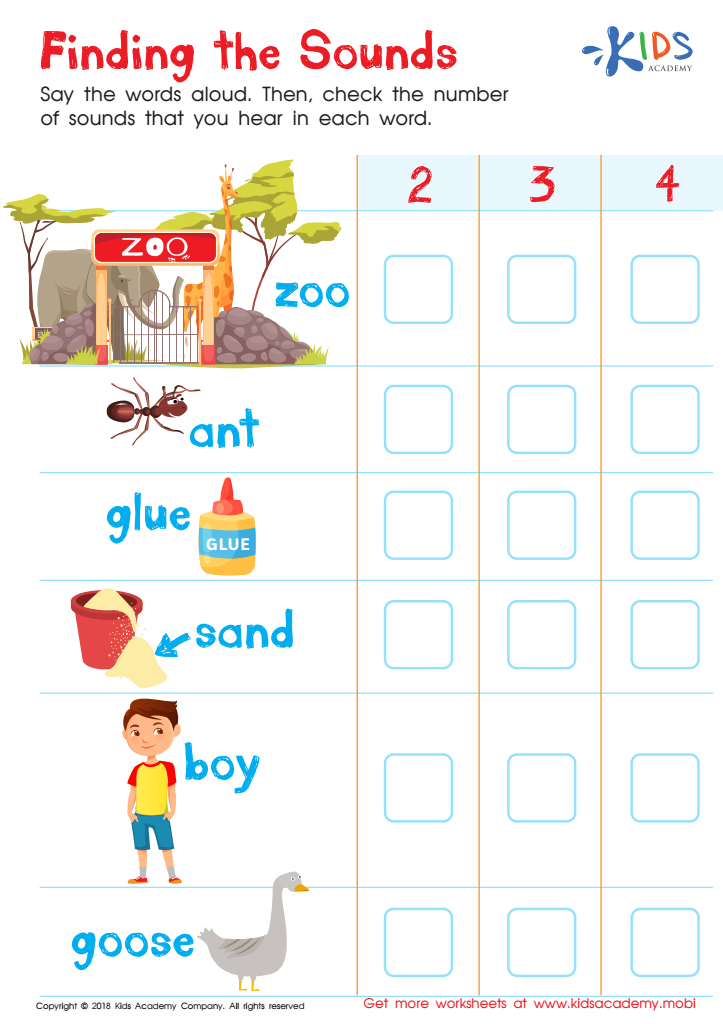
Finding the Sounds Worksheet
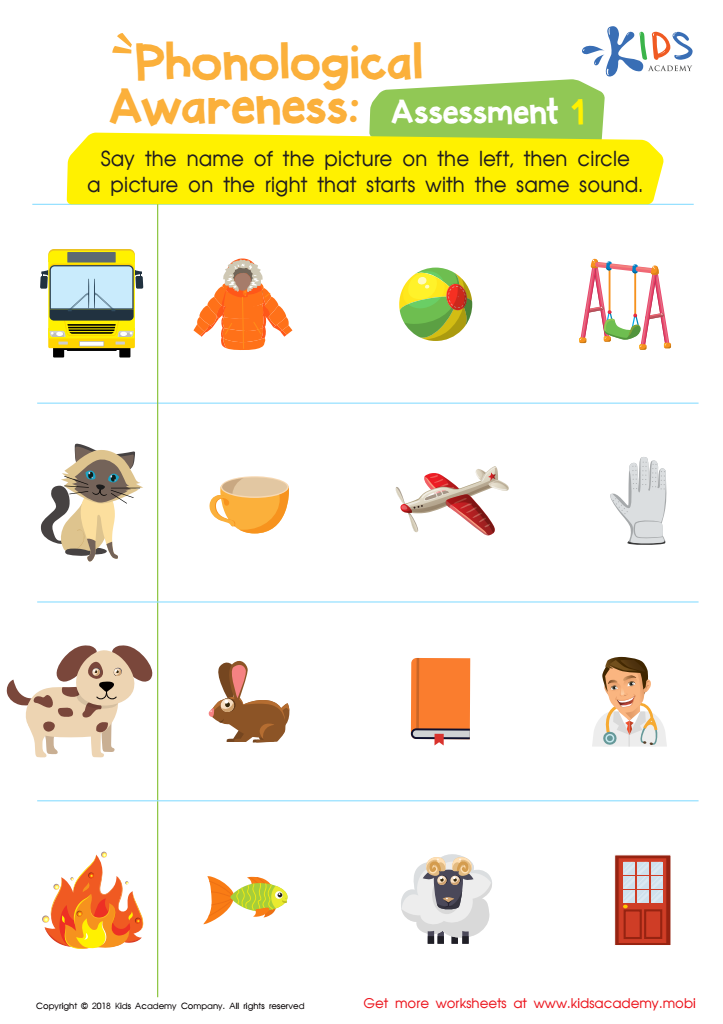
Phonological Awareness: Assessment 1 Worksheet
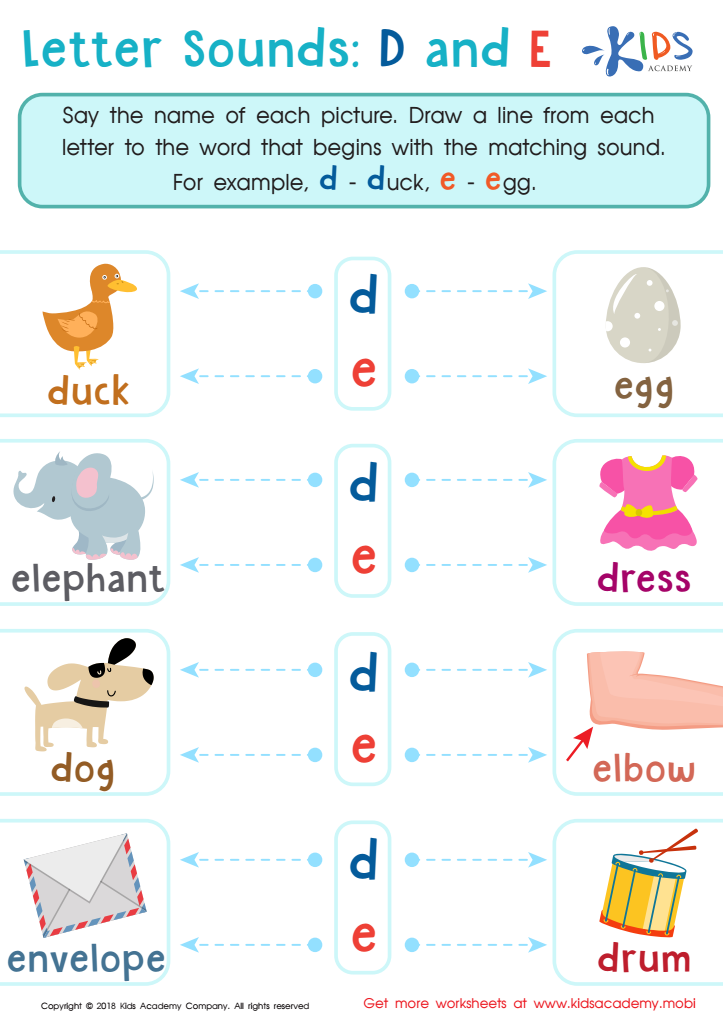
Letter D and E Sounds Worksheet








Vocabulary development and learning normal letter sounds from ages 4 to 8 are critical for children's early literacy and overall academic success. At this formative stage, children are building the foundational skills necessary for reading and writing. A rich vocabulary not only helps young learners grasp the meanings of words but also enhances their ability to express ideas and understand others. This early language development is directly linked to later reading comprehension skills; children who start with a robust vocabulary are more likely to excel in school.
Understanding letter sounds is equally important as it constitutes the mechanics of reading. Phonemic awareness, or the ability to hear and manipulate sounds in words, helps children decode unfamiliar words by sounding them out. This skill is essential for fluent reading, which, in turn, supports comprehension and a love of reading.
By focusing on these areas, parents and teachers provide children with tools they will use throughout their educational journey. Moreover, children who develop strong early literacy skills tend to have higher self-esteem, better social skills, and a greater willingness to engage in learning activities. Therefore, dedicating time and resources to vocabulary development and phonemic awareness is an investment in a child's future academic and personal success.






