Spelling practice Normal Long And Short Vowel Worksheets for Ages 4-8
5 filtered results
Difficulty Level
Grade
Age
-
From - To
Subject
Activity
Standards
Enhance your child's reading and writing abilities with our Spelling Practice Normal Long and Short Vowel Worksheets, designed for kids aged 4-8. These educational sheets help young learners differentiate between long and short vowel sounds, strengthening their spelling skills. Each worksheet is thoughtfully crafted to engage and challenge children, encouraging them to recognize vowel patterns and build a strong literacy foundation. Ideal for classroom or at-home learning, these exercises combine fun activities with effective phonics practice, supporting your child's journey towards becoming a confident and proficient reader and speller. Get started now and watch their learning bloom!
Favorites
With answer key
Interactive
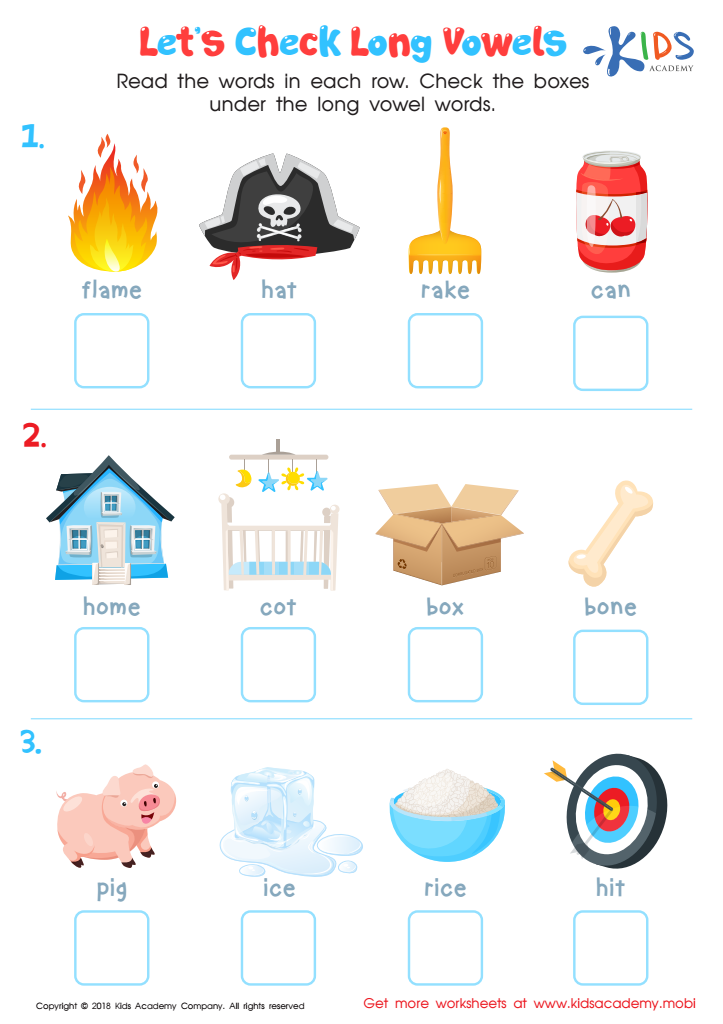
Let's Check Long Vowels: Assessment Worksheet
This worksheet helps your child identify objects and learn long vowel sounds. Ask them to say the names of the four objects in each row. Then, help them check the boxes to confirm they know the long vowel sounds. This will help them develop their reading skills.
 Assign to My Students
Let's Check Long Vowels: Assessment Worksheet
Worksheet
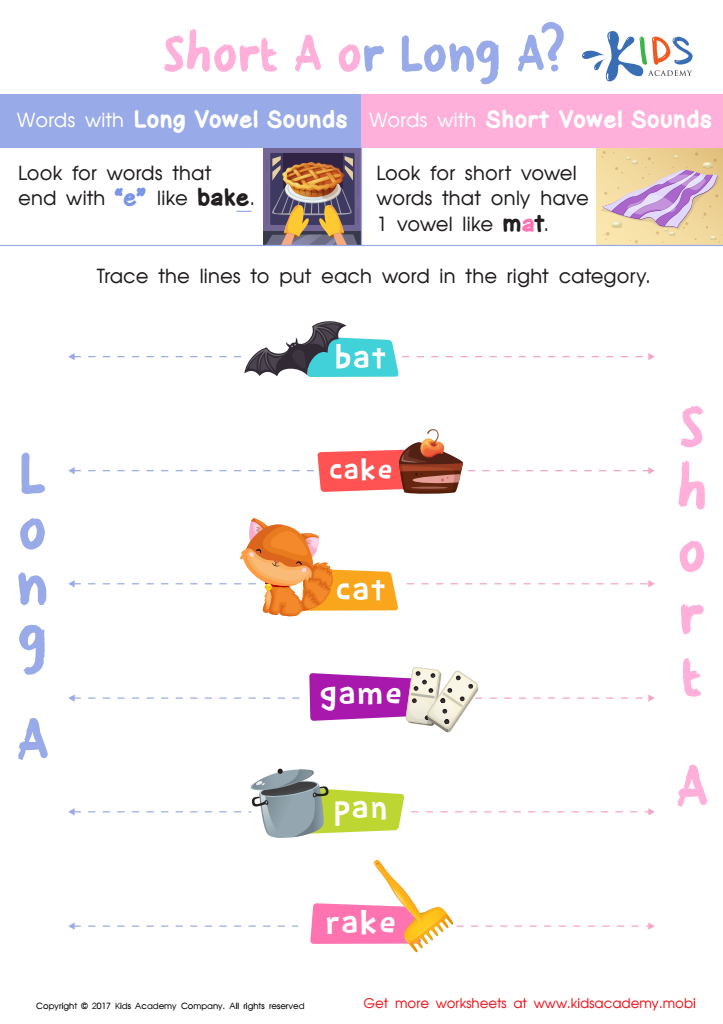
Short /a/ or Long /a/? Worksheet
Phonetics and its sounds can be tricky for kids. They can read and spell, but long and short vowels might be difficult. Use this phonetic worksheet to teach them to identify words with the short /a/ or long /a/ sound. Kids have to find the words ending with 'e' (long sound) and words with one vowel (short sound, e.g. 'mat'). Colourful printout makes it fun and easy to learn!
Short /a/ or Long /a/? Worksheet
Worksheet
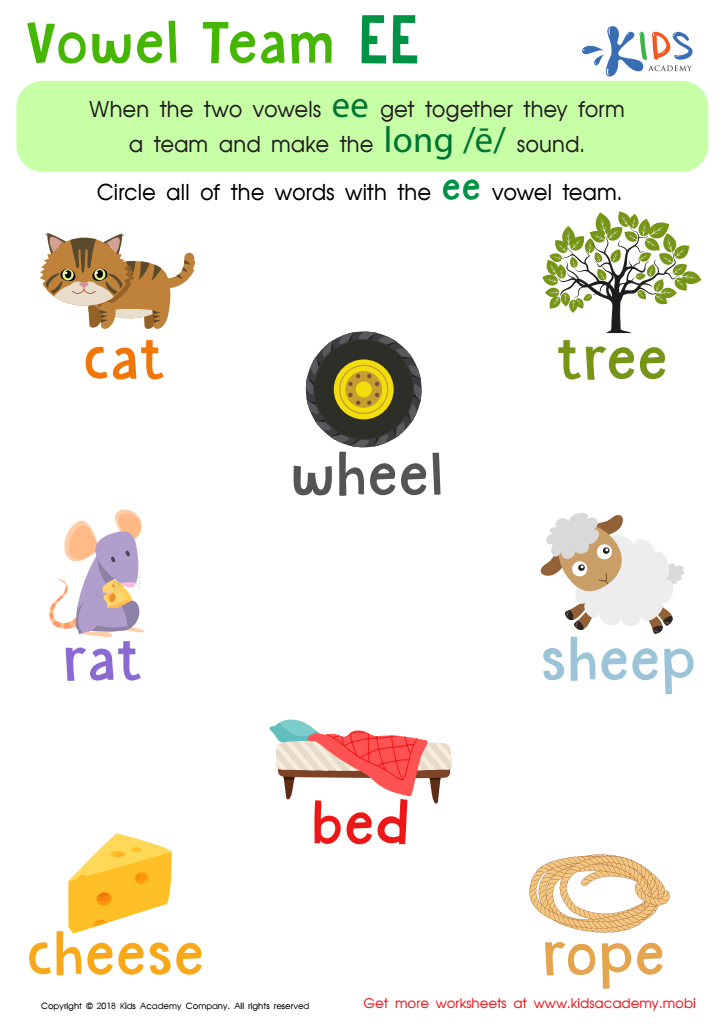
Reading: Vowel Team EE Worksheet
This worksheet is perfect for helping young learners master the /ee/ vowel team. It shows the first vowel with a long sound and the second vowel silent. It also provides pictures for unfamiliar words for readers of all levels. It's an ideal resource for teaching phonics skills.
Reading: Vowel Team EE Worksheet
Worksheet
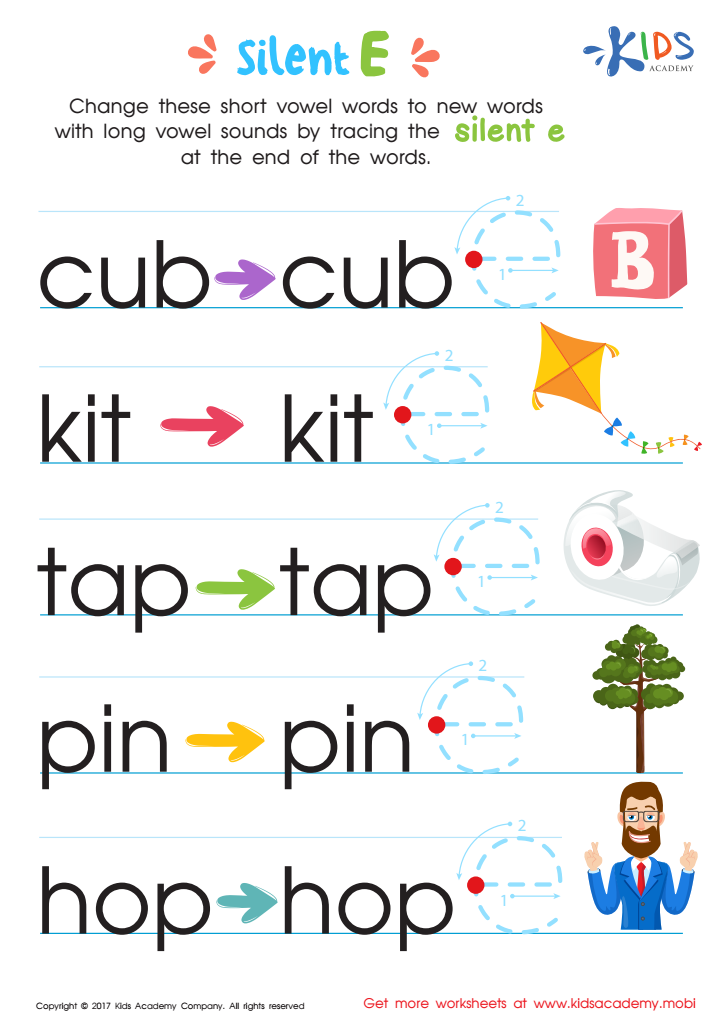
Silent E Words Worksheet
The letter e is amazing - it changes words without making a sound! Boost spelling and phonics with this Silent e worksheet from Kids Academy - fun and colorful!
Silent E Words Worksheet
Worksheet
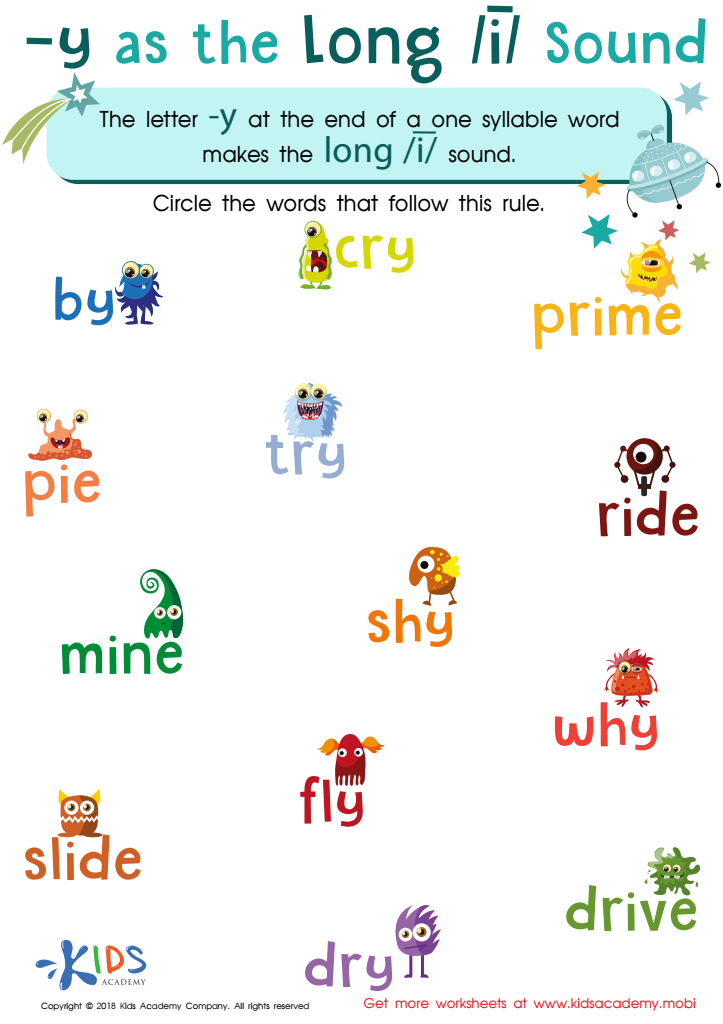
Reading: Y as Long I Worksheet
Students need practice and exposure to letters that make different sounds for decoding and reading success. This printable is a great resource for language arts classes: it explains that words ending with Y and having only one syllable make the long I sound. Students will circle all words with Y that have this sound.
Reading: Y as Long I Worksheet
Worksheet
Join Kids Academy for Free
Who is primarily going to use this learning content?




Spelling practice focusing on normal and long and short vowels is crucial for children ages 4-8 because it directly supports the foundational development of their literacy skills. At this age, children are in the early stages of learning to read and write, and understanding vowels is essential for phonemic awareness—a key component of early reading skills. Vowels play a central role in word formation and pronunciation, influencing how words sound and how easily children can decode and spell them.
Normal, long, and short vowels each have distinct sounds that change the meaning of words, making it vital for children to recognize and differentiate between them. For instance, the word pair "bit" and "bite" demonstrates how the presence of a silent 'e' changes a short vowel to a long vowel sound, altering the meaning.
Regular spelling practice helps solidify these concepts, aiding in vocabulary expansion, reading fluency, and comprehension. Additionally, mastering spelling enhances writing skills, allowing children to express their ideas more accurately and confidently. Teachers and parents should prioritize such practice to foster strong, lifelong reading and writing habits, providing children with vital tools they will use throughout their education and beyond. In a world where effective communication is paramount, these foundational skills offer a route to academic success and personal growth.