
Alphabet Recognition Normal Phonics Worksheets for Ages 4-8
3 filtered results
Difficulty Level
Grade
Age
-
From - To
Subject
Activity
Standards
Explore our engaging "Alphabet Recognition Normal Phonics Worksheets" designed for children aged 4-8! These thoughtfully crafted worksheets help young learners strengthen their alphabet recognition skills through fun and interactive activities. Ideal for both homeschooling and classroom settings, these printables incorporate phonics learning to bolster literacy foundations. Kids will enjoy tracing letters, identifying sounds, and completing colorful exercises that spark their creativity and enhance memory retention. Each worksheet fosters essential early reading skills while ensuring a joyful learning experience. Perfect for educators and parents alike, our resources aim to cultivate a love for reading in young children. Start your alphabet adventure today!
Favorites
With answer key
Interactive
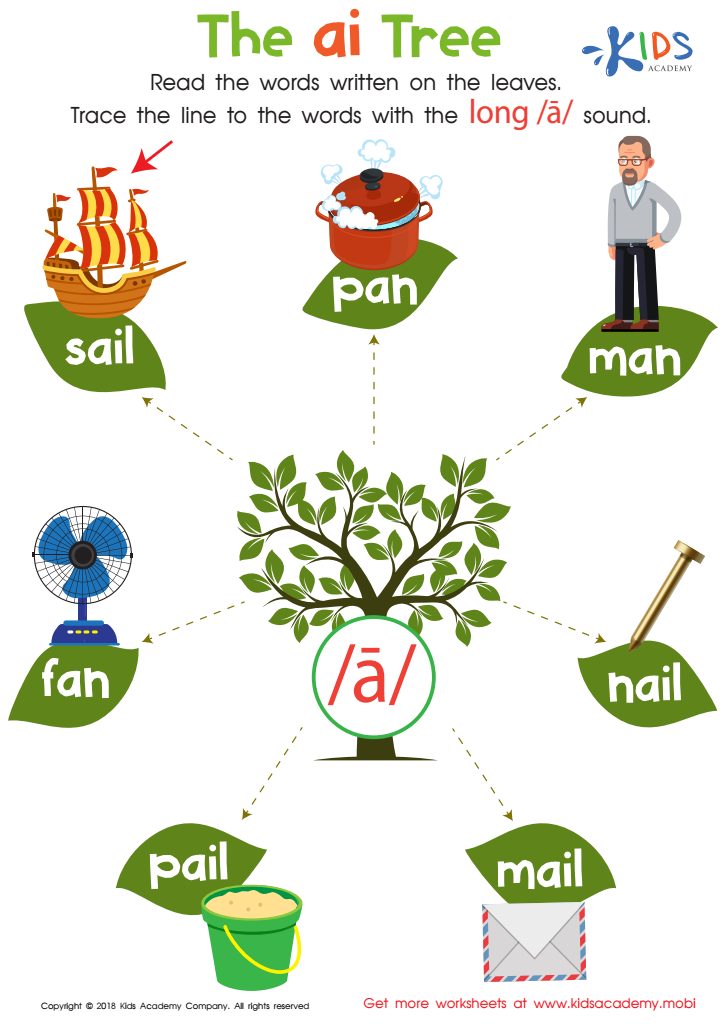
The AI Tree Worksheet
Help your kids learn to read better with this worksheet! Introduce the vowel pair 'ai' and give them familiar examples. Ask them to give you some in return. Then, have them read the words on the leaves and help them trace the ones with the long /a/ sound.
 Assign to My Students
The AI Tree Worksheet
Worksheet
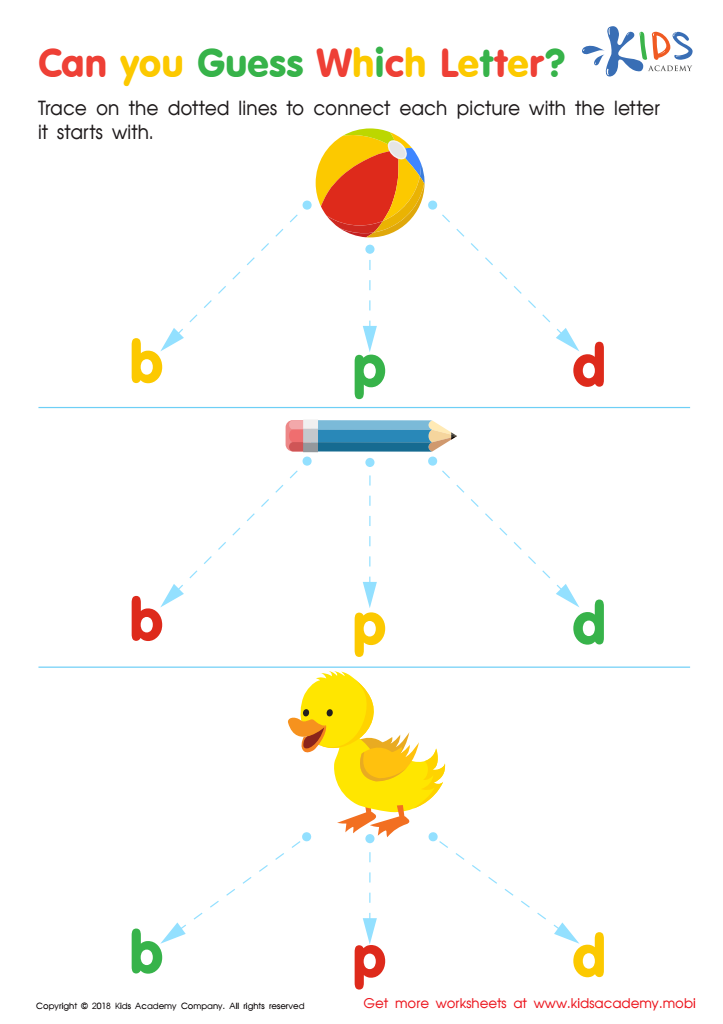
Can you Guess Which Letter? Worksheet
Connect the pictures with their corresponding letters with this fun worksheet! Ask your child what each picture is, then what letter it begins with. Download the PDF for colorful images and engaging texts to hold their attention, making learning an enjoyable activity.
Can you Guess Which Letter? Worksheet
Worksheet
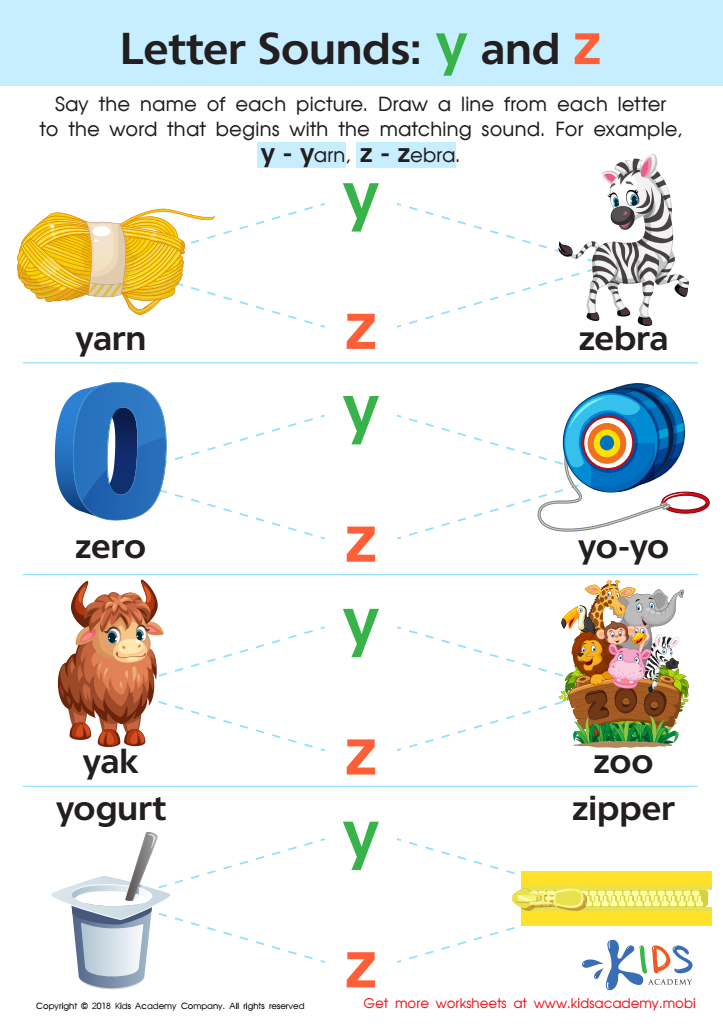
Letter Y and Z Sounds Worksheet
Y and Z can be tricky for kids to learn. Kids Academy has the answer with a great worksheet. "Yo-yo", "yak" and "zebra" help kids recognize, say and trace each letter. Plus, they can read the words and match them to images! Let your child try and help them master phonics at the end of the alphabet.
Letter Y and Z Sounds Worksheet
Worksheet
Join Kids Academy for Free
Who is primarily going to use this learning content?








Alphabet recognition and phonics are foundational skills critical for literacy development in children aged 4-8. Parents and teachers should prioritize these elements because they underpin all future reading and writing abilities. Alphabet recognition helps children identify letters and understand that they represent sounds, which is essential for decoding words.
Phonics instruction allows children to blend these sounds together to form words, fostering early reading skills. When children are equipped with strong phonetic awareness, they demonstrate greater confidence and independence in their reading journeys. This positively impacts their overall academic performance, as literacy skills are integral in virtually every subject area.
Moreover, early mastery of these skills promotes a love for reading, leading to enhanced vocabulary and comprehension as they grow. Engaging with phonics and alphabet recognition can be fun and interactive, making learning enjoyable for children. Collaborative efforts between parents and teachers ensure consistency and support outside the classroom, reinforcing these critical skills. Ultimately, investing time in these foundational concepts creates lifelong learners who are better prepared for academic challenges ahead, making it essential for stakeholders in a child's education to recognize their importance.







