Rhyming skills development Normal Rhyming Worksheets for Ages 4-8
4 filtered results
-
From - To
Enhance your child's linguistic abilities with our Rhyming Skills Development worksheets specially crafted for ages 4-8. These engaging and educational PDFs are designed to make learning fun, combining colorful illustrations with easy-to-follow exercises. Our worksheets assist children in recognizing word patterns and sounds, essential for early reading and language development. Through fun activities, kids will master rhyming concepts, boosting their phonemic awareness and vocabulary. Perfect for both classroom and home use, these resources will aid young learners in their educational journey, laying a strong foundation in literacy. Kickstart your child's rhyming skills with our expert-designed worksheets today!
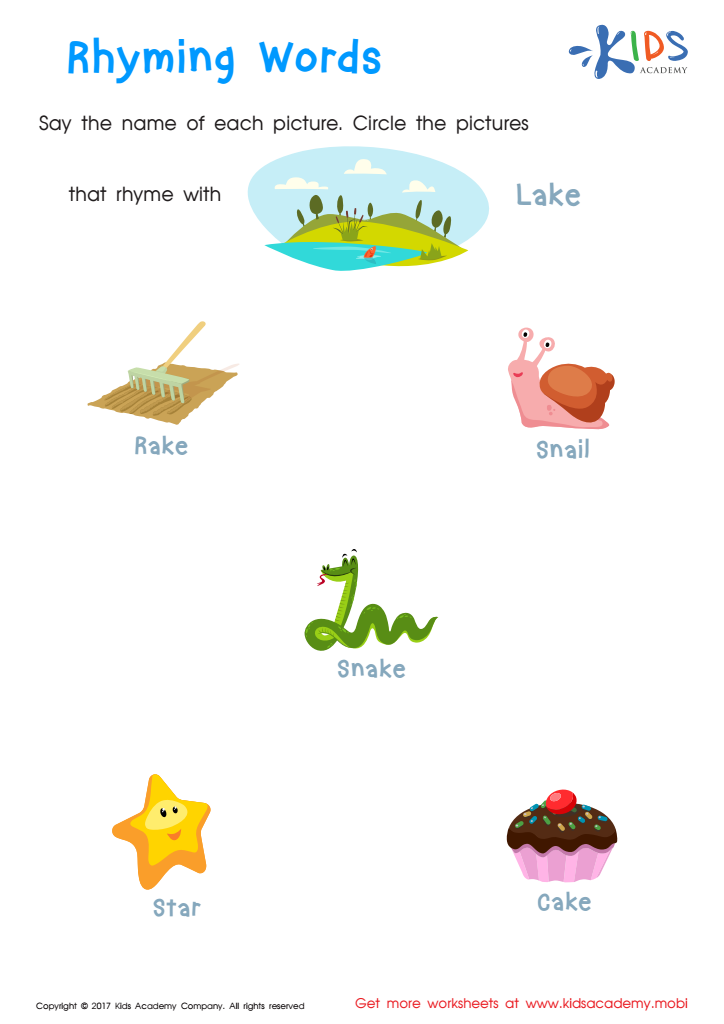
Rhyming Words Rhyming Worksheet
 Assign to My Students
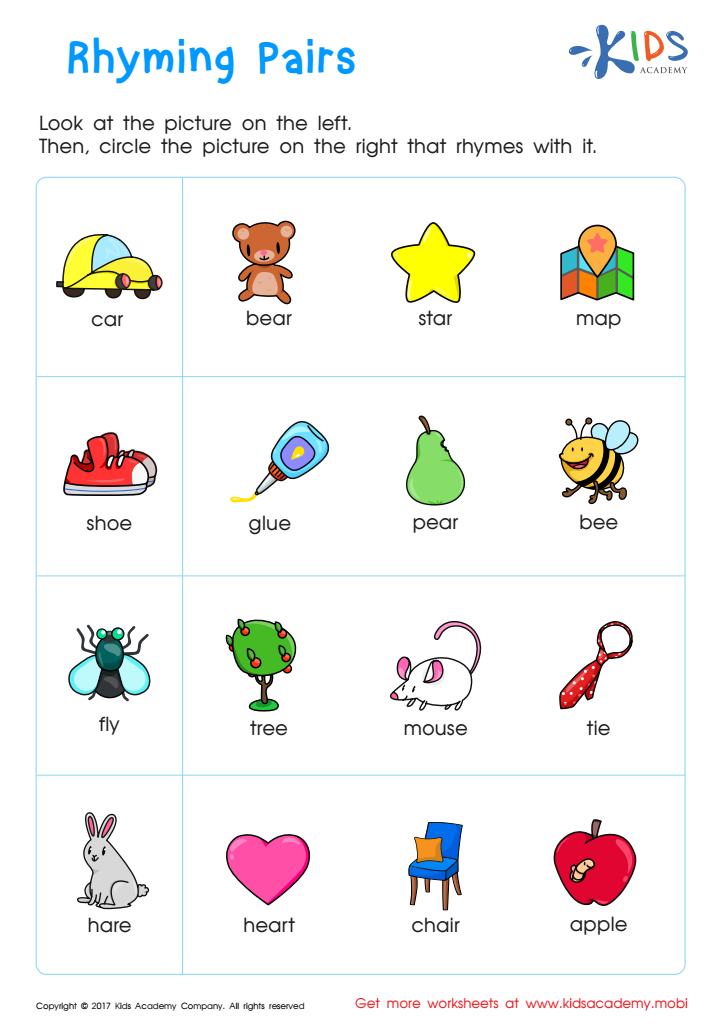
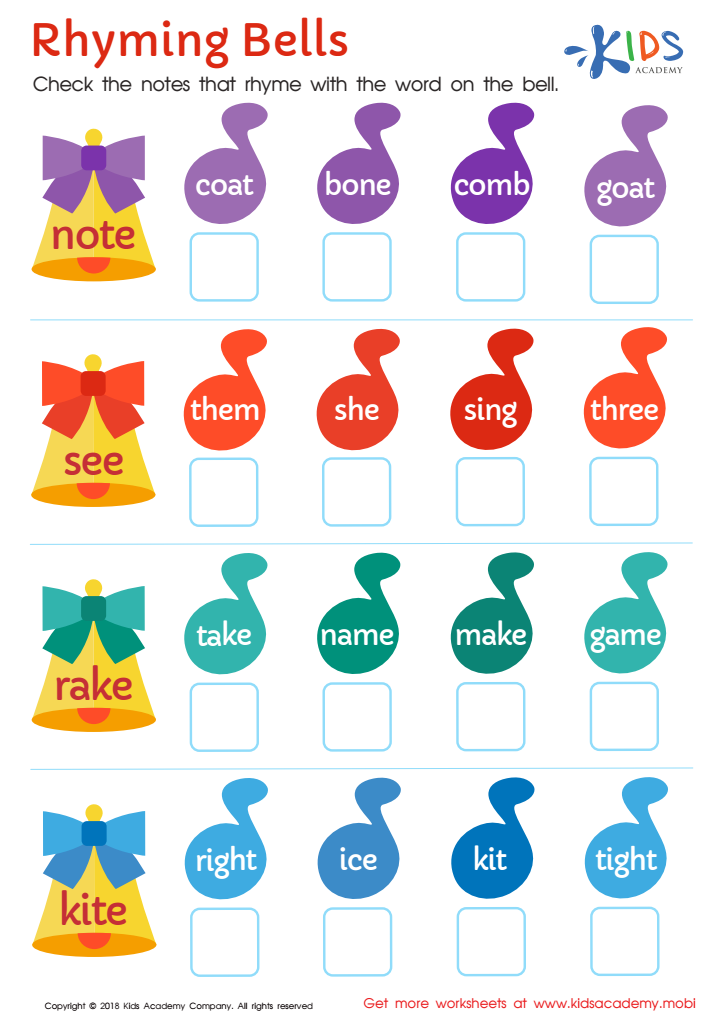
Rhyming Bells Worksheet
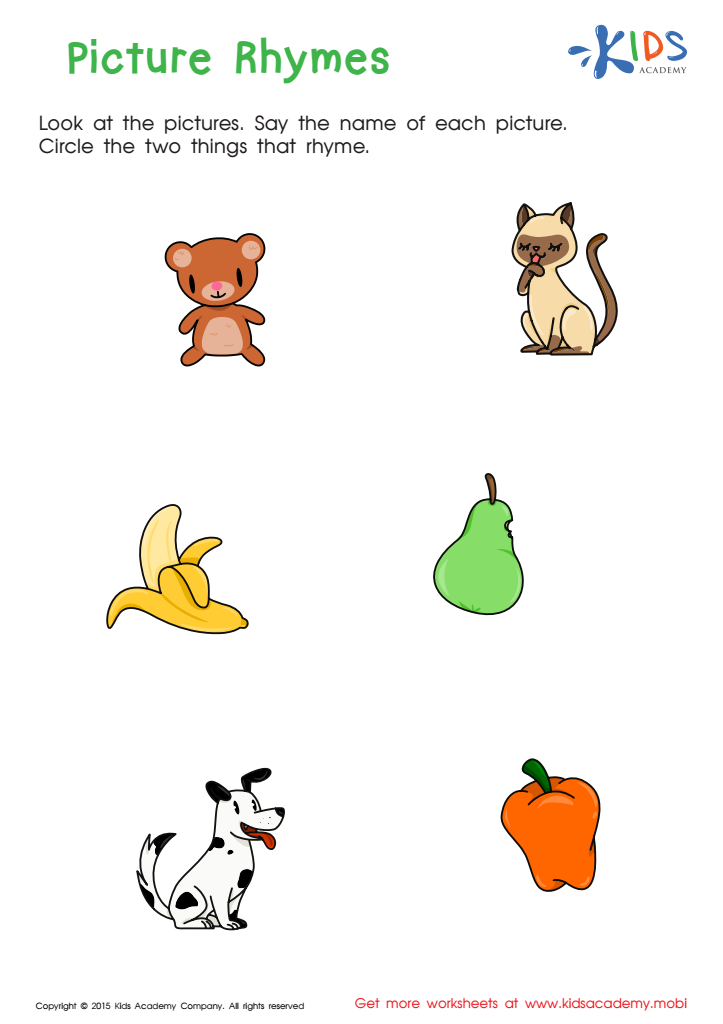
First Words: Picture Rhymes Worksheet







Rhyming skills play a critical role in the early literacy development of children ages 4-8. For parents and teachers, fostering these skills can significantly impact a child's reading and writing abilities. Rhyming helps children recognize patterns in language, an essential component of phonological awareness, which is the ability to hear and manipulate sounds in words. This awareness is foundational for decoding new words that children read and for their overall fluency in reading.
Additionally, rhyming aids in vocabulary expansion. When children play with rhymes, they are exposed to new words and their meanings in an engaging, memorable way. This can also foster an interest in words and storytelling, which are key components of literacy. Rhyming exercises often involve elements of play and music, making learning enjoyable and keeping children engaged, which is particularly important at this developmental stage.
Socially, engaging in rhyming games and activities can boost a child's confidence and communication skills. Whether through songs, poems, or simple rhyming games, these exercises often involve interaction, thereby building social competence and collaborative learning environments.
In summary, developing rhyming skills in young children sets a solid foundation for essential literacy skills, supports language development, introduces new vocabulary in a fun way, and enhances social connections—all crucial elements for a successful start to lifelong learning.






