Vocabulary enhancement Normal Short Vowels Worksheets for Ages 4-8
3 filtered results
-
From - To
Enhance your child's vocabulary with our Vocabulary Enhancement Normal Short Vowels Worksheets, designed for ages 4-8. Engaging and educational, these worksheets focus on mastering short vowel sounds fundamental to early reading skills. Each colorful exercise encourages young learners to identify, pronounce, and write short vowels in various words, boosting their language development. Ideal for use in classrooms or at home, our phonics-focused activities make learning fun while reinforcing essential literacy foundations. Empower your child with the tools to succeed in reading with our expertly crafted worksheets that turn studying into an enjoyable experience.
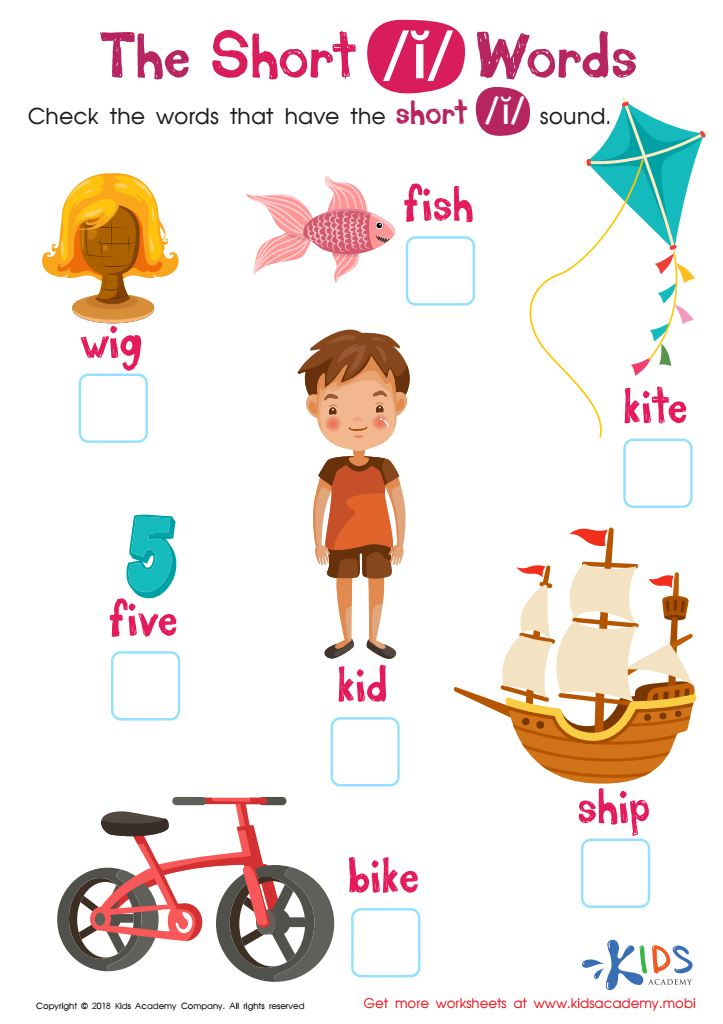
The Short I Words Reading Worksheet
 Assign to My Students
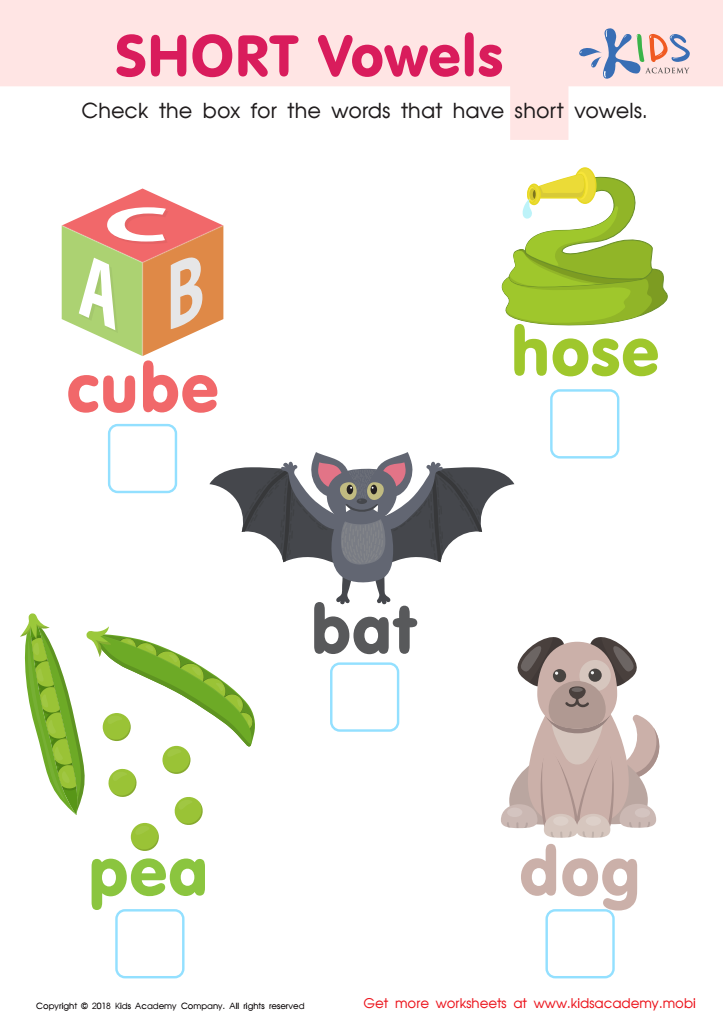
short vowels Worksheet
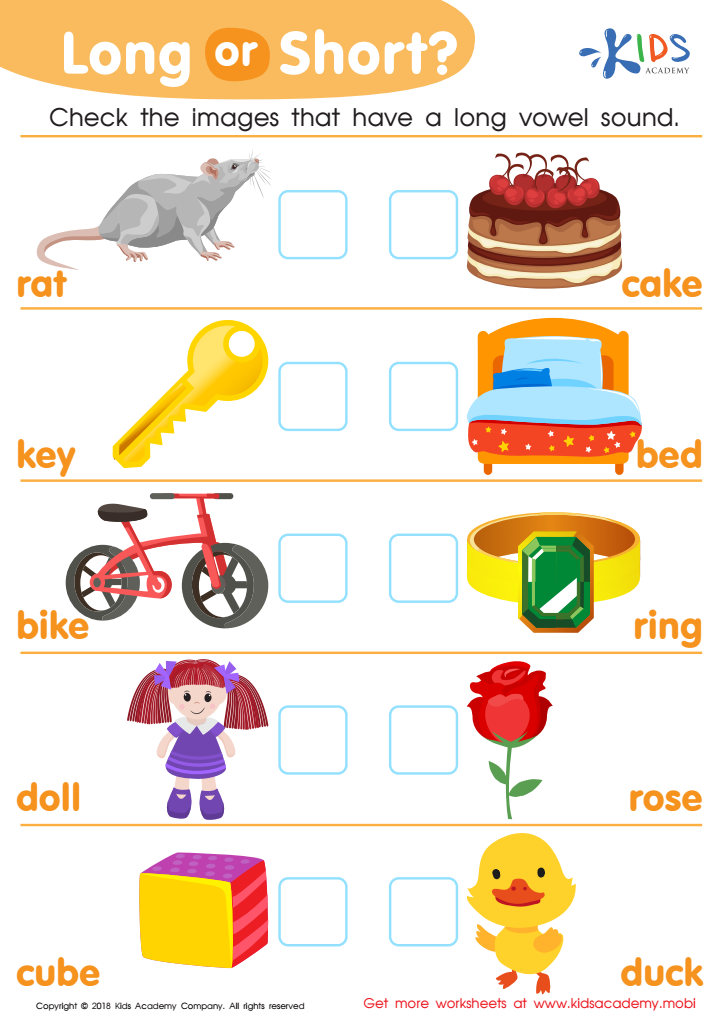
Long or Short Reading Worksheet



Vocabulary enhancement focusing on normal short vowels is crucial for young children (ages 4-8) because it lays the foundation for robust language, reading, and writing skills. Short vowels—'a,' 'e,' 'i,' 'o,' and 'u'—are fundamental building blocks in phonemic awareness, which refers to the ability to hear, identify, and manipulate individual sounds in words.
At this age, children are in a critical period of language acquisition. Mastery of short vowels facilitates accurate pronunciation, enhances their ability to decode new words, and improves comprehension skills. As children recognize short vowel patterns, they can more easily infer the meaning of unknown words in context, thereby expanding their vocabulary further.
Early vocabulary growth leads to better fluency and confidence when reading out loud, an essential skill for academic success. It also improves listening skills, enriching classroom interactions and overall communication. Parents and teachers who focus on short vowels support cognitive development, encourage a love for reading, and enhance the ability to write clearly and effectively.
Moreover, enriched vocabulary has emotional and social benefits. Children can express their ideas, emotions, and needs more accurately, leading to improved social interactions and reduced frustrations. Overall, investing in vocabulary enhancement with attention to short vowels equips children with essential tools for lifelong learning and success.








