Lowercase letter writing Normal Tracing Letters Worksheets for Ages 4-8
3 filtered results
-
From - To
Discover our engaging Lowercase Letter Writing Normal Tracing Letters Worksheets, specially designed for children ages 4-8. These worksheets provide a fun and interactive way for young learners to practice their handwriting skills. Each worksheet features clear tracing guides to help kids develop proper letter formation, enhance their motor skills, and boost confidence in writing. Tailored to support early literacy, our worksheets cover all lowercase letters, ensuring a comprehensive learning experience. Ideal for both classroom and home use, these resources make letter writing enjoyable and effective. Start your child's writing journey with our delightful tracing worksheets today!
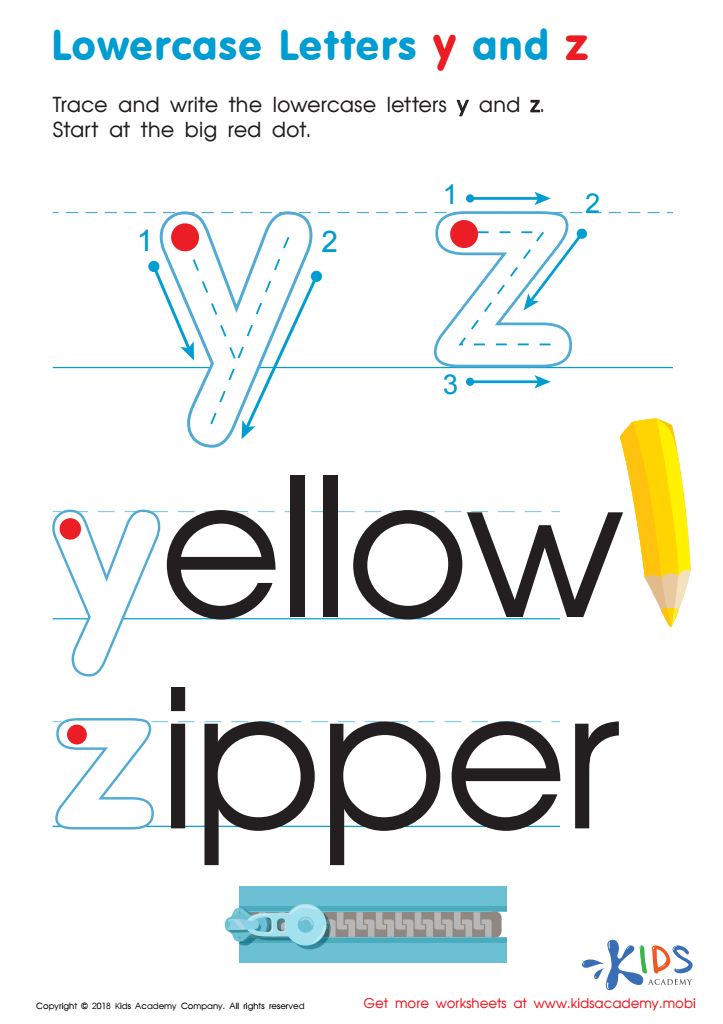
Lowercase Letters y z Worksheet
 Assign to My Students
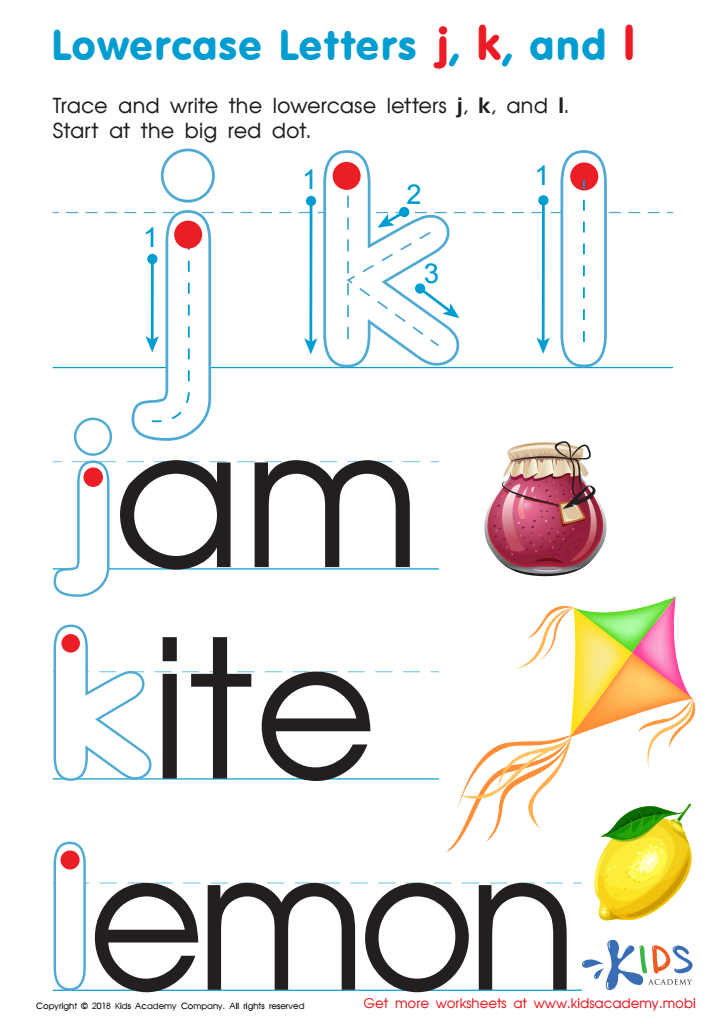
Lowercase Letters j k l Worksheet

Lowercase Letters m n o Worksheet







Parents and teachers should care about lowercase letter writing through normal tracing for children ages 4-8 for several vital reasons. Firstly, learning to form lowercase letters correctly lays the foundation for successful handwriting skills. Mastery of lowercase letters allows children to read and write more fluently, as most written text primarily utilizes these letters.
Moreover, tracing activities help children develop fine motor skills and hand-eye coordination, which are essential for many life skills beyond writing. The physical action of tracing reinforces memory, aiding in letter recognition and phonetic understanding, contributing to early literacy development.
Additionally, incorporating tracing activities into learning can make education enjoyable and engaging through playful and interactive methods. It builds a child’s confidence as they see their progress, thus fostering a positive attitude toward writing.
Lastly, parent and teacher involvement in this process can create a supportive environment, enhancing the child’s motivation to learn. Encouragement from adults also strengthens the child's sense of accomplishment and self-worth. Overall, focusing on lowercase letter writing through tracing is a key step in promoting literacy and fine motor skills in early education.








