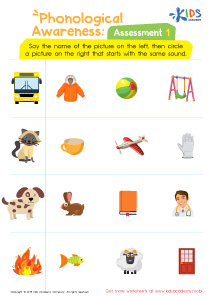
Vocabulary Building Normal Vowels Worksheets for Ages 4-8
3 filtered results
-
From - To
Discover engaging "Vocabulary Building Normal Vowels Worksheets" designed specifically for children ages 4-8! Our interactive worksheets focus on enhancing young learners’ understanding of normal vowels, helping them develop crucial reading and speaking skills. Through enjoyable activities, children can practice identifying, writing, and using vowels in various words, improving their vocabulary in a fun and playful way. These resources are perfect for parents and educators looking to strengthen foundational language skills. Encourage your child's love for learning and boost their confidence with our comprehensive and colorful worksheets. Explore our collection today and watch your child's vocabulary flourish!
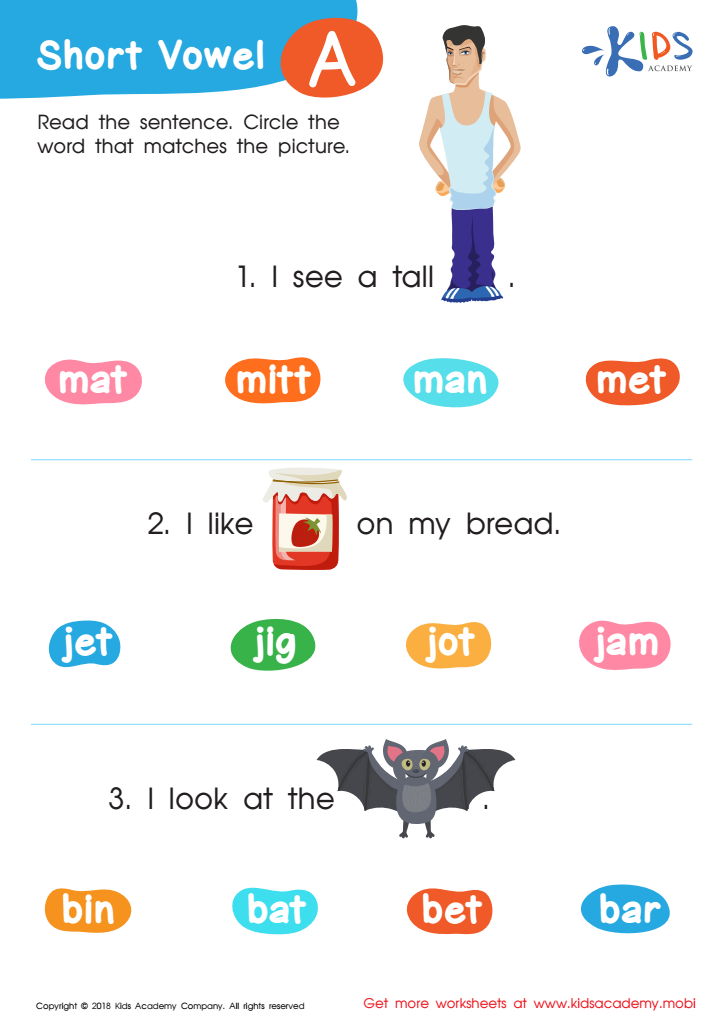
Short Vowel /a/ Worksheet
 Assign to My Students
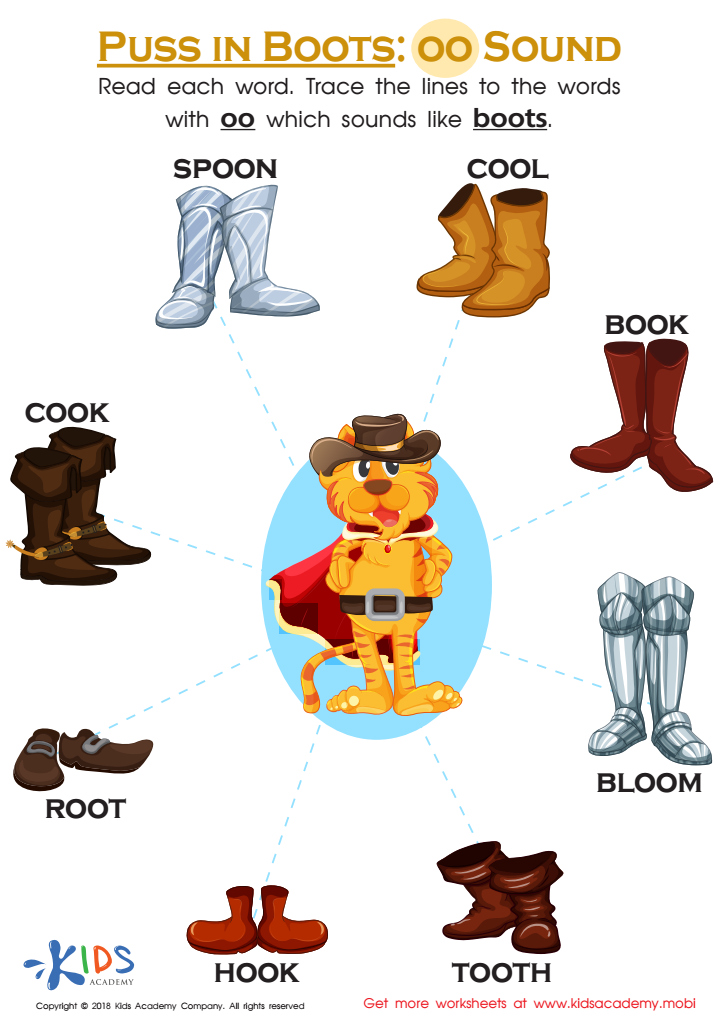
Puss in Boots: OO Sound Worksheet
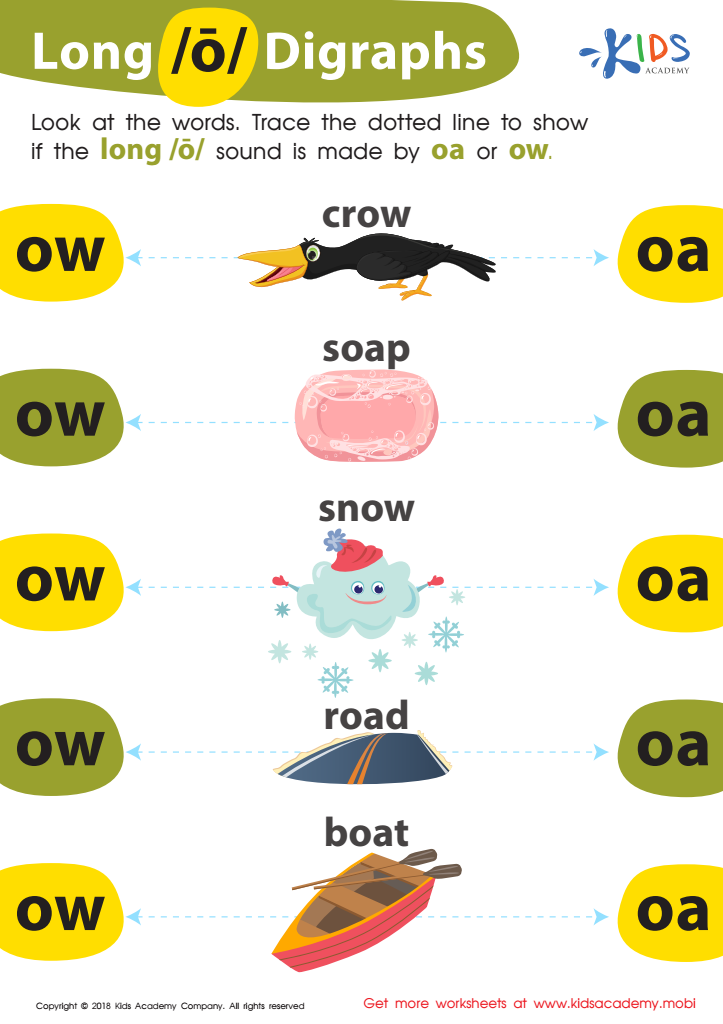
Reading: Long O Digraphs Worksheet





Parents and teachers should prioritize vocabulary building for children aged 4-8, particularly focusing on normal vowels, because this foundational skill is crucial for literacy development. A strong vocabulary enhances children's reading comprehension, writing abilities, and overall communication skills. By mastering normal vowels, children learn to recognize and produce word sounds, leading to improved phonemic awareness—a key component of reading.
During these formative years, children are naturally curious and psychologically equipped to absorb language through play, storytelling, and structured activities. Introducing them to a variety of words laid out around normal vowels encourages not only language acquisition but also critical thinking as they begin to connect sounds and meanings.
Moreover, a rich vocabulary lays the groundwork for academic success across all subjects. When children can articulate their thoughts clearly and understand complex concepts, they are more likely to engage actively and outperform peers. Lastly, language is a critical tool for social interaction; children with robust vocabularies are better equipped to express their emotions, thereby building stronger relationships with their peers.
Ultimately, fostering vocabulary development is an investment in a child's future, equipping them with the necessary skills for effective communication and lifelong learning.