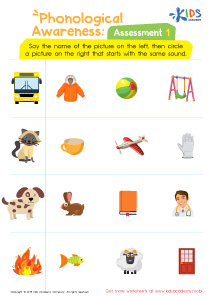
Vocabulary development Normal Vowels Worksheets for Ages 4-8
6 filtered results
-
From - To
Explore our engaging "Vocabulary Development Normal Vowels Worksheets" designed specifically for children aged 4-8! These worksheets offer a creative way for young learners to enhance their vocabulary while mastering normal vowel sounds. Each worksheet includes fun, interactive exercises that promote word recognition and phonetic skills, helping children build a solid foundation in literacy. With colorful images and playful activities, these resources make learning enjoyable and effective. Ideal for both classroom settings and at-home practice, our worksheets support early childhood development and encourage a lifelong love for reading. Discover the joy of learning with our thoughtfully crafted vocabulary worksheets today!
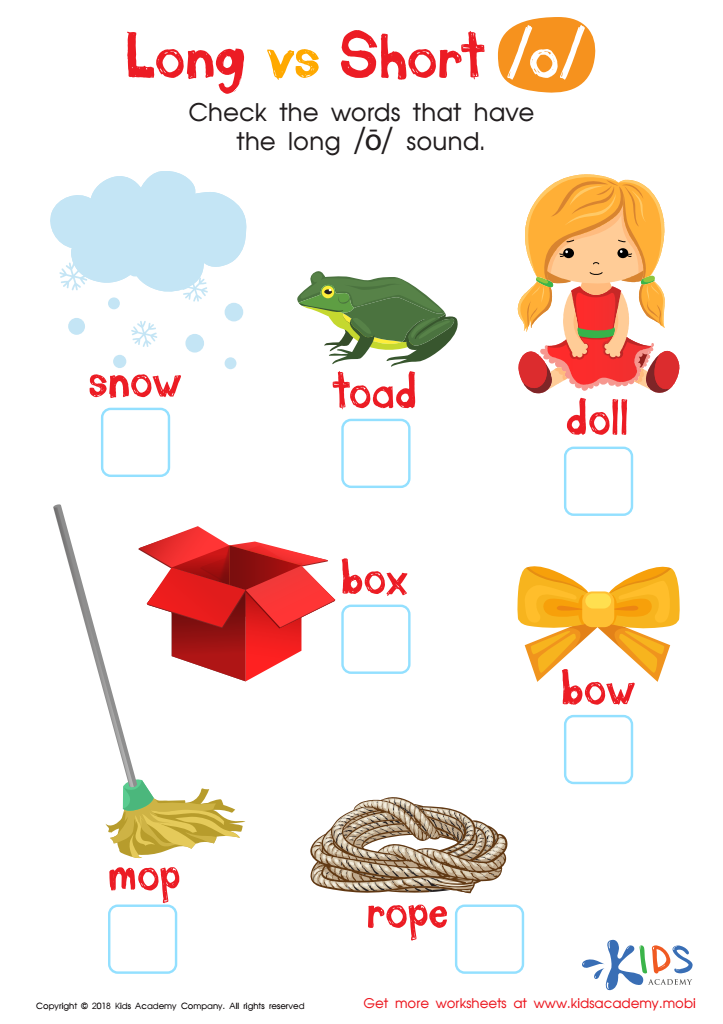
Long vs Short O Reading Worksheet
 Assign to My Students
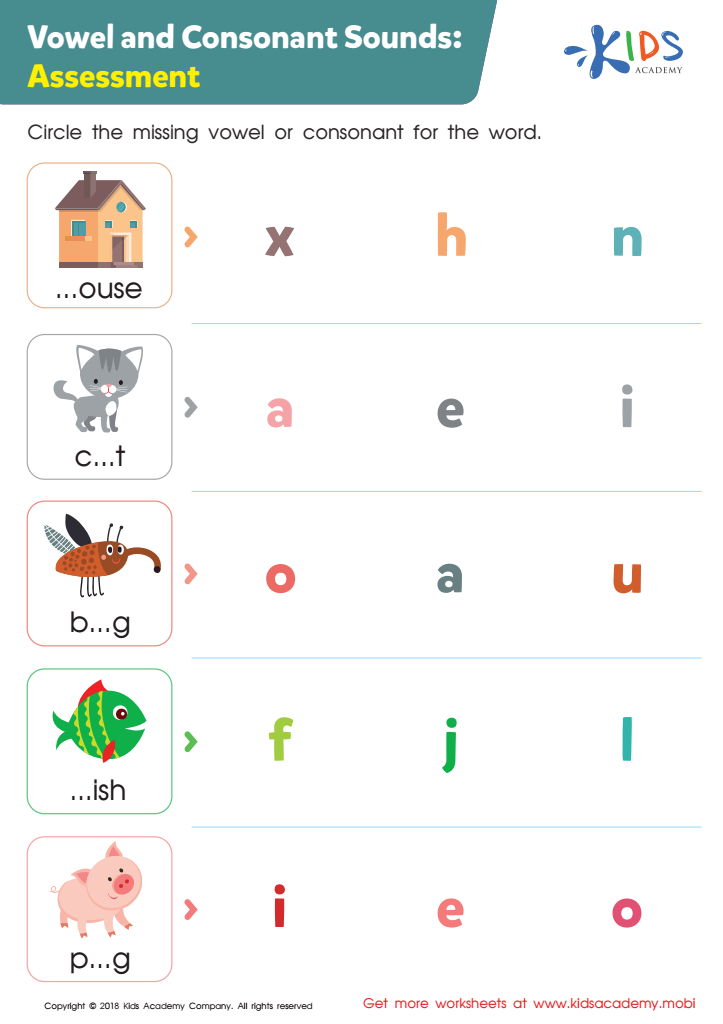
Vowel and Consonant Sounds: Assessment Worksheet
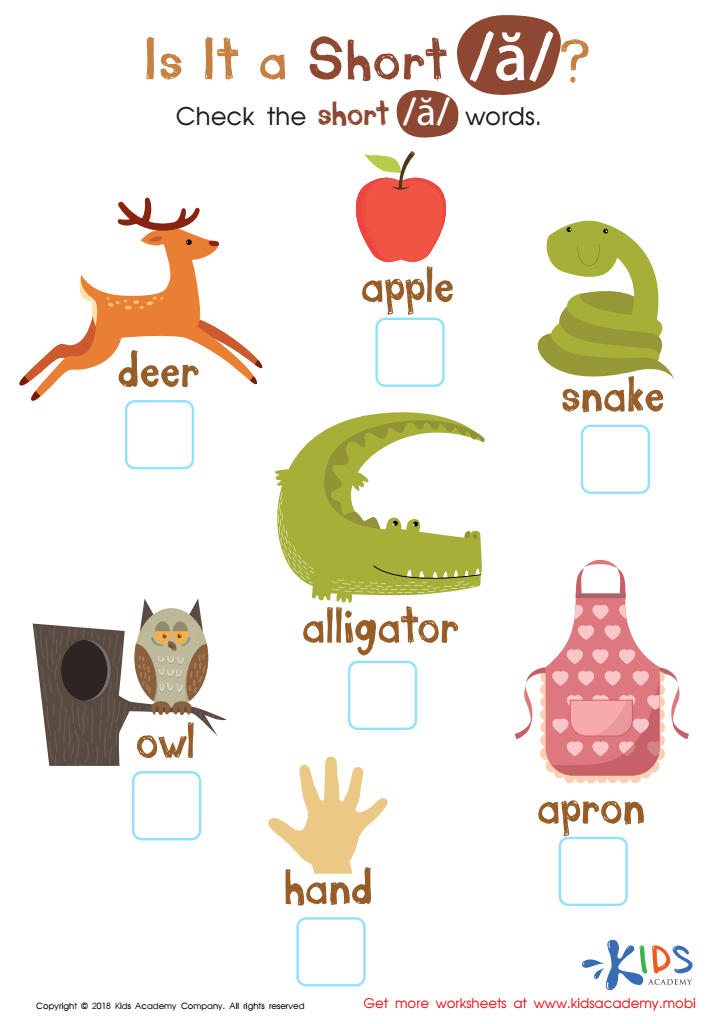
Is It Short A? Reading Worksheet
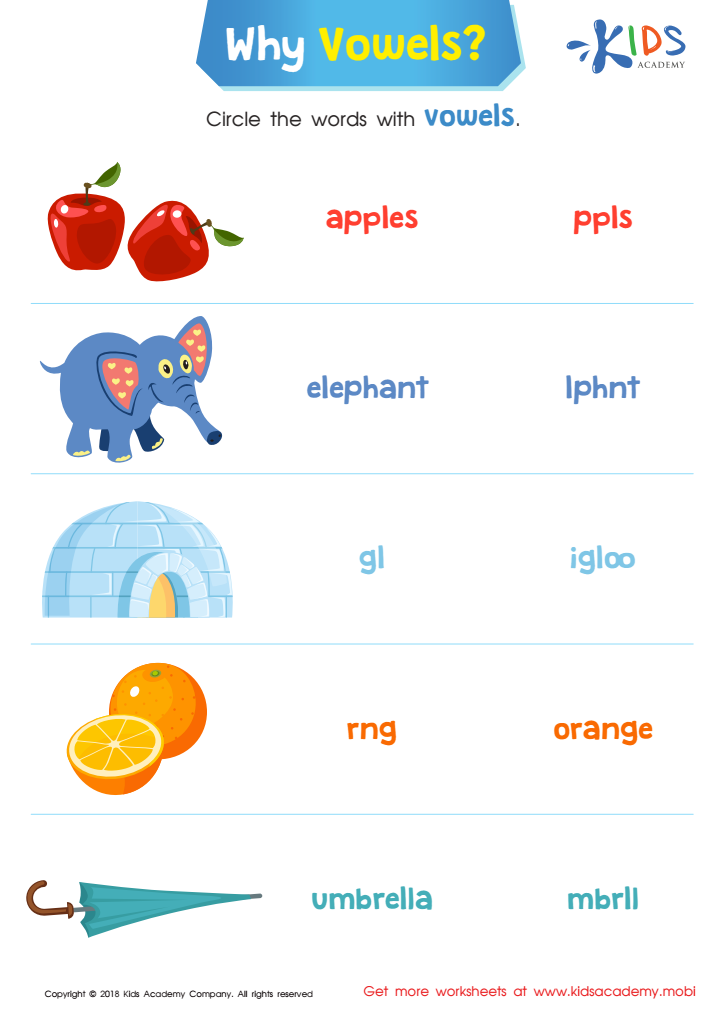
Why Vowels? Reading Worksheet
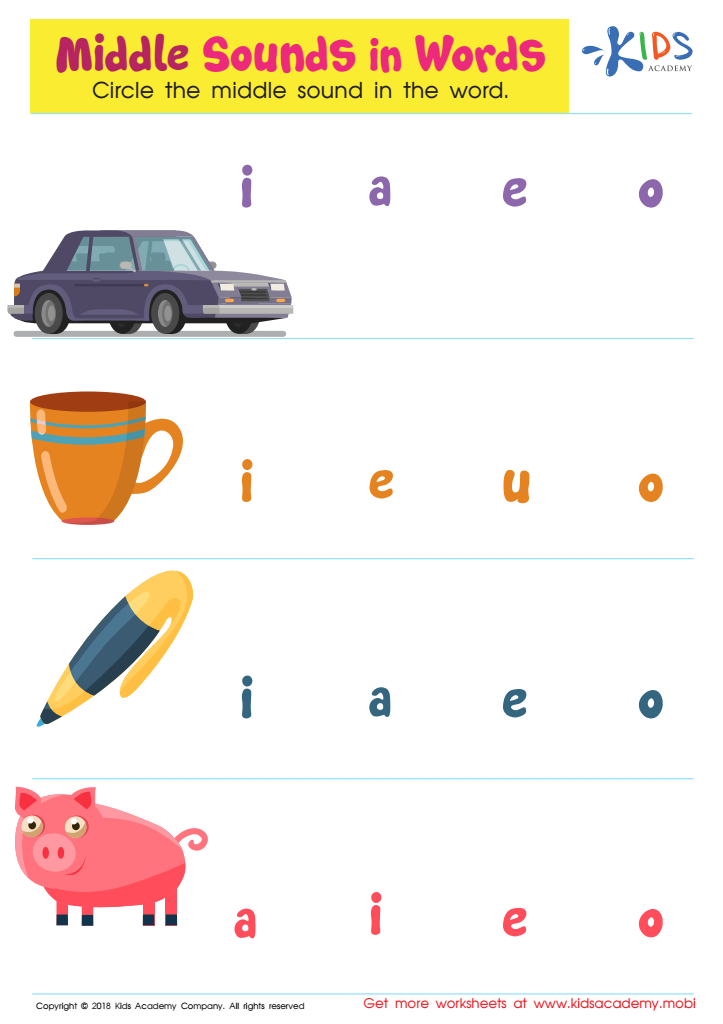
Middle Sounds in Words Worksheet
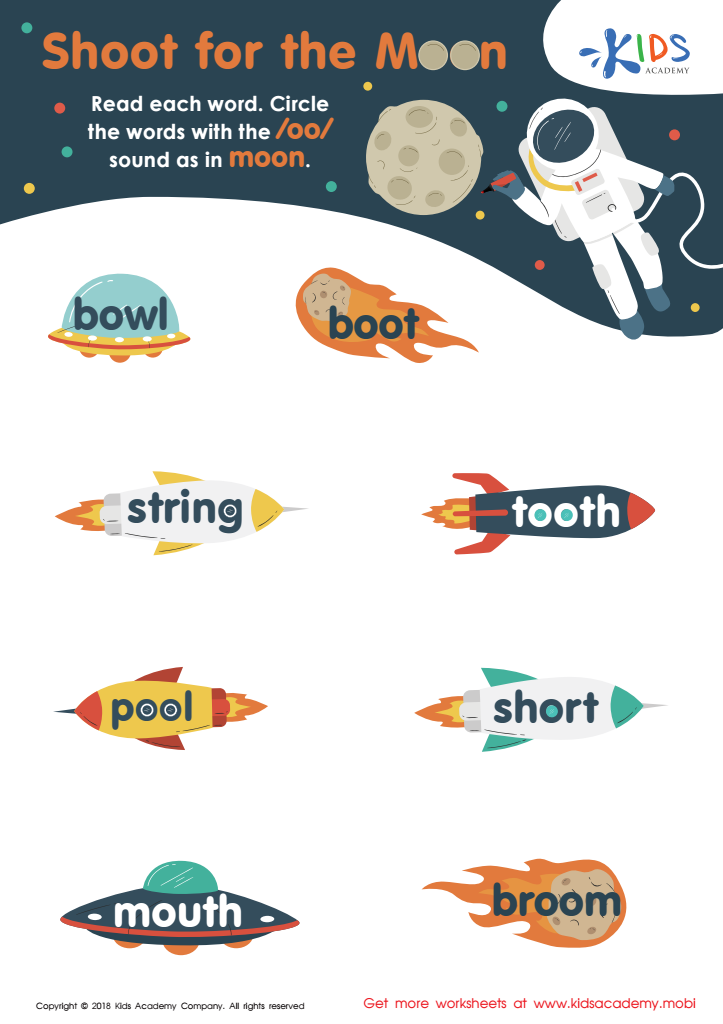
Reading: Shoot for the Moon Worksheet





Vocabulary development, particularly focusing on normal vowels, is crucial for children aged 4-8, as it lays the foundation for effective communication and literacy skills. During this stage, children's brains are primed for language acquisition, making it essential for parents and teachers to engage in activities that promote vowel recognition and usage. Mastery of normal vowels aids in reading comprehension and phonics, allowing children to decode words more efficiently.
A rich vocabulary enhances children's cognitive skills, encouraging them to express their thoughts and emotions clearly. It also supports academic success, as a strong vocabulary enables better understanding of instructions and classroom discussions. Furthermore, children's social interactions benefit from well-developed language skills, leading to improved relationships with peers and adults.
Incorporating vocabulary development activities into daily routines—such as reading aloud, interactive games, and vocabulary-building exercises—creates a stimulating learning environment. By focusing on normal vowels, parents and teachers can help children articulate sounds, read confidently, and build a solid foundation for future learning. Investing in vocabulary development promotes enthusiastic and skilled learners well into their academic journeys and beyond.