Fine motor skills (writing numbers) Normal Worksheets for Ages 4-8
3 filtered results
-
From - To
Fine motor skills are crucial for children's development, and our "Writing Numbers" worksheets for ages 4-8 offer a delightful way to enhance them. These expertly-designed printable sheets help young learners practice writing numbers while improving hand-eye coordination and finger dexterity. Perfect for early grade teachers or parents to use at home, each worksheet offers traceable numbers and engaging activities to ensure children develop essential motor control needed for writing. Introducing these worksheets into daily routines not only supports numerical understanding but also makes the process of learning to write numbers fun and effective for kids.
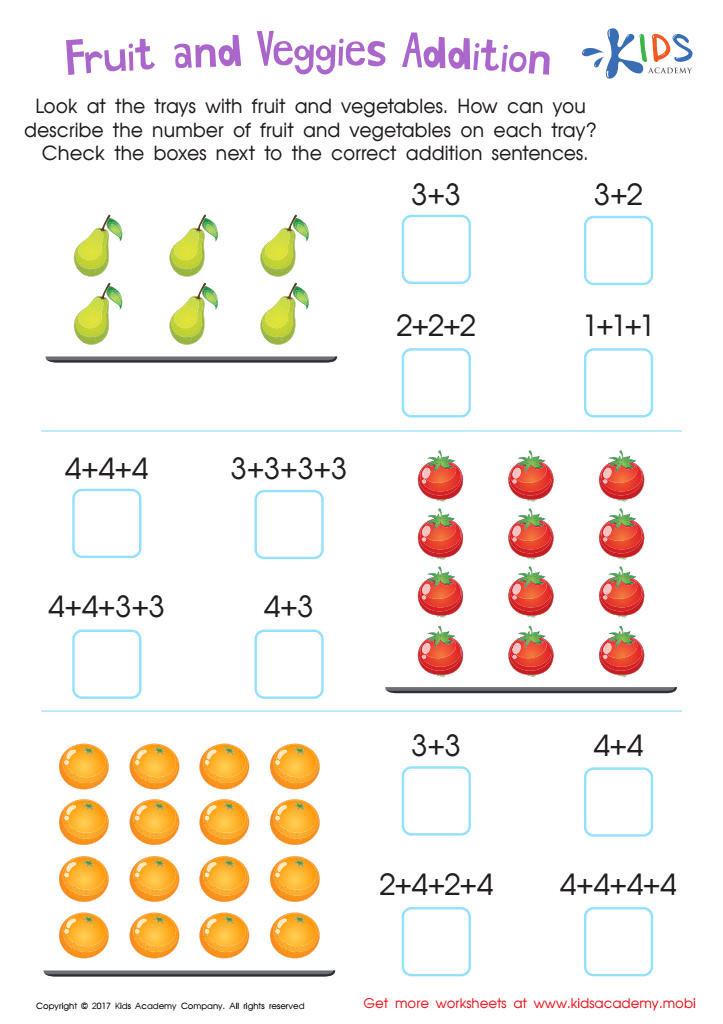
Fruit and Veggies Worksheet
 Assign to My Students

Finding 4 in the Forest Worksheet
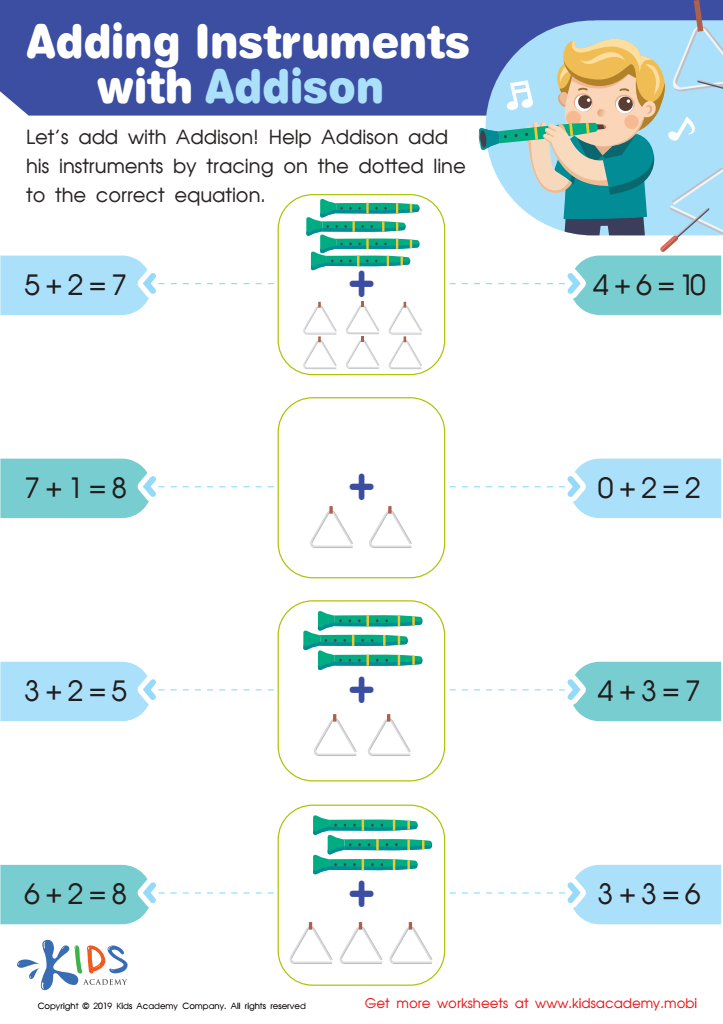
Adding Instruments with Addison Worksheet






Fine motor skills, particularly those involved in writing numbers, are crucial for children aged 4-8 as they lay the foundation for numerous academic and everyday activities. Parents and teachers should prioritize the development of these skills because they are critical for educational success and overall cognitive development.
Writing numbers involves hand-eye coordination, pencil control, and the ability to form precise, distinguishable shapes. Mastery of these skills at an early age enables children to engage more effectively in other academic tasks, including reading and writing. As children practice forming numbers, they also develop the ability to follow sequential patterns and augment their problem-solving capabilities.
Furthermore, fine motor skills are directly linked to other essential skills, such as concentration and attention to detail. Children who have well-developed motor skills usually demonstrate better concentration during various tasks. Outside the classroom, these skills enable children to perform daily tasks like tying shoelaces, buttoning clothes, and handling utensils, fostering independence and confidence.
Teachers and parents who observe and nurture these skills can provide targeted activities that make learning enjoyable and effective, like drawing, playdough, or number formations using manipulatives. By focusing on developing fine motor skills early, parents and teachers set the stage for lifelong learning and adaptive skills that will benefit children well beyond the classroom.








